
As you’ve surely noticed, Irena has recently taken over our Substack helm, penetratingly describing – among other things – how the opportunity to stand directly in front of a masterpiece comprehensively transforms one’s artistic experience.1
On the one hand, this is a fairly obvious point: why else would so many foreigners haul themselves off to Italy to sample its myriad cultural offerings, often battling oppressive heat and equally oppressive hordes of tourists in order to do so?
And yet, it’s all too easy to forget just how different being there can impact our personal impressions, even – or perhaps especially – for those of us who should know better.
A few months ago, I had a most enjoyable podcast conversation with Syracuse University art historian Sally Cornelison, discussing her latest book, Vasari and the Sacred Image: Renovating Santa Maria della Pieve in Arezzo (see below). I knew very little about Vasari as an artist before reading it; and felt gratified that, through reading Sally’s book and chatting with her about it, I had significantly increased my knowledge of this often woefully underrated artist.
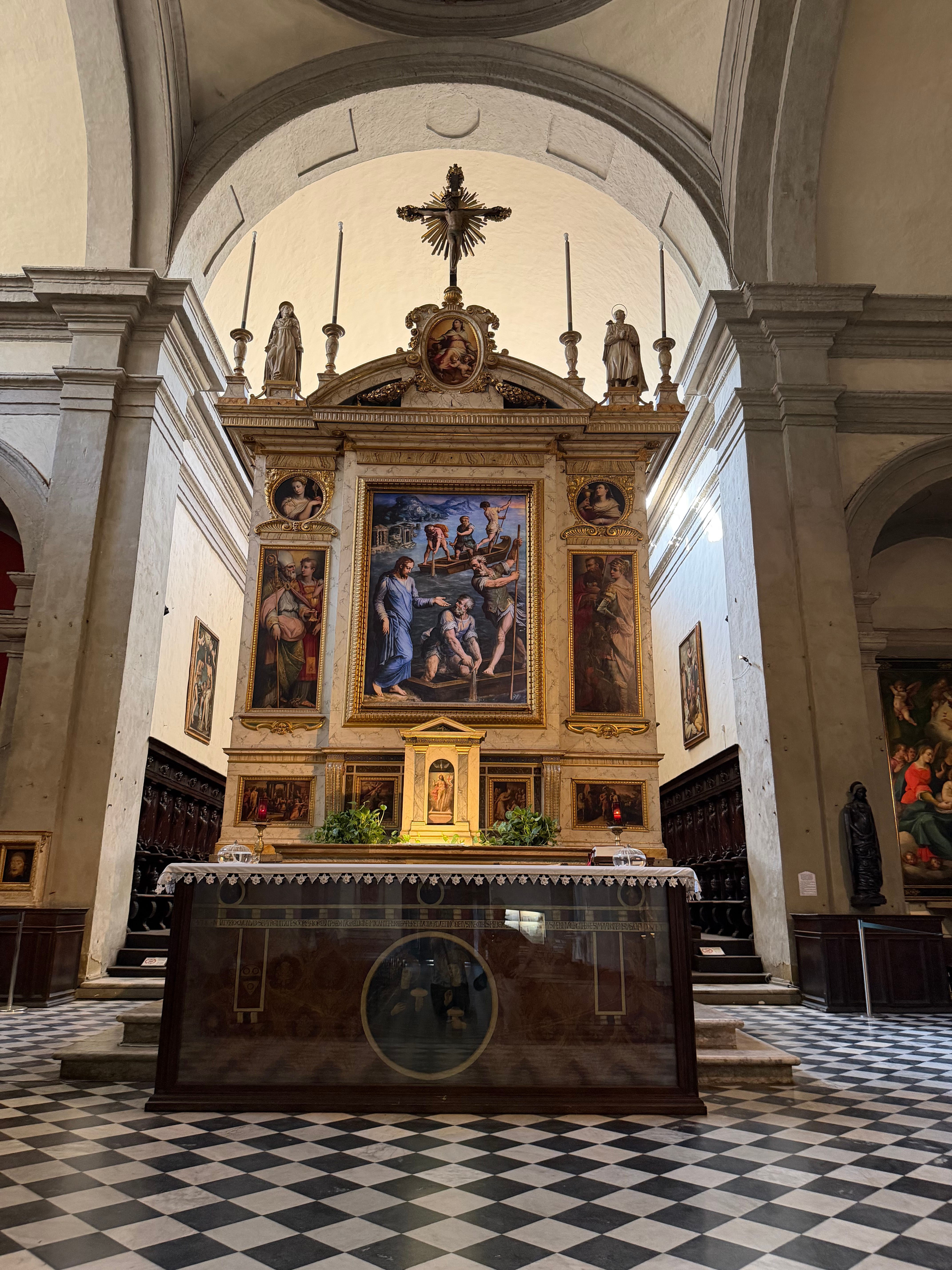
But what I hadn’t appreciated, and something very much worth commenting on, is that doing all of that only took me half the way towards my current level of understanding. Because, as it happens, we’re staying in Arezzo these days; and I’ve now had many opportunities to directly sample much of the art we discussed during the podcast – not only Vasari’s remarkably detailed two-sided altarpiece and de facto tomb monument that’s the principal focal point of Sally’s book,
but also several related masterpieces - most significantly Pietro Lorenzetti’s majestic polyptych that, as Sally emphasized, Vasari implicitly referenced.
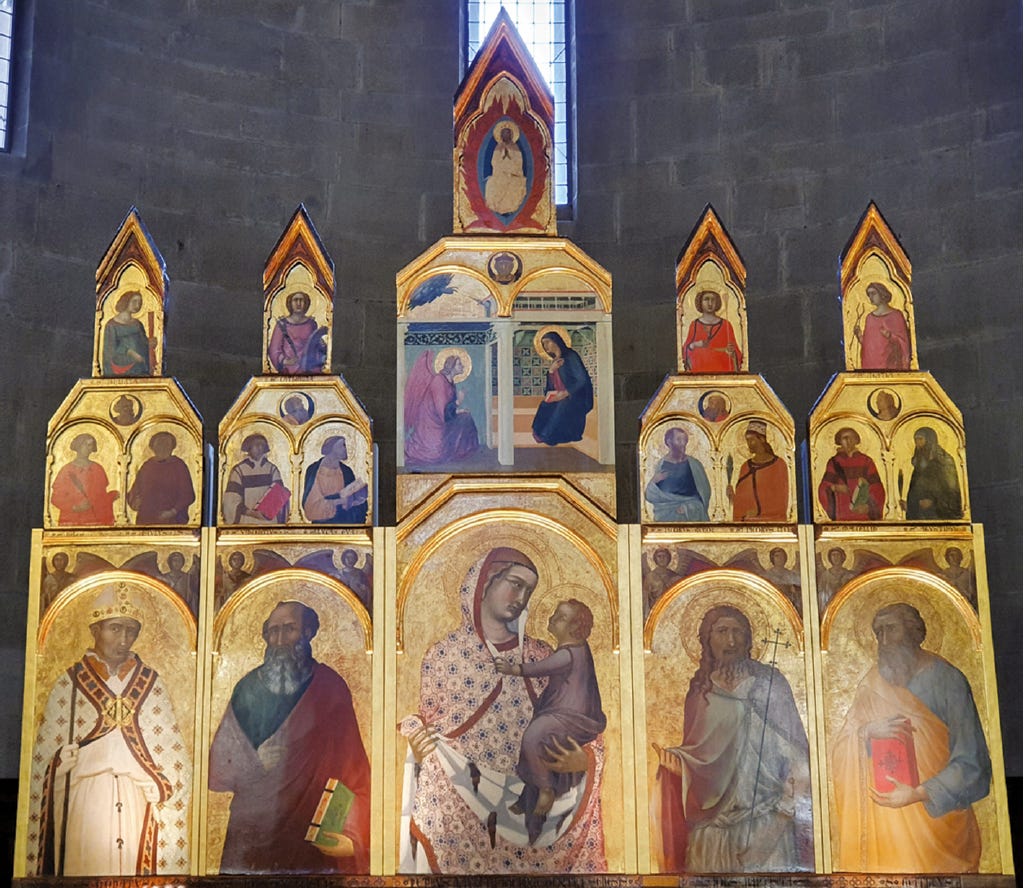
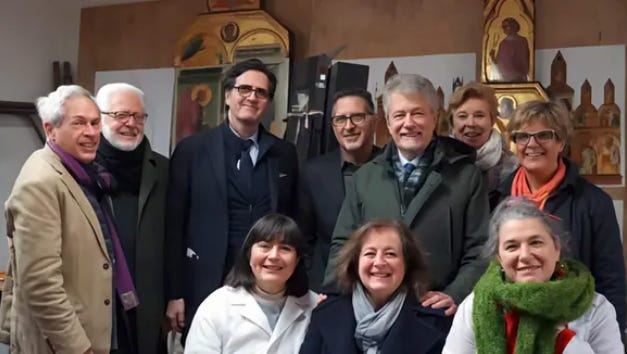
Through my recent studies, I’d seen many images of Lorenzetti’s so-called Tarlati altarpiece before I arrived in Italy, and could confidently tell you who was being represented in each of its 15 separate panels and why, but what I simply had no real appreciation of before I came to Arezzo was how indescribably beautiful it is (particularly in its recently restored state, thanks to the dedicated efforts of the Italian RICERCA team of Paola Baldetti, Marzia Benini and the late Isabella Droandi). For that I simply had to see it with my own eyes.
And here’s the thing. If you’re in Arezzo you can easily do this. For hours. By yourself. For free. Just get up early and walk into the Chiesa di Santa Maria della Pieve in the heart of the town; and there you will find it, waiting for you, with alternating panels of golden background quietly shimmering in the light.2
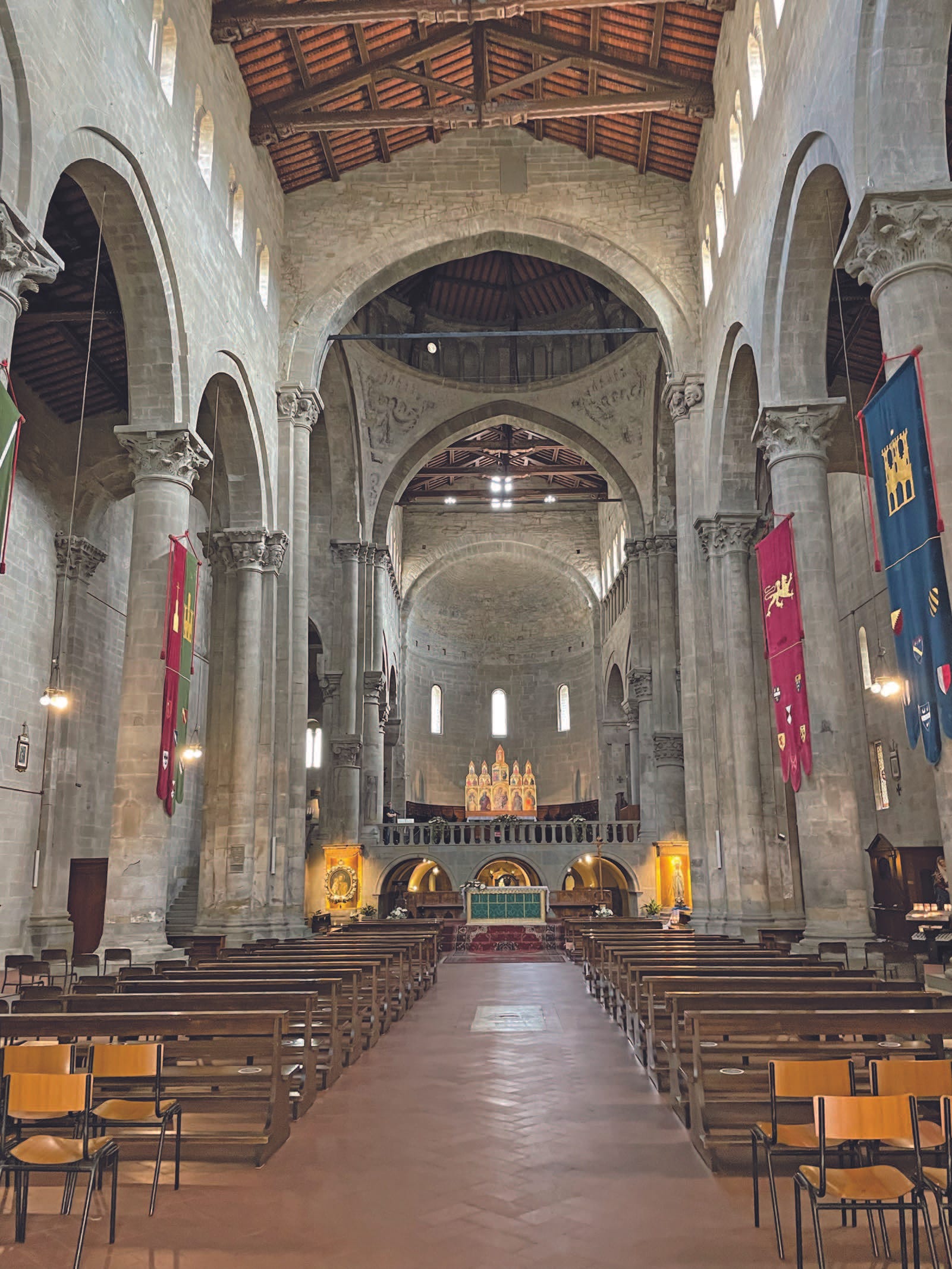
The first time we experienced it I simply didn’t believe it. “That must be a copy,” I knowingly informed Irena. But of course it isn’t. It’s the genuine article, firmly ensconced in the same place it was placed slightly more than 700 years ago. Well, more or less: Vasari moved it to a side chapel during his 16th-century remodelling, and it was returned to a significantly restructured high altar after another explicitly “retro renovation” in the second half of the 19th century.
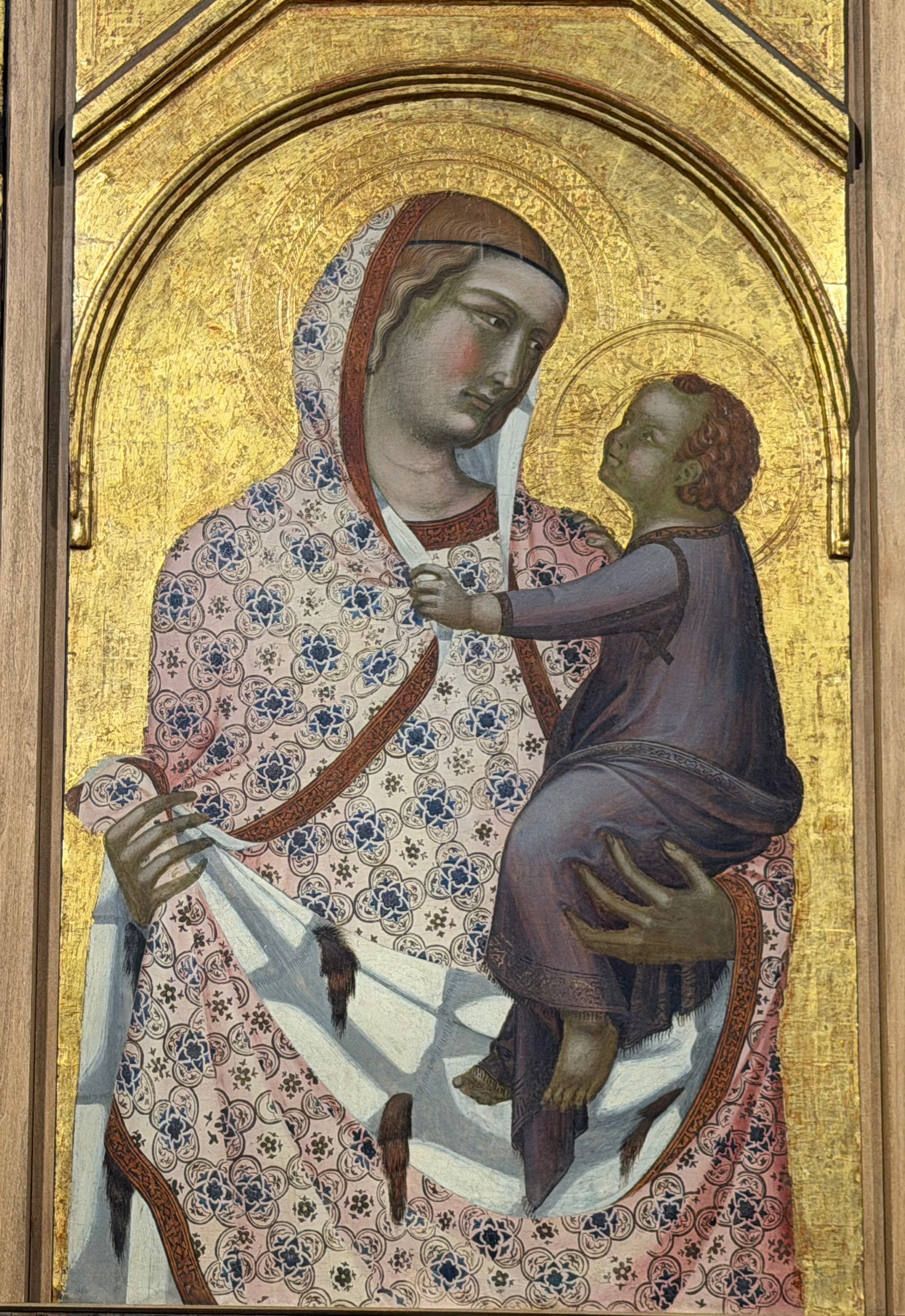
Which brings up another point very much worth stressing. As magical as it is to feast your eyes upon the inimitable (and somehow photographically uncapturable) subtleties of the actual artwork, it’s equally transformative to do so in that very location it was intended to be displayed.
This is most naturally the case with frescoes, but it’s also true for many sculptures and panel paintings (including, but hardly limited to, altarpieces), mosaics, intarsia, and, of course, architecture: a great many works of art were explicitly designed to be placed in direct correspondence, or “conversation”, with artistic environments crafted by illustrious predecessors. And you miss all of that – or at least most of it – when you simply trek through a museum or gallery chock-full of art, no matter how great that art might be.
It’s not that you shouldn’t go, of course, or that you shouldn’t dive into books or online pictures to enhance your understanding. Just don’t confuse it with the real thing.
Howard Burton
Below you can watch my recent conversation with Sally Cornelison: Vasari, Reconsidered. As always the video is illustrated with many visuals to illuminate the artworks under discussion. You can also watch the conversation on our Exploring Art History Spotify channel HERE.
The Art of Looking Closely
·
Aug 3
When it comes to appreciating paintings, there’s nothing more impactful than being in close proximity to the actual work, preferably in a setting where you can take your time to actually see what’s in front of you, as opposed to quickly scanning the picture or being confronted by others standing backwards in front of the art. By taking, say, 10 minutes of quietly sitting or standing in front of a painting, you can feel how your eyes and your brain are starting to focus to be able to discover more and more details that you may not have noticed at first glance.
Do please wait until mid-September, though, after we return to France.
Comments
Nothing yet. Say the first thing.
Sign in to join the conversation.