
. . . Coming In with a Bang (or Three) Dept.—In the immortal words of Vin Scully, you really ought to see and hear it for yourselves, so we’re just going to keep our mouths shut:
. . . Josh the Ripper Dept.—You may have noticed young Joshua Baéz wears the uniform number (22) once worn by once-upon-a-time Cardinals first baseman/bomber Jack (the Ripper) Clark.
. . . Welcome Back to the Club Dept.—The 30-30 club, that is. The newest repeat member: Pete Crow-Armstrong, who had a day to remember against the Cubs’s rival White Sox Monday: a four-hit day that included two home runs to make 30 (one a walkoff) and a stolen base to make 30. This gave PCA back-to-back 30-30s.
. . . Bookends Dept.—In the same game, Crow-Armstrong became the first player in sixteen years to open a game with a home run (he hit Luis Castillo’s first pitch of the game into the right field bleachers) and win it with a home run. (A leadoff blast against reliever Hagen Smith in the bottom of the tenth.)
. . . Soul Brothers Six Dept.—From the indispensable Sarah Langs: Five other players have opened and closed games with home runs in major league history: Chris Young (7 August 2010), Ian Kinsler (19 July 2009), Reed Johnson (15 June 2003), Darin Erstad (25 June 2000), and Vic Power (7 May 1957).
. . . Total Bases Tandem Dept.—Incidentally, Ms. Langs informs further that PCA also became one of only two players to have four games with ten or more total bases in two seasons. (PCA: 2025, 2026.) The other: Hall of Famer Jimmie Foxx (1933, 1938).
. . . Elbowed Aside Dept.—It’s a second left elbow bone bruise for Yankees LHP Max Fried and a second injured list term (retroactive to 14 August) with it. Friend missed time with a similar injury earlier this season. This the day before Carlos Rodon (LHP) returns from the IL.
. . . Designated Hider Dept.—That would be Diamondbacks DH Ketel Marte, who was a no-show for the Snakes’s game against the Red Sox in Fenway Park Monday. Manager Torey Lovullo said Marte’s placement on the restricted list is because of a “personal issue” on which neither the skipper nor the team elaborated.
Last season, Marte missed three games including two on the restricted list when he high-tailed it home to the Dominican Republic after his house was burglarised.
By Mark Kolier
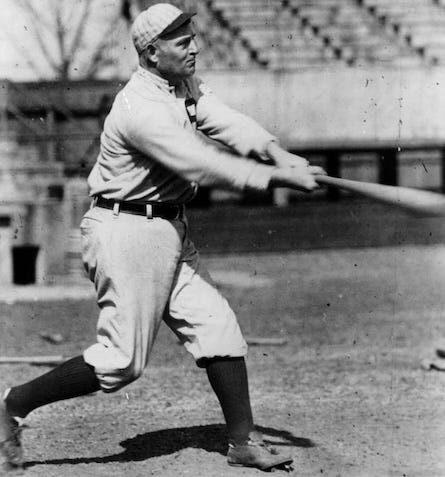
I find Adjusted On-Base-Plus-Slugging (OPS+), to be a useful measure of a player’s performance. It’s not a statistic I grew up knowing anything about. Thanks to the advances in analytics, stemming in large part from the work of the great Bill James, fans are familiar with the idea that a player could be x% better than the ‘statistical average’ player.
It’s important to note that OPS+ adjusts for factors such as different ballparks and overall league scoring environments. Many of the career leaders in Adjusted OPS+ never knew they were leading in that category, because the statistic had not yet been thought up!
As of early August 2026, there are 42 players in MLB history that have a career Adjusted OPS+ of 150 or more. (In baseball, the number 42 always seems to turn up, doesn’t it?) For the charts below I had to break up the list of 42 into two sections and repeated Hall of Famer Roger Connor as a placeholder.
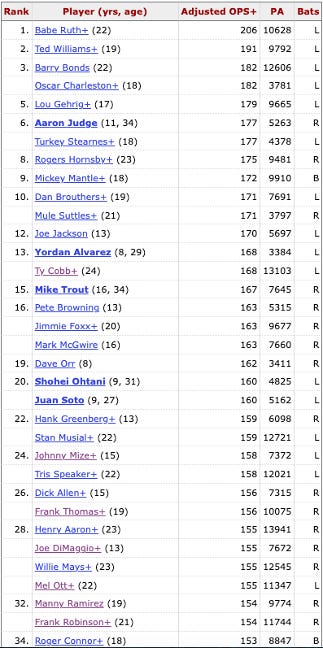
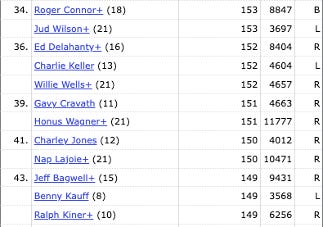
I included a few of the players with 149 career OPS+ so you could see that two of the three are Hall of Famers, but Benny Kauff did not play the required ten major league seasons to be eligible.
Even if he had, Kauff never would get in, as he was banned from baseball in 1921 by Commissioner Kennesaw Mountain Landis (who was fond of bans), due to a controversial arrest of Kauff and indictment for auto theft. Kauff was acquitted of the auto-theft charge, yet Landis nevertheless refused to reinstate him because Landis believed the trial revealed undesirable associations/conduct. But that’s another story.
The Hall of Famers are indicated with the + sign, so non-Hall of Famers currently total fourteen; or, 33% of the total. Active players Mike Trout, Aaron Judge, Shohei Ohtani, Juan Soto, and Yordan Alvarez are all currently ineligible, with the first four already possessing or rapidly building compelling Hall cases.
The best of the non-Hall of Fame 150+ OPS+ players
Gavy Cravath (151)—I’ve written about Gavy before. He would be a worthy inclusion.*
Charlie Keller (152)—It always amused me that he did not like being called King Kong Keller, which it seems he took as an insult instead of a compliment. Keller had a strange career, never playing more than 83 games after his age 29 season. Being overshadowed by such Hall of Fame Yankee teammates as Joe DiMaggio, Bill Dickey, and a late-career Lou Gehrig didn’t help. Sometimes, being a great Yankee can still get you lost amongst other great Yankees.
Pete Browning (163) – Browning played from 1882-1894 and had a career .341 batting average. He played more than fifty percent of his career (eight seasons) in the American Association**, which may have impacted his being elected. Browning continues to be a glaring omission to the Hall of Fame in the eyes of many, including me.
The ‘woulda’, ‘coulda’, ‘shoulda’ group
Manny Ramirez (154), Mark McGwire (163), Joe Jackson (170), and Barry Bonds (182), are all excluded from Cooperstown for reasons that have been well documented. On their playing records alone, all four have obvious Hall of Fame credentials.
Like Pete Browning, Charley Jones (150), and Dave Orr (162) were 19th century stars. Orr did not play the required 10 MLB seasons, so that lets him out.
Charley Jones was the 268th player to ever play major league baseball. Statistics included on his Baseball Reference page include his time in the National Association, which predates the National League but generally is not recognized by MLB as a major league. That makes him more difficult to evaluate.
Jones led his league in home runs in 1877 with two in 57 games. He was born Benjamin Wesley Rippay on April 30, 1852, on a farm in Alamance County, North Carolina. It’s a shame he changed his name. ‘Rippay rips one’ has a nice ring to it!
Not counting Mr. Jones, out of the 42 players with career 150+ OPS+, only Cravath, Keller, and Browning are arguably HOFers. It would be nice if a number like 150 OPS+, fifty percent better offensively than league average, was a mandate for having your ticket stamped for induction into the Baseball Hall of Fame. But it doesn’t work that way. The exceptions are interesting and worth discussion since there are so few.
Also, having five active players in the top twenty for Adjusted Career OPS+ is impressive.
Among modern eligible players with 150+ career OPS+, Charlie Keller is essentially the only Hall omission whose candidacy isn’t explained by eligibility, a short career, or an extraordinary off-field issue. Among modern eligible players with 150+ career OPS+, Keller is essentially the only Hall omission without an obvious explanation beyond the relatively short length of his career.***
Barring extraordinary circumstances, I think it’s safe to say that a player who puts together a substantial career of ten or more seasons and finishes with an OPS+ of 150 or better will ultimately find his way to Cooperstown.
About the Author: Mark Kolier along with his son Gordon co-hosts a baseball podcast called ‘Almost Cooperstown’. He also has written baseball-related articles that can be accessed on Medium.com and Substack.com.
Editor’s Notes:
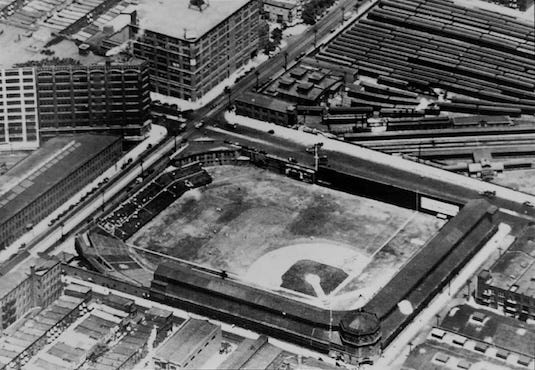
* A dead-ball era power hitter, Cravath the opposite-field-hitting righty hit 78 percent of his lifetime home runs at home, in Baker Bowl:
** The original American Association was formed in 1882 and disbanded in 1891. Four of its franchises joined and survived a downsizing in the National League. You know them today as the Cincinnati Reds, the Los Angeles Dodgers, the Pittsburgh Pirates, and the St. Louis Cardinals. The original AA is recognised officially as having been a major league.
*** Charlie Keller was a great power hitter before he missed a year and a half to wartime service in the merchant marine. He returned to the Yankees in August 1945, according to his Society for American Baseball Research biography, posted a splendid 1946, but suffered a slipped disc in 1947.
Surgery to remove the disc was successful, but Keller was never the same player again: he was never able to play another full season—and never hit more than six home runs in any of his final seasons, including two with the Tigers—before his retirement in 1952.
King Kong bought land for farming, expanded it in due course, and enjoyed the farming life until his death at 73 in 1990.
On going 30-30 in the same game:
Today, I was like, “Man, it's pedal to the metal.” Have some conviction in the swings that you're taking. Don't be afraid to swing and miss kind of stuff. Simple as that really.
—Pete Crow-Armstrong, Cubs center fielder, after his two-bomb, one-steal 30-30 entry Monday.
This might be his best game in the big leagues right here. It was an amazing game.
—Craig Counsell, Cubs manager.
On power hitting in the Dead Ball Era
Short singles are like left-hand jabs in the boxing ring, but a home run is a knock-out punch. It is the clean-up man of the club that does the heavy scoring work even if he is wide in the shoulders and slow on his feet. There is no advice I can give in batting, except to hammer the ball. Some players steal bases with hook slides and speed. I steal bases with my bat.
—Gavy Cravath, whose single-season home run record Babe Ruth broke in 1919.
On Baker Bowl’s uber-short-distance right field wall
That fence isn’t always a friend to the home run slugger. I have hit that fence a good many times with a long drive that would have kept right on for a triple or a home run if the fence hadn’t been there. There are always two sides to every fence.
—Cravath, to Baseball Magazine editor F.C. Lane.
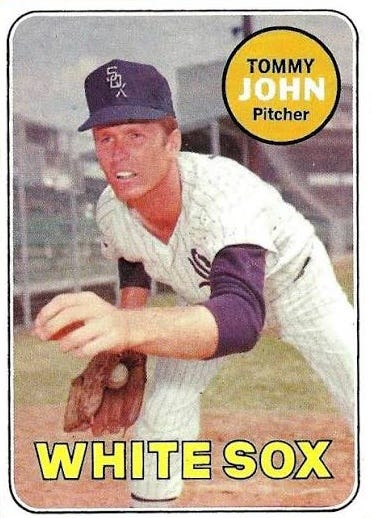
Longtime major league lefthanded pitcher Tommy John died last Saturday at 83, a week after he made a public farewell statement following his entry into hospice care. The first patient for the ulnat collateral ligament replacement surgery that’s borne his name since, John pitched fourteen major league seasons after rehabbing from the procedure.
Here’s the Pitch extends condolences to the John family and offers a few recollections of the brainy southpaw.
On the post-surgery durability of the late Tommy John
[It] wasn’t defined by Ryan-like velocity or anything remotely close to it. To watch John pitch was to wonder how it was possible he could be so good for so long. He didn’t strike out many hitters, and he didn’t move with the easy athleticism you might expect from a basketball prospect out of the Hoosier state, Indiana, who fielded numerous Division I offers.
The sinkerballer instead beat people with his willpower and guile. He became what the Yankees called Sunday “a bedrock of our rotation” and, despite failing to win a World Series ring, finished his career with a record of 6-3 and an ERA of 2.65 in 14 postseason games.
—Ian O’Connor, The Athletic.
On the immediate results
I know they had to give him a new arm. But did they have to give him Sandy Koufax’s?
—Pete Rose, after facing Tommy John post-surgery. (Lifetime, Rose’s slash line against Koufax was .175/.217/.193. Against John: .231/.286/.277.)
When they operated, I told them to put in a [Sandy] Koufax fastball. They did—but it was Mrs. Koufax’s.
—Tommy John.
On the other side of Tommy John’s, shall we say, guile . . .
Tommy John is the elegant Rhett Butler of outlaws. In the fine Whitey Ford tradition of mudballers and scuffballers, the gentlemanly John can turn a tiny scratch into a double play grounder. Asked how many pitches he has, John said, “Four basic ones—fastball, curve, slider, and changeup—plus eight illegal ones.” Then he gave his best Sunday school smile.
—Thomas Boswell, in “Salvation by Salivation,” How Life Imitates the World Series (1982).
That’s much, much more than a real scuffballer would need. God, Gaylord Perry or Tommy John could make this ball sing “The Star Spangled Banner.”
—Mike Flanagan, Orioles pitcher, showing Boswell a fresh ball into which he cut three inch-long scars with a coat hanger’s hook end.
Tommy John and Don Sutton. If anyone can find one smooth ball from that game, he ought to send it to Cooperstown.
—Anonymous scout in the Anaheim Stadium press box, 28 August 1987, after John and Sutton were the starting pitchers for the Yankees and the Angels, a game the Yankees won in eleven innings, 3-2. (Neither pitcher factored in the decision; they both came out with the score tied at two.)
Here’s the Pitch is published daily except Sundays and holidays. Benjamin Chase [gopherben@gmail.com] handles the Monday issue with Dan Freedman [dfreedman@lionsgate.com] editing Tuesday and Jeff Kallman [easyace1955@outlook.com] at the helm Wednesday and Thursday. Original editor Dan Schlossberg [ballauthor@gmail.com], does the weekend editions on Friday and Saturday. Former editor Elizabeth Muratore [nymfan97@gmail.com] is now co-director [with Benjamin Chase and Jonathan Becker] of the Internet Baseball Writers Association of America, which publishes this newsletter and the annual ACTA book of the same name. Readers are encouraged to contribute comments, articles, and letters to the editor. HtP reserves the right to edit for brevity, clarity, and good taste.
No posts
Comments
Nothing yet. Say the first thing.
Sign in to join the conversation.