
The International Academy of Oral Medicine and Toxicology (IAOMT) has released a major new scientific review examining the health effects of root canal treated teeth, a common dental procedure performed on millions of people each year.
The report, titled “State of the Science on Root Canal Treated Teeth (RCTT),” evaluates decades of research and highlights concerns about a substantial and growing body of research examining the relationship between chronic infection in root canal treated teeth and overall health. The review is based on a comprehensive literature search that included over 560 scientific references.
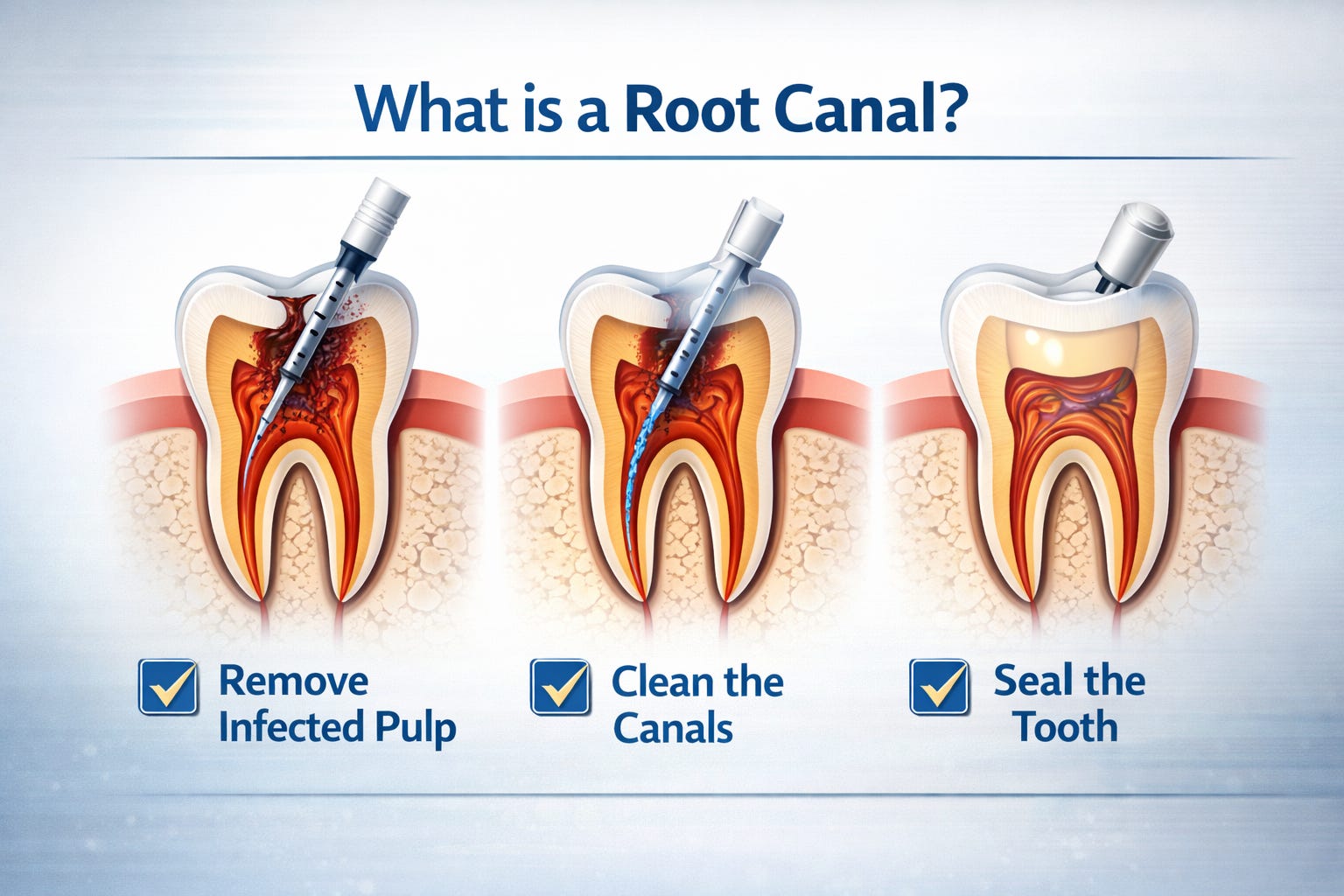
What is a root canal?
A root canal is a dental procedure used to treat an infected or damaged tooth. Dentists remove the inner tissue (often called the “nerve”), clean the inside of the tooth, and seal it to prevent further infection.
What the IAOMT review found
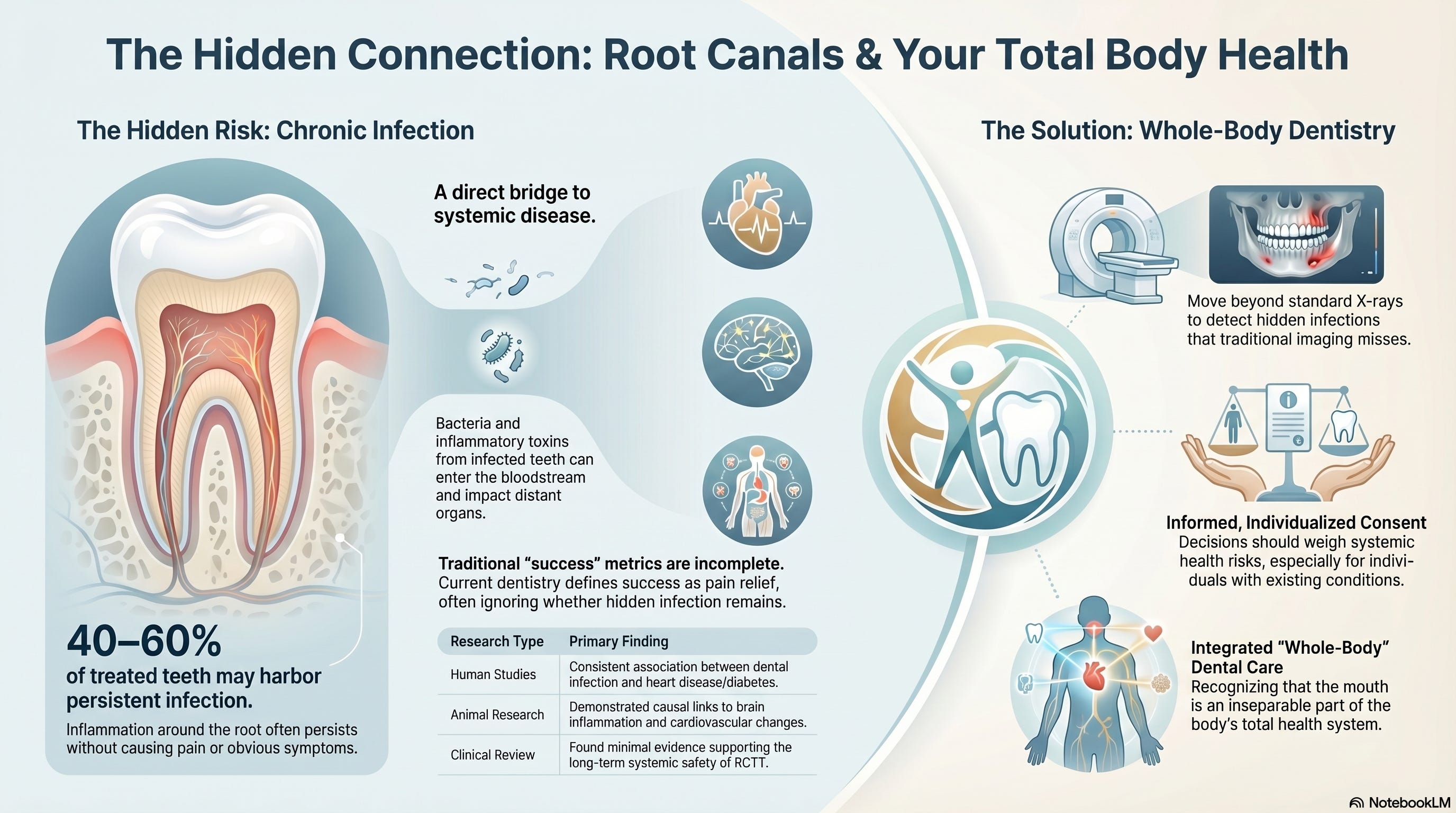
While root canals are widely considered routine and successful, the IAOMT’s review found that many RCTT may still harbor hidden infection. This type of infection often causes no pain or obvious symptoms, meaning patients may not realize it is present. Numerous review papers and epidemiological studies [that- take out this word] consistently show associations between chronic apical periodontitis (CAP), a common condition in RCTT and systemic diseases. While association does not prove causation, the sheer volume and consistency of findings across large populations strengthen concern about potential whole-body effects.
Why this matters for overall health
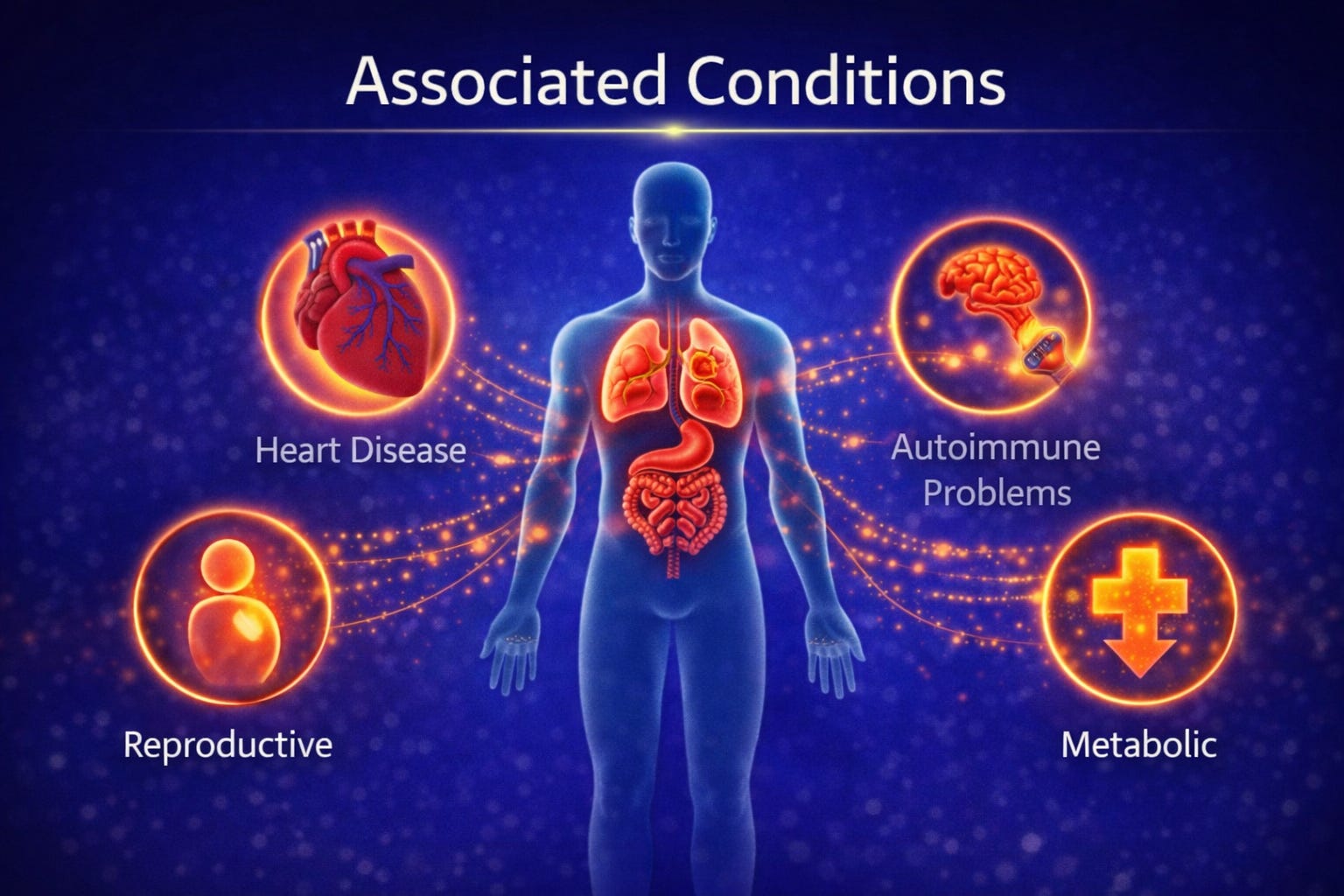
The report highlights a growing body of research suggesting that chronic dental infections may be connected to whole-body health. These include associations with:
Heart disease
Diabetes
Autoimmune conditions
Neurological disorders
Pregnancy complications
Scientists believe this may occur because bacteria and inflammatory toxins from infected teeth can enter the bloodstream and affect other parts of the body.
Very limited evidence supporting long-term safety claims
The IAOMT review found very little high-quality evidence to support the claim that RCTT are universally “safe and effective” from a systemic health perspective.
While root canals may relieve pain and preserve teeth locally, the report notes that existing definitions of “success” in dentistry often focus only on symptoms or tooth retention—not on whether hidden infection persists or how it may affect the rest of the body.
Animal research shows consistent negative health effects
In addition to human studies, the IAOMT evaluated a large body of animal research designed to test cause-and-effect relationships.
According to the report, every animal study identified that used a model of chronic apical periodontitis (the condition commonly associated with RCTT) demonstrated harmful effects on systemic health markers.
These studies showed:
Increased systemic inflammation
Changes in cardiovascular function
Worsening metabolic and diabetic markers
Impacts on brain inflammation and neurological health
Alterations in immune response and gut microbiome
Because animal studies allow for controlled experiments that cannot be ethically performed in humans, they provide important insight into biological plausibility.
A consistent pattern across research types
Taken together, the IAOMT concludes that:
Human studies repeatedly show associations between CAP and systemic disease
Animal studies consistently demonstrate biological plausibility
There is minimal evidence contradicting these concerns
This convergence of evidence suggests that chronic infection associated with RCTT may play a role in systemic inflammation and disease, particularly in susceptible individuals.
Not a simple yes-or-no issue
The IAOMT emphasizes that this is not about labeling all root canals as “good” or “bad.” Instead, the organization calls for a more balanced and informed approach.
“Root canal treatment can relieve pain and save teeth,” the report notes. “However, evidence shows that in many cases, infection may persist and potentially impact systemic health.”
Call for better diagnostics and informed decisions
The IAOMT encourages:
More advanced imaging (such as 3D scans) to detect hidden infections
Greater awareness of individual health risks
Open discussions between patients and dental professionals
Consideration of alternatives, such as tooth extraction in certain cases
A shift toward whole-body dentistry
The IAOMT stresses that oral health should not be viewed in isolation.
“The mouth is connected to the rest of the body,” the report concludes, urging a more integrated approach that considers both dental and overall health when making treatment decisions.
About IAOMT
The International Academy of Oral Medicine and Toxicology (IAOMT) is a global network of dentists, physicians, and researchers dedicated to advancing safe, science-based dental care that promotes whole-body health.
Comments
Nothing yet. Say the first thing.
Sign in to join the conversation.