
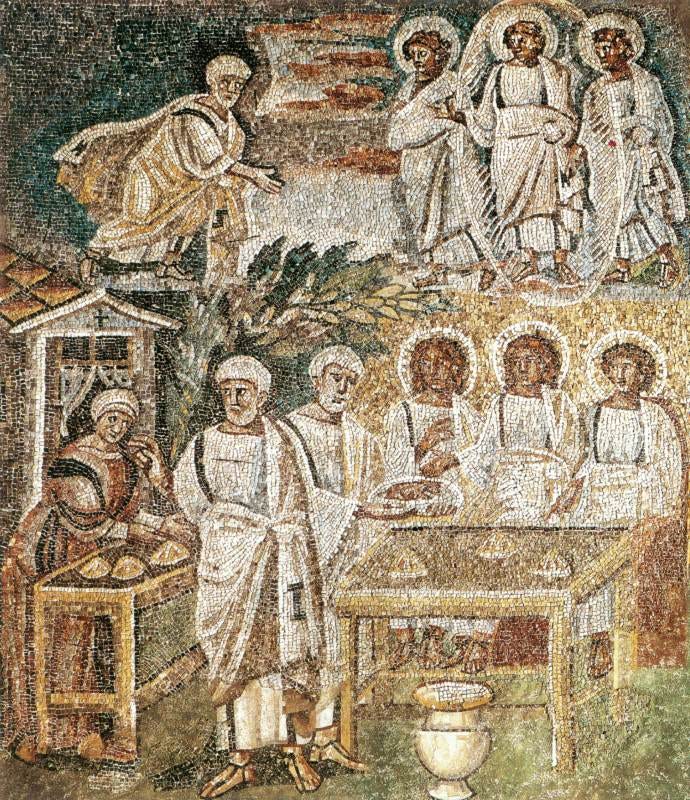
A classic experiment by David Topper and William Simpson (“Depth perception in linear and inverse perspective pictures,” Perception, 1981) made a very useful demonstration: by viewing a fifth century mosaic utilizing “inverse perspective,” and inspecting it in Richard Gregory’s “Pandora’s box” (a device for marking perceived depth) they were able to show that perceivers see depth even in non-perspectival pictures. Although somewhat obvious, the demonstration was worth making because even Ernst Gombrich – as reported in the article – predicted that in that case such an image would be “read,” not “seen.”
This experiment is highly useful for dispelling the presumption that only perspectival pictures yield a sense of depth and I have cited it in my work. However, it may also be used for examining symptoms it reveals of the equivalence of “seeing depth” and “seeing pictures.” The authors mention an experiment (unpublished) by J. J. Gibson in which a third of subjects who viewed a photograph of a hallway through a pinhole regarded the photo to be the actual corridor. They are anxious to criticize Nelson Goodman’s admittedly implausible theory that there is no relationship between resemblance and pictorial reality.
However, the trompe l’oeil example goes too far. They conclude “at least in the case of peephole trompe l’oeil, we do not read but instead perceive depth in pictures.” A small library exists on this topic, associated with the philosopher Richard Wollheim, that points to the fact that a trompe l’oeil – especially in Gibson’s condition (that is, unreported as photograph) should not properly be called a representation, a picture, at all.
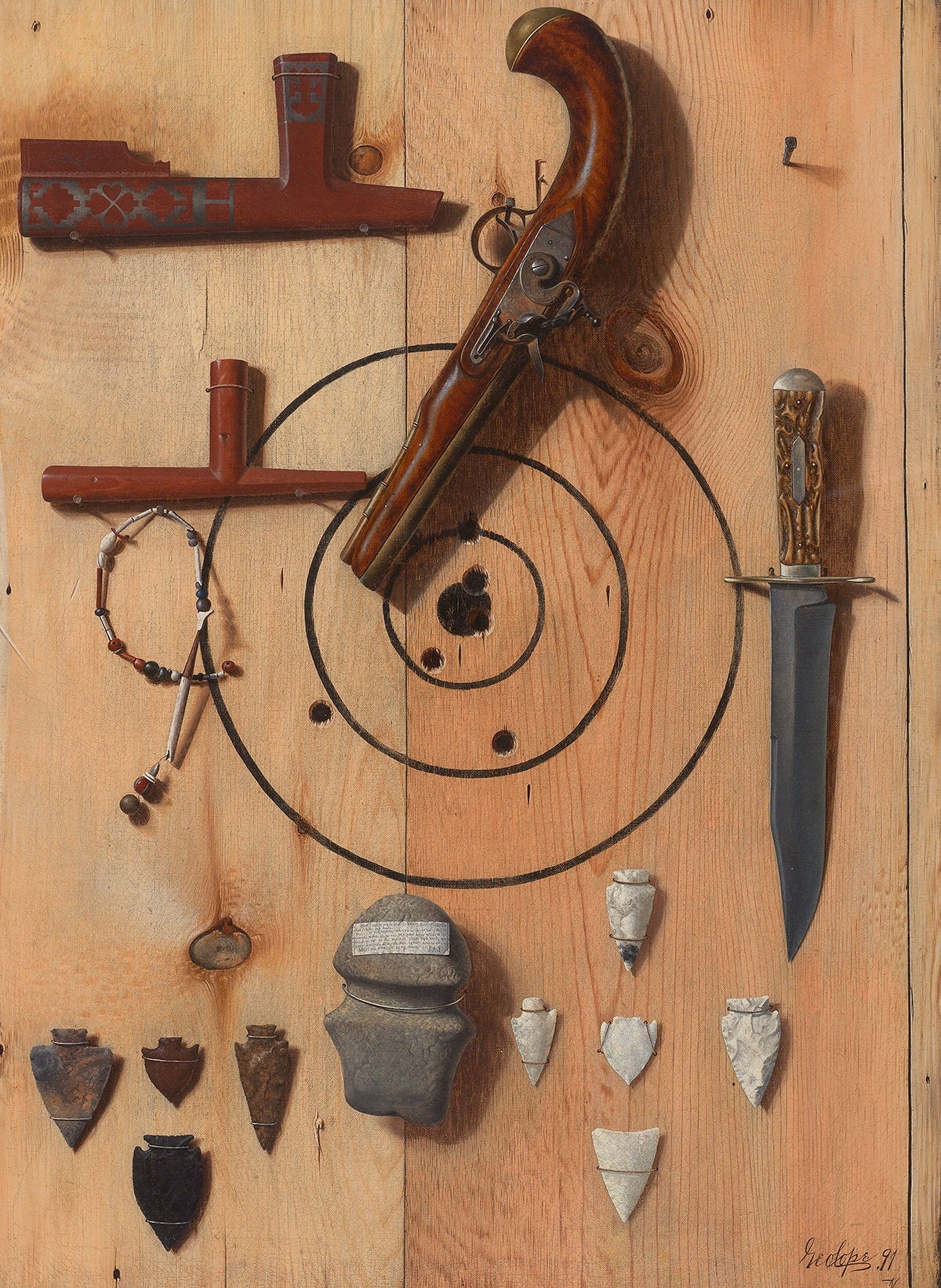
We can construct a mental exercise. Say grandmother happened to own an old trompe l’oeil painting and kept it in a locked wardrobe. As a child you could see some kind of bulletin board with papers pinned to it (as is common in this genre) through the keyhole. But you never knew that it was a painting. Then, the wardrobe was gone one day, with no explanation of it or its contents. Effectively, the painting – unknown as such – was not really a picture to you, not a representation or pictorial sign. In fact, without being told otherwise you would never even begin to associate that experience with pictoriality at all.
This is the problem with associating vivid experiences with picture perception, because when those perceptions are too good, too real, they stop being pictorial experiences at all. It is the fatal flaw of “resemblance” theories of pictorial representation, where brute recognition is supposed to bootstrap pictorial understanding. But it can be seen quickly that just because one recognizes an object does not mean that one is responding to the object as picture.
This explains incidentally why Pliny’s story of Zeuxis and Parrhasius is such a terrible paradigm for pictorial art. According to the account, the ancient Greek artist Zeuxis so successfully painted a bowl of grapes that birds came to peck at it. But Parrhasius had outdone him. When Zeuxis walked over to pull back the curtain over the painting, it was revealed that it was a painted curtain, and Zeuxis realized he had been beaten. Although I am sometimes deflated by some of his pronouncements, W. J. T. Mitchell is completely correct when he writes, “When a duck responds to a decoy, or when the birds peck at the grapes in the legendary paintings of Zeuxis, they are not seeing images: they are seeing other ducks, or real grapes—the things themselves, and not images of the things” (p. 17).
This discussion is part of a bigger problem of distinguishing object recognition from pictorial recognition, and related to Arthur Danto’s disputable contention that there is a “pigeon within us all,” that is, pictorial abilities that are unlearned and cross-species.
No posts
Comments
Nothing yet. Say the first thing.
Sign in to join the conversation.