
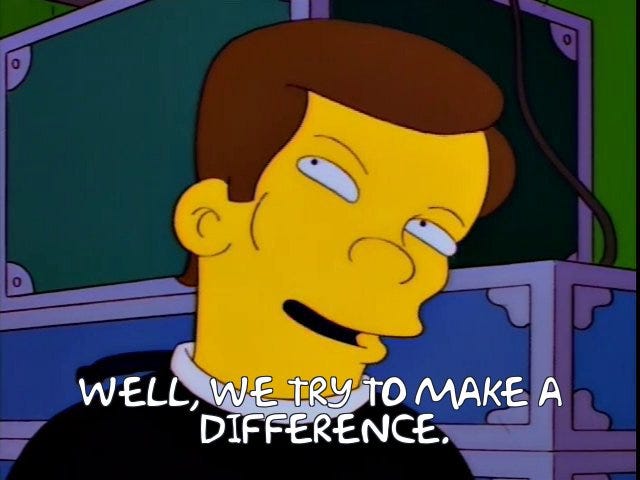
It’s rare to have my two careers overlap but there was a very specific day in 2017 when my afternoon schedule looked something like this:
11:00 - session with [redacted]
12:00 - lunch
12:30 - interview with Billy Corgan
2:00 - session with [redacted]
This was back when I was, more or less, a solo practitioner and could thus put a “do not disturb” note on my door as if I was working on expense reports or whatever, as opposed to my side job on company time. I also did a Zoom interview with Bright Eyes while sitting in the supply closet during this time as well. I share an office with seven other people now, so it’s not even something I could do even if I wanted to.
Anyways, what album found one of my boyhood musical idols in a diminished enough state to be available for an interview? That would be Oglilala; the only things I remember about it were that it was mostly piano and Rick Rubin produced it. These are not things you want from a Billy Corgan solo album, if you even want a Billy Corgan solo album to begin with. What I do remember is that Billy, or..sorry, William Corgan was particularly interested in setting the record straight with Spin about their review of Adore. Amongst other things.
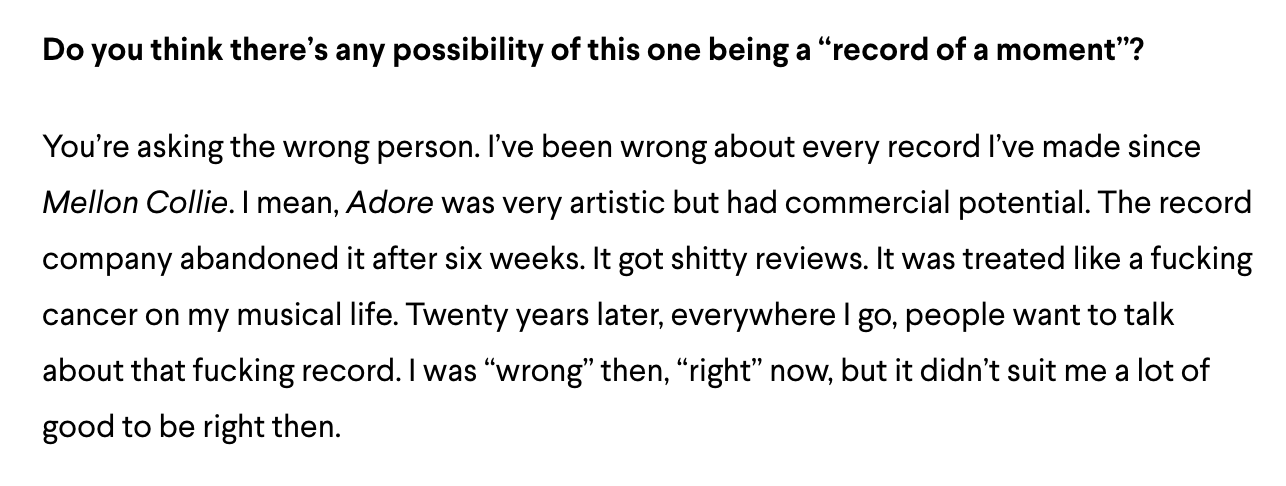
The last time I had a subject immediately attack the publication that set up the interview was Gene Simmons, back when I, for reasons that escape me, covered the opening of his Rock and Brews restaurant in Long Beach for Rolling Stone in 2012. Or, more accurately…
PR person: Gene, this is Ian from Rolling Stone.
Gene Simmons [in the most dismissive tone anyone has mustered in the entirety of human existence]: Rolling Stone dot com.
I gotta hand it to him, this was the most savage half a bar I’ve ever received in my life. That whole piece was bizarre in 2012 - we all did the Pledge of Allegiance before eating and did a “thank you for your service” to military personnel in attendance - but it’s one of the most prescient pieces of proto-MAGA journalism you’ll ever read.
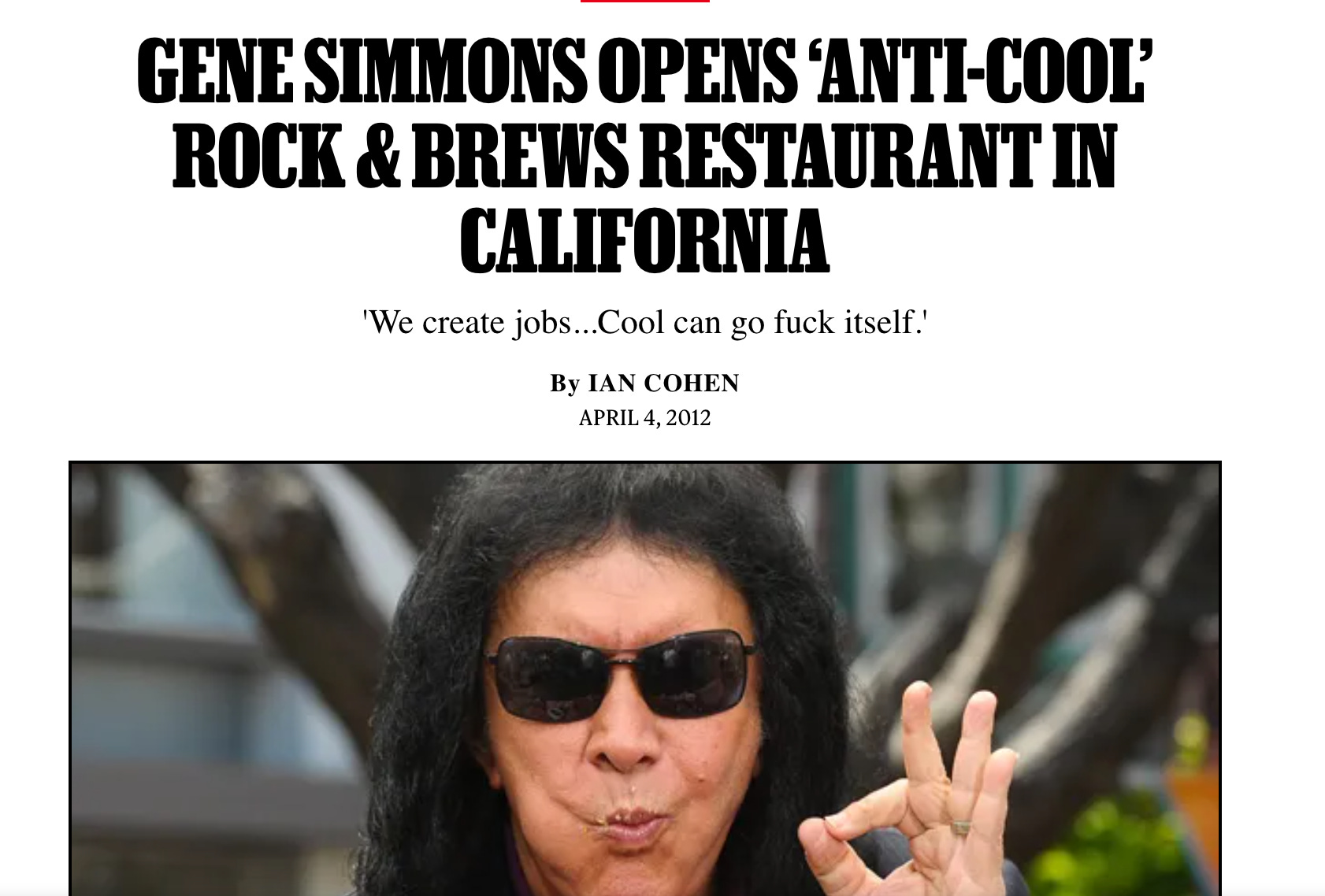
Anyways, interviewing Billy Corgan wasn’t a source of anxiety because he’s…you know, the guy who made Siamese Dream and Mellon Collie and the Infinite Sadness and essentially set my life’s course upon seeing “Cherub Rock” on MTV. Rather, it’s because I knew damn well he liked to push back and needle his interviewers, which made him one of the rare musicians who were harder to talk to than your typical dietary patient.
That’s something few of my IRL coworkers understand - I’ve interviewed Snoop Dogg, Weezer, Migos, Jimmy Eat World, Deftones, guys that even normies can recognize, and it’s usually a breeze. We both want the same thing - a good story and minimal hassle. They might not be super stoked to talk to, say, Rolling Stone dot com, but they recognize that it’s going to help them 99.99% of the time.
This realization did not come easy. When I got promoted to staff writer at Pitchfork in 2012, I figured I was just going to double my output of reviews for Wavves side projects and Here We Go Magic. I wasn’t aware that interviews were going to be a part of the gig; I hadn’t really done any before, even though I have vague (and unconfirmed) memories of talking to Bubba Sparxx and Ice Cube for PopMatters. Why would Ice Cube be talking to PopMatters in 2006 is beyond me. Either way, my first assignment was talking to Liars about their new album WIXIW. I had enjoyed all of their albums to various degrees without loving them and all I really knew about the band itself is that they looked incredibly scary and, based on Sisterworld, they hated Los Angeles even though they lived there. I went to see them at a studio that was under the 101 freeway in what they described as a “rough part of L.A.” No, it wasn’t NE of Compton.
And yeah, Angus Andrew is an Australian dude who looks sorta like Andrew W.K. stretched to 6’8” and, looking back on the piece that eventually got published, I had completely forgotten about this:
Between offering me a drink and saying maybe five words, drummer Julian Gross doodled severed arms and a disembodied fist hitting someone's face during our talk.
What I mostly remember is that we talked about the Clippers. A lot. Which not only gave me a huge sigh of relief during what was previously a nerve-wracking proposition, but also set off a weird mini-trend where I talked to Oneohtrix Point Never, Band of Horses, Slim Thug and freakin’ Polvo about basketball for Grantland.
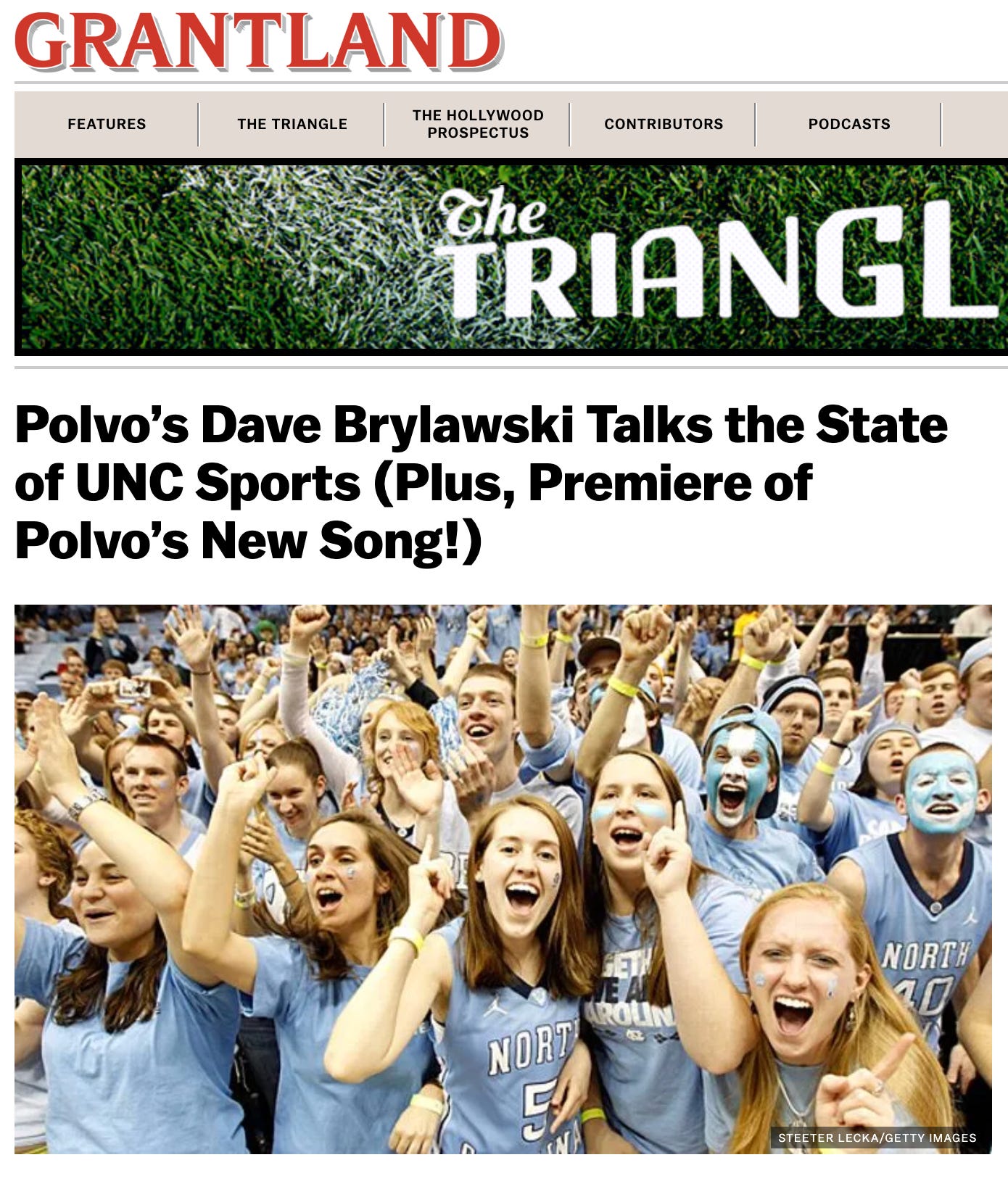
(Take a good look at the above picture. This is what peak pop culture media looks like.)
The bigger outcome is that it forced me to really dig into WIXIW, which I had never done with a Liars album before then. And maybe that’s why I’d put it higher than most Liars Day Ones would, but it also had the effect of encouraging me to work backwards and learn to appreciate the entire Liars Experience.
I don’t know if I would call Liars “underrated” at this point, since the music they’ve put out since 2014 their least compelling. And they were loudly celebrated during their peak. For at least a decade, Liars somehow found themselves at the center of whatever discussion was happening: when nothing else but dance-punk mattered in New York City, they were there. No one would call Liars “freak-folk,” but just go back to the music they made from 2004 to 2006 and tell me “percussive albums about witches and mountains” doesn’t fit the description. There was a massive left-turn towards smart-dumb garage rock album during that brief time when King Khan and Black Lips made Pitchfork year-end lists and during the GADPY peak of mainstream indie, Liars released their most accessible album, one that I remember seeing them perform at an Urban Outfitters. And when Grizzly Bear, Dirty Projectors et al. were making their albums that dovetailed with Big Indie’s shift away from the previous decade’s aesthetics, Liars made WIXIW, which, like Shields and Swing Lo Magellan was given a more muted reception than what came before and probably better than you remember.
They aren’t a band I love nearly as much as, say, Joyce Manor. I can’t remember having any profound emotional reactions to their music or even really sussing out what any of their songs are about - listen to “They Don’t Want Your Corn, They Want Your Kids” and thinking, “man… ‘Maps’ is about this guy.” I get some Liars-type energy from Mandy, Indiana but can’t think of too many contemporary acts that have been so reliably unreliable from album to album.
Comments
Nothing yet. Say the first thing.
Sign in to join the conversation.