
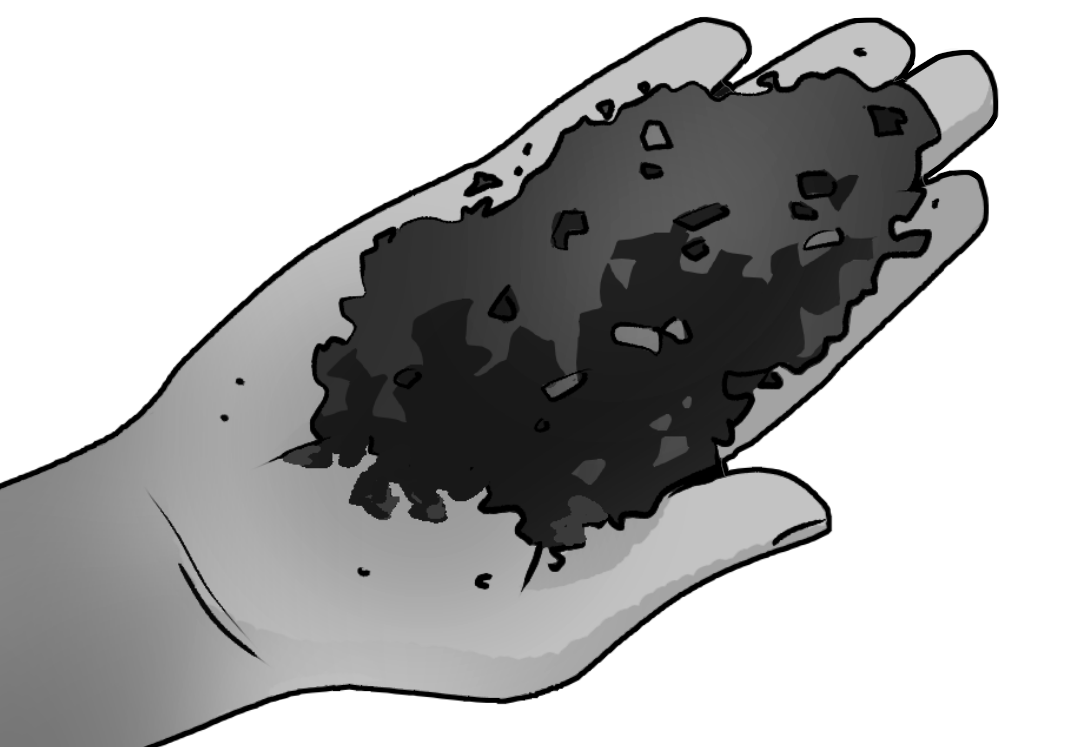
Biochar looks like charcoal, feels like charcoal and tastes (probably), like charcoal. Both are products of organic material, but the key difference lies in their duration under pyrolysis (explained later). This process, although now conducted commercially, has ancient roots. Indigenous Amazon basin populations burnt organic matter, mixing the resulting charred biomass into the soil to create nutrient-rich 'terra preta,' or 'dark earth,' thus boosting crop growth.
Whilst it is unlikely these ancient biochar adopters had the chemical understanding of its benefits, we now know that biochar significantly enhances soil health by increasing soil carbon content that in turn improves water retention, soil stability, homes for microbial life and other numerous advantages.
While biochar isn't suitable for all soils (warning to home gardeners!), it can significantly enhance degraded soils when appropriately applied under optimal conditions, broadly speaking. Furthermore, its affordability and the potential for large-scale production could make it a game-changer for subsistence farmers in less affluent nations such as Tanzania, where its benefits could have a profound and positive impact.
While the technology of biochar for carbon sequestration might seem modern, the concept of enriching soil with charred biomass traces back millennia. Around 2,500 thousand years ago, indigenous populations of the Amazon basis created biochar through a ‘slash and char’ technique. Distinct from 'slash and burn', these early techniques entailed partially burning felled biomass, then incorporating the residual matter into the soil to boost its fertility. The addition of carbon and other nutrients darkened the soils so significantly, it captured the attention of early European explorers. Char infused soils was eventually dubbed ‘terra preta’ by the Portuguese, which translates to ‘dark earth’ (hence our companies name!).
It remains ambiguous whether the formation of these soils was intentional or merely a side-effect of early land clearing. Yet, it is indisputable that the fertility of terra preta is worlds apart when compared to the typical nutrient-deprived soils of the Amazon. Today, there has been a resurgent interest in biochar. Its benefits are now scientifically substantiated and technology has advanced enough to facilitate commercial-scale production.
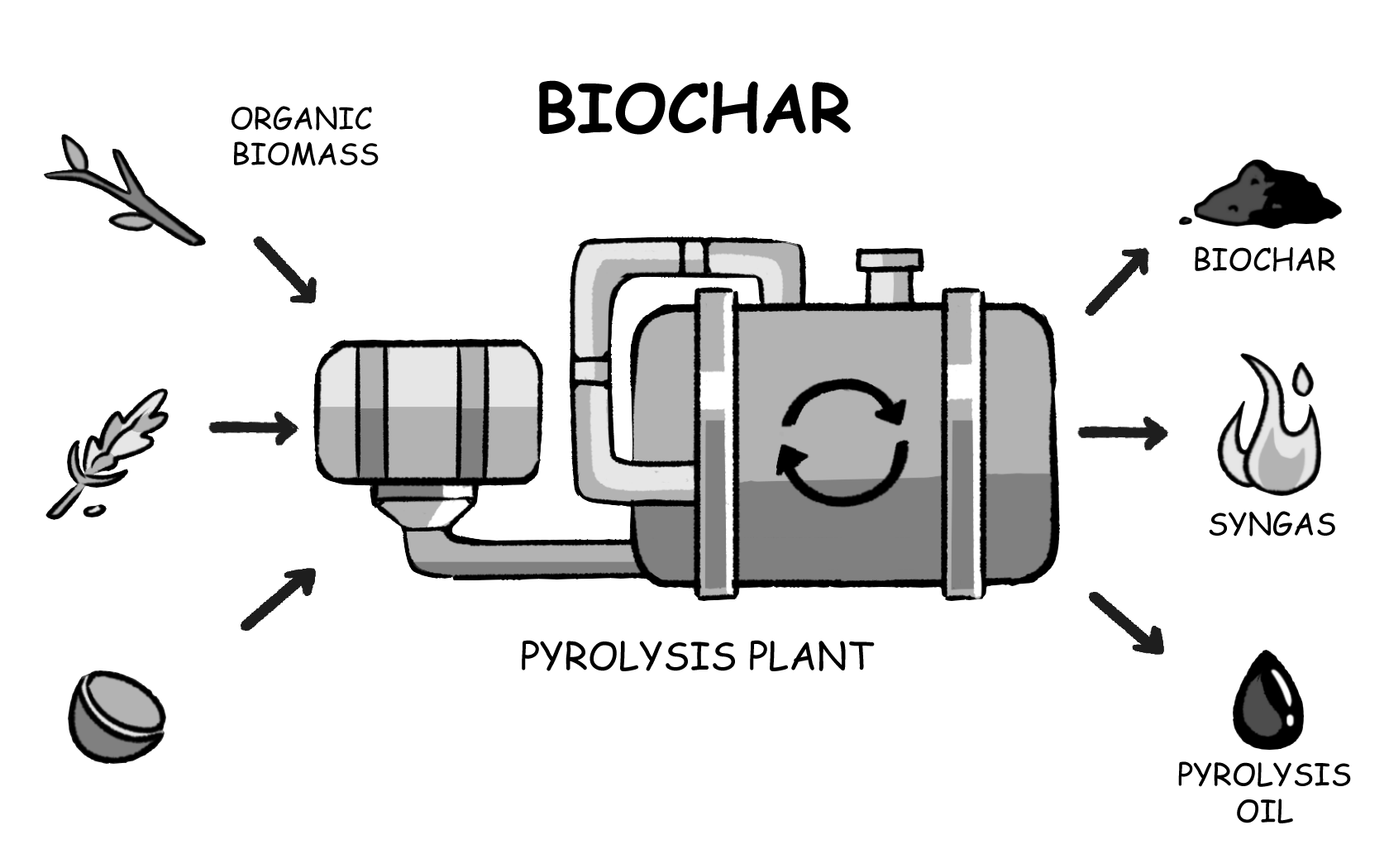
Both charcoal and biochar are created by burning organic material, such as timber cuttings or maize stalks, at a high temperature and in the absence of oxygen. This process is known as pyrolysis and depending how long the biomass spends in pyrolysis determines whether it becomes biochar or charcoal.
To create biochar, biomass must be in pyrolysis for a long time so all the volatile compounds (like gases and tar) contained are burnt off. Given the absence of combustion, no carbon dioxide is released with the resulting biochar being lightweight, black and typically granular. It is extraordinarily rich in carbon which comprises about 70% of its weight, and does not combust easily. In charcoal production, the pyrolysis process is halted prematurely, leaving volatile compounds intact, which enhances its utility for BBQing
Below is an example of the pyrolysis process, and how we’ll be making biochar at Dark Earth Carbon. We aggregate biomass from local sustainable sources, shred it, and heat up in the reactor. The syngas produced will be captured as a fuel source for future cycles, whilst the pyrolysis oil and biochar will be stored.
Whilst the above is indicative of a commercial scale operation, individuals can also make biochar via ‘kilns, drums and ‘buried fires’ at home. The quality, of course, will vary greatly without the necessary temperature or measurement controls.
Biochar significantly enhances soil health by modifying its physical and biochemical properties. It’s highly porous nature bolsters the soil's capacity to hold water and essential nutrients, thus reducing the need for frequent irrigation and fertilisation. By fostering a conducive environment for soil microorganisms like mycorrhizal fungi, biochar enhances soil biodiversity which is critical in nutrient cycling and thwarting soil-borne diseases. Additionally, biochar reduces soil acidity which can promote certain plant growth, and due to its stability nature, its slow breakdown will provide the above mentioned benefits for century long periods.
In countries like Tanzania, intensive farming practices and inadequate nutrient replenishment have severely degraded agricultural soils. This issue is magnified by soil erosion driven by deforestation and overgrazing. Factors such as shifting rainfall patterns and a lack of knowledge about synthetic fertiliser application further accelerate soil degradation. With proper application, biochar could become a crucial tool for restoring these soils. This restoration will lead to increased and more consistent crop yields, enhancing the economic stability of farmers.

Working out the optimal use of biochar involves a variety of factors so there is no ‘one size fits all’ approach with regards to application. Yet due to biochar’s incredible chemical and physical stability, if correctly applied, it only needs to be refreshed every few centuries.
Before being introduced to the soil, it's recommended that biochar be preconditioned, or 'charged', by bathing it in a solution rich in nutrients. To further enhance its benefits, biochar can be enriched with a suitable fertiliser, organic or otherwise. The decision to spread the biochar across the soil's surface or to till it into the ground is dictated by whichever approach better prevents losses to wind or water erosion. And to further turbo charge the benefits of biochar it’s best to apply ahead of crop planting.
Finally, though the precise quantity of biochar varies based on factors such as soil type and acidity, as well as the specific goals for soil improvement, a usual range is from 1 to 10 tons per acre. As such, for those home gardeners reading this, it’s best to do your homework here before applying to your own garden!
From ancient Amazonian practices to modern soil management, biochar's rich carbon content and soil enhancing properties offer a promising solution for restoring degraded soils. The benefits are amplified in poor countries like Tanzania, where much of the agricultural soil has been degraded. While biochar may not be universally applicable, its potential benefits, when utilised correctly, can lead to improved crop yields, soil health, and farmer livelihoods.
No posts
Comments
Nothing yet. Say the first thing.
Sign in to join the conversation.