
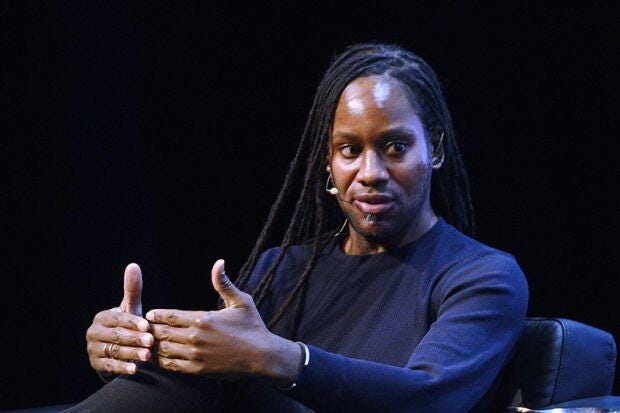
I recently wrote about Jason Arday because the controversy surrounding him had grown into something larger than one Cambridge professor. Celebrated in 2023 as Cambridge’s youngest Black professor, Arday later faced allegations and questions about his doctoral thesis, research publications, qualifications, honorary appointments, and elements of the extraordinary public biography that accompanied his rise.
He denied plagiarism while acknowledging errors in his work. Liverpool John Moores University did not uphold the allegations concerning his thesis, and Cambridge initially characterized the claims against him as a campaign to undermine his credibility before later opening inquiries into new information. His case also became entangled with broader arguments about race, diversity, and academic standards.
On Aug. 14, nine days after his Aug. 5 resignation, Arday was found dead at 41. Police said his death was being treated as unexpected and was not believed to be suspicious. His family said that a campaign of misinformation and harassment had become too much for him. In his resignation statement, Arday said the years since his Cambridge appointment had been marked by an “unrelenting level of public scrutiny and personal attack,” and that the accusations and commentary had taken a profound toll on him and those he loved. The terms of the controversy changed immediately. The unresolved questions did not disappear, but the man at their center could no longer answer them.
There is a natural human reluctance to continue scrutinizing someone who has died. Questions that seemed appropriate during an employment investigation can sound needlessly cruel once the person can no longer respond. But compassion should not do the work of evidence, any more than death should justify an endless excavation of a person’s life. The task is to preserve legitimate inquiry without turning it into humiliation.
That becomes easier to understand once we ask what an academic investigation is actually for. One purpose is disciplinary: determining whether a scholar committed misconduct and what professional consequences should follow. Another is protecting the reliability of the scholarly record. The disciplinary purpose largely disappears when the scholar dies. The obligation to establish and correct the record does not.
Arday’s death does not erase his published work, his doctoral thesis, or the institutional records surrounding his appointment. If a passage was inadequately attributed or a published account contains unresolved inconsistencies, those facts remain available for examination. What has changed is our ability to move from what the surviving evidence shows to confident conclusions about why it happened.
Arday cannot locate an old record, reconstruct a conversation with a supervisor, explain a disputed quotation, identify an editing mistake, or challenge an investigator’s interpretation of his intent. Inadequate attribution may establish an error without establishing intention; inconsistencies in research data may reveal a problem without establishing its cause. His death therefore does not weaken the documentary record. It limits our ability to hear the explanation of the person whose conduct is being interpreted.
That should alter the direction of the inquiry. Examination of Arday’s individual conduct may still be necessary where it bears on the reliability of scholarship or the accuracy of the institutional record. But there is little purpose now in accumulating accusations merely to arrive at a final public judgment on a man who cannot answer them. The more consequential questions concern institutions that remain capable of explaining what they did and correcting what may have gone wrong.
Cambridge can determine what it knew before appointing Arday, what it independently verified, what information it received from previous institutions and how it responded when concerns were raised. Liverpool John Moores can clarify the scope and reasoning of its earlier examination of the thesis allegations. Journals can review whether published work requires correction, clarification, an expression of concern or some other editorial action. Publishers can explain what verification standards they used when presenting biographical claims. These are not substitutes for determining what happened. They are part of determining what happened.
Cambridge had already begun moving toward that broader institutional inquiry before Arday died. On Aug. 12, Vice-Chancellor Deborah Prentice announced a review of the circumstances surrounding his appointment and his time at Cambridge, to be conducted by senior academics from within and beyond the university. The findings were also intended to inform a wider review of Cambridge’s procedures for senior academic appointments. Arday’s death makes that institutional part of the inquiry more important, not less.
We often use “accountability” as though it means identifying a culprit and imposing a penalty. Institutions have another responsibility: to discover how their own systems performed and correct them when necessary. If Cambridge’s procedures were sound, an honest inquiry should establish that. If they were not, it should establish that too. The same commitment to accuracy should govern Liverpool John Moores’s prior findings and any remaining allegations under examination. Claims that fail should be corrected as readily as those that survive scrutiny are substantiated.
Journalism faces a similar change in responsibility. There was a legitimate public interest in investigating a celebrated Cambridge professor whose academic record and biography had become matters of controversy. That does not mean every disputed detail of his life remains equally worthy of investigation after his death. Whether Cambridge adequately verified a senior professorial appointment has consequences for future appointments. Whether published scholarship requires correction has consequences for future researchers. Whether every contested claim in Arday’s public biography can now be resolved has much less bearing on anything that can still be repaired.
This is where the distinction between truth and public importance matters. A fact does not become false because pursuing it would be cruel. But neither does the mere existence of a potentially discoverable fact tell us how much public attention it deserves.
The circumstances of Arday’s death make that restraint especially important. His family’s account of misinformation, harassment and sustained abuse deserves to be heard with seriousness and humanity. It does not establish that a particular journalist, critic, university decision or controversy caused his death. Police have said only that the death was unexpected and was not believed to be suspicious. Compassion requires that we take the suffering surrounding his final days seriously without turning grief into a causal conclusion the available evidence has not established.
What remains most consequential now is the conduct of the living institutions around him. They will continue appointing scholars, publishing research, assessing allegations and making decisions that affect people who had nothing to do with Jason Arday.
His death should therefore change the inquiry without ending it. It should make the inquiry less personal, more exacting about what surviving evidence can establish and more concerned with what can still be corrected. That seems to me a better way to respect both the dead and the truth: stop asking a man who can no longer answer to carry the whole controversy, and start asking the living institutions around him the questions they can still answer.
Comments
Nothing yet. Say the first thing.
Sign in to join the conversation.