
The modern world largely runs on what we might call the Novelty Economy.
New books.
New shows.
New apps.
New hobbies.
New products.
New destinations.
New planners.
New systems.
New information.
Novelty has value because it captures attention.
But there is another economy, one that most living things seem to understand instinctively.
Salmon return to the same streams.
Swallows return to the same barns.
Monarchs return to the same forests.
People return to favorite fishing holes, old cabins, neighborhood parks, family recipes, well-worn Bibles, beloved novels, and songs they have known for decades.
Nothing about these returns is “new.”
Yet they somehow become richer every year.
Memories are strongly connected to context.
Returning to the same chair...
the same walking trail...
the same notebook...
the same course...
the same mug...
helps reactivate previous learning.
You’re not starting over.
Your brain quickly retrieves the network already associated with that place or object.
In a sense, your environment becomes an external memory system.
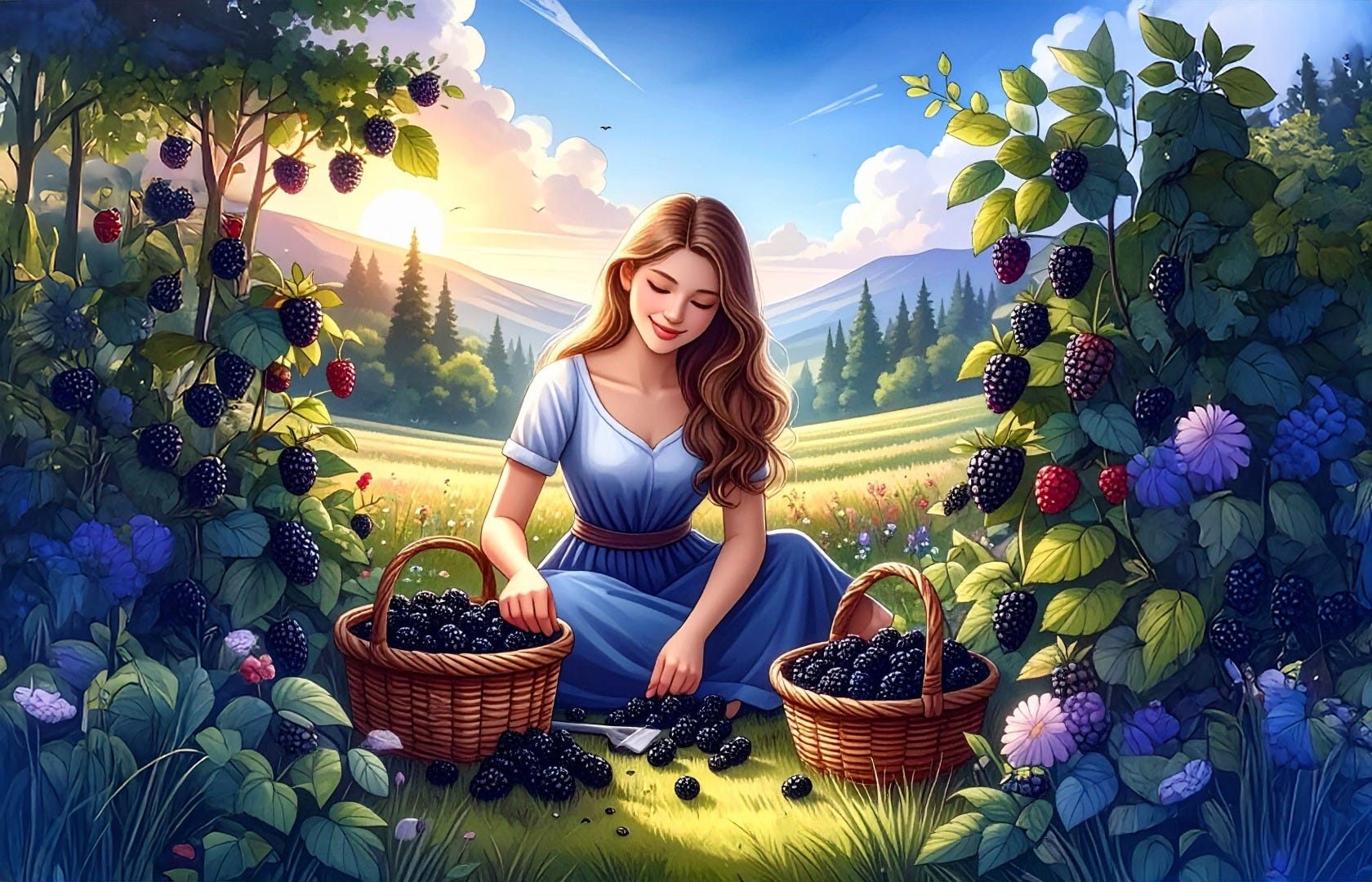
Imagine two people.
One spends twenty years searching for beautiful places.
The other spends twenty years returning to one meadow.
The first has accumulated photographs.
The second has accumulated relationship.
She knows where the first violets appear.
She notices when one oak finally loses a great limb.
She remembers the year the creek flooded.
She knows where the wrens prefer to nest.
She recognizes which blackberry patch fruits first.
The meadow has become layered.
It now contains years, not merely scenery.
Its value did not come from novelty.
Its value came from return.
That is the Return Economy.
Time itself becomes the currency.

I think this is why children often love repetition in ways adults forget.
The same bedtime story.
The same blanket.
The same stuffed rabbit.
The same swing.
The same path through the woods.
Adults sometimes assume children lack imagination because they ask for the same thing again and again.
Perhaps they are doing something wiser.
Perhaps they are investing.
Each return adds another invisible layer.
🚶🏻♂️🌿🚶🏾🌿🚶♂️
Robin Wall Kimmerer writes beautifully about gifts creating relationships rather than transactions. A gift is not merely exchanged; it draws people into mutual care. I think repeated returns do something similar with places and practices. They transform use into relationship.
The walking trail is no longer merely a trail.
It begins recognizing you.
Of course, not literally—but psychologically, it begins carrying your memories. Your mind no longer enters an anonymous place. It enters a place already full of previous mornings, previous birdsongs, previous recoveries, previous questions.
The trail has become a keeper of your life.
🚶🏻♂️🌿🚶🏾🌿🚶♂️
I think there is another difference between these two economies.
The Novelty Economy asks,
“What else is out there?”
The Return Economy asks,
“What part of ME is HERE?”
Those questions lead in entirely different directions.
One keeps moving outward.
The other keeps deepening.
A maple tree doesn’t become valuable because it grows somewhere else every spring.
It becomes valuable because it remains.
Every year another ring.
Every year another nesting cavity.
Every year a little more shade.
Every year a little more moss.
The tree participates in the Return Economy.
So does an old friendship.
So does a favorite mug.
So does Scripture read for the thousandth time.
So does your German notebook.
So does your Harvest Journal.
So does your daily morning practice.
Each revisit deposits another ring.
Your brain is constantly predicting what comes next.
When environments become familiar, prediction becomes easier.
Less prediction error means less unnecessary vigilance.
The brain spends fewer resources figuring out whether the environment is safe, leaving more capacity for curiosity, enjoyment, creativity, and learning.
Familiarity literally reduces cognitive load.
🚶🏻♂️🌿🚶🏾🌿🚶♂️
Imagine visiting a botanical garden once.
It might be beautiful. You may experience peace.
Now imagine becoming one of its volunteer gardeners.
Every week you return.
You recognize the benches.
The roses have opened.
The oak has dropped acorns.
The pond has ducklings now.
Eventually...
the garden becomes part of your identity.
Nothing dramatic happened.
You simply kept returning.
Our minds seem to work the same way.
Places, books, projects, walking routes, hobbies, favorite teachers, recurring notebooks, familiar music, and even recurring questions slowly become psychological places.
Each return requires less effort than beginning somewhere entirely new.
Instead of asking,
“What should I do today?”
your mind begins asking,
“Which familiar place shall I visit today?”
That question feels profoundly different.
One creates pressure.
The other creates belonging.
Perhaps home is not merely where we live.
Perhaps home is wherever we have accumulated enough gentle returns.
Researchers studying place attachment have found that repeated interaction with places contributes to identity.
Usually they study neighborhoods or parks.
But I think the same principle applies to activity spaces.
A favorite audiobook series.
A long-term language notebook.
A particular exercise routine.
A cross-stitch project.
A recurring pattern.
These become psychological “spaces” you inhabit repeatedly.
🚶🏻♂️🌿🚶🏾🌿🚶♂️
Survival often forces constant novelty: every day brings a new crisis, a new interruption, a new place to adapt.
Living, by contrast, allows accumulation. It lets places, practices, and projects deepen over months and years until they become a kind of experiential homeland.
Home, in this sense, is not only a location—it is the growing confidence that tomorrow will include familiar places where part of your life is already waiting for you.
🚶🏻♂️🌿🚶🏾🌿🚶♂️
I wonder if this is one reason survival often feels so exhausting.
Trauma, instability, and frequent disruption force us into the Novelty Economy—not because we want novelty, but because continuity keeps breaking.
Every move.
Every lost possession.
Every interrupted project.
Every changed schedule.
Every crisis demands starting over.
But healing often looks surprisingly ordinary.
Not dramatic transformation.
Simply being able to return.
To the same chair.
The same notebook.
The same walking route.
The same project.
Eventually these become a kind of homeland.
Imagine two gardens.
One is planted differently every week.
Nothing has time to mature.
The other receives the same gardener year after year.
The gardener kneels in the same places.
The same robin watches.
The same stone slowly sinks into the moss.
The gardener notices that the peonies bloom three days earlier than they did ten years ago.
The garden has become thick with memory.
Nothing spectacular happened.
The richness accumulated because someone kept coming back.
Perhaps that is the deepest wealth of the Return Economy.
Not that we own more.
Not even that we know more.
But that more and more of our world begins to know us.
No posts
Comments
Nothing yet. Say the first thing.
Sign in to join the conversation.