
Have you ever realized that you’ve walked the same path dozens of times without really knowing it?
You know how to get there. You know roughly what it looks like. But if someone asked what has changed since last week, where the first spring wildflowers appear, which tree turns color first in autumn, or where the robins usually gather after a rain, you might not know.
Many of us spend our lives moving through places without ever truly inhabiting them.
We become experts at getting somewhere.
Less often do we become experts at being somewhere.
That quiet difference has become one of my favorite things to explore.
To inhabit is more than simply occupying a place.
It means developing a relationship with it.
Visitors notice what is interesting.
Inhabitants notice what is familiar.
Visitors see what is there.
Inhabitants remember what was there yesterday.
Visitors collect destinations.
Inhabitants collect relationships.
Every return adds another layer of familiarity.
Another memory.
Another comparison.
Another small discovery.
Eventually, a place begins to feel less like scenery and more like part of your life story.
Many people spend years looking for extraordinary places.
There is certainly joy in travel and discovery.
But inhabiting suggests something almost opposite.
Instead of asking,
“Where should I go next?”
we begin asking,
“What have I not yet noticed, right here?”
That simple shift changes everything.
The familiar sidewalk becomes a changing landscape.
The neighborhood park becomes a living calendar.
The tree outside your window becomes an old acquaintance.
Your backyard develops seasons, personalities, rhythms, and surprises.
Nothing about the place changed.
Your relationship with it did.
Researchers have found that our brains build cognitive maps—rich internal representations of places we know well.
As these maps become stronger, navigating requires less mental effort. Instead of focusing on “Where am I?” your attention becomes available for something else.
You begin noticing birdsong.
Patterns of light.
Small seasonal changes.
Subtle movement.
The unexpected mushroom after a rain.
Repeated familiarity doesn’t make a place boring.
It often makes it more detailed.
There’s a common assumption that novelty creates happiness.
New restaurants.
New vacations.
New hobbies.
New experiences.
Novelty certainly has value.
But there is another kind of richness that grows through repetition.
Think about people you know well.
Your appreciation for them probably didn’t happen during your first conversation.
It developed over hundreds of ordinary moments.
Places work much the same way.
The more often you return, the more they reveal, and the more precious they become.
One of my favorite ideas is something I think of as a landscape of return.
These are places you visit again and again.
Not because they’re spectacular.
Because they’re yours.
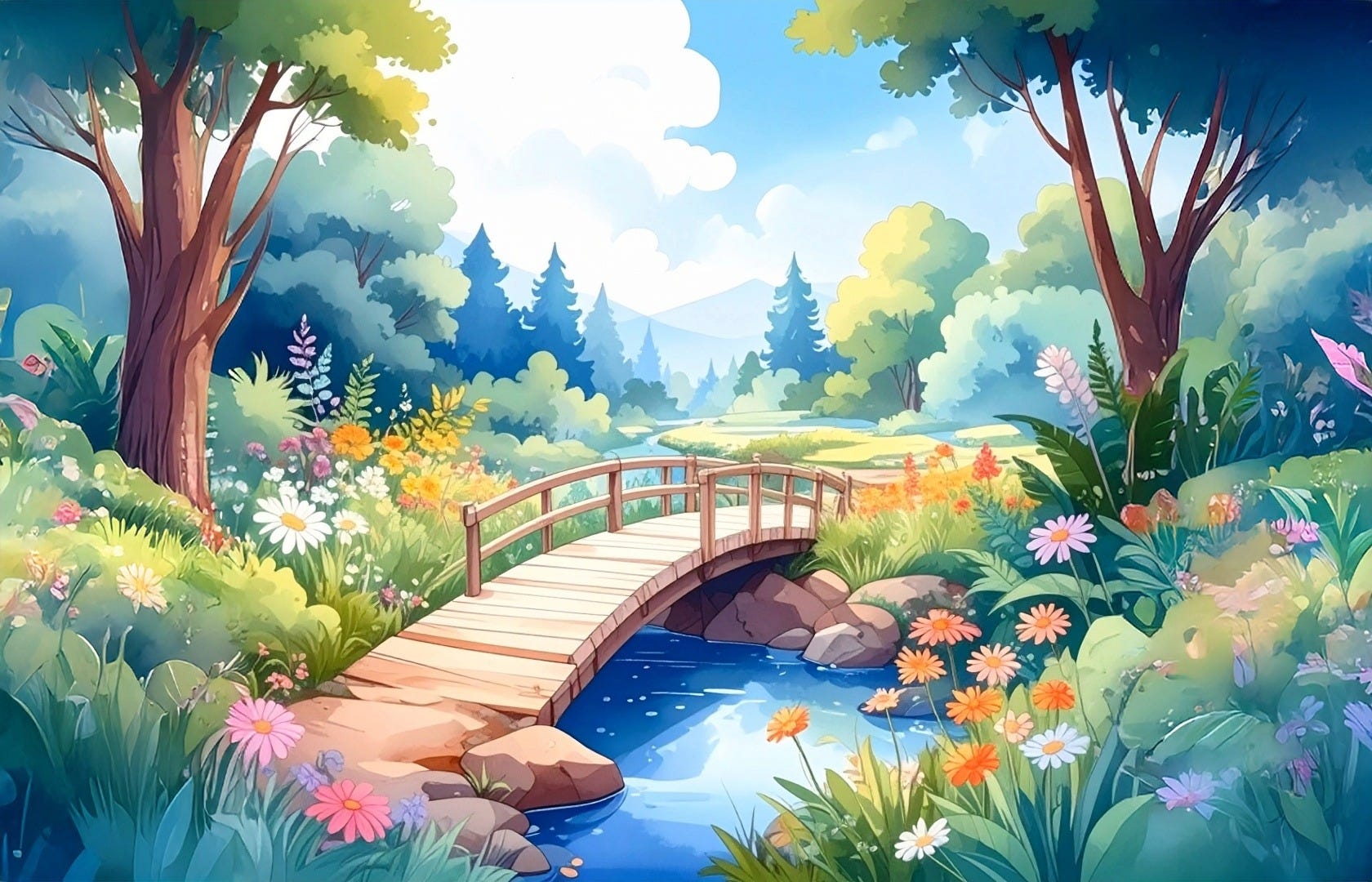
The walking trail behind your neighborhood.
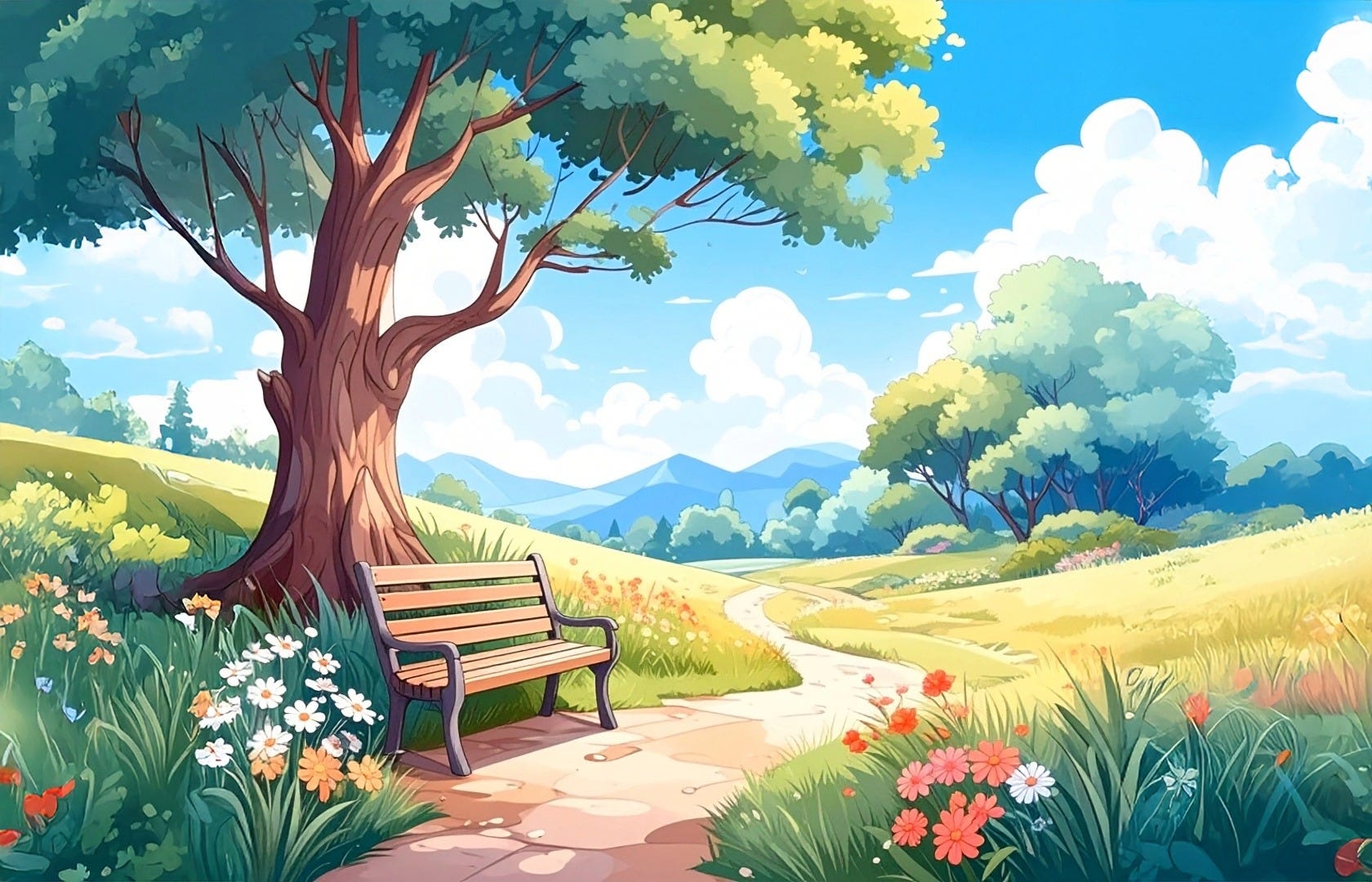
The bench by the pond.
The old maple tree.
The porch chair.
The creek.
The local nature preserve.
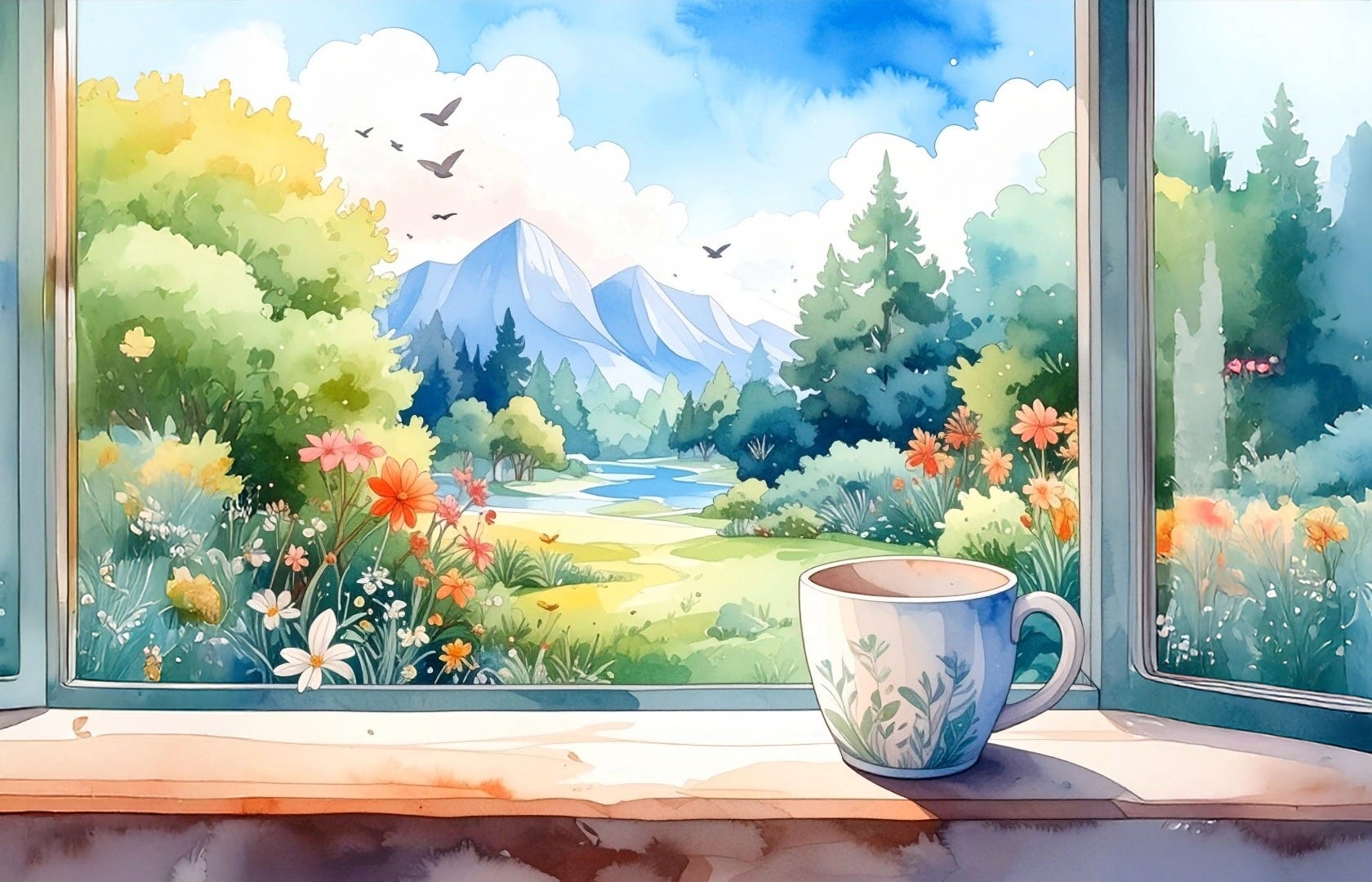
The kitchen window.
Each return quietly builds continuity.
Instead of constantly beginning again somewhere new, you begin continuing a relationship that already exists.
Human brains are extraordinary pattern detectors.
The more often we encounter the same environment, the more subtle differences begin standing out.
The first goldfinch.
The first frost.
The disappearance of spring ephemerals.
The changing angle of afternoon sunlight.
The smell before rain.
The squirrel that always seems to use the same fence.
These patterns aren’t new.
They’re becoming visible because your brain has enough previous experiences to compare them against.
This is one reason repeated visits often feel increasingly rewarding.
Many people describe life as feeling like it’s rushing by.
Part of that feeling may come from how little we remember.
Routine days blur together.
But when we begin noticing small differences, memory has more “hooks” on which to hang experience.
Instead of remembering,
“I went for a walk.”
you remember,
“Today the milkweed pods finally opened.”
or
“The cicadas were louder than yesterday.”
or
“The evening light reached the old fence for the first time this summer.”
Small observations become landmarks in memory.
It doesn’t require hiking boots.
Or expensive equipment.
Or wilderness.
It might look like...
walking the same block every evening
sitting in the same chair with a cup of tea
visiting one favorite tree throughout the year
noticing which flowers bloom first
learning the regular neighborhood birds
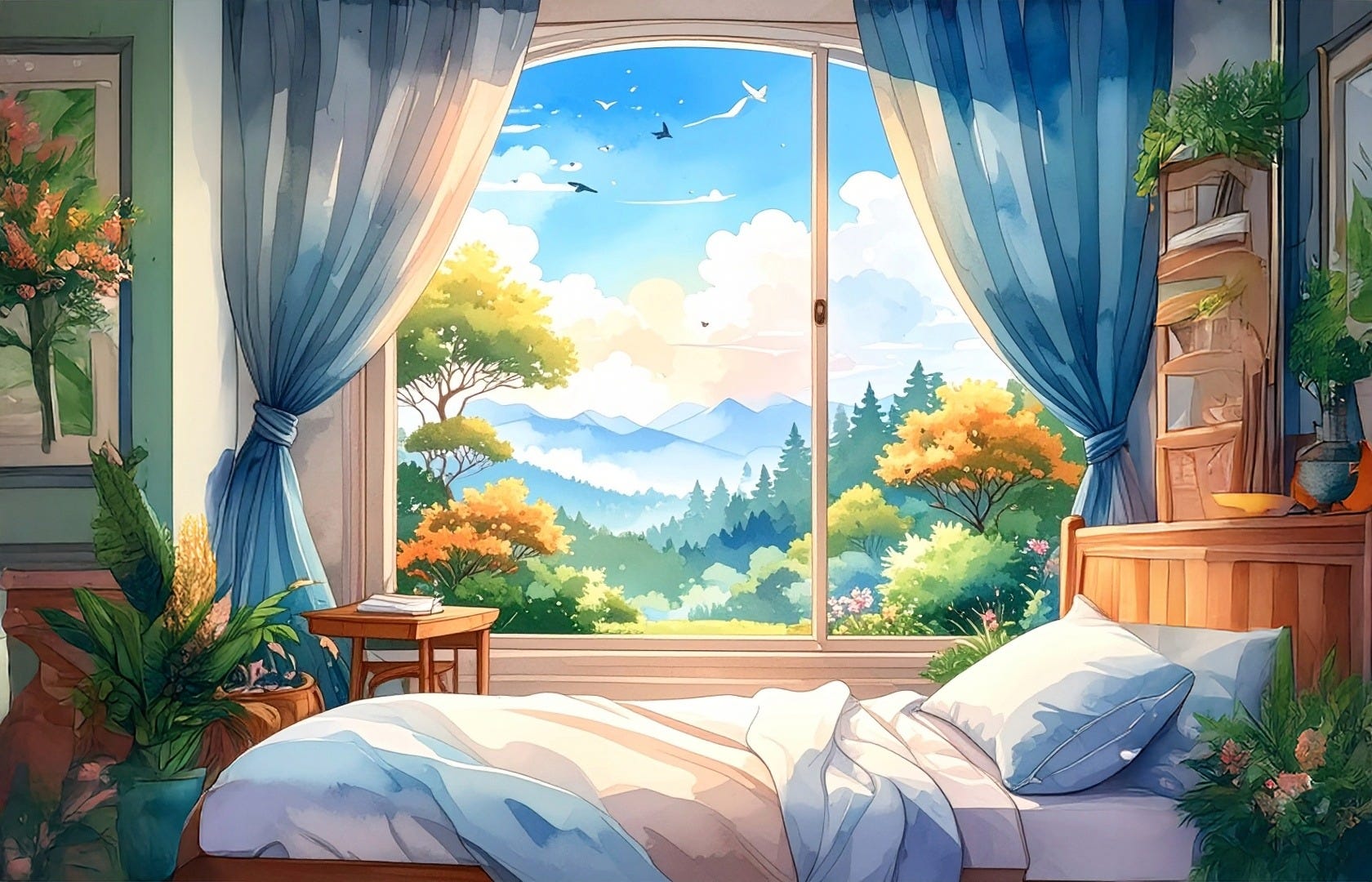
watching moonrise from the same window
listening for seasonal sounds
comparing today’s sky with yesterday’s
remembering where rabbits usually appear
noticing how your favorite places change after rain
Inhabiting begins with one simple practice:
Return.
Psychologists have long known that attention is remarkably adaptable.
The things we repeatedly look for become easier to notice.
Birders begin seeing birds everywhere.
Botanists notice plants others overlook.
Artists see color relationships.
Photographers notice light.
Gardeners notice soil.
In much the same way, inhabiting trains us to notice continuity, familiarity, and subtle change.
Over time, the ordinary becomes increasingly interesting.
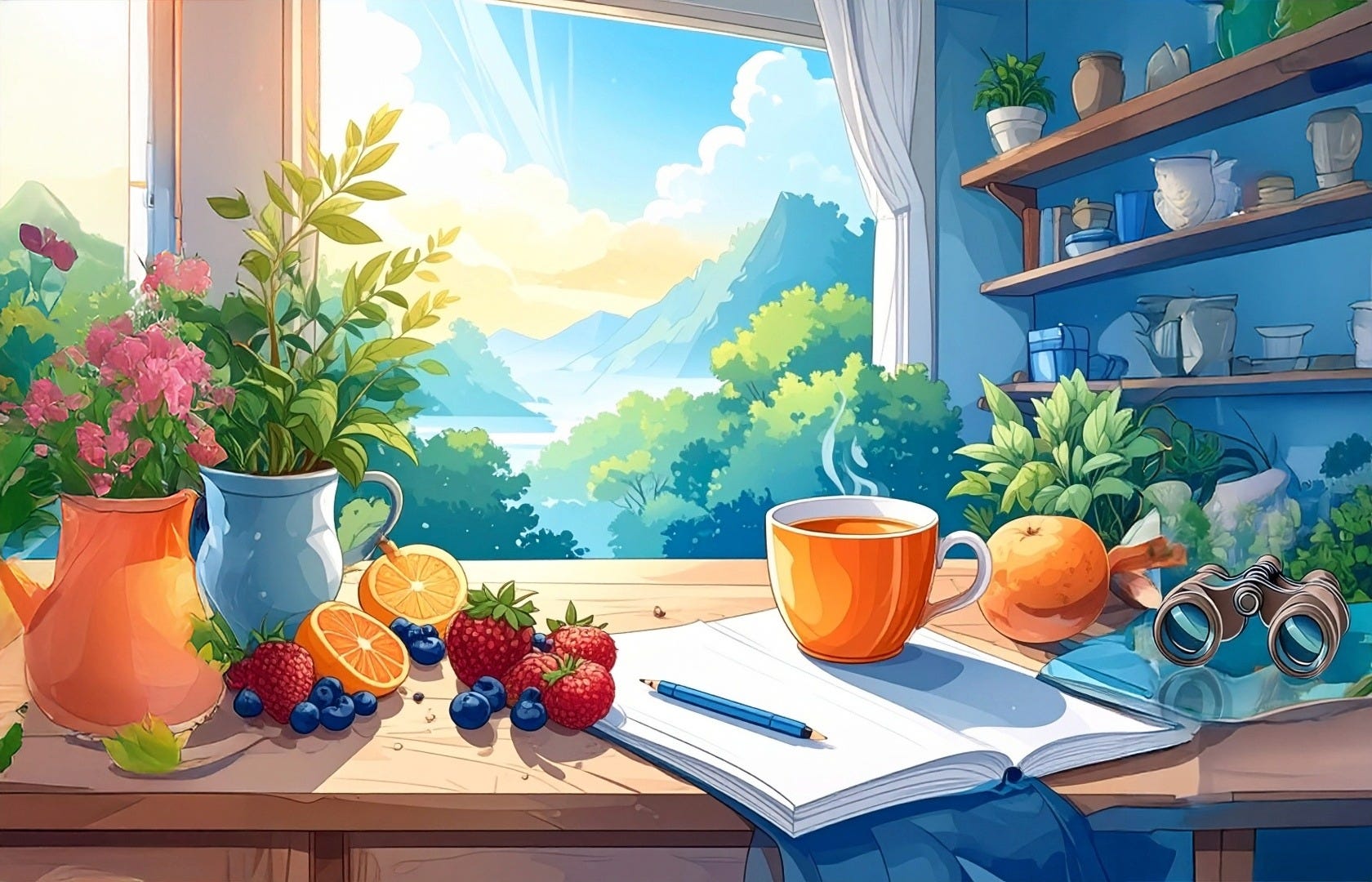
Perhaps we have accidentally become visitors in our own lives.
Always preparing.
Always planning.
Always moving toward what’s next.
Inhabiting gently asks us to pause.
To learn the places where life is already happening.
To become familiar enough that ordinary places begin feeling like companions rather than backdrops.
Not because they’ve changed.
Because we’ve changed.
The beautiful thing about inhabiting is that there is no finish line.
No score.
No perfect observation.
No requirement to notice everything.
One small detail is enough.
One return is enough.
One familiar path is enough.
Tomorrow you can return again.
To celebrate this idea, I’ve created a free printable deck of 36 Inhabiting Practices.
Each card offers a simple invitation to help you notice the places where your life unfolds every day.
Some invite you to pay attention to changing light.
Others encourage you to notice sounds, seasons, textures, patterns, familiar trees, neighborhood wildlife, or the quiet rhythms that gradually weave themselves into everyday life.
Every card ends with the same reminder:
The practice is not ___
The practice is inhabiting.
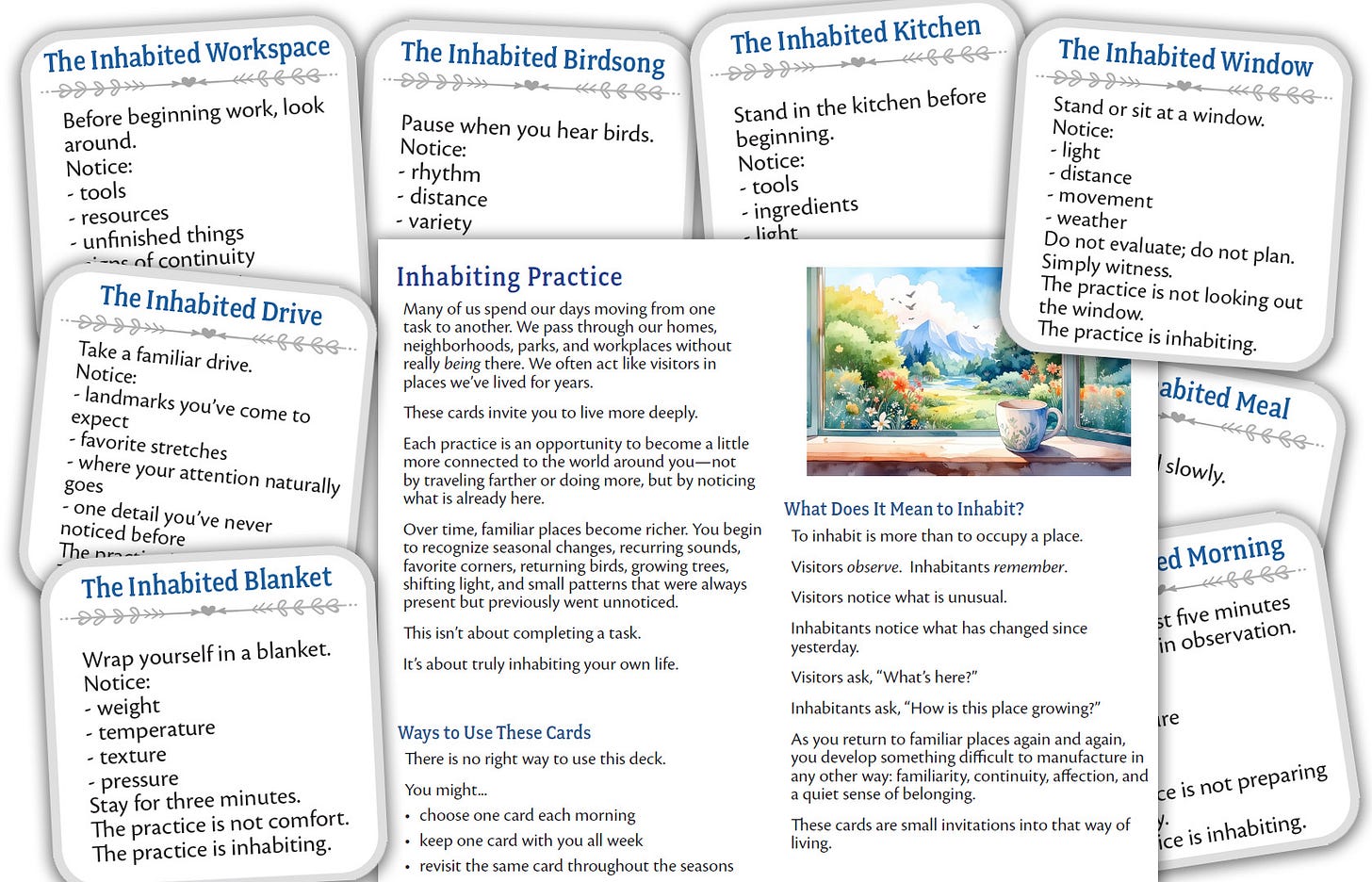
You can print the cards, keep them on your phone, choose one before a walk, or return to the same card throughout the seasons.
There is no wrong way to use them.
If you like this free deck, you’ll find much more on my Ko-fi page.
There is even a Ko-Fi article on Inhabiting Practices.
You could also jump straight to the Connecting Pathway, a growing collection of free resources and printable practices designed to help you slow down, notice more deeply, savor ordinary moments, and build a gentle sense of belonging through everyday life.
Whether you’re walking a woodland trail, sitting on your porch, or simply looking out the kitchen window, I hope these practices encourage you to discover something I’ve been learning myself:
You don’t always need a new place.
Sometimes you simply need to become an inhabitant of the place where you already are.
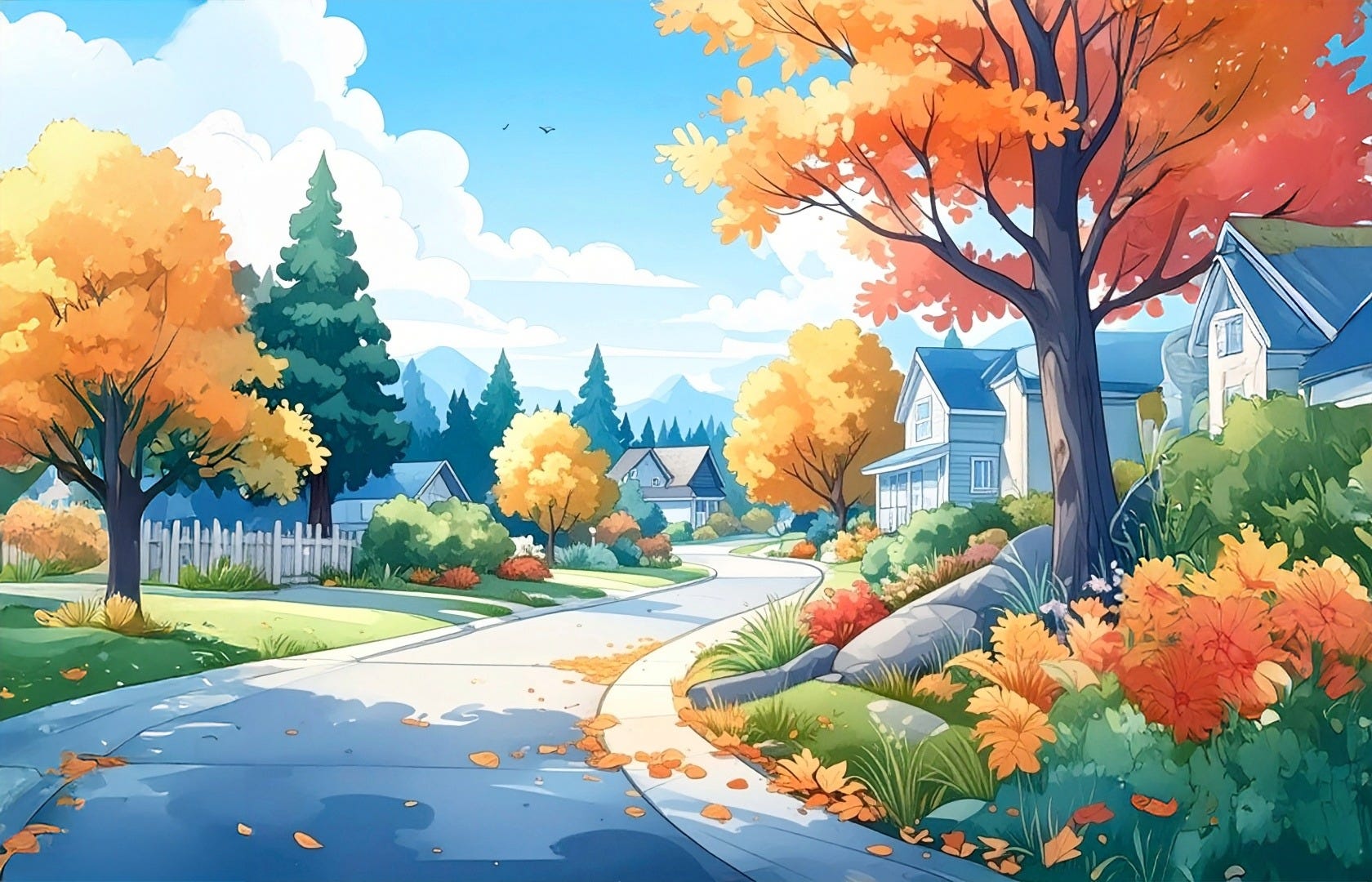
HOME is rarely built all at once. More often, it is built one ordinary return at a time.
If someone asked you to introduce them to your place, where would you begin?
No posts
Comments
Nothing yet. Say the first thing.
Sign in to join the conversation.