
I was sitting on the toilet at 2 a.m because that’s where all my YouTube SubwayTakes clip scrolling happens. When I heard the brilliant Rachel Sennott say:
“Everyone should get addicted to something once in their life just to prove they can quit.”
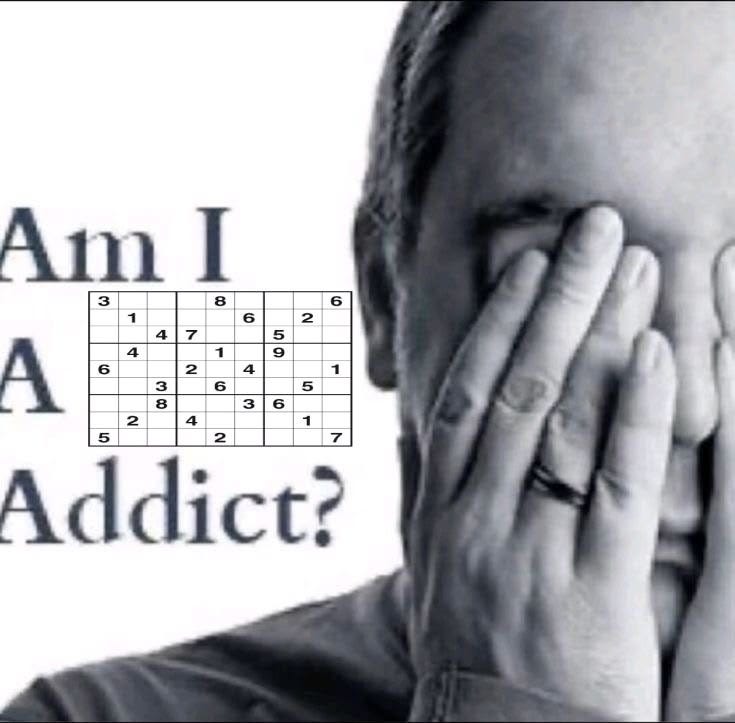
As any coherent person would, every word that woman says immediately becomes part of my moral philosophy. It made me think about how every single person I know is addicted to something. Nicotine, sugar, alcohol, work, burpees, sociopathic men with mommy issues. Addictions are usually framed as weakness, which is why I liked the switch Sennott proposed. Maybe addiction was never weakness. Maybe it was a game. A battle. A weird little side quest your brain creates so you can feel something.
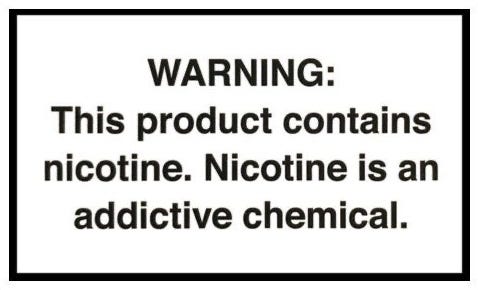
For me, that addiction is definitely smoking. Although technically it has evolved through the years. First sugar. Then emotionally unavailable men. Then nicotine. And I can honestly see progress. Even though my lungs would probably disagree.
I still remember my first puff.
I didn’t start smoking because I wanted to look cool. It was more of an economic decision. I realized alcohol hit me faster when I smoked. I could get drunk with less booze if I had one or two cigarettes. At the time, I genuinely thought I was being smart. Saving money and protecting my liver. Cigarettes were basically free. No man has ever refused to give me one at a party. Sometimes I’d trade it for my Instagram account, which is probably the closest I’ve ever been to prostitution.
And weirdly, my hangovers felt better when I smoked a little. So it felt like a win-win situation. I knew cigarettes could give me cancer in twenty or thirty years, but that was a tomorrow problem. The hangover the next morning always feels more urgent than a disease decades away.
One day I asked someone for a cigarette, and he told me something I didn’t ask for, but got anyway.
“From now on, your life is just going to be an endless loop of smoking your last cigarette.”
And that has exactly been my life. With a few more little details. For a while, every cigarette I smoked was my last one.
But honestly, the blame is not entirely on me. There was always a perfectly good reason to smoke. Stress from exams. Moving cities. Getting out of an abusive relationship. I always found an excuse painful enough. There was always something more toxic than the nicotine entering my lungs.
When I escaped my abusive relationship, I decided the best way to heal was smoking a cigarette every evening at 7 p.m. on my balcony while listening to Manuel Turizo’s “La Bachata.” Let me tell you something: it was not a beautiful image. And definitely not a healthy recovery plan. However, what embarrasses me most about my nicotine addiction is not even the poor (and ridiculous) reasons that led me there. It’s the voice.
The voice that appears around the third puff. Because the first two always feel like heaven. Everything bad happens at the third.
That voice would suddenly appear in my head and start torturing me because I didn’t recognize myself anymore. I never wanted to be someone who smoked. So it wasn’t the health consequences that bothered me most. It wasn’t the future lung cancer nobody actually believes will happen to them.
It was the title. Smoker. I could not stand being a smoker. Which meant I could not stand myself when I smoked. There were always two Marias: the one romanticizing life through balcony puffs, and the one finding herself disgusting while doing it. And maybe part of that comes from the fact that one of my greatest fears in life is becoming like my father. That’s why I swore I would never smoke or have a mustache. Those were two essential elements of his persona.
So yes, maybe I want to quit smoking for health reasons. But mostly I want that voice to shut the fuck up. I want to look at myself in the mirror and feel like I beat something.
I once read that the human brain evolved to solve life-threatening problems. And since most of us no longer spend our days running from bears, our brains just create smaller wars to survive. Maybe that’s what addiction is. Maybe my brain misses the feeling of danger, so instead it settles for nicotine. I don’t know if that’s scientifically true. Don’t ever, for any reason, take anything I say as contrasted scientific information.
Still, there’s something weirdly comforting about waking up every morning with a very clear objective: don’t smoke today. And then going to bed every night with the exact same conclusion: I smoked today. It felt like a game to me. And I was really bad at it.
Quitting an addiction comes with grief. Not just grief for the substance itself, but for the life surrounding it. The moments attached to it. The pauses. The ritual. The small disappearances. Smoking a cigarette always felt to me like entering a dimension where time ceased existing. Time stopped being measured in hours and started being measured by the distance between the ash and the filter. Unlike normal human time, a cigarette doesn’t tell you how much time has passed. It tells you how much is left. And I liked the certainty of it.
Last Thursday I made the final decision. This is my last day of smoking. I knew this decision was either going to make my life better or make me absolutely unbearable to be around. Whenever I’m scared of making a big change, I like reminding myself that failing would only return me to exactly where I am right now. So trying can never really be the loss.
So there I was. Just me, my Marlboro pack, my dramatism and my will to become the person I always wanted to be. On Thursday I only thought about saying goodbye to smoking. The rest of the week became about saying hello to everything this goodbye implied.
When I imagined quitting, I only focused on what I was losing. I forgot every goodbye comes with a hello. Every time we close a door, we have to open another one. Unless we are emotionally attached to our own suffering or on an escape room. I was so focused on the cigarettes that I forgot the point was never really the addiction. It was me. Getting over an addiction is not really about learning to live without the substance. It’s about learning to live better with yourself. I am a bit ashamed to recognize a cigarette made me forget what I got out of my last relationship. (Apart from an STD and a gym towel).
Addiction always comes with this bitchy, deeply unemployed voice living inside your head. The same voice that tells you to smoke is somehow also the one asking you why you did it afterward. Lately I’ve felt lighter. I no longer walk around carrying cigarettes and a full-time internal bully everywhere I go.
For years I thought that voice was just my personality. Something fundamentally embedded in me. At some point I even started treating the voice like proof of adulthood. As if hating myself in a very articulate way somehow made me more mature. But the fact that the voice is slowly disappearing now makes me think something deeply unsettling:
Maybe that voice was never actually me. Maybe it was just nicotine wearing my skin.
I Am Fine, Really is a reader-supported publication. To receive new raw, real, deep-ish but ironic essays, and to support an independent, (slightly unhinged) writer, consider becoming a free or paid reader ♡ꕤ。˚⋆
If commitment scares you, but you still want to support my writing (from a safe emotional distance), you can leave a small tip here.
This has been the toxic, romantic, ridiculous relationship cigarettes and I have shared for the past few years.
If you’ve also had this experience with nicotine, situationships or Diet Coke, I really hope you are fine and feel free to share it in the comments. With or without puffs or terrible voices.
Thanks for reading me and tuning into my cigarette crisis <3
No posts
Comments
Nothing yet. Say the first thing.
Sign in to join the conversation.