
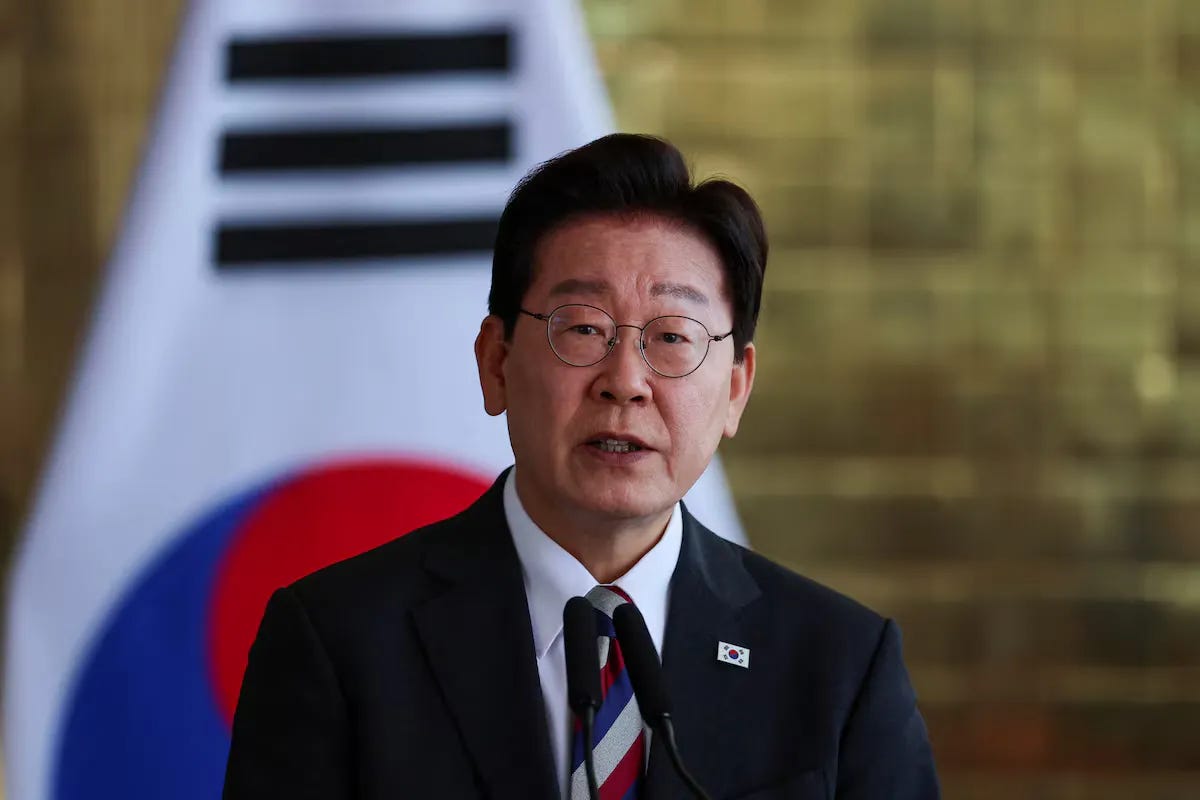
SOUTH KOREAN PRESIDENT Lee Jae Myung renewed his push Tuesday to return wartime control of the country’s armed forces to Seoul and accelerate development of nuclear-powered submarines, two days after President Donald Trump ordered a sharp reduction in a major U.S.-South Korean military exercise.
Lee’s demand centers on who would direct South Korean forces if fighting resumed on the Korean Peninsula. The transfer would place that authority in Seoul’s hands and change a command arrangement rooted in the 1950-53 Korean War.
Lee told his Cabinet to proceed without disruption with the planned transfer of wartime operational control, known as Opcon, during his term. He presented greater South Korean military autonomy as a way to strengthen the alliance.
“A strong alliance makes the foundation of security stronger, and strengthening our own capabilities increases our value and necessity as an ally,” Lee said.
Lee also called for faster progress on South Korea’s nuclear-powered submarine program and the development of officers capable of directing integrated operations in future conflicts. The orders connect wartime command authority with the equipment and military leadership Seoul is seeking to build.
Trump instructed the Pentagon on Sunday to “substantially reduce” this week’s joint exercises. He said nuclear-armed North Korea “has been unthreatening and respectful” and cited his “very good relationship with Kim Jong-un.”
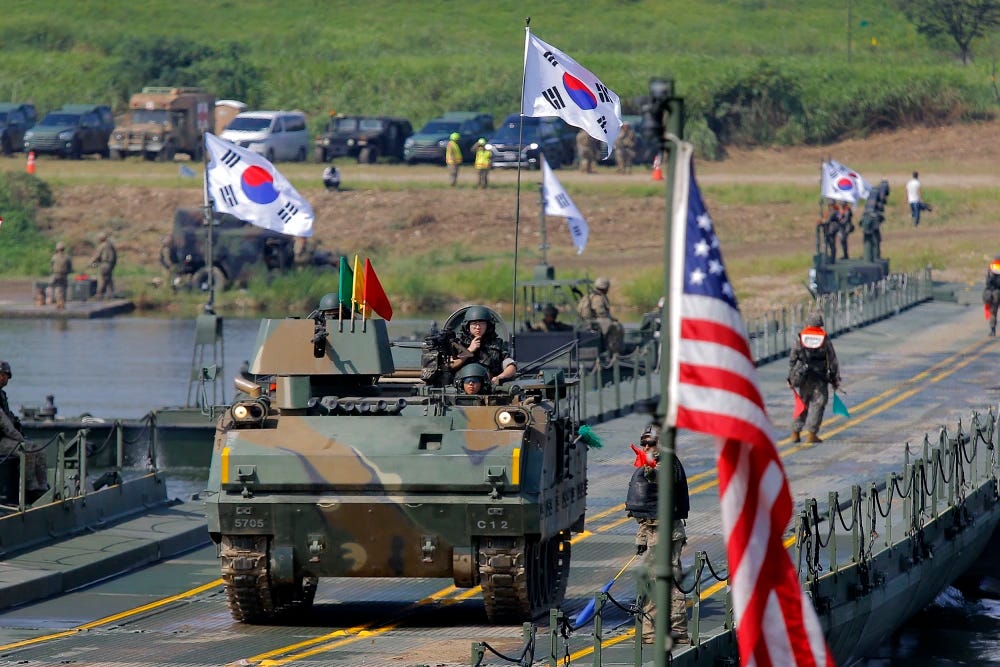
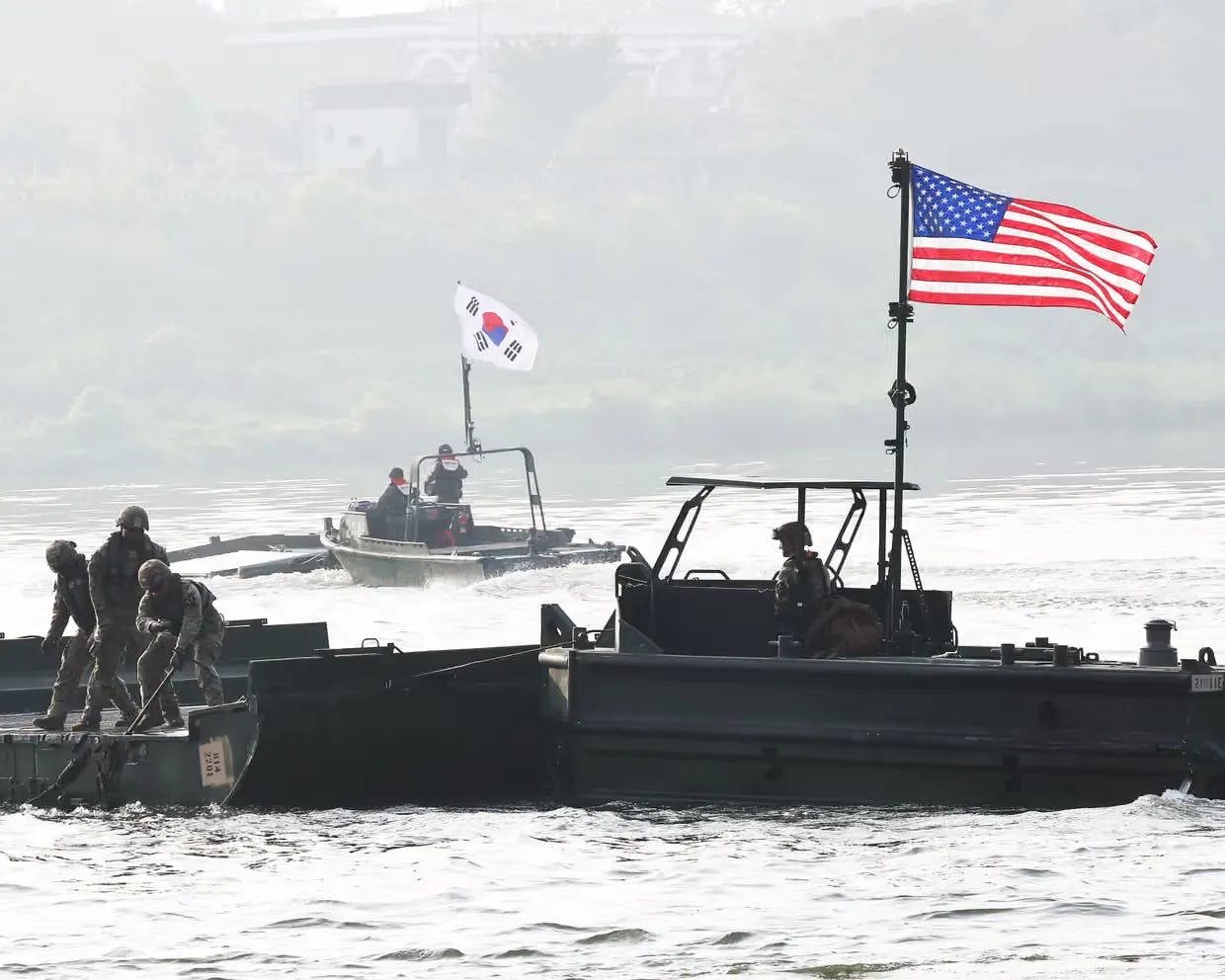
The order affected Ulchi Freedom Shield, one of the two principal annual exercises conducted by the United States and South Korea. The 10-day drill began Monday and was expected to involve about 18,000 South Korean troops, U.S. forces and personnel from 11 of the 18 member states of the United Nations Command.
The exercise carries added importance for Lee’s military agenda. It was intended in part to help certify South Korea’s readiness to assume wartime command, a process he has sought to accelerate since taking office. A reduced exercise limits one of the alliance’s principal opportunities to evaluate that readiness through combined operations.
The command structure dates to the Korean War, which ended with an armistice in 1953 and no formal peace treaty. The two Koreas remain technically at war.
The United States has maintained a continuous military presence in South Korea since the conflict. The country hosts Camp Humphreys, the largest American military installation outside the United States and the headquarters of the alliance’s principal military commands.
Wartime authority over South Korean forces rests with the head of the Combined Forces Command, a position held by an American four-star general. A South Korean general serves as deputy. The command would direct the allies’ combined response if hostilities resumed.
South Korea regained peacetime control of its armed forces in December 1994. Wartime control remained with the Combined Forces Command. The division means Seoul directs its military during peace and would relinquish operational control of designated forces to the U.S.-led command during war.
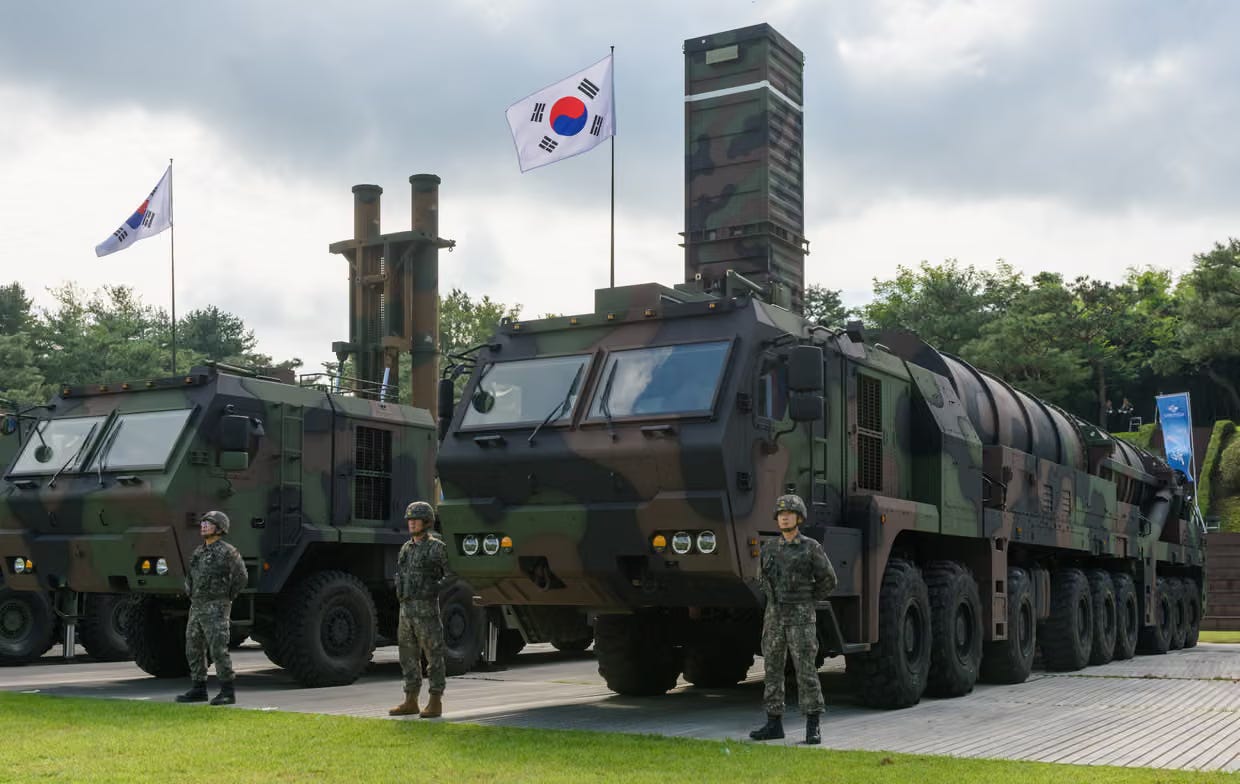
Reclaiming that authority has become a central South Korean security objective and a potent symbol of national sovereignty. Successive governments have pursued the transfer for more than two decades, with the schedule repeatedly delayed as the allies assessed South Korea’s capabilities and the threat from North Korea.
The United States and South Korea moved in 2014 to a conditions-based process for transferring wartime control, linking the change to Seoul’s ability to lead the combined defense of the country. Joint exercises provide a key setting for testing those capabilities.
Trump previously reduced military training in pursuit of diplomacy with Kim. Following their first summit in 2018, the Pentagon suspended Ulchi Freedom Guardian and two other exercises. Other drills were scaled back, redesigned and later resumed under modified names.
Trump said Monday that Kim had responded to his Pentagon order. Asked about the status of any conversations with the North Korean leader, Trump said “it’s very positive” and provided no details.
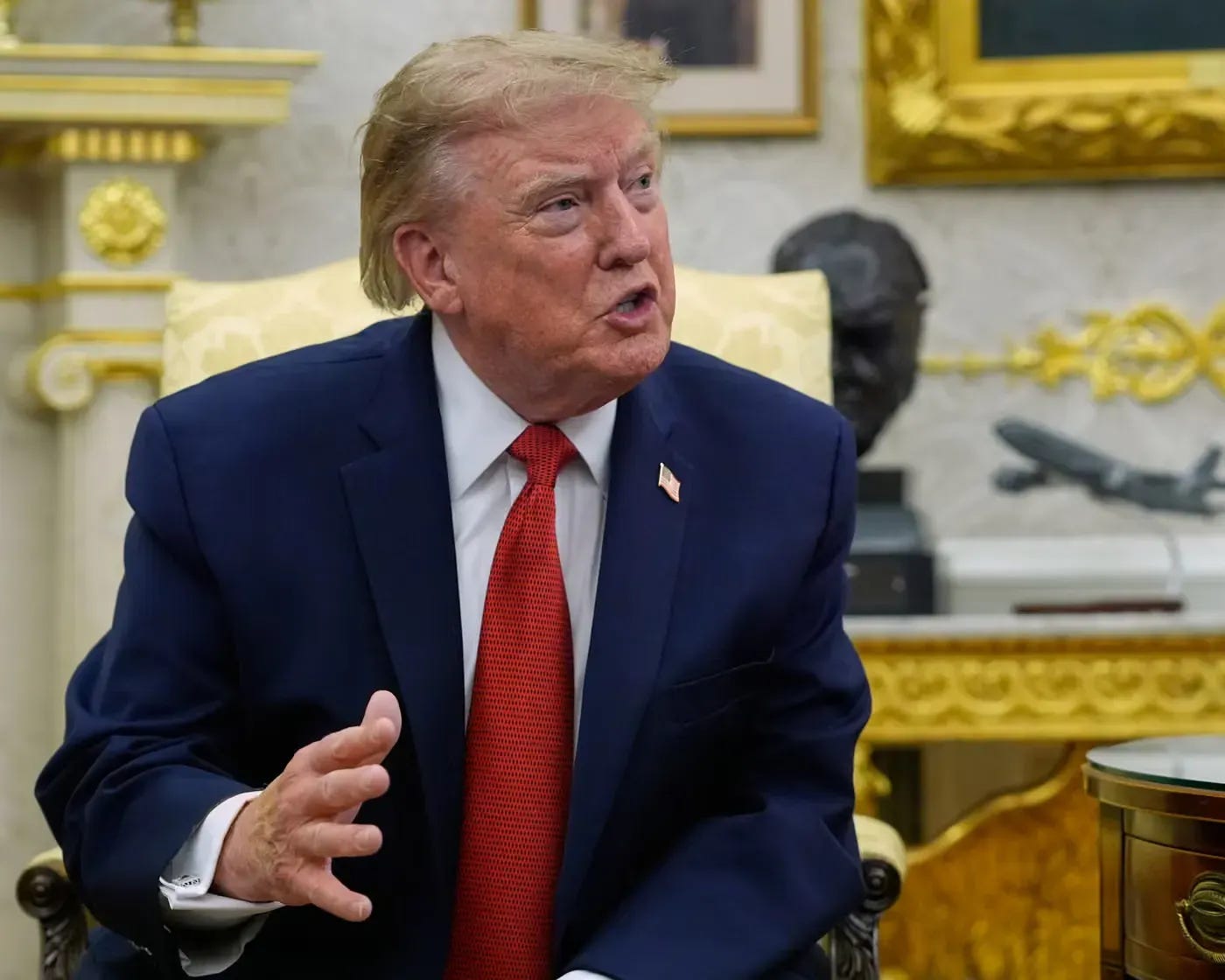
“You see, I’m actually making it much safer. Kim Jong-un has always treated me with great respect,” Trump said.
“I understand him. He understands me.”
The reduction comes as U.S. and South Korean military officials adjust their training to account for battlefield experience North Korean forces have gained from Russia’s war against Ukraine.
Pyongyang and Moscow signed a comprehensive strategic partnership treaty in June 2024. North Korea has supplied Russia with troops, artillery ammunition and ballistic missiles. A report circulated through the United Nations said the cooperation gave North Korean forces firsthand experience in modern warfare.
“They’ve taken those lessons they learned there and brought them back to North Korea, that changes the DPRK capability,” said Col. Ryan Donald, public affairs director for the U.S.-led commands in South Korea.
“Our training accounts for that threat, that is why the exercise looks different [from previous exercises], and over the last five years it’s continually evolved.”
Seoul’s presidential office described the drills as defensive and intended to protect the population during a crisis. It said South Korea had no intention of attacking North Korea or escalating tensions on the peninsula.

Press freedom does not survive on vibes. It survives because readers decide the work is worth protecting. The Developer is independent, ad-free, and reader-funded—which means your support goes directly into the reporting, not into some billionaire’s pocket. If my work helps you stay informed, consider upgrading to paid: $8/month or $80/year. If upgrading isn’t possible right now, sharing The Developer with someone who needs to read it matters just as much. Help keep independent journalism alive and impossible to buy.
No posts
Comments
Nothing yet. Say the first thing.
Sign in to join the conversation.