
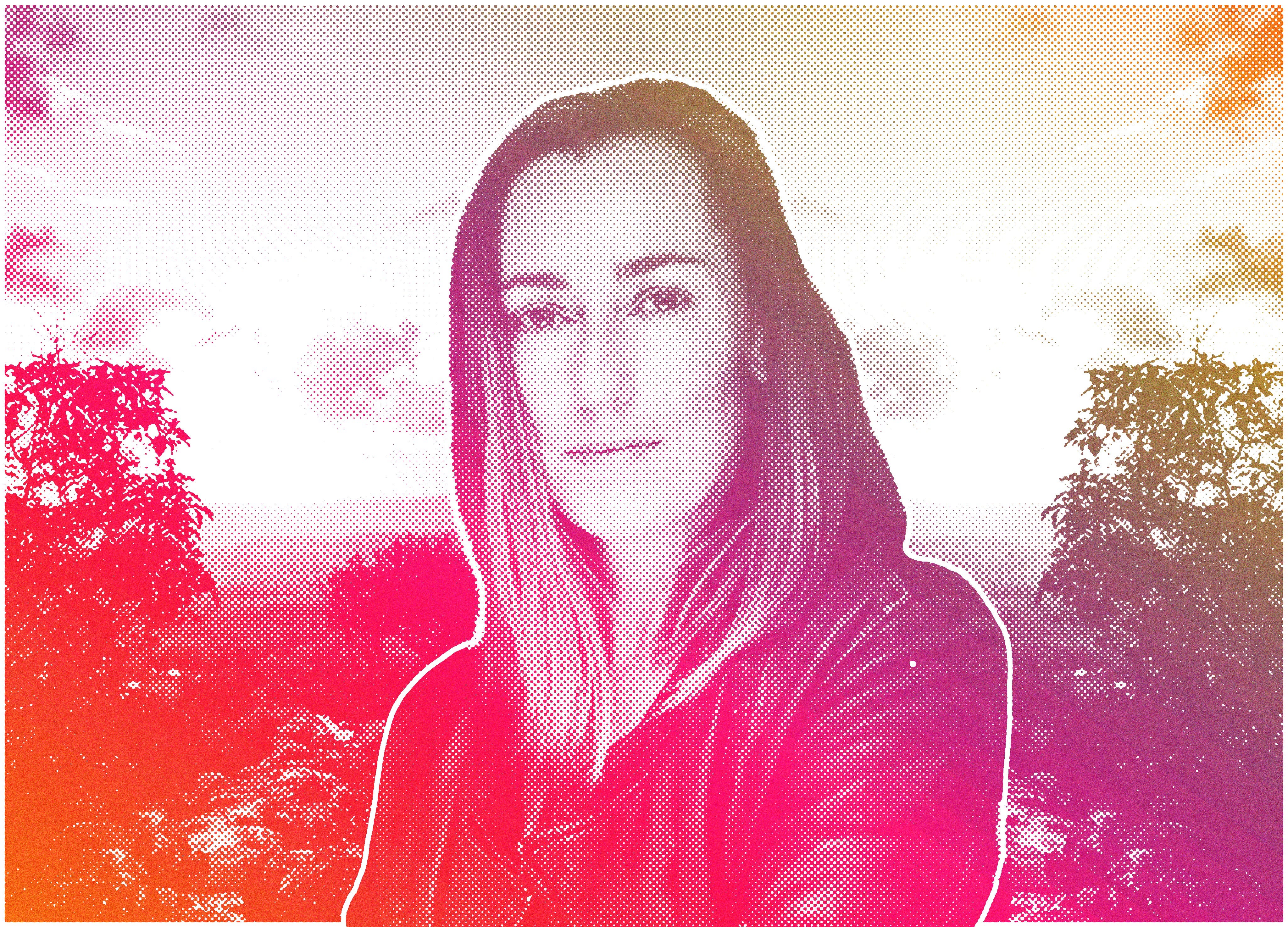
On Thursday the 18th of June, Melbourne author Christine Gregory and I sat down in Readings Carlton to discuss her crime writing, the ex-pat Queensland experience, and her new novel, The Informant (out now thru Ultimo Press).
Let’s start before The Informant and work our way up to it. In 2020 you did the Curtis Brown Creative course on novel writing, and it seems to have been a turning point for you. Can you take us back to that moment? It looked like quite an undertaking, time-wise and financially. What made you push the button?
Time-wise — 2020, we know what was happening then (COVID-19). It’s not like I had a lot of time, actually. I was working and I had two kids at home doing school. But there was nowhere to go, so I was thinking about doing something. Honestly, I don’t think I gave it a lot of thought. I was up one night reading an interview with Jane Harper, who said she’d done that course and that The Dry had come out of it. I thought, Oh, that sounds like a really good course. I’d never heard of it. It was selective, so you had to send off a submission and be accepted. I sent off the first 3,000 words of The Community thinking, I’ll never hear from them again. Then a few weeks later I got an email saying they’d loved it and would like to offer me a spot. So then I had to come up with the money — you just dig deep for that. I really didn’t know much about it until I started, and I was in a group with all these great writers and realised a lot of people have come out the other side of that with manuscripts, many of which have been published.
Were you in a cohort with anyone we’d know?
Definitely in my cohort there are three of us who’ve been published. Amy De La Force — her Australian distributor is Hardie Grant — writes romantasy. And Rachel Driscoll, who writes historical fiction — I’ve seen her book in the airports here. Then there are two others who have agents and are, I think, going to go out on submission.
That’s a pretty good strike rate. What did you learn? It sounds like you had a manuscript on the way before you pushed the button. Did the course do something to the manuscript, or did it just help you finish it?
It helped me finish it, definitely, because I set myself the task that I’d finish it by the end of the course. The day the course ended, I typed “the end” of a first draft. The workshopping with the other students was very good and the tutor was very encouraging — a guy called Andrew Michael Hurley, who writes gothic horror. He wrote this book called Starve Acre, which is amazing, and they’ve turned it into a BBC film with Matt Smith. What I learned was about the business side of it, which I wouldn’t have had a clue about. How do you pitch to an agent? When should you do that? What should go into a pitch? That made a big difference. At the end of it I thought, I’m not sure I can actually write crime fiction — I don’t even know if I’m very good at the genre. So I signed up for mentoring with William Shaw, a British crime writer. I think that was a big turning point, more so than the course. But the course led me to him.
The stories about how people break into writing novels are really strange and varied, but it sounds like you did it the smart way — going out and finding someone to help you. I wanted to circle back to something. We did a panel together once, at the Book Grove in Ocean Grove. You talked about how The Community started off as a more literary novel and then became a crime title. Can you walk me through how that happened? I found it so puzzling — I’m not a literary crime novelist, I’m a dirty, capital-C crime novelist. So I’d love to know: what happened? Did you decide to do it, or did someone tell you it would sell?
I don’t know that it was that well thought out, to be honest. I didn’t really understand genre fiction that well, and what that even meant before I got serious about that manuscript. I always associated crime fiction with Lee Child or James Patterson — the big, commercial crime. There’s nothing wrong with that, but I didn’t want to write fifteen Jack Reacher books. It’s not my style. And I didn’t think I even read that much crime — then of course I looked at my bookshelf and there’s heaps of it, but across the spectrum: literary, hard-boiled, more traditional detective stories. What changed was the opening. I’d written all these scenes that are in the middle of The Community, the relationship between Lars and his daughter, and then I was in a creative writing class and I wrote the opening scene — that hunter trapping foxes and stumbling on a dead body. As soon as that happened I thought, Oh, that’s what this is, I’ll have to turn it into a crime book, and then I had to work out how to do that. When I was younger I loved literary fiction, and I think that’s what I aspired to do — and I haven’t written it off, maybe one day I’ll write a literary book. You have to write the story that has to be written. Genre is almost secondary to me.
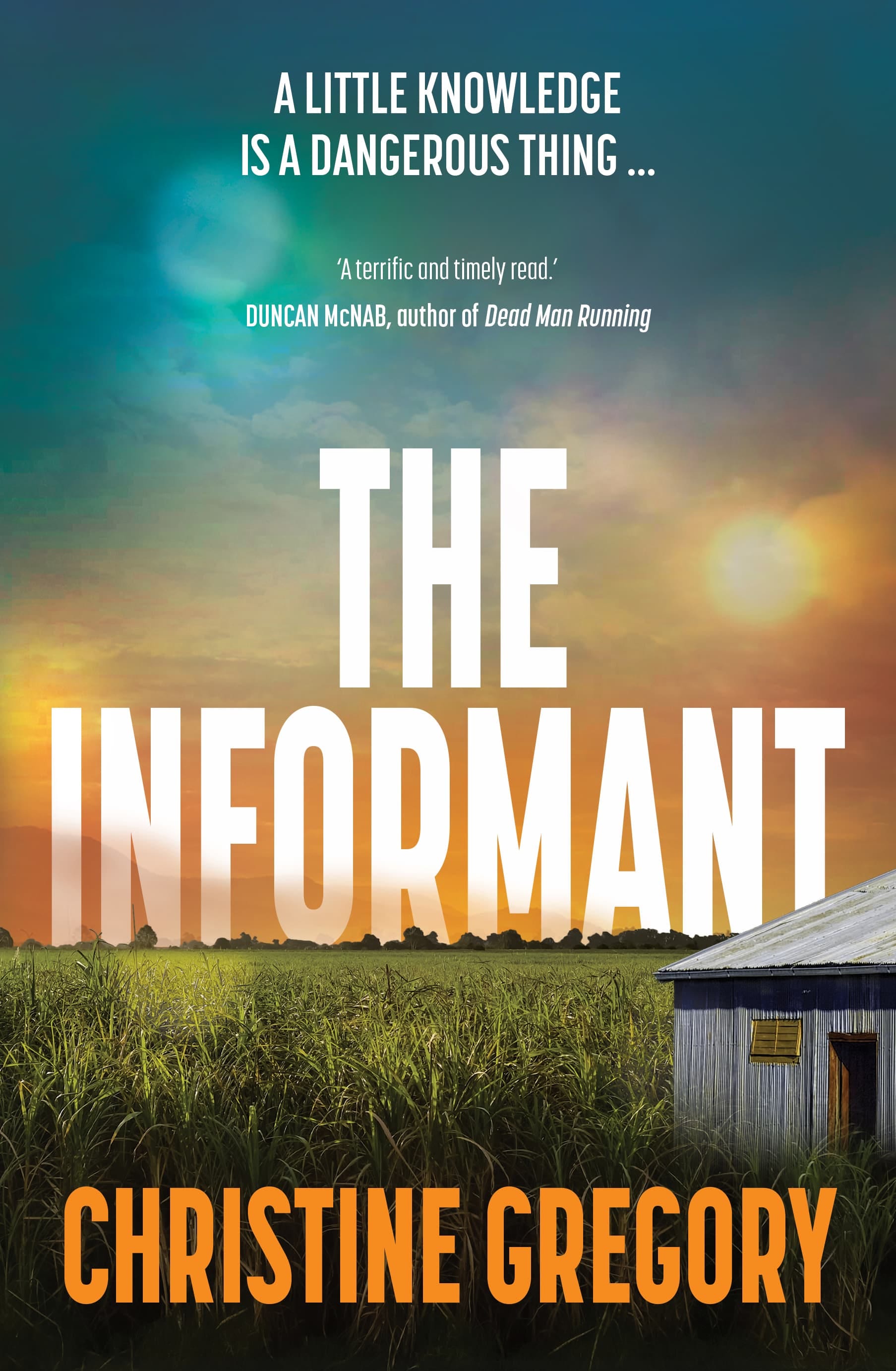
I like that you came over to the dark side. Now, The Informant. Let me tell the audience a little about the book. When the president of the Outcasts motorcycle gang is shot dead on a Sunshine Coast hinterland road, freelance journalist Lars Nilsson finds himself drawn into a fraught police investigation involving bikies, a close-knit regional community, and rumours that the Outcasts have a police informant in their midst. It’s a very tight thriller. If the last one started out as literary fiction and morphed into crime, this book feels tight as a drum — like it started out as a crime novel and ended as one, a very adept one. It’s got all the stuff I like: lots of white space on the page and fast pacing. I want to start by talking about Lars and Hopeville, both of whom feature in your previous book. Why did you return to the well, instead of doing something completely different?
I think I had more to say. I actually had all this stuff that hadn’t made it into the first book — too much for the first book, almost enough to kick off a second, which is what ultimately happened. There were threads left hanging with the Detective Fuller character, and Lars and their history together. I actually started writing something completely different, then I got this idea about that opening again — it always starts with the opening, this body lying on the side of the road next to cane fields, and the character of Ashley. I couldn’t get it out of my head, and you know what it’s like when you get an idea — you’ve got to go where the heat is. In the first book it ends with Lars happy, but knowing him and his personality, he’s going to revert back to some of his bad habits and his need for whatever it is that pursuing these stories gives him. It’s an innate need. He’s not going to be satisfied to sit in his little country home with Miriam visiting on weekends, plugging away at a book — which is where we find him at the start of this one. He still had something left in him: I need to chase that other big story. And the big story arrives, and it’s a really big story.
Another book set in Queensland. We both grew up there and then moved out here. So why are you writing a book about Queensland now that you don’t live there?
I don’t know, it’s weird, isn’t it? I didn’t grow up on the Sunshine Coast — I’m from Brisbane originally, but I know the area very well. I knew someone who lived up there and used to visit and stay with him when I was at uni. I lived in Brisbane as a kid and a teenager, went to university there, went overseas for a few years, came back for a couple of years, and then left. My family is still there, but I’ve lived here for more years now than I lived up there. I think it’s something about the early years of your life — the memories and experiences are so clear, almost clearer to me than things that happened five years ago. Maybe having kids does that, too.
Who can remember anything after children.
I don’t want to set all my books in Queensland. The current one I’m working on is set down here. But it seemed like the right place to start.
When I write a book, I’m locked into a chapter cadence of point of view. If it’s a two-hander, I go back and forth; the moment I step away from that, I freak out completely. It feels like chaos. You seem to be the exact opposite — you go wherever you want. Is there a logic to it that I’m not seeing? Is there a method to the madness?
Yeah, because I want to do it. I did plot this one out — I didn’t just dive in. I put together a structure, and it always changes. I start with the idea that I’m going to have particular point-of-view characters, then at some point I get stuck and think, none of these people would know this information, I need this person’s perspective here. That’s what happened with this book, bringing in Detective Fuller’s perspective in the second half. He was always a bit on the sidelines, and I felt we needed to get in his head and understand him more. I’d actually like to try writing a whole book from one first-person point of view, because I think that’s hard. Look at a book like Mark Brandi’s The Others — the entire thing is told from a twelve- or thirteen-year-old boy’s perspective, hardly any dialogue, and it sustains over 300 pages. It’s an amazing book, and I think, how do you do that? Whereas with third person close, you’re able to drop in different elements. With a crime novel you’re dropping those seeds, the trail of clues — it’s just got to be the right person telling the right part. If that’s two people, that’s how it works. If it’s four, I don’t know that I’d try for more than four.
Both of us have day jobs, like pretty much all writers. Your day job looks pretty full-on — it doesn’t look like a hobby. Tell me, how are you getting this done?
Oh God, it is a struggle. I work full-time, these days in four days — four longer days, and then Friday is meant to be my writing day. I also steal bits and pieces of time on the weekends. When I’m writing a draft I might get up early and do bits here and there. With The Informant I went away for ten days and locked myself away somewhere and just wrote like a fiend. I think I’m going to have to do that with every book — go on retreat for a couple of weeks every year to get into that flow state where you can write a lot. But it just takes time. You’re on a book a year — that’s crazy, I couldn’t do it.
Oh, I can’t do what you do either. I went on retreat once to the casino and it was an absolute nightmare. I was eating breakfast with problem gamblers and aimlessly wandering the halls of the casino. I got nothing done — about 5,000 words. Last question: I want to talk about your favourite crime novels and writers. Who’s in the canon of Christine Gregory?
For me, the book and the characters have to stay with me. The first crime novel that did that was Peter Høeg’s Miss Smilla’s Feeling for Snow. That came out in the early ‘90s and it’s incredible. It’s set partly in Greenland. I definitely like that Scandi noir stuff — I read all the Stieg Larsson books when they came out. But more recently, Peter Temple was a great inspiration. The Broken Shore and Truth are two outstanding books. Truth won the Miles Franklin — the first crime novel ever to win it. And Mark Brandi, who wouldn’t describe himself as a crime author — he’s crime adjacent — I absolutely love his books. Emma Viskic as well, more recent; her first book came out around 2016. I tend toward the darker stuff. I’m not really a cosy crime reader. I know you’re a big James Ellroy fan.
Don’t get me started.
If you’re a fellow crime author, I’m available to host live events in Melbourne. Please reach out direct (iainkryan@gmail.com) to hook things up. My rates are very reasonable: a free copy of your book and a beer afterwards, if available. I can promote and document the event on this list. There’s over 3,000 people subscribed at the moment.
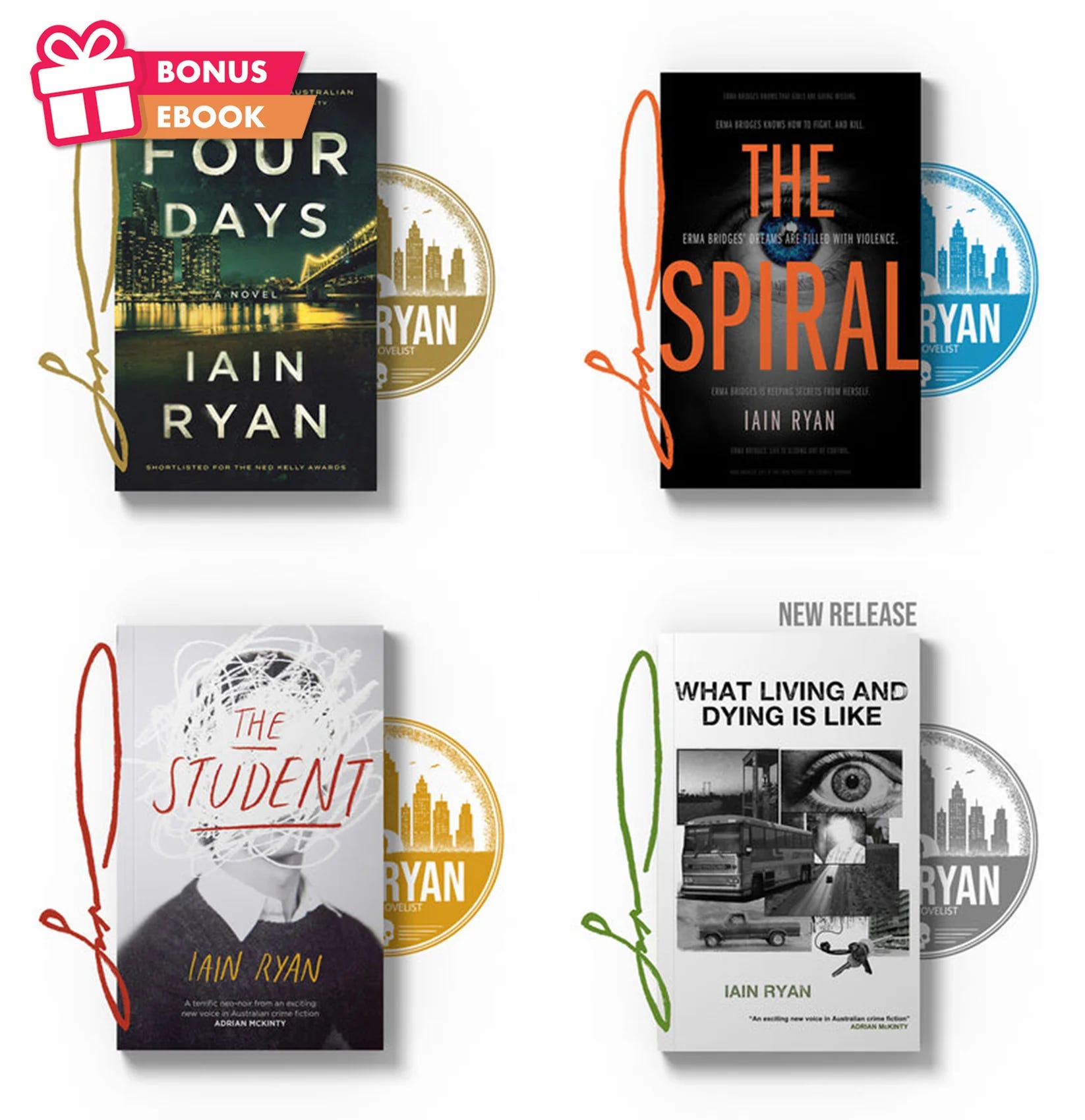
I AM INVITING YOU TO BUY MY BOOKS!
Comments
Nothing yet. Say the first thing.
Sign in to join the conversation.