
Hi, I'm Taylor Hughes. I'm the technical cofounder of Hypernatural, the best way for brands to make videos. I have shipped apps and built teams at Facebook, Google, and a bunch of start-ups in between.
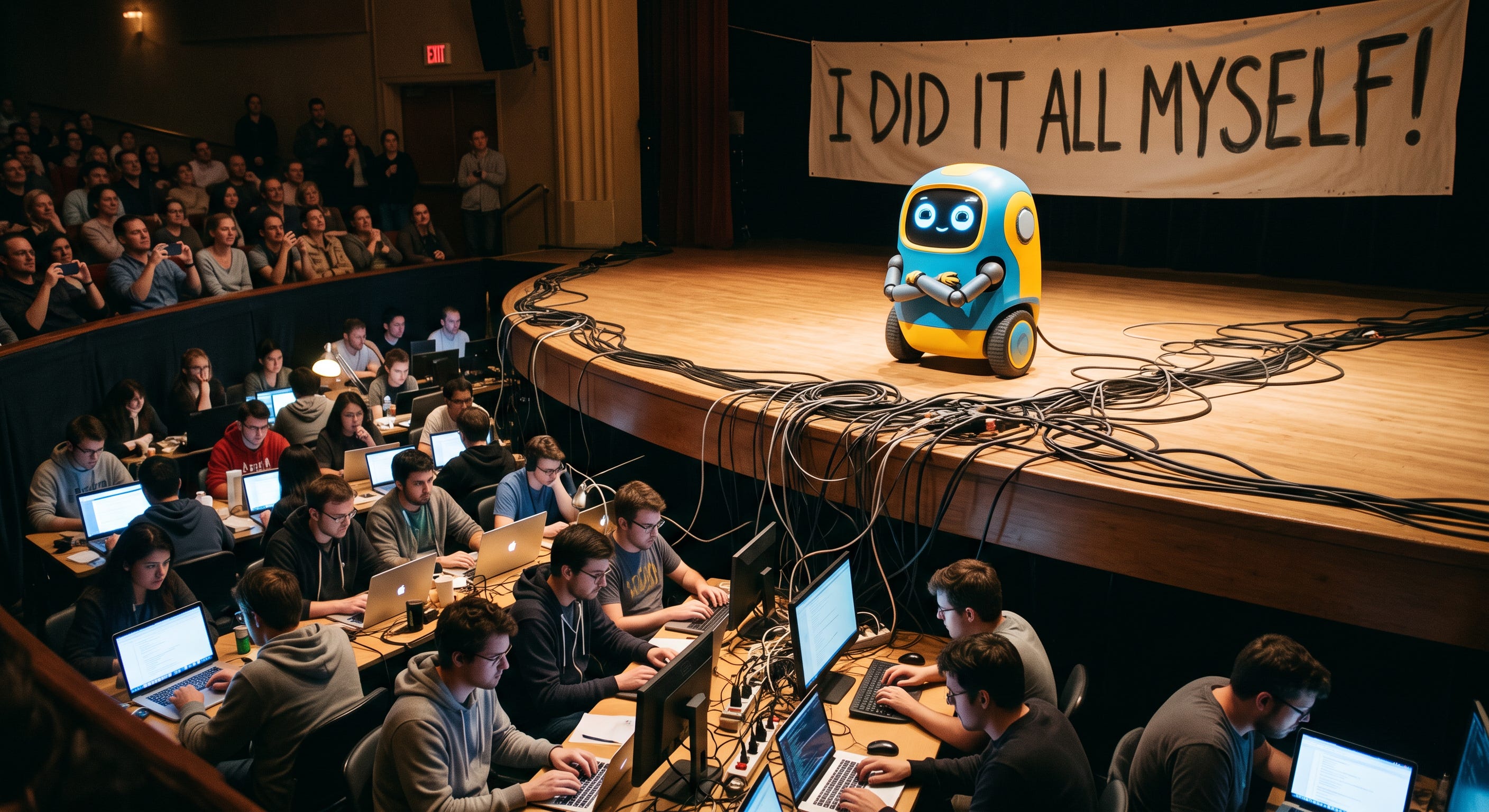
This spring, Claude built a brand-new version of Hypernatural in 2 days.
At this point, everybody knows AI coding tools are absurdly good at prototypes. What’s less clear is what a prototype is actually for — and what happens in the weeks after, when the demo has to become a product.
This post is about that process: how a 2-day throwaway prototype answered the craziest question at our company, quietly ate our existing product, and then demanded two+ months of very human work to ship it to real people.
Along the way, we also broke the oldest commandment in software engineering: We rewrote our product from scratch, and lived! Sort of. (“From scratch” is doing a lot of work in that sentence, and we’ll get to that.)
First, some context: Hypernatural has been trusted by millions of people to make videos across a wide variety of use cases: everything from small businesses promoting their physical products to storytellers sharing stories about Viking shipbuilding. We have tons of paying customers who were super happy with the O.G. Hypernatural.
We were also ahead of the industry on some of the gnarliest problems in AI video. Back in 2024, we shipped consistent characters across scenes — long before image reference models could do that reliably, and way before anything could do it for video. We hacked it together using duct tape and bubble gum (and a really-good-for-its-time faceswap model).
But at the end of 2025, the multimodal video models got better shockingly fast — and that’s when the old platform started to show its age.
Hypernatural 1.0 was built around spoken words. Every video was narrated, even a prompt like “a silent reflection on life through the eyes of a butterfly.” The old platform required words. (We have had so many support inquiries about building music videos — I’m sorry y’all!)
But once video models became good at generating audio themselves, things got weird. We figured out ways to make our old data model work, but eventually, the workarounds on workarounds started adding up. It was hard to even think about how to add silences. I came up with the bright idea of… invisible narration. (Ugh.)
We couldn’t help but think…
Do we need a new core data model? ...one that isn’t based on words?! But every engineer knows why that question is cursed. Rewrites are never a good idea. We have many millions of rows of user data tied to words.
So the question sat there, unfalsifiable and expensive. You can’t A/B test a rewrite. Historically, the only way to find out was to spend months building the alternative — exactly the mistake you’re never supposed to make.
Except with LLM coding tools it costs… (checks watch) about two days.
At the end of March, we pointed Claude at the question. Instead of arguing about the data model, we had it build a throwaway prototype of a completely different product: type a prompt, get a storyboard. Shots became first-class citizens, with music and narration as optional accoutrements. MTV, here we come!
We called it “Storyboard Chaos,” and the idea was that you could start with a vibe, or a shotlist ... or just a single image you dragged from your computer directly into the timeline.
Two days later, we were playing with it. And the moment we could touch the new product instead of whiteboarding it, the debate was over. Storyboard Chaos was janky and missing ninety percent of a real product, and it was still immediately, obviously right.
We started iterating on the prototype. We added the ability to animate scenes, we added the ability to export videos, we added support for more models. Within three or four weeks, our whole team was using Storyboard Chaos full-time for every video we made. By the end of May, nobody on our team was using the old tool at all.
Your own team abandoning your own revenue-generating product for a duct-taped prototype is a strong product signal. We spent years accumulating hacks for how to get things done in the old product, but we didn’t need them anymore.
At this point it was a question of when, not if, we wanted to ship this thing.
What followed was two months of the same hard, slow, human work that shipping a product has always required. We realized we needed to handle way more cases than we originally designed around. We did UXR sessions and realized how confusing it all was for anyone outside the team. We wanted to make image quality better and support more models than we did in the old world. We wanted to fix our credits system and the way subscriptions worked to be more aligned with our underlying costs.
And then, after weeks of daily use, it became clear this product needed something I never would’ve thought about building in 2023… a chat interface! (For video? Get outta town!) A conversation with an agent that builds your video with you… It’s so obvious now, especially because we have such a strong foundation of underlying tools that the agent can use in the editor.
So we rebuilt the new thing again … and spent weeks drilling into all of the ways it might get confused in responding to your requests. We built a tremendous system for running agentic eval as we modified the stacks of tools and prompts — all while feeding in prod baselines and bug reports to create a nearly self-improving loop. (It’s the first genuinely agentic part of our platform! More on that in a future post.)
All in all, getting ALL of this stuff into a place that was actually smooth enough to hand over to our users took about 3 months, from prototype to launch. Q2 was spent rebuilding the whole kit-n-kaboodle.
I lied before, and I’m sorry about that. You were right to call me out on it. When I told you we rewrote the whole product — Claude did not rebuild the whole product from scratch. It built a new core data model and editor interface in two days, on top of years of accumulated APIs.
Our codebase already knew how to write great image and video prompts. It already had first-class concepts for references, for characters that persist across scenes, for coherently telling a story across minutes of footage. It knew how to queue background work and percolate progress to the frontend. All of that was sitting there as reusable APIs — and Claude strung them together in a completely new shape.
Which means… I guess Spolsky was right all along about never doing a rewrite. (Damn!) The knowledge really does live in the code. We just kept every line of code that actually knew the hard things, and rearranged the way we called into it.
(This is also a warning: these tools amplify whatever foundation you have. If your core is a piece of shit, the AI will happily build you a brand new piece of shit right next to it.)
The most dangerous thing about Big Product Questions was never the answer, it was the cost of finding out. That cost has collapsed … well, at least in one very specific way.
If you suspect your product’s fundamentals are wrong for where the market is going, you no longer have to choose between betting the company and ignoring the question. You can spend two days and get directly to the bottom of it.
So don’t be afraid to revisit your fundamentals. Prototype the scary rewrite. It might eat your product from the inside like ours did.
Did you enjoy this post? Please share it and subscribe to the Hypernatural blog for more banging content like this, straight to your inbox!
No posts
Comments
Nothing yet. Say the first thing.
Sign in to join the conversation.