
It was a few highly energetic days, truly. We left feeling refreshed and involved, and with some strong memories. Such feelings started on the very first day, on Monday evening,with Richard’s presentation on the topic. He started by arguing that different pathologies are overlapping in permanent war as a topic, back to at least five hundred years of imperial and colonial past. What we experience in the present is not much different from past recurrences of thiscrisis. However, this one is unique in its depth and possible future significance. The contemporary crisis of the West, with its cultural crusade against the last bastions that remained of our civilisation is so strong that evidently it will complete afoundational change. The Americanisation of Europe, the universalisation of its uniqueness shifted away from the qualities its bared in the sovereign or in the international sovereign, from the separation of powers to their gatheringinto a globalist, hegemon will, which in our view can be called as The One. The second part of the presentation offered a six-fold classification of the radicalisation of universalistic tendencies: Hegelian, Kantian, Hayekian, Hobbesian, Leo Straussian (culminating with Peter Thiel), ‘ and Marcusian (to which later a seventh, Carl Schmittian was added), implying atransformation or rather cannibalisation of our very entity asbeing time and space constrained individuals.
On the same night, Gonzalo’s talk was focusing on the notion of the Hegemon, an automatic device, that occupies space in the monetary system, yet extendable to the world of politics and the economy at large. Here the main question is how to have one’s currency by making it paid by the whole world, or with other words, how to plunge the whole world into the servitude of one will and one suggestion, while icing insecurity, the permanency of wars, including emergency issues, and the global surveillance of all people into the impenetrable cube of necessity.
On the second evening, Bjorn shared with us his thinking on wars and revolutions. Their relation is not a very well-studied field, in spite of their evident centrality. They resemble in the way their imitative logic spreads over us and slowly coversevery segment of society, including education, especially theuniversities. War technologies, cyber wars, even total wars are eating themselves into the everyday, silently militarising our societies and people. Here social defence has no limits, no temporal limitations, neither spatial significance; permanent liminality overgrows every aspect and segment, without any boundaries. Even a simple anamnesis could record the gap between the anti-war demonstrations of the 1960s and the contemporary silence considering the renewal of the arm race, where external wars have become the absurd paradigm for inner security and peace, and where Denmark, formerly model of social democracy, now distinguishes herself in driving for militarisation. In such an absurd situation Ukraine, through her innovations in drone manufacturing, is now offered as a model for Europe.
Arpad’s presentation, started with a quote from Heimito von Doderer, concentrated on the problem of the absurd, as permanent war is. Looking into the root of the word ‘absurd’, it is the deaf one, the one out of place, displaced and without nomos (laws, but in a musical sense), so not to attuned to reality, either because of a deprivation of senses, or because of a learned ignorance about the order of nature. Here and now, the normalisation of the absurdity of war is taking place, a process similar to the one Herodotos described about the Persian Magi. This is being done by purely, or merely, intellectual means: the current “market economy” is just a permanentized fair, driven by expectations about anticipated earnings and debts, a kind of game of musical chairs, by which the future itself is as if bound; while the Hobbesian “war of all against all”, as Foucault argued in a 1976 Collège de France lecture, is a merely intellectual effort of being engaged in a verbal game of intimidation.
Wednesday was dedicated to Janos, Angela and Elisabetta. Janos has shown the invisible technology that can harm without seeing it. It is absurd, as it can go so deeply that not even a killer is conscious about his killing. Paradoxically, this new development did not eliminate the absurd, but made it more fashionable by breaking all tabu; a scandal of violence and making wars available as a new norm, normality. War became as if ordinary part of the everyday, without consequence.
Elisabetta gave a fascinating talk, sparked by a comic strip, on the no-war/some war topic, where the second one was represented by a man in suit and the first one by the common man, without knowledge about the higher interest of the second, the politicised one, who are decoding reality and defining order and classifying obedience to it in security, resulted in endless wars, in wars everywhere. War is thus not an event anymore, but an organising principle, a little bit like Marx defined and hoped or envisioned it. The result is, on the one hand, even the militarisation of humanitarian aid, where violence is no longer routine and banal, as envisioned by Hannah Arendt, rather becomes radicalised – leading to endless wars.
As the third speaker of the night, Angela discussed how the concept of deterrence has changed during the Russia-Ukraine war. While deterrence was traditionally associated primarily with nuclear weapons and the threat of devastating retaliation, the war has demonstrated how new technologies are altering this relationship. Inexpensive drones, in particular, can give smaller and conventionally weaker states the ability to challenge and inflict significant damage on a nuclear power. Ukraine’s Operation Spiderweb in June 2025 illustrated this transformation, as Ukrainian drones struck strategic Russian air bases and damaged nuclear-capable aircraft. Despite the scale and symbolic significance of the attack, Russia did not respond in the way that its own nuclear doctrine might have suggested. This raises broader questions about the credibility of declared red lines and suggests that political and military calculations do not always coincide. Rather than deterrence operating according to clearly established thresholds and predictable responses, the war points toward growing uncertainty about what actions will actually trigger escalation and how nuclear powers will respond when their conventional and strategic assets are challenged.
When we sat around on the following morning, the fourth day,to listen to Alicia, Harald, and Richard’s second part, it was already clear from the start that something extraordinary will happen. Harald started with evoking a song by Deep Purple, Child in Time, about the line that is drawn between good and bad, but not seen by the blind, as an illustration of frontline thinking, theme of his just completed manuscript, in which he explored the question of what made this our world borderless. In his talk he focused on those who are benefitting on wars, if not on permanentizing wars for their own profit. Here important episodes included Spain defaulting four times in the 16th century due to wars, while the idea of financing wars was invented at the same time by the Dutch – a main enemy of Spain. Thus, no state really ever won the wars, but only theycould have the deliberate aim to continue wars into infinity. It is therefore not surprising that Nietzsche, in his early Untimely Meditations, claimed that states don’t know what they are doing.
Alicia followed, as witness to a par excellence case of permanent war, using the case of Burma, based on her fieldwork. Burma and its history of an almost permanent, multi-front warfare, from British Burma to Myamars’smilitary state has been going on for two centuries. Yet it is rarely discussed in the “world”, though Burma is a large country, of about fifty-five million people. The overall outcome is a permanent state of violence where even the hope that this can be altered is all but gone – even the relatively recent decade of attempted democratization did not manage to alter this.
In the second part of his talk Richard emphasised that the“Political West”, a concept he introduced in the first part of his talk, but which he discussed already in previous writings and talks, is an Americanised West, but as it is gradually losing the conditions of governing itself, lurking into a constitutive Void, from where is no escape, it can equally be called the Orientalised West. A main sign of such a constitutive void is the undermining of sovereignty. It is but ano-state, which shows the case of impossibility (which we do not know how it started and where does this go), but moving as if an automatised machine. The overall outcome is that confidence in a better future is being undermined.
The concluding session returned to some of the central themes and yet unformulated questions. The constitutional void, the undermining of sovereignty, can be explained by the increasing permanentisation of the state of emergency – as, if the sovereign is the one who decides about the state of emergency, then, under the conditions of a permanent emergency, this function becomes irrelevant. So, perhaps, the sovereign should be the one who manages to declare a state of normalcy … We also discussed the question whether we can hope for a better future, and whether this can imply some kind of return to a “high modernity”. This was the hope of Richard, while for Arpad there is no hopeful future inside modernity; it should rather be search in a reassertion of a Renaissance. He furthermore argued that, given that our problems are intellectually stimulated, both concerning the Hobbesian war driven by insinuations and expectations, and the economy similarly being spun by anticipated earnings, the most important efforts to get out of the current stasis must also be intellectual.
In sum, modernity lost the experience of the threshold, and is now navigate itself in the flux of liminality, without knowing what liminality and flux means in reality. As an illustration of this ignorance, we repeatedly evoked the Talking Head song “Life During Wartime”. In the real world liminality has no meaning; meaning is linked to positive, giving principles, while negativities: no names, no identities, no space and no time relations, no possessions, no properties, no characters, no belongings are absurdities, thus not real at all. Voided entitiesare just vessels, as we witness the voided democratic institutions, the emptying of the parliament of its legislative power and transferring this to second organisations, now without proper rights, guaranties and political engagements,but marked by hegemonic privileges, security issues, permanency of wars, ongoing emergencies, illegitimate observation of people. Vessels that are ready to be filled with whatever content is coming to be fashionable.
Permanent wars are like a content deprived of any meaning, but which keeps going to fill loves, desires, and necessities.With the difference that being just a space-keeper, they also serve to produce unending victims for the moving of the machine, that with its every turn is milling energy out of its subject for its further, meaningless, empty moves.
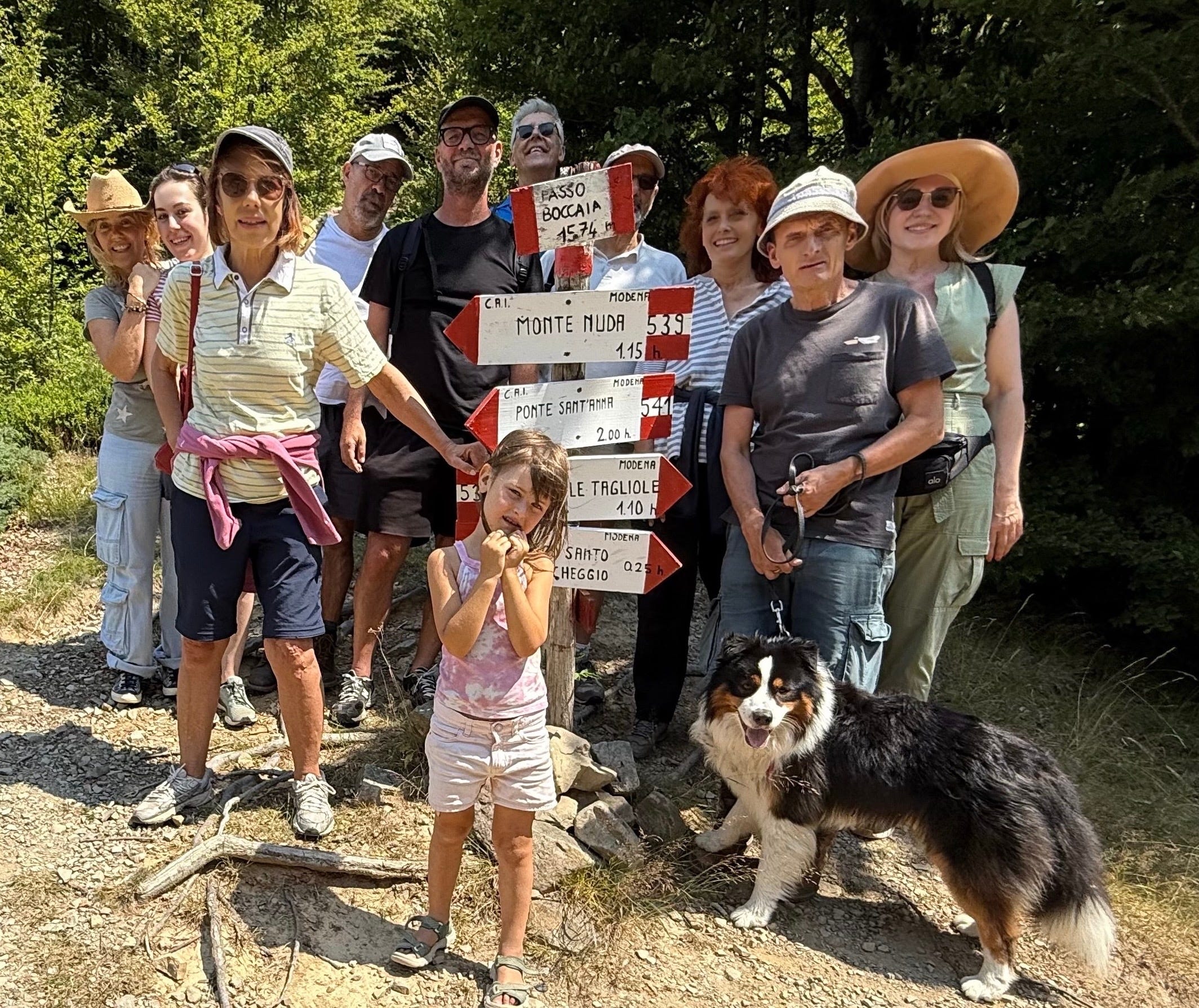
The resume of the talks of the 2026 IPAA Meeting in the Apennines by the participants: Bjørn Thomassen, Richard Sakwa, Angela Borozna, Arpad Szakolczai, Harald Wydra, Elisabetta Brighi, Gonzalo della Cordoba, Alicia Stevens, Janos Szakolczai. Convener: Agnes Horvath.Thank you for the warm support from Alejandra, Roza, Kassia.
Comments
Nothing yet. Say the first thing.
Sign in to join the conversation.