
By Arpad Szakolczai
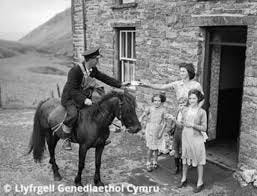
Please, Mister Postman, look and see
If there’s a letter, a letter for me
I’ve been standin’ here waitin’, Mister Postman
So patiently
Carpenters, 1974
Once upon a time, there was something called a ‘postal service’. For quite some time, there wasn’t a simpler thing in the world – say, the ‘developed world’ – than receiving mail – a postcard, a letter, a package: anything. Reading classical novels, for e.g. Dickens, one is struck by the ease by which people regularly exchanged correspondence, often several times in the day, and the mail was delivered – at least, in London. But even according to French films in the 1960s, the almost instantaneous delivery of postal messages seemed to have been taken for granted.
Postal service, in Italy, was notoriously bad, since quite some time. The main reason, ostensibly, is the presence of Trade Unions. Any mention of Trade Unions touches on one of the most ideological discourses of our times; for a right-wing pro-business politician it is compulsory to attack them, while for academic intellectuals, who presumably are de rigueur left wing, their defence is obligatory. However, Trade Unions originally served the purpose of defending the workers from the capitalists, while now they mostly collect together public employees who organise themselves against the state – not the capitalists, but the supposed Welfare State which is the other main enemy of the right-wing pro-business neoliberal politicians – so the situation is quite more complex. And evidently irresolvable.
At any rate, it is the malfunctioning of the ‘state post service’, and not only in Italy, which supposedly required the launching of free-market courier services. Which, far from ‘solving’ the ‘problem’, rendered the delivery of packages increasingly a nightmare – at least, for some people, in some places.
Let’s see in some detail what is going on. My examples are from personal experience in Italy, but I do have some independent confirmation of my experience, from other people in several places.
Over the past decades, for a series of reasons – mostly internet shopping, exacerbated by Covid – the role of courier services became ever more important. Thus, one would expect them to work better all the time. However, in my experience, the opposite is happening.
Let me try to explain why.
In the past – not in the good old days; say, up to 3-4 years ago – a delivery company came to the house, left a note if one was not at home, which was often the case, indicating the date of the next attempt at delivery, and made two more attempts. History still kept a hold; as the films said, The Postman Always Rings Twice. I purposefully don’t mention names, as our experiences with all the main names got significantly worse over time – UPS, GLS, Fedex, DHL, you name it. Compared to this, in the past few years, even literally the past months, in a sky-rocketing acceleration, literally everything but everything got worse.
Let’s start with email notification. In the past, we got a notification that the courier would soon come, then a specification of the date, the fact of the attempt, and the next possibility. The messages sometimes were even too much. Recently, such messages became rarer; perhaps one about the attempt; but then nothing – usually we were able to detect that they failed, and by insistently searching for the package, could discover a way to redirect it. But this became increasingly more difficult, as for such redirection we needed to login, have the password, change the password, which then never arrived, and so on. Which increasingly generated a sense of powerlessness – you needed the package, gave the right address, but then you were at the mercy of the courier, even more helpless than you had been in the past with the standard state Italian mail service.
But let’s move from emails to the physical delivery. In the past, say up to about five years ago – an important date, because it is connected to Covid, with and after which the recourse to postal delivery intensified – one became less and less certain than the delivery company actually came. They claimed we were not at home even when we were, so probably never came; or if they were actually around, they did not care to ring, only left a note that they were here and would come again – but did not leave an indication when, failing to properly fill out their own notice slip, and to be sure never again came – though on the internet they indicated that they did. More recently, just a couple of months ago, a package was sent back to the publisher, which I discovered only through internet tracking: they claimed the address was not correct, which was not true, but did not offer another delivery, and I was not able to redirect the package, because their online service did not work. At least I could not make it work, despite spending a lot of time on it – which is increasingly the case, and not just with courier companies: using internet services increasingly requires more and more competence, a part of the strategy to force us to spend our time familiarising ourselves with technology, systematically building up technology dependence.
The overall outcome was that I became genuinely intimidated concerning the address I should give, as our house is at the very margin of the city. So I decided to indicate, instead, one or other of our sons. For a time this worked, as they, or their wives, were at home more frequently, but very recently a package was returned even from their address, claiming that the delivery company encountered a gate to be opened only with a secret code! This was nonsensical, so I was not sure whether they never went there, or could not find the bell on the gate – which of course is absurd.
Our nightmare experiences were intensified when another of our sons moved to an address in the countryside where the legal street address did not come out in Google Maps, and he needed a number of deliveries to set up the house. This was because it was a very small community on a hilltop, of about ten houses, and so street names were irrelevant. We indicated this in the orders, but evidently the delivery company failed to read this, as likewise the phone number provided, and we regularly received email notification that the address was incomplete. Which it wasn’t; and one only need have consulted the map, Google or other, to see that the locality is so small that a street name is irrelevant, and at any rate everybody knows everybody else – especially the newcomer as newcomer. But they did not care to look it up – or had no time – perhaps they did not even insert the address to Google Maps, likely an AI did this, which then automatically generated the message to us that the address was incomplete. The full result, again, is powerlessness – and a worse powerlessness then when there are humans involved, and one can arrange things verbally.
So what is going on?
Let me try to put two and two together, though here some good research would be important, and of significance for many. There are quite a few delivery companies, competing with each other, but they all are enormous multinational/global organisations. This means two things. First, that they do not have local knowledge, and they try to hire a cheap labour force, usually foreigners with minimal local knowledge, who don’t have it either. Second – and this is a very important revelation about the utter nonsense of the neoclassical pricing theory of neoliberals like Milton Friedman, concerning ‘no free lunch’ – payment is not made per delivery; rather, large, mostly online corporations like Amazon, or major book publishers, make multiyear contracts with the large delivery companies, and so single deliveries are not priced. But this leads to a situation where, say, the delivery of books from London or Berlin to Vienna or Milan is simple, especially to places where there is a high density of housing with easy car access, but anything falling out of the common traffic represents a price burden. Thus, delivering an extra package to such a suburban city area is practically free, while delivering it to a relatively isolated rural community is extremely costly. This is economic rationality. However, real, substantial, living rationality is the opposite, meaning that in large cities people can in any case buy items nearby, and it is especially the more remote communities which need home delivery.
But they, evidently, don’t get it, as courier firms obey an economic logic, which means that they try to undercut their competitors, following the absurd logic of ‘cutthroat competition’, which means trying to save on the more ‘costly’ deliveries. One way of doing which is to overload the drivers, who need to deliver an increasing number of products to ever more distant areas. Certainly most of us have had experience with courier vans driving with mad speed, performing shocking ‘competitive’ driving acts like dangerous overtaking, try to save on time – the ‘real’ outcome of companies saving costs by ‘competition’.
But is there a solution? Yes, to be sure – but for this the ‘free market’ and the ‘state’ should be forgotten as exclusive alternatives. Postal service, or the delivery of goods in a larger, regional or national area is certainly not something like the baking of bread, where anybody can set up a bakery, so where the basic underlying principles of the ‘free market’ are met. Incidentally, the ‘free market’ does not work even there, as in the two countries where historically the logic of the free market is most closely followed, the US and the UK, the quality of bread is atrocious, and it is not small bakeries which bake bread, competing with each other to improve quality, but large chains that ‘produce’ bread, or what is called such, in industrial quantities and using industrial methods, but whose product is not really suitable for human consumption.
But similarly, a postal service should not have to do with the state as ‘monopoly of the legitimate use of violence’ (Max Weber) – just as applies for education or the health service, which are similarly far from defending citizens from external or internal violent actors. Rather, as it is focused on the proper organisation of the delivery of goods, this should be primarily a local concern, run by independent local councils, where the task of getting the goods to people should be a privilege and a most respected work to do, both concerning its organisation and actual execution, and where those dealing with it should consider it as a meaningful life service, not a temporary way to make ends meet.
This might sound utopian, but this is only if one takes for granted the current degree of overall existential corruptness, which indeed exists, but is not real – part of our overall unreal reality, or absurdity. The first step to setting up such a service is to realise that the postal service is a natural monopoly – like roads, electricity, or water. The idea of ‘natural monopolies’ was a central part of economic theory up to a few decades ago when – as part of the aggressive and coordinated neoliberal/rational expectations/rational choice takeover – it was removed from economics textbooks, together with any other reference to ‘nature’ or something being ‘natural’, as part of a systematic ideological campaign. But the existence of ‘natural monopolies’ is trivially true – indeed natural. This simply means that there is one electricity line to every community, just as there is one road between two localities – there evidently should not be a series of electric lines, which indeed happens in Sao Paolo, for obscure historical reasons, serving as further illustration to the absurdity of the ‘free market’ logic.
The questioning of ‘natural monopolies’ does not question this, but claims that there should be several companies who are ‘managing’ (the magic buzzword of our times! All power to the managers! The slogan of the day – and the illuminated highway to Hell) the single line. But it does not take much to realise that this is the wrong idea, and only leads to the unnecessary multiplication of meaningless organisations. This can be well seen with the courier companies, where now every day half a dozen or more delivery vans are running along the same lines, polluting the air and contributing to traffic overload, while the many drivers only exceed each other in their lack of local knowledge. Managerial economists would explain why all this makes sense, but it doesn’t, except through the ideological terminology which is theirs, and which only leads to world destruction.
Since the 17th century, European thinking and increasingly political, economic, and social life is caught in the binary logic of markets and/or states. But this is not a natural development, or overall progress, only a sleepwalking into entrapment. We are now fully entrapped in it, and must find a way out. Thinking about the best way to organise the delivery of goods is just a small step towards it, but must be done. Together with thinking about the right way to handle education or health. Not by the logic of ‘reform’, which only results in permanent liminality, so the void, but by setting them up the right way.
If we start to think, finally, we might find it. A right way, which coincides with the Common Good. Which again exists, and we might find it, instead of constructing various fakes and traps.
Comments
Nothing yet. Say the first thing.
Sign in to join the conversation.