
Gifted thinker Randy Crossman argues against making the vague concept called “residential school denialism” a criminal offence, stating that it would criminalize historical debate and infringe on freedom of expression. He highlights the importance of open inquiry in democratic societies and the risk that such a law could be misused to prosecute competing historical interpretations. Crossman also points out that existing laws against harassment and hate speech already address harmful conduct targeting individuals, making any new legislation redundant.
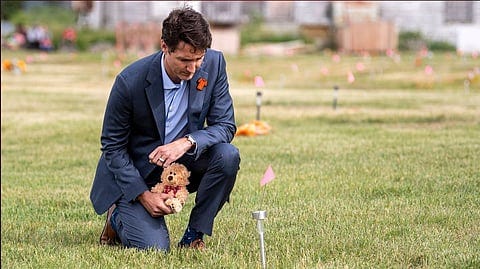
Survivor accounts of residential schools vary — sometimes from the very same person. Nunavut Senator Nancy Karetak-Lindell told Nunatsiaq News in 2001 that her time at Akaitcho Hall was “a home-away-from-home” and that “it’s not like what you’re hearing about all the residential school issues today.” In the same piece, she said, “At Akaitcho, we were in a structured environment compared to where we came from. That taught us perseverance and how to discipline ourselves.” “It taught us a lot about doing things in life that we didn’t always want to do, but those things had to be done ... We had to learn how to live with people from different cultures who spoke different languages and came from different parts of the NWT,” she continued, adding that those friendships helped her political career.
Twenty-five years later, it was the same senator, now describing herself as a residential school “survivor,” who stood in the Senate and introduced an amendment to Bill C-9, the Combatting Hate Act, that proposed making residential school “denialism” a criminal offence.
On June 3, the Senate voted 41-32 against it, even though the Standing Senate Committee on Human Rights had recommended it 7-1 two days earlier. Government representative Pierre Moreau told the chamber why it failed: no consultation with First Nations and Inuit communities, and no legal analysis of what the amendment would actually do.
The Assembly of First Nations didn’t let it go. On July 15, chiefs at the AFN general meeting in Ottawa passed an emergency resolution demanding the government try again. Chief David Monias called it a matter of honouring survivors. Grand Council Chief Linda Debassige said the history “isn’t up for debate,” arguing hate-speech law is needed so denialism can no longer “prey upon survivors, their families, or our people.” NDP MP Leah Gazan has a private member’s bill on the same subject sitting in the Commons since 2024 — this fight isn’t over just because the Senate voted once.
Comments
Nothing yet. Say the first thing.
Sign in to join the conversation.