
The wrestling world changed forever with a kick.
Akira Maeda was famous for them. He threw them with the casual violence of a man who viewed his own body as a weapon and his opponent’s body as a suggestion.
But he had never thrown one quite like this.
It was November 19, 1987. The venue was Korakuen Hall, a cramped, concrete box in Tokyo known as the “Sacred Ground” (Seichi) of martial arts. Two years after their return from a failed exodus, the wrestlers of the Universal Wrestling Federation (UWF) still carried the scent of danger. They were the “invaders” in New Japan Pro-Wrestling, men who wore dark suits and refused to smile. Every time they stepped through the ropes, the friction was palpable—a static charge waiting for a spark.1
On this night, the spark found powder.
In the center of the ring, Riki Choshu was doing his job. He was the “Revolutionary Warrior,” the man competing for the throne in a post-Antonio Inoki future. He had grabbed Osamu Kido, a UWF veteran, and twisted his legs into the Sasori-Gatame—the Scorpion Deathlock.
Choshu sat back, grimacing at the lights, pulling on Kido’s legs. It was a pose. It was theater. It was the “Business.”
Maeda stood on the apron, watching. He stepped through the ropes to break the hold.
Business as usual.
Except it wasn’t.
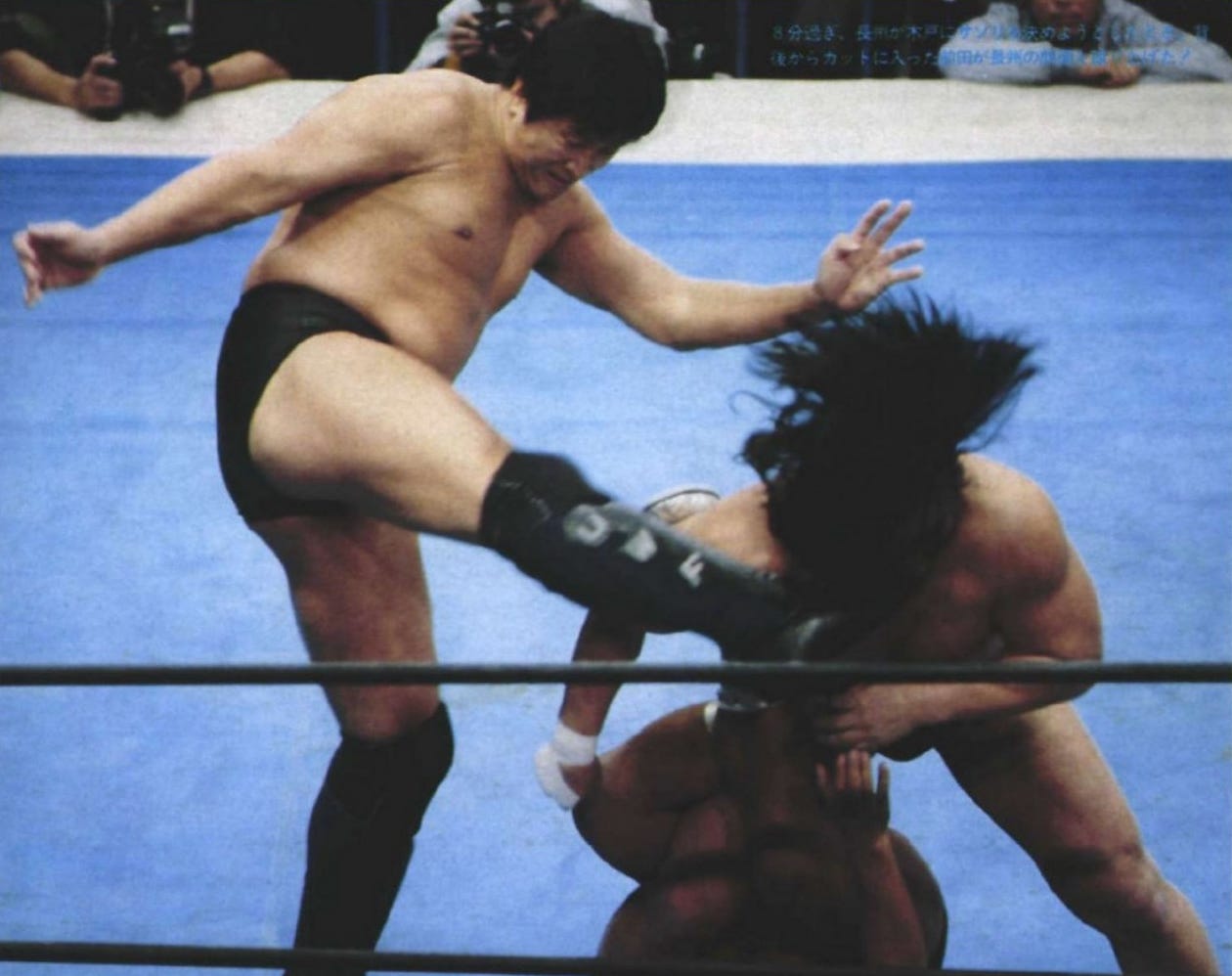
Maeda didn’t stomp. He didn’t chop. He didn’t play to the crowd. He walked up behind Choshu, tapped his shoulder, and as Choshu turned his head—trusting the rhythm, trusting the work—Maeda threw a right high kick.
It did not make the sharp thwack of skin slapping skin, the noise of the work. It made a dull, wet sound. The sound of a heavy book dropped into mud.
Maeda’s shin connected directly with the orbital bone of Choshu’s right eye.
Choshu didn’t roll away. He collapsed in on himself, his legs wobbly, his hands clutching the ropes to stay standing. He staggered but never fell, a hell of a man. But still just a man.
He could bleed. He could break.
The diagnosis would be clinical and brutal: Fracture of the right orbital floor (Ganka tei kossetsu).
The arena went dead silent. When he got his bearings, he went after Maeda, if half-heartedly. Maeda swaggered forward, awfully John Wayne for a fighter who’d kicked someone who wasn’t looking. Men filled the ring. Whatever was happening, it was no longer a wrestling match, at least in the traditional sense.
The controversial match was never aired on television.
Shigeo Miyato, a Maeda disciple, was there that night, a young boy just integrating into the New Japan system. In his book, UWF: The Strongest Truth, he described the aftermath, the uncertainty suddenly a palpable, almost living force:
The match ended in chaos, unsettled. The violence lingered in the air, and we feared a brawl in the dressing room. Maeda was incandescent with rage.
“If they’re coming, let them come!” he roared in the back. “If they have something to say, I’ll finish it right now!”
He refused to back down. I remember Nobuhiko Takada and the others frantically trying to soothe him, eventually wrestling him into a car to get him away from the venue.
Was the kick an intentional execution? Was it the act of a Zealot lashing out against an industry that was dying slowly, choking on its own artifice? Maeda had spent years screaming that the “Old System” was fake. When he saw Choshu posing in that submission hold, perhaps he decided to remind everyone what “Real” felt like.
Or was it the reckless mistake of a paranoid man? Just hours before the match, an executive had whispered a rumor to Maeda: “Starting next year, we are moving to individual contracts.” To Maeda, this wasn’t policy; it was an assassination attempt on his “UWF Family.” He believed the office was plotting to split them up, to fire the weak and keep the strong. He had made commitments to these people. Uprooted his life for these people. This was not a move he could take lightly. He had an obligation.2
He entered that ring feeling like a cornered animal. And a cornered animal doesn’t care about workplace safety; it cares about survival.
Or, perhaps, was it simply a “receipt” gone wrong? A moment of frustration where Maeda meant to “snug” the kick—to hit him hard enough to bruise the ego—but the angle was wrong, the force was too high, and the bone was too weak? “It wasn’t intentional,” Maeda would later claim, his voice flat. “It wasn’t an incident, but an accident.”
The answer is, as it so often is, in the eye of the beholder.
To his enemies in the New Japan front office, it was “The Maeda Incident”—a convenient excuse to exile a dangerous employee who refused to follow the script. To the fans, it was a revelation. It was the moment the veil dropped.
To Maeda it was an answer to what they were doing on the other side, an attempt to heat things up the way Genichiro Tenryu was generating excitement with Baba’s group.3
“Over in All Japan Pro Wrestling, Tenryu and Wajima were doing something outrageous,” Maeda recalled. “They were pounding each other for real (nama). From our perspective as pros, it was unbelievable. Both of them were taking clean shots. It wasn’t half-hearted. When I saw that, I thought we had to go above that. If Tenryu and Wajima did a match like that, our shadows would fade... there was that fear. That was true radical pro wrestling. And this impatience exploded.”
Whatever the truth of the moment, it has long since moved beyond the realm of fact. November 19, 1987, lives now in lore. It is the story of two men—the Mercenary and the Believer—colliding in the only way they knew how. But it is also the story of a birth.
Because when that bone broke, it didn’t just end a match. It broke the timeline. The “King of Sports” died on the canvas that night, and something new, something violent and religious, was about to be born from the blood.
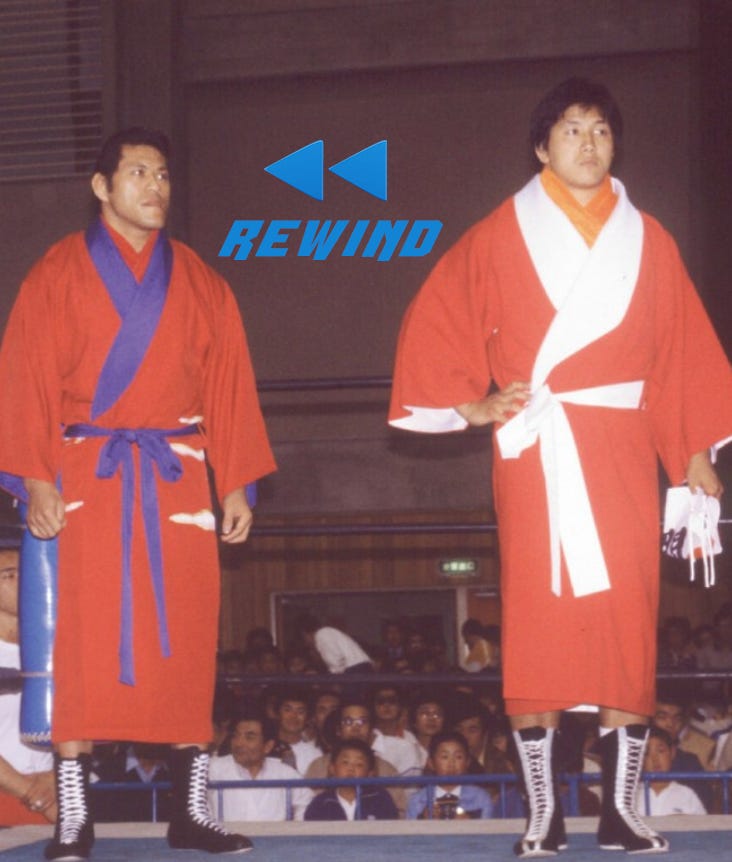
Say what you will about Antonio Inoki—he was not a man who dreamed in two dimensions. To Inoki, wrestling was not a mere carnival sideshow; it was a vehicle for global diplomacy and personal mythology. He fought Muhammad Ali. He negotiated with Saddam Hussein. He would eventually stage a festival for peace in North Korea. To dream for Inoki was to believe.
But in the early 1980s, Inoki’s most recent dream was rotting in the Brazilian sun.
He’d turned his considerable powers toward the global energy crisis, investing heavily in a bio-venture called “Anton Hi-Cell.” The plan was visionary: ferment sugarcane waste (bagasse) to create cheap fuel and cattle feed.
The reality was a disaster. The fuel was too expensive to produce. The cattle ate the feed, developed severe diarrhea, and died. And as inflation in Brazil skyrocketed, Inoki didn’t cut his losses. He doubled down. He raided the coffers of New Japan Pro-Wrestling as if it were his personal piggy bank.
It was a tragic irony. On the surface, New Japan was in a Golden Age. Tiger Mask was a cultural phenomenon, drawing legions of new fans—housewives and elementary school children—who lined up for hours just to touch his cape. Choshu and Fujinami were in place as the next heavyweight stars. Maeda lurked as the next big thing. And Inoki was still Inoki. The venues were sold out. The television ratings were over 20%.
But backstage, the company was insolvent. Lieutenants were ordered to put their houses up as collateral. Rank-and-file wrestlers were coerced into buying worthless “Hi-Cell” corporate bonds. The locker room, once a brotherhood, became a place of suspicion and debt.
“In the spring 1983 contract renewals, most wrestlers were offered no raise,” Ken Yanigisawa wrote in UWF in 1984. “(The wrestlers asked) ‘The crowds are this big, so why are our salaries so low?!’
“... on June 18th, a New Japan Pro-Wrestling shareholders’ meeting was held. It was reported that against sales of 13.58 billion yen, the retained earnings were a mere 7.5 million yen. When sales manager Naoki Otsuka, attending the shareholders’ meeting for the first time that year, investigated the financial situation with Kotetsu Yamamoto, it was discovered that the accounting had been cleverly manipulated to divert money to Anton Hi-Cell.”
By August, Inoki had offered his resignation, if not in disgrace, in behind-the-scenes ignominy. But just three months later, he’d returned, inserted back into the Presidency by TV Asahi, which declared “There is no New Japan Pro Wrestling without Antonio Inoki.”
Needless to say, the rank-and-file were not pleased.
As 1984 dawned, the two brightest young heavyweight stars in the company looked at the “King of Sports” and saw a tyrant. They both decided to leave. But they left for very different reasons—and very different destinations.
Riki Choshu was a realist. An Olympic wrestler who had been told he was “too small” for the heavyweight division, he viewed the industry through a cold, transactional lens. He saw Inoki burning money in the jungle, and he made a calculation: I am an asset, and this asset is being devalued.
He didn’t want to change the sport, despite his own marketing. At least not change it in a fundamental way. He wanted to own his slice of it.
Choshu joined forces with a brilliant producer named Naoki Otsuka to form “Japan Pro-Wrestling.” They didn’t just defect; they invaded Giant Baba’s rival promotion, All Japan Pro Wrestling. And they did it with a war chest that would have made Inoki weep.
The matches were brilliant. So was the money.
Otsuka had secured a meeting with Katsuji Takeda, a wealthy furniture store tycoon. In a hotel room, Takeda made a phone call to his wife, who arrived shortly after carrying a simple paper bag.
Inside the bag was 140 million yen in cash.
Takeda handed it over without a contract. “I am investing in your guts,” he told them.
With that capital, Choshu became a superstar. He traveled in luxury. He pioneered the “Sold Show” system, bypassing the shady traditional promoters to sell entire events to legitimate local bosses—sake brewers and chamber of commerce leaders—guaranteeing profit before the bell even rang. Choshu proved that if you treated wrestling like a business, you could get rich.
Akira Maeda didn’t care about the business. At least not in the same way. He cared about the Truth.
Maeda, along with his mentor Yoshiaki Fujiwara and the original Tiger Mask (Satoru Sayama), formed the Universal Wrestling Federation (UWF). Their goal was to strip away the pageantry and present wrestling as a legitimate sport.
It was a romantic idea. It was also a financial suicide mission.
Without the “sake brewers” or the paper bags of cash, the UWF starved. The reality of their revolution hit home in Hagi City, Yamaguchi Prefecture.
The crew set up the ring in a drafty gymnasium. There were 30 staff members and wrestlers present. There were only 25 paying customers in the seats.
Maeda, the “Ace” of the promotion, had to swallow his pride. He put on a track suit and walked the streets of the town, knocking on doors like a desperate encyclopedia salesman. “Please,” he begged. “It is real fighting.”
“Maeda-san,” an old woman told him, “you are a kind man.”
She bought a ticket out of pity. Maeda realized then that “tickets are heavy.” Every single person in that gym was a weight on his shoulders. But as the debts mounted and the “UWF Family” faced ruin, Maeda had to make the hardest choice of his life. To save his crew—Takada, Yamazaki, the young trainees—he had to crawl back to the Mad King.
Maeda returned to New Japan in 1986 not as a hero, but as a prisoner of war.
The “UWF Army” was treated with open hostility. They were isolated in the locker room. Inoki, sensing Maeda’s dangerous popularity, decided to break him.
In April 1986, someone from the New Japan office sent Andre the Giant to Tsu City with unspoken orders to humiliate Maeda. The match remains one of the most uncomfortable spectacles in wrestling history. Andre arrived drunk and refused to cooperate. He stood in the center of the ring, a seven-foot wall of indifference, daring Maeda to try his “shoot style” moves.
Maeda realized the company was trying to kill his career right in the middle of the ring. So he stopped wrestling and started chopping. He kicked the Giant’s legs until the monster collapsed.
Maeda survived the trap, but the paranoia took root. He began to see enemies in every shadow.
By 1987, the stage was set for the explosion.
Riki Choshu returned to New Japan as the conquering hero. He had made his millions in All Japan. A flashy young star, he had stripped off his gold chains before entering the boardroom to negotiate his comeback, a show of fealty to Inoki.4 But everyone knew the truth: Choshu was a power player now.
And he would need to be.
When he walked back through the curtains of New Japan in 1987, he wasn’t just returning to fight Inoki. He was walking into a war zone that already existed between Inoki’s loyalists and Maeda’s UWF.
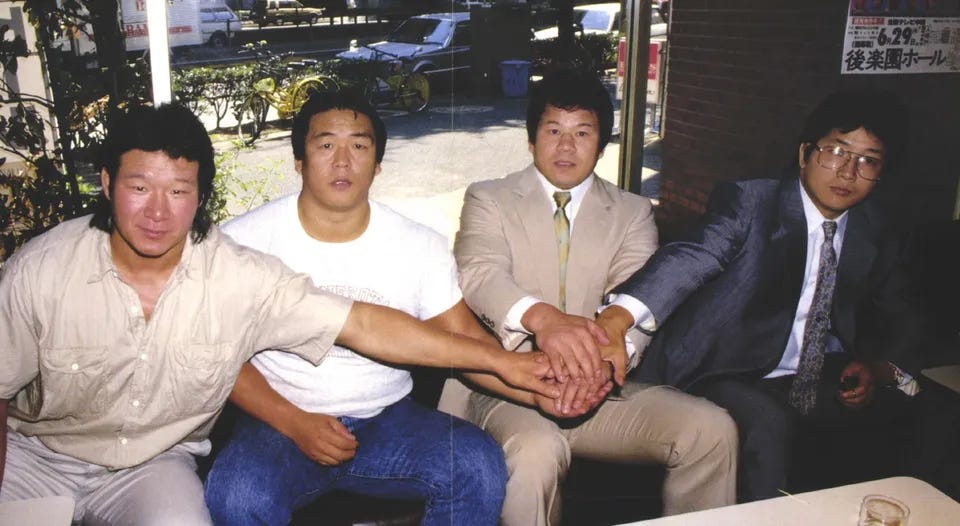
The “Generation Struggle” (Sedai Toso) was the promotion’s solution to the tension, intended to be the grand narrative of 1987—a civil war between the “New Generation” (New Leaders) and the entrenched “Old Guard” (Now Leaders). On one side stood the uneasy alliance of Riki Choshu and Akira Maeda, two wolves forced to hunt together, demanding the throne. Standing in their way was the immovable wall of the establishment: Inoki and his lieutenant Seiji Sakaguchi, men who controlled not just the ring, but the flow of money and power. It was supposed to be a revolution; instead, it became a pressure cooker, as Inoki deftly manipulated the younger men’s egos, stepping aside just enough to let Choshu and Maeda turn their fangs on each other rather than the king.5
Inoki, the wily survivor, maneuvered out of the way, focusing his attention on Masa Saito. Soon enough, the old guard side included Young Lion Keiji Muto, proof the generational battle had become meaningless theater. The narrative had lost all steam. It was no longer about sweeping out the old and the new blood ascending. Inoki had, as was his wont, found his way into the comfort of the briar patch.
The top prize remained in his grasp and his grasp alone. Rather than be deposed, he let the two young wolves turn on each other instead, competing with Fujinami for the silver medal. On one side: Riki Choshu, the Company Man who believed in the “Work.” On the other: Akira Maeda, the Zealot who believed in the “Shoot.”
They were two men defined by their exiles. One had learned that wrestling was about making money. The other had learned that wrestling was about survival.
When they stepped into the ring on November 19, 1987, there was no room left for negotiation. Choshu went to apply a hold. Maeda went to apply a verdict.
In the days after the kick, Tokyo was alive with thrilling energy, fans and wrestlers alike shaken by the removal of any limiters, by the implicit foundations of the very enterprise being challenged so brazenly.
The press had been summoned for an emergency conference. They expected a storyline, perhaps a worked angle to turn the chaos into ticket sales. Instead, they found Vice President Sakaguchi wearing the grim expression of an undertaker. Flanking him were Kotetsu Yamamoto and senior referee Mr. Hattori.
They were not there to promote a fight. They were there to explain one, a delicate dance in light of the fact they still presented pro wrestling as real.
“If we condone this,” Sakaguchi said, his voice flat, “it becomes a chaotic brawl. A kill-or-be-killed situation. We have to draw a line.”
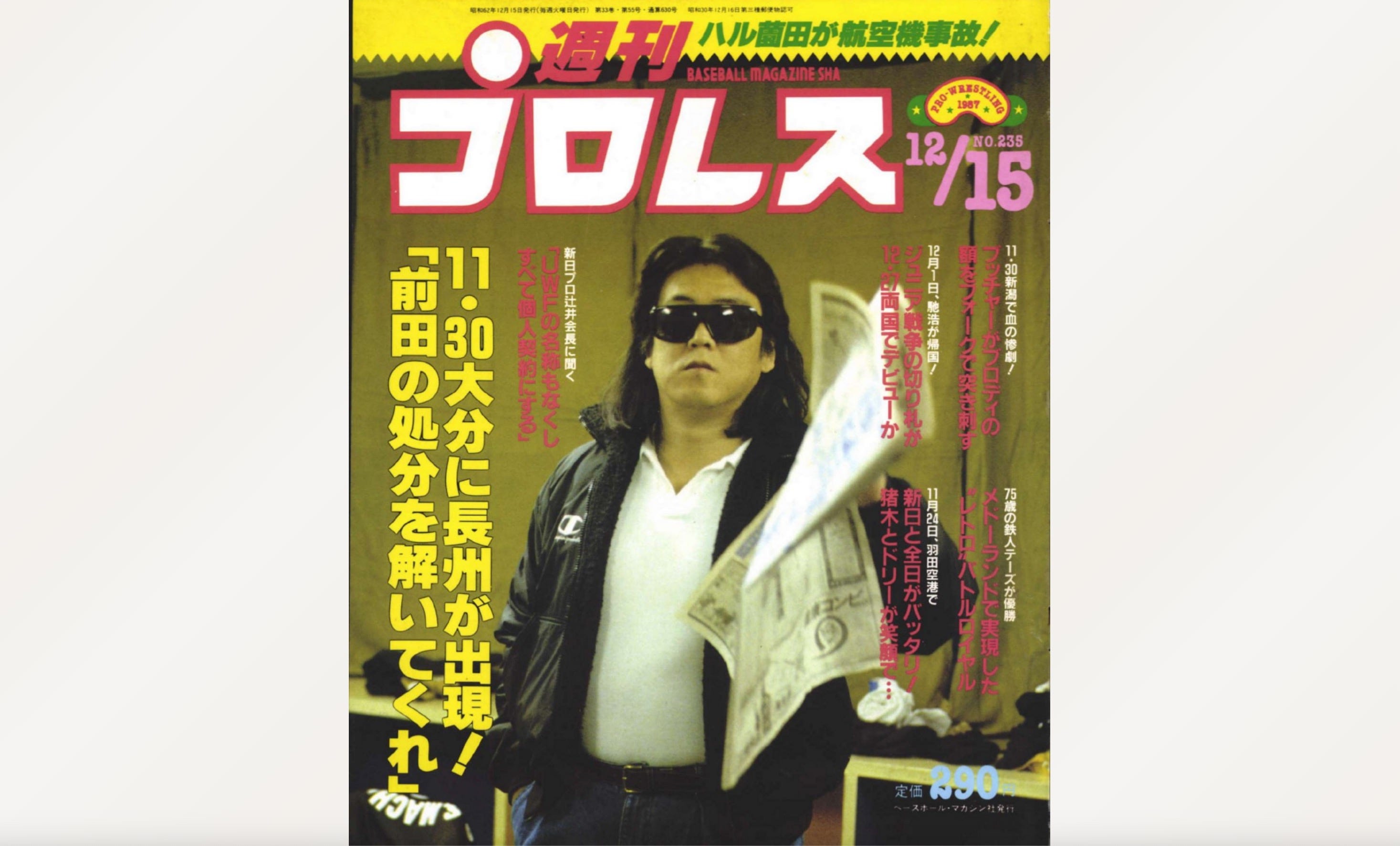
The medical report from the hospital in Hiroshima sat on the table like an indictment. Riki Choshu, the Revolutionary Soldier, the man who had returned from the wilderness with a paper bag full of cash to save the company, was broken. The diagnosis was clinical and brutal: “Fracture of the right orbital floor.”
The eyeball itself had been spared—he wouldn’t go blind—but the eyelid was swollen shut, the vision was blurry, and the doctors had ordered two weeks of absolute, immobile rest.
A big match against Ric Flair? Gone. The “Singing Duel” promotional event with Tatsumi Fujinami? Canceled. The entire year-end “Tag Festival,” the company’s holiday touring show, had to be completely overhauled. The machinery of the business had been ground to a halt by a single piece of bone snapping in Korakuen Hall.
It was the capstone to a “cursed year” for New Japan, a year already marred by boycotts from stars like Bruiser Brody and abysmal match outcomes. The trust with the ticket-buying public was fractured. Sakaguchi had to thread a needle. He had to punish Maeda for violence in an industry predicated on it.
The executives laid out the crime. It wasn’t just that Akira Maeda had kicked Riki Choshu; it was how he did it.
The kick occurred outside the bounds of competition Sakaguchi explained, parsing the violence with legalistic precision. “It caught the opponent completely off guard. It was an intentional foul. A sucker punch.”
Then came the phrase that signaled the death of the era. Sakaguchi didn’t say Maeda broke the script. Not in so many words. Instead, he said: “We agreed that this was an act that deviated from the realm of professional wrestling.”
The verdict was swift and draconian: Indefinite Suspension.
“We cannot allow him to step into the ring again until he fully understands the danger of what he did,” the statement read. “And returning to the UWF is out of the question. President Inoki has been notified.”
To the reporters in the room, and the fans reading the breathless coverage in Weekly Pro, the suspension felt like a formality. The real story was the “Why.”
The magazines had already started dissecting the film like the Zapruder tape. They saw what the office refused to admit: the “wavelength” between the two men had been poisoned long before the kick landed. For ten minutes, they had watched a collision of two incompatible realities.
The photos told the story. Choshu, the consummate professional, the master of the emotional moment, couldn’t get Maeda to play nice, no matter how much the crowd wanted it. The short match was filled with an awkward tension. When Choshu tried to apply his signature Scorpion Deathlock—the move that sold t-shirts and filled arenas—Maeda didn’t feed him the leg. He curled up, his body going soft and limp, refusing to participate in the geometry of the performance.
“There was a palpable sense of hatred,” one reporter noted—and he wasn’t wrong.
It was an enmity that went back four years to November 3, 1983 and a match that taught Maeda what betrayal in the ring actually felt like. It was the young “supernova” Maeda and the established “Revolutionary” Choshu in the kind of contest that had lit the promotion on fire. This was a glimpse of the future, two wrestlers clearly ready for bigger things colliding in the middle of the ring. Midway through the bout, the unspoken contract of the ring was violated, at least as Maeda remembers it.
Normally when Choshu applied his signature Scorpion Deathlock, the move is theatrical—he sits back comfortably, creating the illusion of pain while actually protecting the opponent’s back.
This time, Choshu sat deep. He torqued his hips. He turned a piece of performance art into a legitimate spinal lock.
Maeda, trapped in the hold, felt the difference immediately.
“He really locked it in tight, trying to force me to tap out for real,” Maeda later recalled with bitterness. “That was breaking the matchmaking. I actually messed up my lower back in that match.”
The 1983 Match
The referee stopped the fight, awarding the win to Choshu. In the locker room, Maeda didn’t just nurse a strained back; he nursed a grudge. In the code of the wrestler, you trust your opponent with your life. Choshu had taken that trust and twisted it.
For four years, Maeda carried that receipt in his pocket, waiting for the right moment to cash it in.
This, at least, is one of many versions of the story. But it wasn’t the one being told in 1987, when Maeda refused to explain himself or walk the kayfabe tightrope.
Instead, he was on trial for his professional life. The evidence was laid out in the executive suite in Roppongi. It was not a body, but a strip of developed film, the negatives magnified to reveal the precise millisecond where the fiction of professional wrestling had curdled into assault.
New Japan Pro-Wrestling ran on the “unspoken agreements” of a fraternal order. You protect your opponent. You catch him when he falls. You do not kick him in the orbital bone with the intent to blind. Yet here, the executives stared at the black-and-white proof of heresy. Frame one: Akira Maeda grabs Riki Choshu’s leg. Frame two: The boot connects. Frame three: Choshu covers his face, the agony unscripted, the trust irrevocably broken.
To the brass, this was a “crime.” But to understand why Maeda committed it, you have to understand the war that had been raging inside his head for years. This wasn’t a sudden snap; it was the inevitable collision of two incompatible religions.
On one side stood Riki Choshu. To Choshu, wrestling was a job, a protected guild where seniority commanded respect and the performance was paramount. A former Olympian, he drew a sharp, pragmatic line between “The Fight” and “Pro Wrestling.”
On the other side stood Maeda, the “Dojo Yaburi”—the man who storms the school to challenge the master. Maeda possessed the heart of a karateka and the skillset of a European catch wrestler. To him, the line Choshu drew was a lie. “The Strongest is Beautiful,” Maeda preached. He didn’t just want to perform for the fans; he wanted to show them the Tao—the Road. In his mind, Riki Choshu wasn’t a colleague to be protected; he was an obstacle obscuring the view of the truth.
“My ideology is completely different from Choshu’s,” Maeda had said months earlier. “We can never mix.”
In Choshu’s mind, Maeda wasn’t a bad guy. He was just a reckless, careless wrestler. But when the executives hauled the 29-year-old Maeda in for the inquiry, expecting a contrite employee, they found a man who had lost interest in their version of reality.
“It wasn’t uncontrolled,” Maeda told them, his voice devoid of the theatrical remorse they required. “It was completely intentional.”
In the silence that followed, the gap between the corporation and the wrestler became a canyon. Maeda confessed he had wanted to “write on the face” of Riki Choshu, to humiliate him for the crime of being lukewarm in a ring that demanded fire. He asked them a question that terrified the men in suits:
“Is the ring a place to read the room? Or is it a place to fight?”
They had their answer. Now, they had to figure out how to bury him.
Thus began the 103-day war of attrition—a tedious, grinding siege designed to break the spirit of the exile.
The suspension was only ten days old when the victim realized that his assailant was more valuable to him in the ring than in exile.
On November 30, 1987, the New Japan tour rolled into the Oita Prefectural Gymnasium. The mood was grim. The “Face Kick” had sucked the oxygen out of the arenas, leaving a vacuum filled with awkward matches and confused fans. Then, Riki Choshu walked out.
He wasn’t in his wrestling gear. He wore a bomber jacket and dark sunglasses to hide the purple wreckage of his right eye. He looked less like a professional athlete and more like a yakuza enforcer collecting a debt. He grabbed the microphone, and instead of condemning the man who had shattered his orbital bone, he issued a demand that stunned the front office.
“Put Maeda back in the ring!”
The crowd roared. It was a masterstroke of wrestling politics. Choshu understood what the executives didn’t: In the wrestling business, hatred is currency. “This isn’t just about resentment,” Choshu said, his voice cutting through the confusion. “If we don’t settle this in the ring, it’s not Pro Wrestling.”
With one promo, the narrative shifted. The “Face Kick” was no longer a crime; it was an angle. Choshu was no longer a patient; he was an avenger.
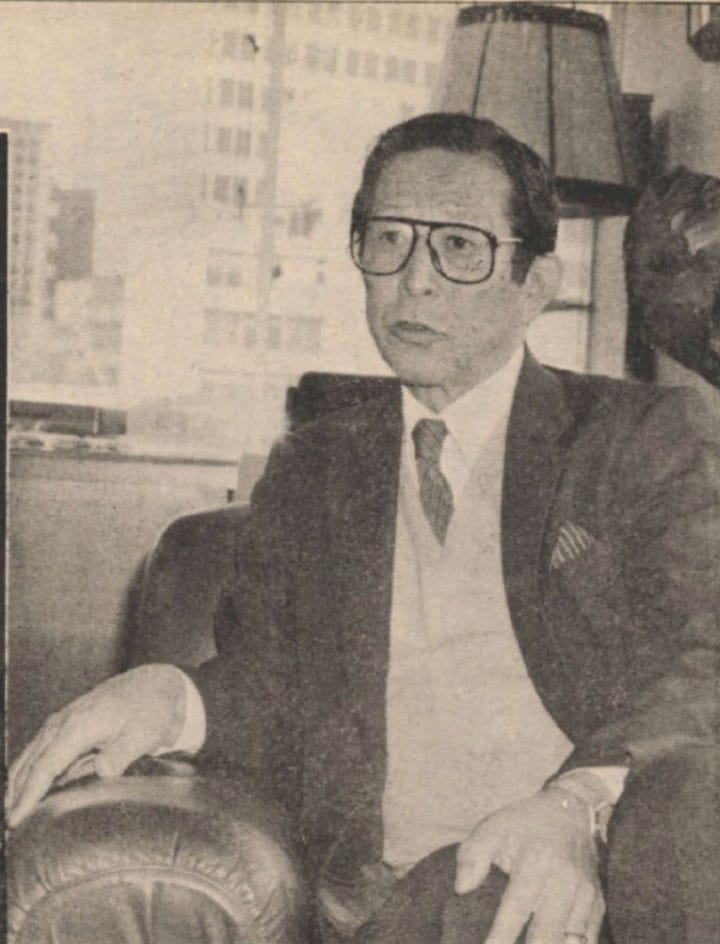
But back in Tokyo, New Japan chairman Hiroshi Tsujii watched the tape and saw an opening.
Tsujii was a suit, a corporate operator trying to manage a carnival that was rapidly spinning out of control. He was under immense pressure from TV Asahi. The “Golden Time” ratings for Monday nights had bled down to 10%, a disastrous number for a prime-time slot.6 Sponsors were nervous. They wanted a “Commission,” a governing body to sanitize the violence and ensure that “accidents” like the Face Kick didn’t alienate the advertisers.
Tsujii decided to use Choshu’s demand as leverage for a corporate hostile takeover. He would bring Maeda back, yes—but at a price that would kill the insurrection forever.
“The name ‘UWF’ will disappear,” Tsujii announced to the press, his tone clinically detached. “We will sign individual contracts with all wrestlers. It’s the same as a pro baseball team.”
There would be no more “UWF.” The name was unnatural, Tsujii explained to the press, an anomaly that confused the branding. New Japan was returning to the principle of “Economy First.” The era of carrying a subsidiary company was over.
The offer on the table was brutal: Individual Contracts.
The young men who had followed Maeda into the wilderness were told they could return to the castle, but only as foot soldiers. And the pay would be cut—”Significant Down,” the papers called it. The raises they had won the previous year were gone, erased by the sudden realization that without Maeda in the ring, the UWF had no leverage.
But the contract came with a catch, a wedge driven perfectly into the heart of the group’s loyalty. The offer was open to Takada, to Yamazaki, to the others. It was not open to Maeda.
“Maeda is different,” the executives said.
The Front Office had constructed a perfect moral trap. If the five other members signed, they would survive, but they would have to step over Maeda’s body to do it. If they refused, they would join him in an exile that looked increasingly permanent. It was a test of whether they were revolutionaries or employees. “The shop is closing,” the industry whispered.
It was a union-busting tactic of sorts disguised as modernization. For years, Maeda and his cohorts had operated as a “sub-team,” the UWF army, carrying their own banner within the New Japan ring. Tsujii’s ultimatum was simple: Sign with us as individuals, or starve.
The milkman didn’t come one day.
Or perhaps he did, and there was simply no one left at the warehouse in Setagaya to unlock the door. For three years and eight months, the delivery of milk bottles had been part of the rhythm of the Universal Pro Wrestling Federation. It was the fuel for the young men who lived there, who ate chanko stew next to the ring, and who believed, with the quiet fanaticism of monks, that they were saving professional wrestling from itself.
The milkman’s brother was a fan. He’d understood the mission.
Now, the mission was over.
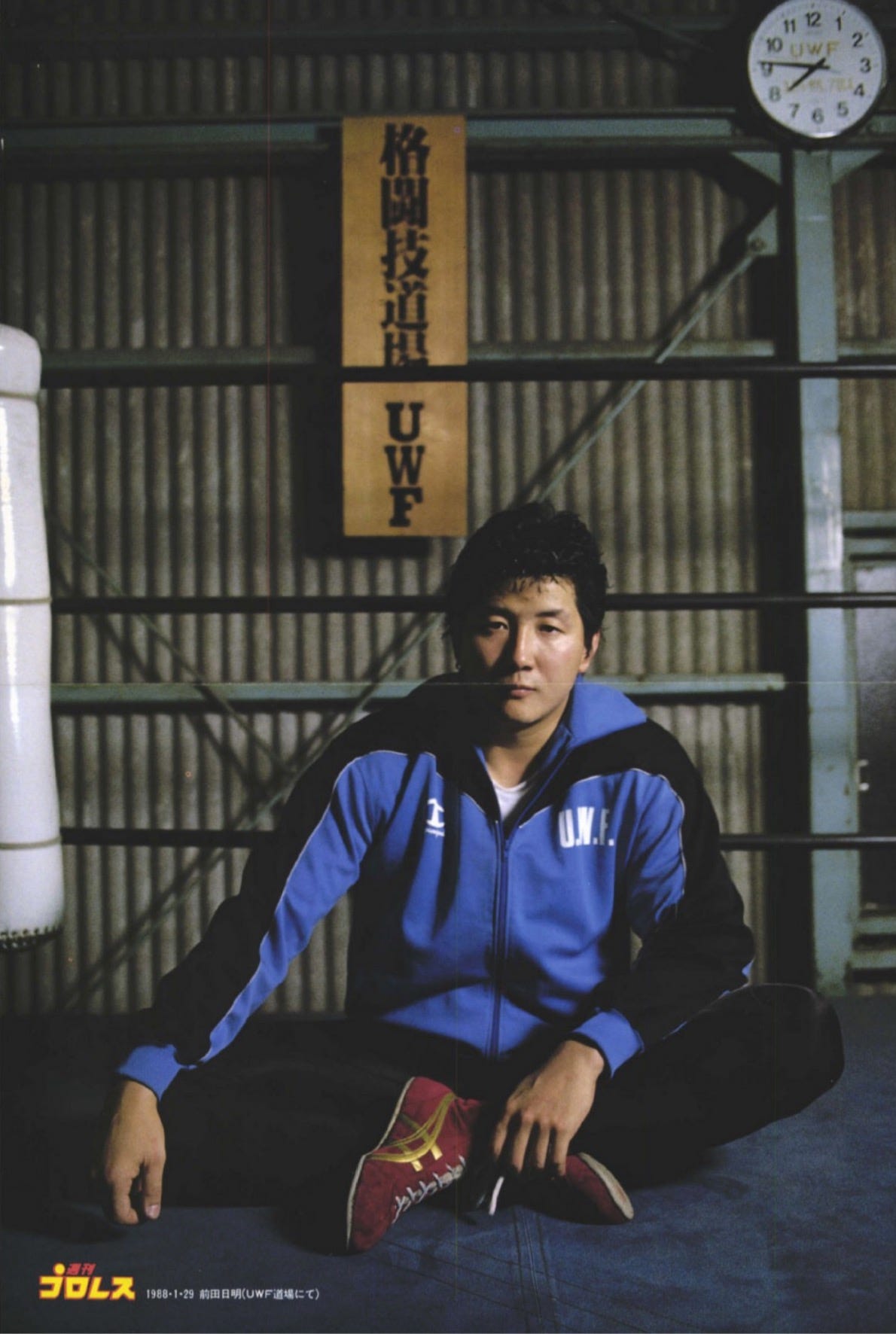
It was late December 1987. The Tokyo winter had settled into the uninsulated walls of the dojo, turning the sweat on the canvas into ice. Inside, Akira Maeda sat in the dark. He was not technically alone—Nobuhiko Takada was there, sitting a few feet away—but the distance between them felt like an ocean.
He was wearing a blue tracksuit, the uniform of an army that had been disbanded by corporate decree. The dojo was silent, save for the rhythmic thud-thud-thud of Maeda’s feet hitting the mat and the ticking of a clock on the wall. One. Two. Three.
He was 29 years old. He was the most dangerous man in professional wrestling, and he had nowhere to go.
“Even if I go to the gym for two hours, there is no intensity,” Maeda muttered, staring at his reflection in the dark window. “Without a goal, the body doesn’t tighten up.”
He put a CD in the boombox and began to shadowbox. He threw kicks, perhaps at an invisible Riki Choshu, grappling with the phantom of a career that had been put on ice. The magazines called him a “Ronin”—a masterless samurai waiting for a war. But in the quiet of the dojo, he looked less like a warrior and more like a prisoner of his own ideology.
“I will endure,” he told the empty room. “Until the time comes.”
Maeda knew that his stubbornness—the “Double-Edged Sword” that made him a star—had finally cut too deep. He had refused to be a “Pro” like his mentor Fujiwara, who could swallow resentment and make it look like wrestling. Maeda had insisted on reality.
“Humans have obsessiveness,” the magazine caption read, narrating the scene of the two men sitting in the gloom. “The determination to put a period on your heart and move forward is heavy.”
Maeda looked at his hands. The dream was dead. The only question left was whether he would die with it, or if he would find a new way to fight.
On the wall, a clock was stuck at 10:05. In the corner, a single yellow sponge sat drying on a shelf. The sign on the wooden pillar still read “Universal Pro Wrestling Dojo,” but it hung there like a tombstone.
He was a man built to break things, currently broken by the silence of indefinite suspension. The “Face Kick” at Korakuen Hall had not just shattered Riki Choshu’s orbital bone; it had shattered the fragile economic truce that kept this warehouse open. The “UWF” was no longer a revolutionary army. It was a line item that New Japan Pro-Wrestling had decided to delete.
Empowered by the kick, and Maeda’s refusal to bend, the empire struck back. In December, they slid a contract extension across the table. It was a “Cooling Off” deal, a classic banishment ritual: a 15% pay cut and a one-way ticket to Mexico or Europe. Go away, they were saying. Go wrestle in obscurity until you learn to harmonize.
Maeda pushed it back. “I cannot accept the pay cut,” he said. “I will not go overseas.”
He chose isolation instead.
The False God
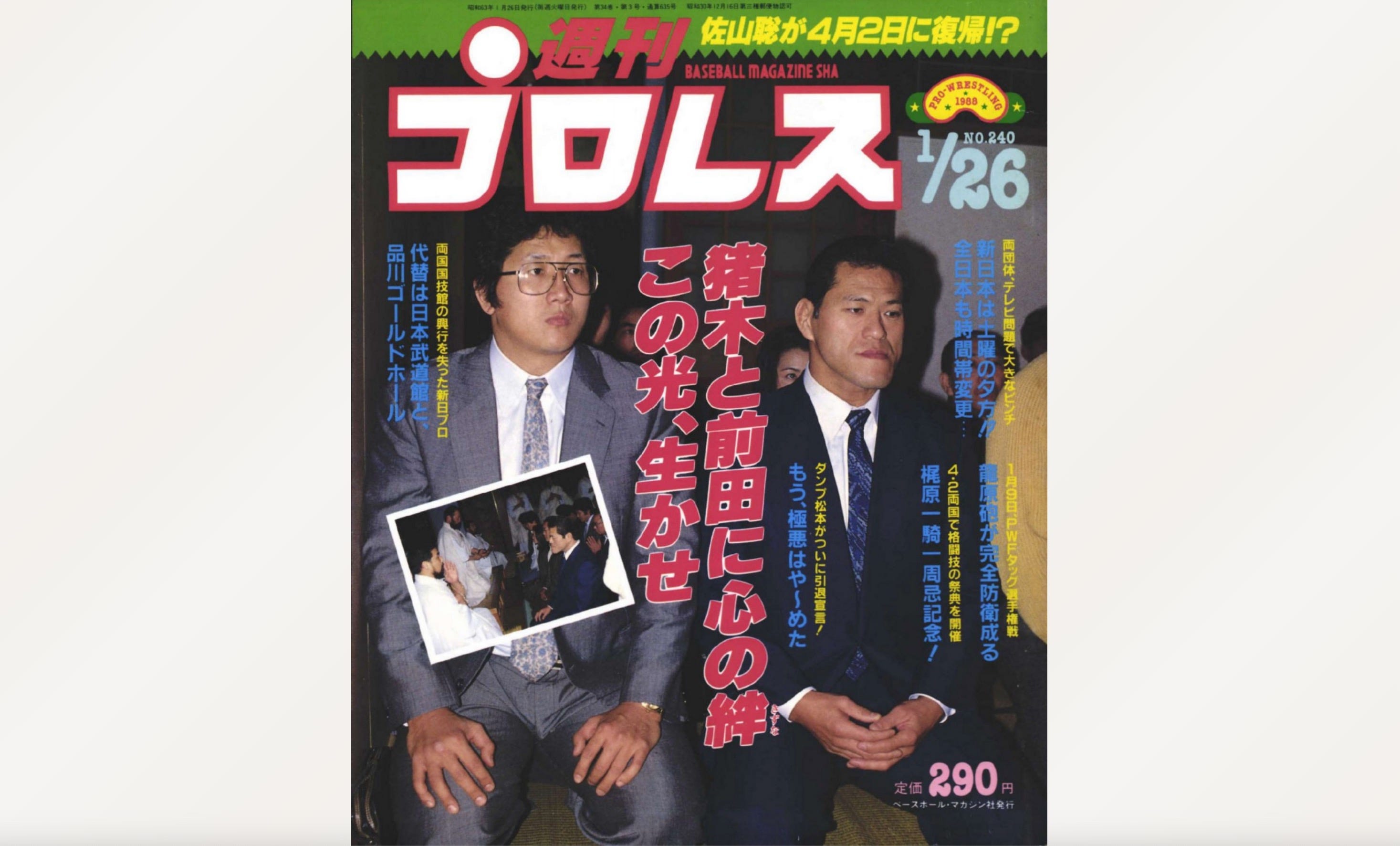
It was a Tuesday in January, unseasonably warm for Chiba Prefecture. The sun beat down with a brightness that made heavy winter coats unnecessary, yet Antonio Inoki and Akira Maeda arrived at the Nakayama Hokekyo-ji Temple encased in wool suits—Inoki in navy, Maeda in grey—looking less like professional wrestlers and more like two rival ward bosses forced into an uncomfortable public truce. They stood shoulder-to-shoulder for the photographers, but their eyes rarely met. Inoki, his famous chin jutting forward, seemed to be performing piety for the cameras, a man accustomed to bending any situation to his narrative. Maeda, a man built for violence and ill-suited for diplomacy, stared at the temple floorboards as if plotting an escape route, his shoulders tight beneath the jacket.
They had come ostensibly for spiritual cleansing. Inside, monks were enduring the brutal “100-Day Ascetic Practice,” dousing themselves with freezing water to scrub away bad karma. Inoki, however, was there for a more practical kind of purification. His company was bleeding money, television executives were panicked by the recent violence, and his most valuable, volatile commodity—the man who had shattered Riki Choshu’s face on national television—was currently unemployable. The temple visit was theater; a public act of Sange-metsu-zai, repentance for sins. Inoki needed to demonstrate to the sponsors that the mad dog could be brought to heel, put in a respectable suit, and made to kneel on command.
Maeda knelt on the tatami, surrounded by the droning of sutras and the cloying smell of incense, looking entirely miserable. The reporters present, desperate to spin a narrative of reconciliation, wrote breathlessly of a “mysterious karma” binding the two men, a mix of “love and sadness.” Maeda likely felt only the itching of the unfamiliar fabric and the deep humiliation of being a prop in another man’s angle. He was a fighter who dealt in bone-breaking reality, now forced to play dress-up in Inoki’s theater of the absurd, praying for forgiveness for a crime that had made them both famous, just so he might eventually be allowed to take the suit off and do it all over again.
This boardroom struggle was haunted by the shadow of Maeda’s complicated relationship with Inoki. For years, Maeda had oscillated between being Inoki’s heir and his harshest critic. He had watched Inoki, the “God” of wrestling, drown in financial scandals and soft matches, trading his legacy for live entertainment spectacle.
“Why is Inoki allowed to do anything?” Maeda had railed in the press back in 1985. “He admits to debt, he admits to scandal... and the fans still cheer? Everyone, are your heads empty?”
Maeda didn’t want to destroy New Japan; he wanted to purify it. He wanted to be the Jitsuzō—the “Real Image”—that replaced Inoki’s fading Kyozō (False Image). He had even publicly pleaded with his mentor: “You are tired. Your wrestling is old. Please retire and let us take over.”7
To Inoki, the “Maeda Incident” was not a tragedy; it was a transaction that had simply gone bad. “I don’t mind if we renew contracts or not,” he told reporters, his tone bored. He had already calculated the loss of the UWF, amortized the “Shoot Style” experiment, and moved on to the next hustle.
It was difficult to parse the relationship between the two without being part of it. Maeda, once Inoki’s personal assistant, would later claim he’d lived his wrestling life asking himself “what would Inoki do?” But, despite this intimate bond, the two were not close. In the wake of the Choshu incident, they met in private for the first and only time in their lives, Maeda joining Inoki and his glamorous actress wife Mitsuko Baisho in Daikanyama, an upscale, trendy Tokyo neighborhood, for shots of Wild Turkey.
It was a memorable night—but nothing changed.
While the rest of the industry moved on, Maeda sat alone. He drove his Porsche to the empty UWF dojo in Setagaya, stretched in silence, and waited for the phone to ring. It never did.
But while the office tried to freeze him out, the streets were overheating. The fans, sensing the injustice, began to vote with their lungs. The magazine Weekly Pro-Wrestling launched an “Essay Contest” to gauge public sentiment, and the response was overwhelming: the fans were no longer buying the corporate line. They saw the united front of Inoki and Sakaguchi not as strength, but as a conspiracy to protect a dying business model.
The breaking point came on December 27 at Ryogoku Kokugikan. New Japan, desperate to prove they didn’t need Maeda, booked a disaster: Antonio Inoki pinned in under three minutes by the debuting Big Van Vader, under the command of a Japanese comedian. The arena dissolved into a riot. Seat cushions rained down. And from the angry mob rose a chant for the man who wasn’t there. “Maeda! Maeda!”.
After months of speculation, magazine after magazine tracking the drama, the execution finally happened on Tuesday, March 1, 1988.
It was scheduled as a solemn affair at the Roppongi main office. Vice President Sakaguchi sat before the flashbulbs to read the obituary of the “New Leader” era.
“We had no choice,” Sakaguchi said. “Dismissal is unavoidable.”
But even the funeral was denied its dignity. In the middle of the recitation, 'Mr. Matsuda,' the manager of a gimmick faction known as the 'Pirate Army,' barged in with his henchmen. They weren't there to protest Maeda's firing; they were there to shoot a wrestling angle, demanding 'Official Entry' for themselves. It was a bizarre, carnival sideshow interrupting a corporate execution. The press conference descended into a brawl involving Inoki, turning the tragedy of the UWF into a farce.
Maeda, somehow, was starting to look like the grownup in the room.
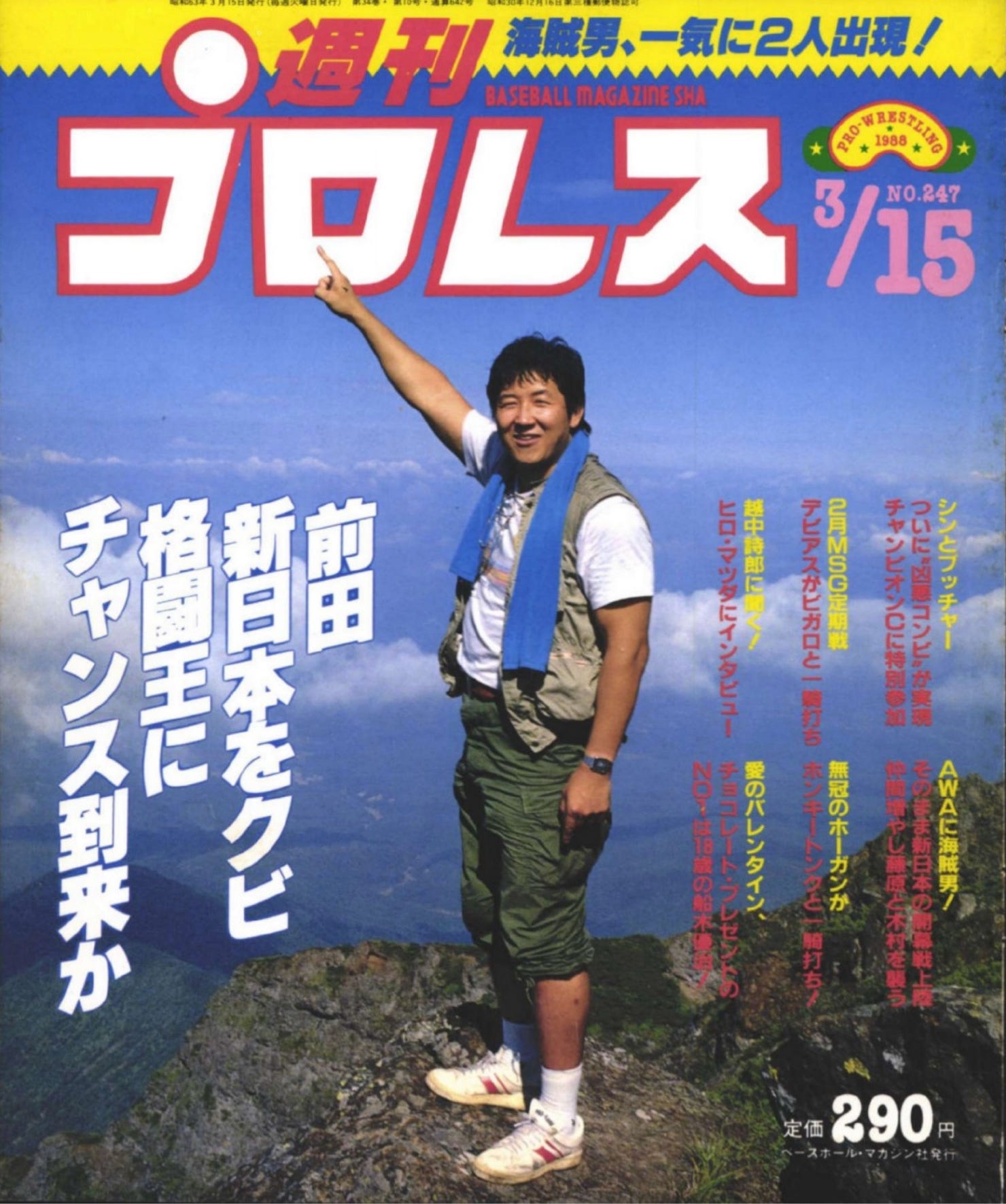
As the spring issue of Weekly Pro-Wrestling hit the newsstands, the narrative shift was undeniable. The cover no longer showed Maeda in glorious, contemplative suffering. It showed him standing atop a mountain peak, pointing a finger at the limitless blue sky. The headline asked, “Is this the chance to become the Martial Arts King?”
New Japan thought they had fired an employee. They had accidentally liberated a prophet.
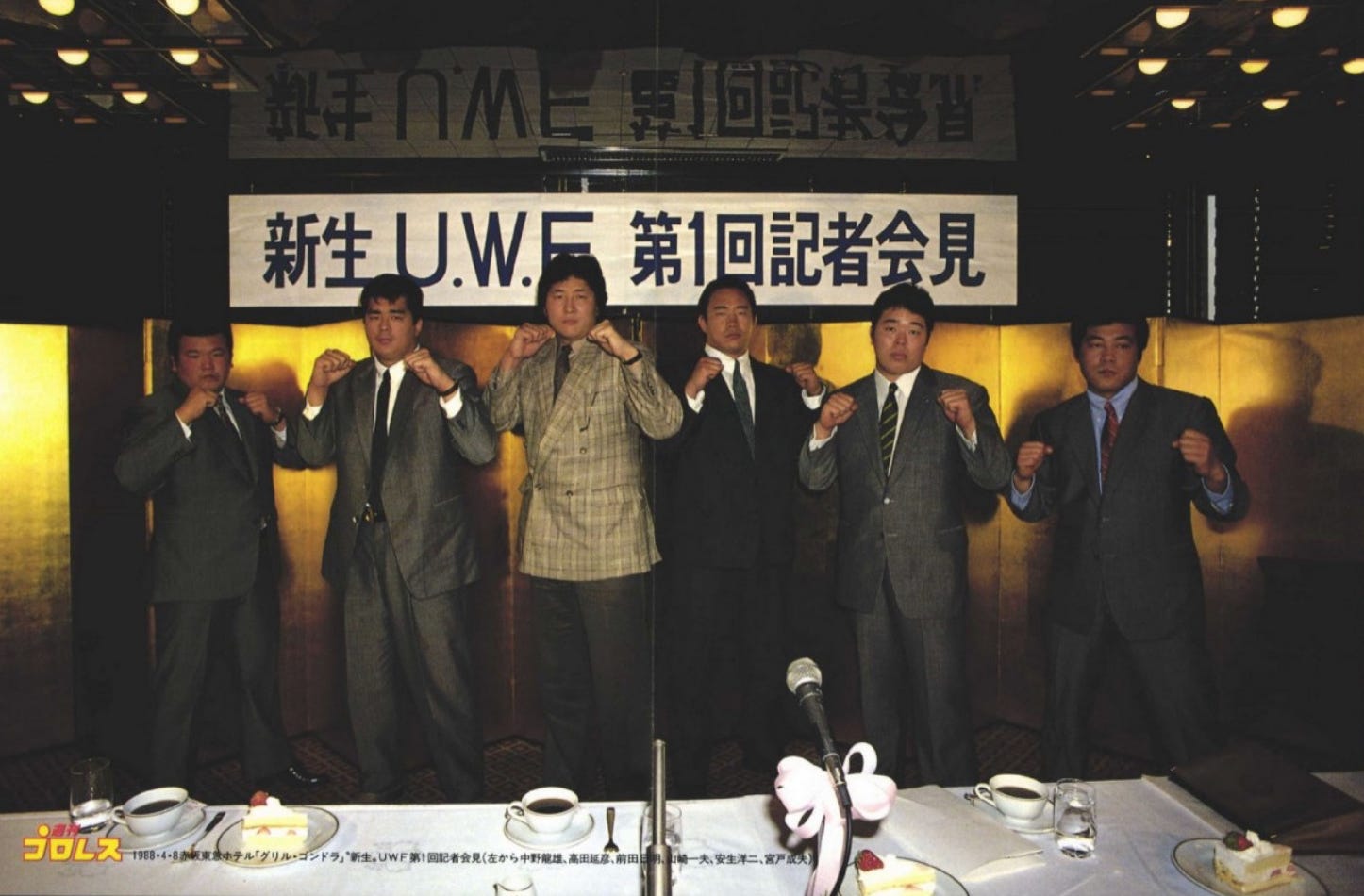
The resurrection began not in a cathedral, but in a hotel restaurant. On April 8, at the “Grill Gondola” in Akasaka, six young men in suits stood before the press.
They were the “Newborn” UWF. There were no reserves, no opening acts. Just Maeda and five disciples—Kazuo Yamazaki, Nobuhiko Takada, Tatsuo Nakano, Yoji Anjo, and Shigeo Miyato. They were betting their careers on a radical concept: Pro wrestling without the lie.
“I want to pursue the kind of wrestling that is impossible for Baba and Inoki,” Maeda declared, finally stepping out of their shadow. “We are going to fix the system and finally make the sport a reality.”
The skepticism was high. A promotion with six wrestlers? It was another perilous undertaking, a mission perhaps destined for failure. But Maeda took his message directly to the people, bypassing the traditional wrestling press to appear on mainstream radio programs like “Yoshida Terumi’s Yaru-Mange” and STV Radio in Hokkaido. He cracked jokes, he sounded human, but his message was revolutionary.
He described his new organization not as a business, but as a “Citizens’ Rights Movement” for martial artists.8 Maeda had seen too many elite Judo and Karate champions graduate from university with nowhere to go. Their options were stark: retire to become a gym teacher, or surrender their dignity to become a “clown” in the theatrical circus of pro wrestling.
Maeda envisioned the UWF as a “Saucer”—a sanctuary where these lost warriors could earn a living without debasing themselves. “It is disrespectful to wrestling to have untrained guys,” Maeda argued. By creating a system where a fighter could win with their own techniques, without scripts or pantomime, he was offering them the one thing the giants could not: the right to be real.9
The strategy worked. On the morning of April 16, when the phone lines opened for tickets, the Tokyo telephone grid melted down. Seven thousand five hundred calls battered the switchboards for 1,500 seats. It sold out in 15 minutes. In Hokkaido, 3,000 seats vanished in a single day.
Maeda, holding the receiver in the UWF office, was stunned. “It’s scary,” he whispered. “Is this true?”
It was true. And on May 12, it became physical.
It rained that night in Tokyo. Outside Korakuen Hall, a line of pilgrims snaked around the block. Some had slept on the concrete for days, clutching sleeping bags, waiting for standing-room tickets.
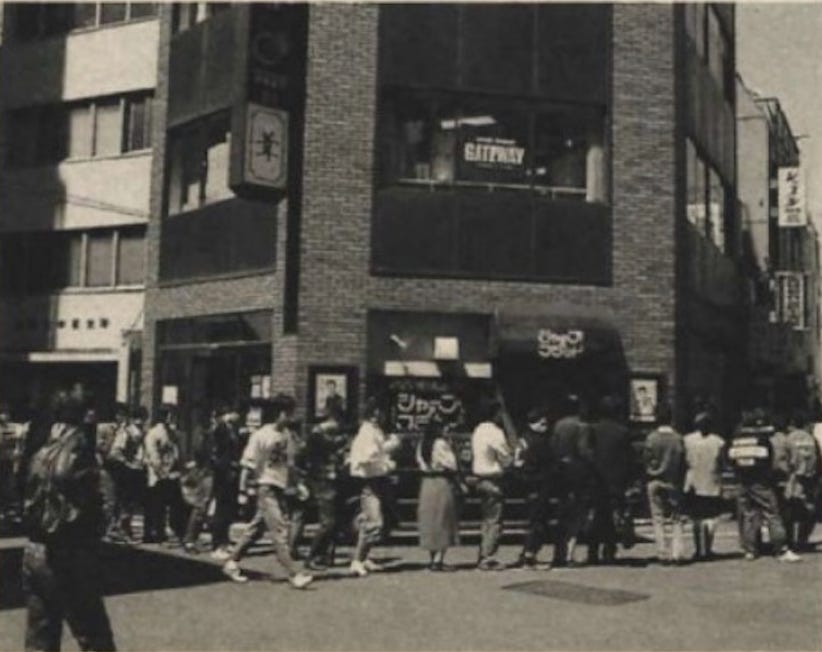
Inside, the atmosphere was less like a sporting event and more like a mass. Karl Gotch, the “God of Wrestling” who had trained them all, stepped into the ring to sanctify the canvas.10 He didn’t just wave to the crowd. He read a proclamation, a “UWF Charter” that laid out the moral laws of the new territory. The rules were posted like commandments: No closed fists. No theatrics. 15 points to lose.
Before the first bell rang, Maeda stood in the center of the ring, a microphone in his hand. He wore a crisp white t-shirt and looked out at the faces of 2,300 believers. He didn’t cut a promo. He gave a sermon.
“Inside the anxiety and uneasiness, there were two feelings,” he told the hushed crowd before the bell rang. “’Will it work?’ or ‘Is it reckless?’”
It was reckless. But the main event—Maeda vs. Yamazaki—was a revelation.
Starting Over (5/12/1988)
When the bell finally rang, what unfolded wasn’t the fluid, operatic dance the fans were used to. It was jagged, halting, and often ugly—a prototype of a sport that hadn’t quite been invented yet. Karl Gotch, watching from ringside with the critical eye of a creator, grumbled that there were “too many kicks,” a sign that the delicate balance between striking and grappling was still being calibrated.
The rhythm was unfamiliar. There were no smooth transitions or cooperative Irish whips. Instead, there was the heavy thud of shin against thigh and the sudden, frantic scramble for a limb. It stopped and started, lacking the polished crescendo of a New Japan main event, but in those awkward silences, the audience found something far more compelling: the absence of a script.
Yet, if the mechanics were rough, the drama was electric. The new rules—where points were deducted for every knockdown—created a tension that rendered traditional near-falls obsolete. Maeda, the returning hero, was nearly humiliated, knocked down five times by Yamazaki’s punishing low kicks, left sprawling in a “Big Letter” shape on the canvas, one mistake away from losing his own revolution. But the finish, when it came, felt earned in a way wrestling rarely allowed. A desperate “Captured” suplex segued into a “Kata-Ha-Jime” choke, draining the life from Yamazaki not with a theatrical bang, but with a silent, suffocating squeeze. It wasn’t a perfect match, but as Maeda stood victorious in the center of the ring, it was clear that while they hadn’t reached the destination, they had finally found the road.
The crowd didn’t cheer like wrestling fans. They watched with the intensity of witnesses. And when Maeda finally choked Yamazaki unconscious, the roar that shook the hall wasn’t for a victory. It was for a validation.
The poster for the night read “STARTING OVER.” But as the faithful spilled out into the rainy Tokyo streets, buzzing with the adrenaline of the new gospel, they knew the truth. The era of the “Show” was over. The era of the “Fight” had begun.
The timeline that broke in 1987 did not heal quickly. For decades, the Mercenary and the Believer walked parallel paths, separated by a canyon of ideology and scar tissue.
Riki Choshu got exactly what he wanted: the Kingdom. After Maeda was exiled, Choshu didn’t just return to the fold; he conquered it. He eventually did the unthinkable—he pinned Antonio Inoki in a singles match, becoming one of the few Japanese wrestlers to cleanly surpass the God of the era. With Inoki fading into political office and more scandals, Choshu ascended to the role of “Site Supervisor” (Genba Kantoku). He traded his tights for a tracksuit and a whistle. He became the architect of the 1990s “Three Musketeers” boom, filling the Tokyo Dome not with “shoot” experiments, but with dramatic, heavy-impact professional wrestling. He proved that the “Business” could be just as profitable as the “Truth.”
Akira Maeda got exactly what he wanted: the World. He never stepped back into the traditional pro wrestling ring. With RINGS, he built a global empire that bridged the gap between theatrics and actual combat. He imported Soviet commandos like Volk Han and legends like Alexander Karelin. He created the stage where Fedor Emelianenko would eventually be born. Maeda spent the 90s seeking the “Strongest,” eventually retiring in 1999 after a colossal battle with Karelin. He had become the “King of Outsiders,” a man who proved you didn’t need the NJPW lion mark to be a legend.
It took thirty years for the ice to melt. The thaw began not in a ring, but in the quiet resignation of old age, two men realizing their battles were with ghosts of the past, not each other.
As the eras passed and the “Strong Style” they both fought for (in different ways) began to vanish from the modern landscape, the animosity seemed to evaporate.
The final verse of their song was written on June 26, 2019, at Choshu’s final retirement event, “POWER HALL 2019.” In the lead-up to the end, Maeda sat down for a magazine feature that felt less like an interview and more like a confession. The tension of 1987 was gone, replaced by the warm, gruff laughter of a survivor.
The man who once kicked Choshu with the intent to break him, offered a revisionist history that sounded like an apology wrapped in pride. “I tapped you on the shoulder,” Maeda insisted, laughing. “I gave you the signal. You just moved your head! If I had kicked you for real, you’d be dead. I did it because I knew you were sturdy enough to take it.” He admitted that the kick wasn’t just hatred—it was trust. He believed only Choshu was strong enough to handle the “Heat” he wanted to create.
“The best angle is one that even deceives the people involved in the scene. The tension of ‘they are really fighting, this is dangerous’ gets conveyed to the people around you, and then spreads to the fans. My greatest teacher in that regard was Inoki-san,” Maeda admitted. “I just followed the rules of what a pro-wrestler can say, shouldn’t say, can do, and must do—200%, as his top student. Nothing more, nothing less.
“There was a time when Inoki-san had Tiger Jeet Singh attack in front of the Isetan department store. That had real tension, didn’t it? That’s what I was aiming for. Pro-wrestling is a turf war over how many people you can drag into your own angle. The person who can do that becomes the top guy.
“The thing I can boast about is that I’ve never had anyone else think up my angles for me. I thought of them myself, initiated them myself, and created the tension. One of those instances just happened to be with Choshu-san.”
And Choshu, the man who had worn sunglasses to hide his broken face, simply smiled. He had won the war for the company, but he recognized that Maeda had won the war for the spirit.
In a touching final gesture referenced in the piece, Maeda was asked to write a message on a shikishi (autograph board) for his old enemy. He didn’t write “Sorry” or “Forgive me.” He wrote a message that acknowledged the burden they both carried as the men who had to carry the world after Inoki.
“To Riki Choshu,” the sentiment went, “You worked hard. Now, rest.”
When Choshu finally walked out of the ring for the last time, leaving his boots in the center of the canvas, the “Face Kick” was no longer a crime or a psychic burden. It was just a scar—a reminder of a time when wrestling was dangerous, when passion was real, and when two men loved the sport enough to break each other’s bones over it.
They were the North and South poles of the King of Sports. And in the end, despite the distance between them, they realized they were part of the same planet.
Jonathan Snowden is a long-time combat sports journalist. His books include Total MMA, Shooters and Shamrock: The World’s Most Dangerous Man. His work has appeared in USA Today, Bleacher Report, Fox Sports and The Ringer. Subscribe to this newsletter to keep up with his latest work.
Even before the Maeda incident, the locker room was already toxic. In addition to issues with the UWF, there was major tension between the "Native" NJPW roster and Choshu’s returning "Japan Pro" faction. On June 3, 1987, Shinya Hashimoto fought Hiro Saito (from Choshu's camp). Hashimoto refused to sell Saito’s offense and eventually broke Saito’s hand with a kick.
Maeda was bound by Giri (義理), a uniquely Japanese concept of social obligation that weighs far heavier than a simple promise. Giri is a debt of honor—a burden one carries to care for those who have placed their trust in you. Maeda had led these men into the wilderness once; they had followed him, and in doing so, placed their livelihoods in his hands. To sign an individual contract and leave them behind would not just be a “business decision”; it would be a moral default, a failure of character that would strip him of his legitimacy as a leader. In this ethical framework, protecting his “dependents” was not a choice, but an inescapable requirement of his status.
"I thought if the two of us really went at it, we could build an angle from there," Maeda said years later. "If we didn't do something like that, the industry wouldn't pay attention to us."
This was a masterclass in Tatemae (建前), the public performance of social roles. In the 1980s, heavy gold chains were the visual shorthand for Narikin (new money) and Yanki (rebellious) culture—symbols of an individual who exists outside the rules. By stripping them off before entering the boardroom, Choshu was physically shedding his identity as an independent star to assume the posture of a humble “Salaryman.” It allowed Inoki to maintain the “Face” (Mentsu) of the absolute boss, preserving the corporate hierarchy even though everyone in the room knew the “True Reality” (Honne): Choshu was the one with the leverage.
Historian Teppei Arita argues that Maeda doomed the “Generation Struggle” from its inception by refusing to take on the role of a team player. Arita cites Maeda’s infamous declaration on the faction’s opening night—“I’m not doing this for you guys; I’m doing it for the UWF”—as the moment he pierced the “angle” with cold reality. By openly prioritizing his own group over the alliance, Maeda shattered the illusion of unity before the war even began.
For over a decade, Friday night at 8:00 PM, “Golden Time” (the Japanese equivalent of Prime Time), belonged to New Japan, a tradition dating back to the JWA era. In October 1986, TV-Asahi shattered this tradition by evicting New Japan to Monday nights to launch Music Station, a variety show that would go on to become a cultural institution in its own right. The demotion was the first crack in the armor of wrestling’s mainstream dominance; within eighteen months—following stagnant ratings and the infamous Sumo Hall Riot of December 1987—New Japan would be exiled from Golden Time entirely.
This dichotomy between Kyozō (虚像 - False/Virtual Image) and Jitsuzō (実像 - Real Image) defines a particularly Japanese paradox. Inoki was the master of Kyozō—he built a “Virtual Image” of invincibility so potent that it became accepted as reality. But by 1987, the image had been corroded by scandal and age, leaving only a hollow shell. Maeda didn’t just want to beat Inoki; he wanted to replace the “Virtual” with the “Real.” He argued that for professional wrestling to survive in a cynical age, it had to shed the theatrical Kyozō and become Jitsuzō—a raw, unvarnished reality where the struggle was genuine and the pain was visible. Maeda wasn’t trying to kill the business; he was trying to save it from its own artificiality.
Maeda used the term Shimin-ken (citizenship), a powerful metaphor for social legitimacy. In Japan, pro wrestling was often dismissed as a “show” beneath the dignity of true Budo (martial arts). Maeda’s “movement” was an attempt to gentrify the profession—to grant “citizenship” to wrestlers so they could exist in the public eye as respected athletes rather than circus performers. He wasn’t just selling tickets; he was selling the right to be taken seriously.
Maeda described the UWF as an Uke-zara (literally “receiving saucer” or “catch basin”). In the rigid hierarchy of Japanese sports, elite judoka and karateka faced a “graduate or quit” cliff—there was no professional league for pure fighting. The UWF was designed as a sanctuary to “catch” these displaced warriors, offering them a third path where they could monetize their skills without surrendering the dignity of their martial arts discipline to the “clown show” of traditional wrestling.
This ceremony was a variation of Dojo-biraki (道場開き), the ritual “opening of the dojo.” In Japanese martial arts, a new fighting space is considered spiritually “cold” until it is consecrated by a master. By having Karl Gotch—the literal teacher (Sensei) of the roster—perform this rite, Maeda was doing more than just honoring a guest. He was transferring the “Lineage” (Keifu) of authentic catch wrestling directly onto the UWF canvas. It signaled to the audience that this was not a rogue outlaw show, but the legitimate heir to the wrestling tradition.
No posts
Comments
Nothing yet. Say the first thing.
Sign in to join the conversation.