
For a long time, self-sufficiency has carried an interesting reputation.
Depending on who you ask, it either means growing absolutely everything yourself…
or it’s dismissed entirely as unrealistic in the modern world.
Most people sit somewhere in the middle, quietly thinking:
“I’d love to grow more of my own food… but I simply don’t have the time, space, or energy to do it properly.”
And so the idea gets parked as something nice in theory, but impractical in reality.
Over the past few years, I’ve come to realise that the problem isn’t the idea of self-sufficiency.
It’s the way we’ve been defining it.
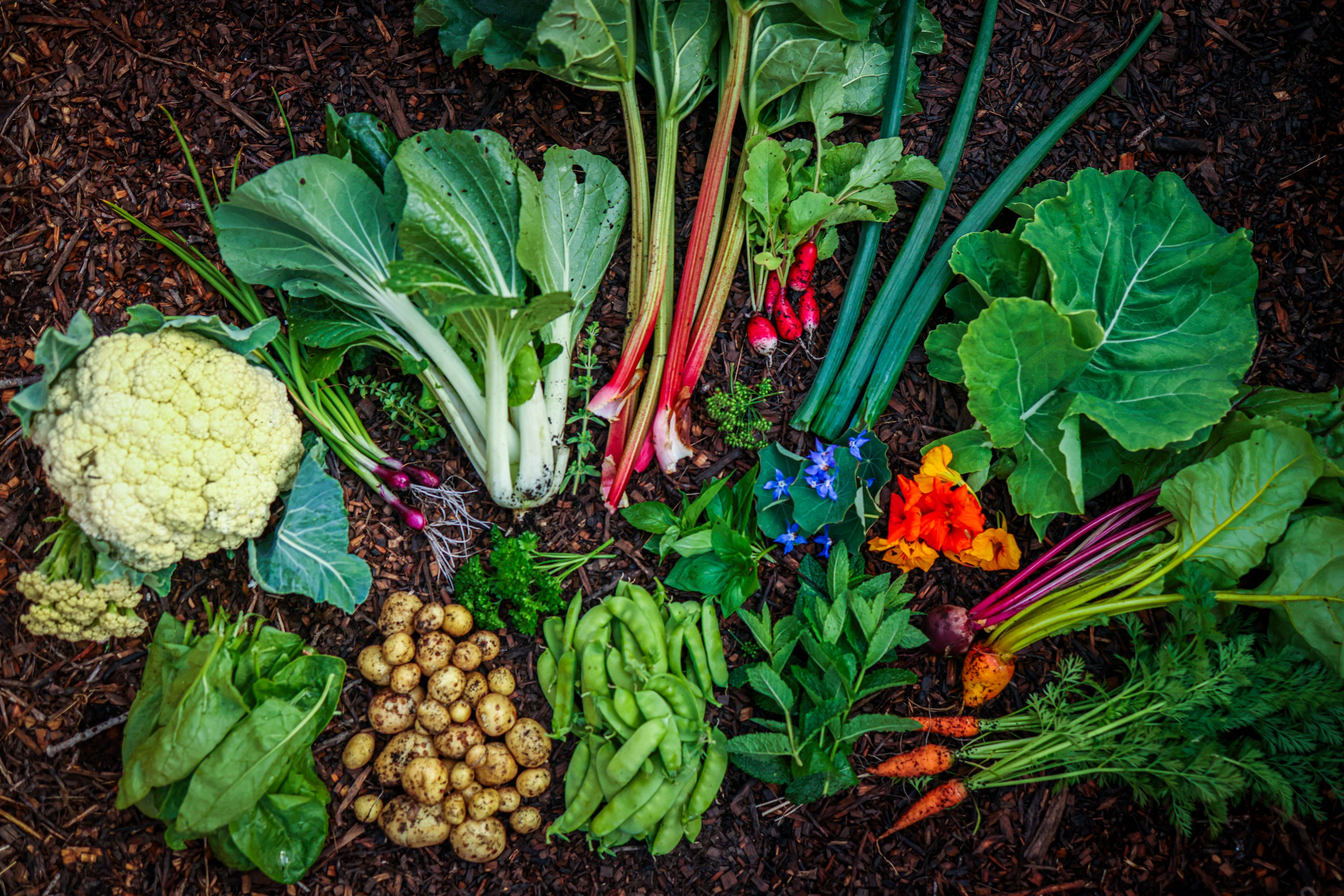
Self-sufficiency has often been portrayed as total independence from all aspects; food, energy, clothes etc.
Grow all your own food. Raise all your own animals. Produce every calorie.
Do everything yourself.
For almost everyone - myself included - that simply isn’t realistic.
We have jobs, families, limited space, limited time, limited resources and very modern lives. Plus there is a social aspect with depending on others for various elements.
And when the bar is set at “do everything yourself”, the natural response is:
“Well I can’t do that… so I won’t try at all.”
That’s a shame, because I don’t think the real value of self-sufficiency was ever about isolation.
It was about participation.
I’ve started thinking about food resilience as three connected layers.
At the centre is self-sufficiency.
Around that is shared-sufficiency.
And beyond both sits what I’d call systemic-sufficiency - the wider systems that support the rest.
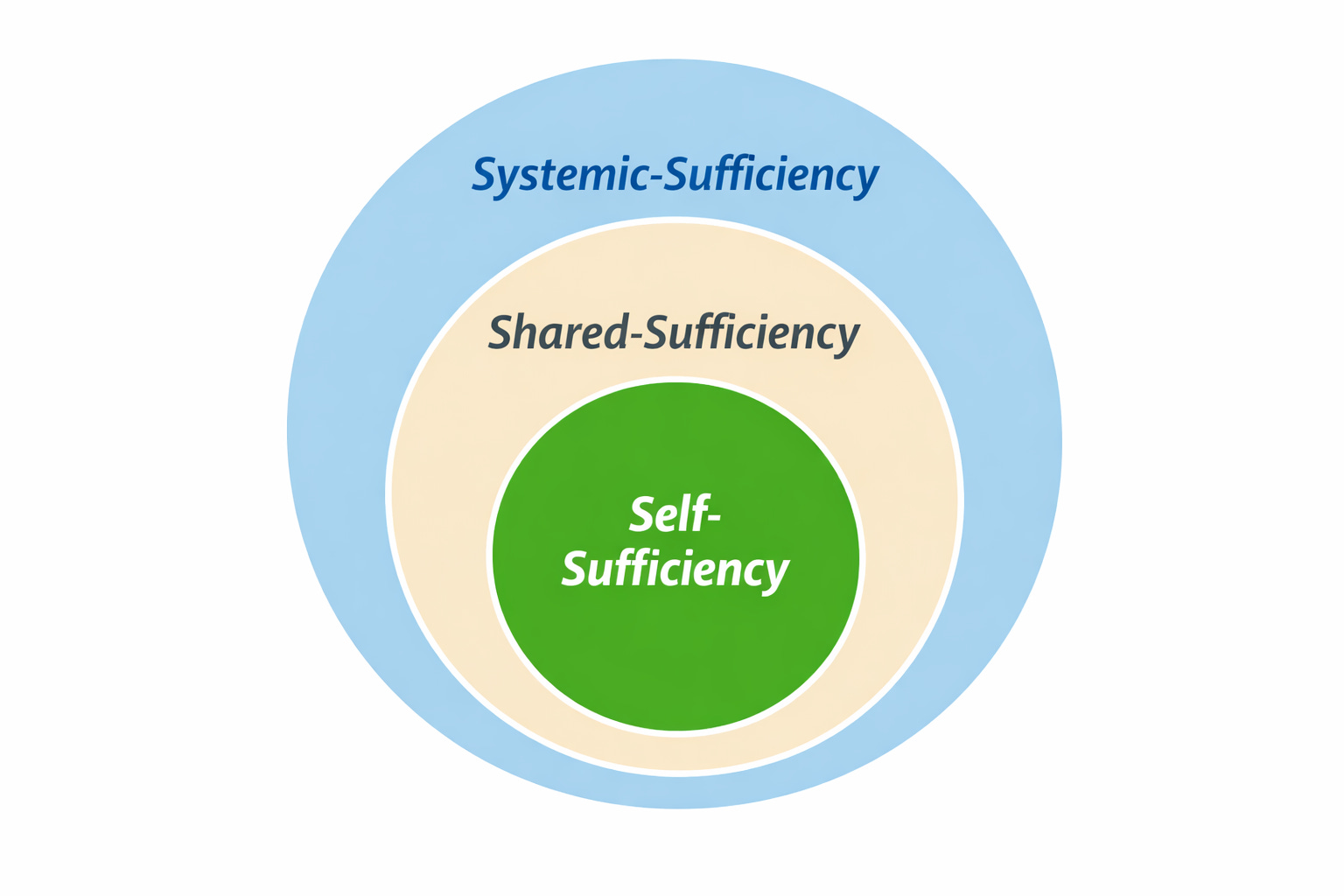
These are not three competing ideas. Rather, they are three different scales.
Focus: What I can realistically take responsibility for
This is the food you grow yourself.
Even if it’s:
a single raised bed
a few potato bags
herbs by the kitchen door
a bed of salad leaves
Self-sufficiency isn’t about growing everything.
It’s about growing the things that make a meaningful difference.
It builds:
confidence
practical skills
a sense of security
a direct relationship with food
Most importantly, it shifts you from being a passive consumer to an active participant.
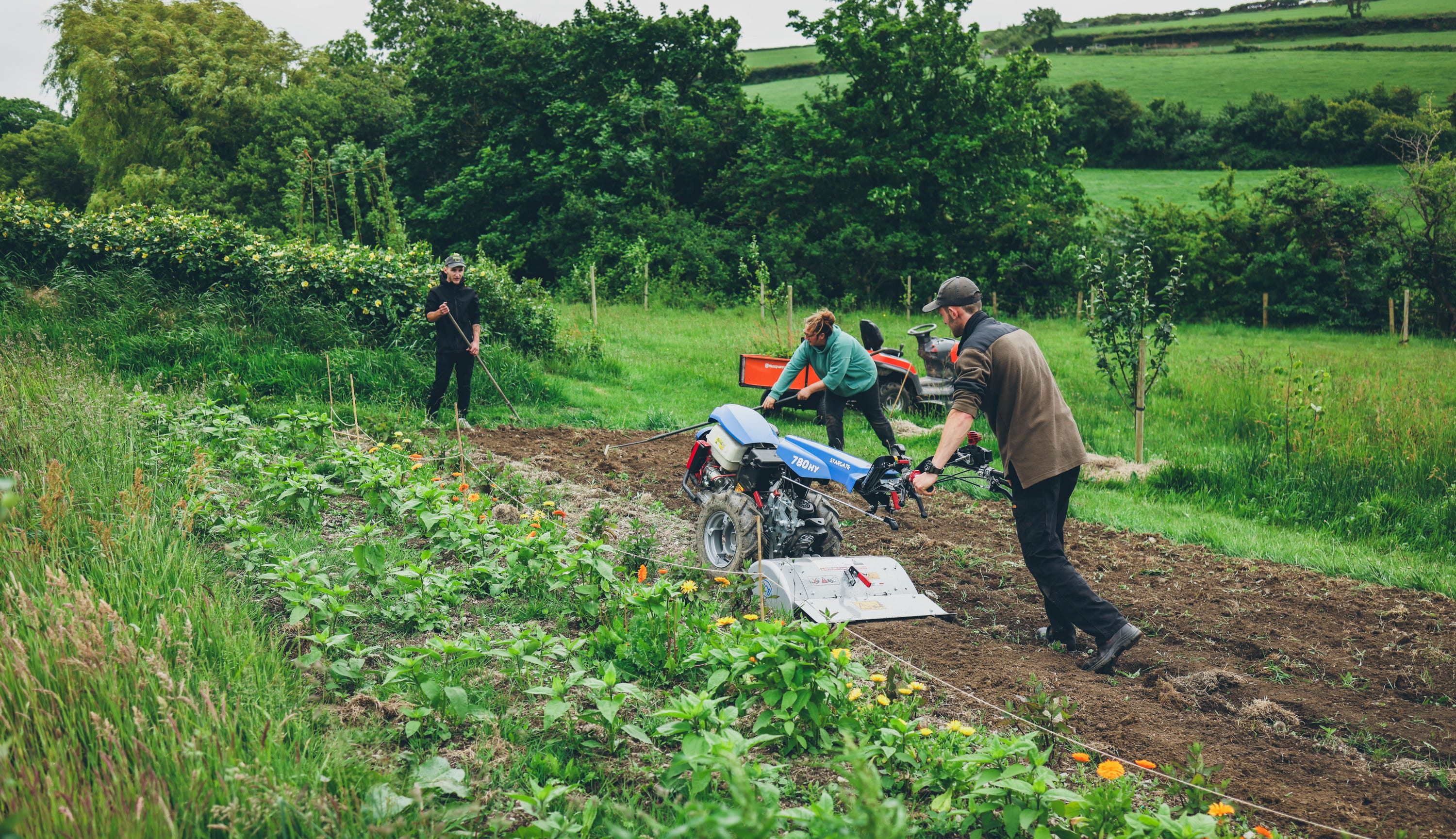
Focus: What we cover together
Historically, very few people were ever fully self-sufficient on their own.
Instead, food security came from communities.
One household had eggs.
Another had apples.
Someone else grew potatoes.
Tools were shared. Seeds were swapped. Knowledge travelled.
This is what I think of as shared-sufficiency, or co-sufficiency (co = community).
It’s not a step backwards.
If anything, it’s the most stable and realistic layer we can strengthen today.
Because shared systems:
spread risk
reduce individual workload
increase diversity
strengthen local food culture
make food relational again rather than purely transactional
You don’t have to grow everything.
You simply have to do your part - and allow and support others to do theirs.
Focus: What the wider world quietly provides
Beyond both of these sits the layer we all still rely on to some degree:
supply chains
transport
energy
tools and materials
seeds and equipment
shops and distribution networks
This is what I think of as systemic-sufficiency.
It isn’t good or bad.
It simply is.
In many ways, it’s what “mops up” whatever isn’t covered by what we grow ourselves or share locally.
The important distinction is not to eliminate this layer - that wouldn’t be realistic - but to understand its distance from our control.
The further away a system is, the more vulnerable it can feel when disruption happens.
Which is why strengthening the inner circles matters so much.
Rather than trying to become completely independent, a more realistic approach is to strengthen each layer in order:
First, grow what you reasonably can - for many people including myself, this is my priority.
Then, build relationships and local food networks - wherever possible I will support others in my community who offer goods and services I need
And allow the wider system to support what remains.
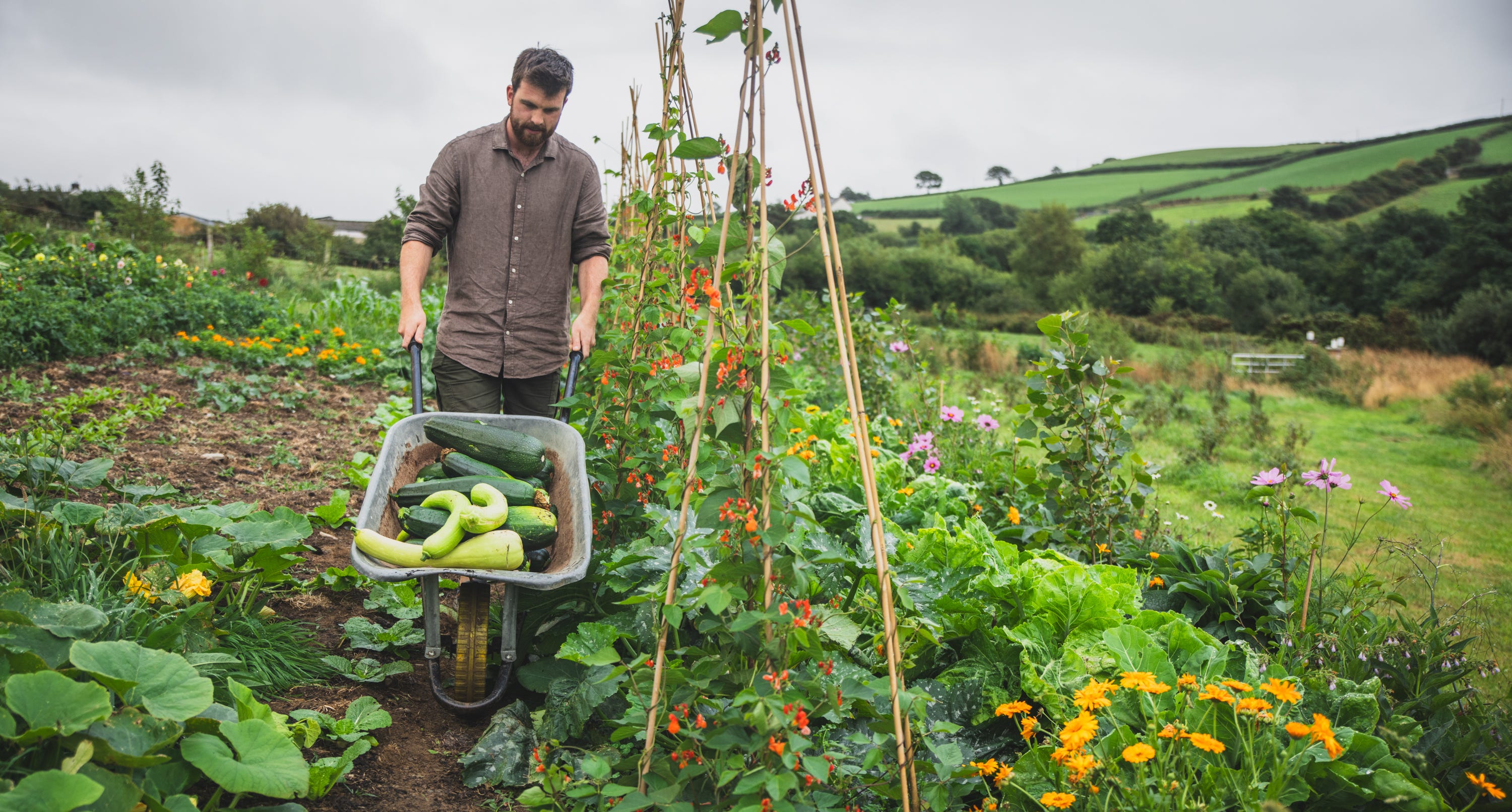
I think the future of resilient food isn’t about everyone becoming fully self-sufficient.
It’s about something much more achievable.
Meaningful contribution.
Growing some of your own food.
Supporting local growers.
Sharing surplus.
Swapping seeds.
Buying from people you know.
Self-sufficiency is what you take back into your own hands.
Shared-sufficiency is what we support together.
Systemic-sufficiency is what sits beyond both, quietly filling the gaps.
By prioritising the self & shared aspect, we reduce dependence on a system that is most out of our control.
Self-sufficiency doesn’t have to mean isolation.
It can mean:
growing a little more each year
building confidence season by season
becoming someone who produces, not just consumes
being part of a local web of food rather than standing outside it
You don’t have to grow everything.
You don’t have to do it perfectly.
You simply have to start doing your part.
Because when enough of us do that - even on a small scale - something bigger begins to happen.
Not just more food.
A culture of food, rebuilt closer to home.
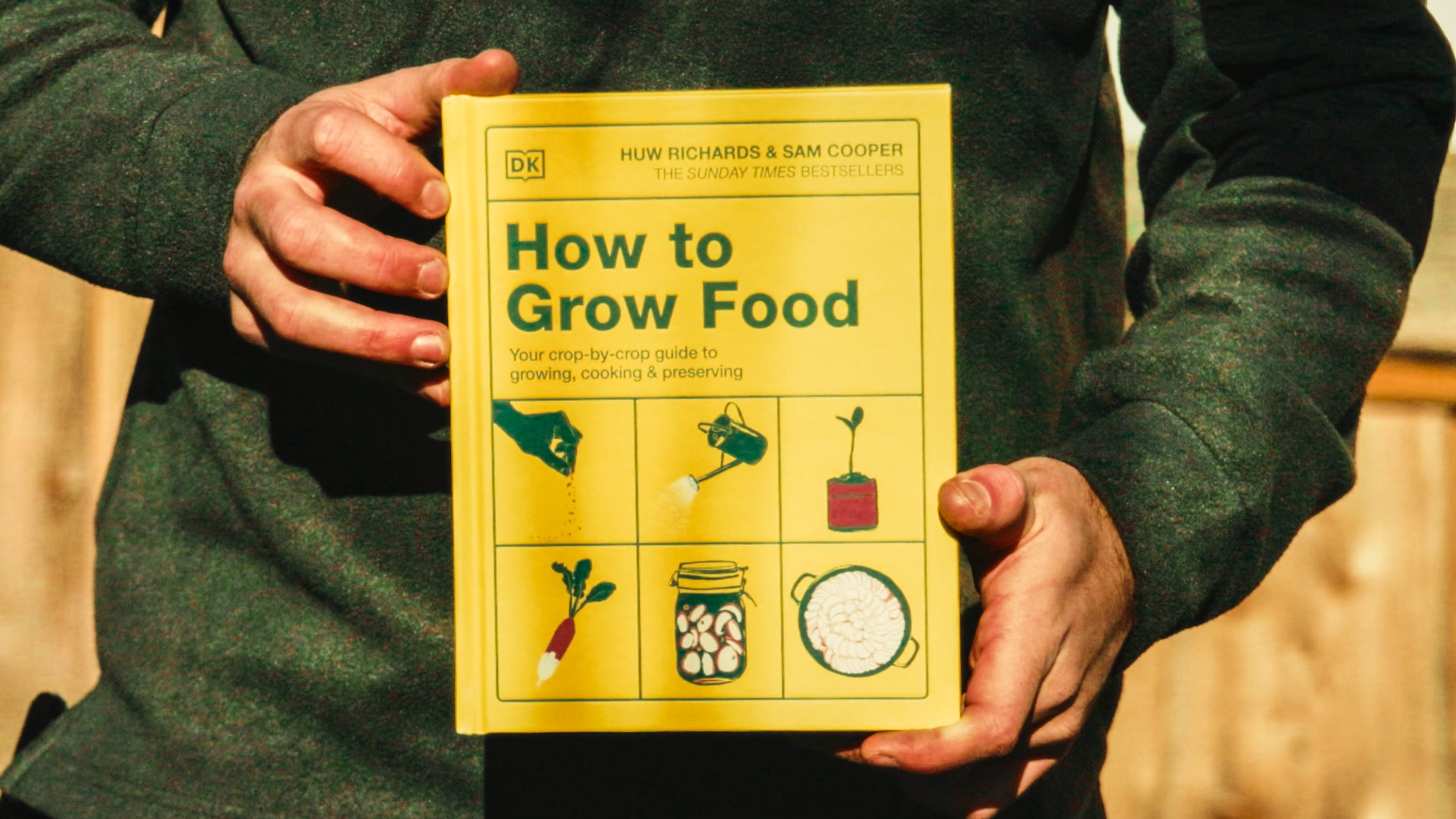
Before I share some practical tips about working as a community (common unity) with others, for my best tips on the self-sufficiency side of growing your own food, I invite you to get a copy of my new book with Sam Cooper titled How to Grow Food which is designed to help you move from simply consuming food to confidently producing more of your own.
Now we’ve covered the three layers or scales of sufficiency, I just want to share a case study and also a couple of practical ideas that you can take away and use to help reduce your dependence on global food systems.
Comments
Nothing yet. Say the first thing.
Sign in to join the conversation.