
If you have driven I-95 through West Haven, Connecticut, you have seen the motels.
They sit just off the highway, set back from the road at distances that suggest an earlier decade’s idea of convenience. The signage is sun-bleached. The parking lots are mostly empty at noon and mostly full at midnight, and the cars that fill them are not the cars of travelers. Some of the buildings look abandoned. The drapes are drawn on every window. The facades have the stillness of places that have stopped trying to attract anyone who has a choice.
They are not abandoned.
They are full.
The rooms cost seventy-nine dollars a night, which is a number that means different things depending on where you are standing. From the highway, seventy-nine dollars sounds cheap. From inside the room, seventy-nine dollars is a sum you do not have, or a sum you have only because you have sold something, borrowed something, or failed to pay for something else in order to pay for this.
The carpet smells of mildew and moisture, the kind that settles so deeply into the material that cleaning cannot reach it. It is not the smell of dirt. It is the smell of duration. Years of human living compressed into fibers that were never meant to hold that much.
I know what the rooms look like because I was there.
Not as a visitor. Not as a journalist. Not as someone passing through on the way to somewhere better. I lived in them the way the other people in them lived in them. With the drapes pulled. With the deadbolt turned. With the posture of a person who has stopped moving through the world and started hiding inside it.
There are photographs of me in rooms like these. They are widely available. In some of them I am naked. In some of them I am smoking crack. In some of them I am doing both.
That happened.
More than once.
The studio is colder than it looks on television.
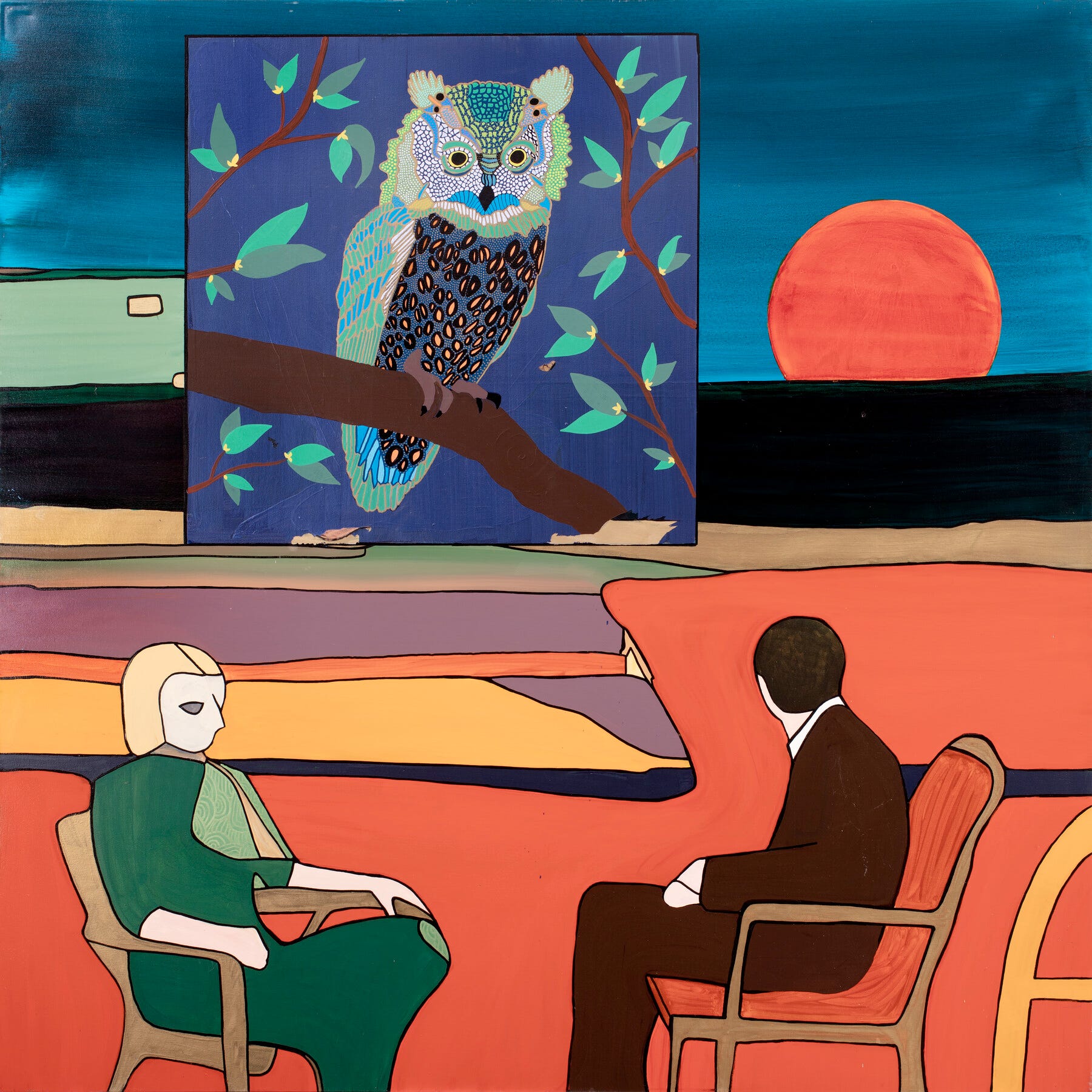
They lower the temperature before the cameras start because the lights generate heat, and the lights must stay on, and the people under them must not sweat. The furniture is arranged to suggest intimacy. Two chairs angled toward each other. A small table with a glass of water no one drinks. The set is designed to make the viewer at home believe they are watching a private conversation when they are watching a production.
The person in one of the chairs is usually there because something has gone wrong in their life.
I have been in that chair.
I have sat under those lights in a room kept cold so the audience would not see the effort it takes to not sweat through your shirt. I have answered the first question the way the first question is always answered, carefully, with the pauses where the pauses are expected.
There is no room further from a motel off I-95 than a television studio in Manhattan.
One smells of mildew and desperation.
The other smells of nothing at all.
One is where things happen.
The other is where things are described.
One is seventy-nine dollars a night with the deadbolt turned.
The other is broadcast to millions with the lighting calibrated to make suffering look like something you can watch from a safe distance.
I have been in both rooms.
One is real and one is not.
Neither one is where redemption lives.
Redemption lives in the space between them. In the ordinary, unbroadcast territory where a person is neither performing their worst moment nor performing their recovery from it. Where no one is watching. Where no cameras are set up because the thing happening there does not make good television.
That is where the work occurs.
And the work has no audience.
There is a version of what happens next that America loves.
The person who fell gets back up. The story of the fall is told in retrospect, from the safety of a professed recovery, with enough distance to make the audience comfortable. The suffering is referenced but contained. The images are described but not shown.
The person in the chair says I learned something.
The audience exhales.
The arc is complete. Disgrace, darkness, return.
What nobody discusses is that the fall and the return are the same product.
They are manufactured from the same material, broadcast on the same networks, consumed by the same audience in the same posture. The cameras that recorded the collapse are not the cameras that record the apology, but the revenue generated by the destruction funds the segment about the repair.
We like to pretend the redemption corrects the disgrace.
It does not.
They are two acts of the same show.
And the show is produced by us.
By our attention.
By our appetite for the spectacle of a human life converting into content and then converting back into a human life inside a programming cycle.
We are the industry.
Every click, every share, every moment of lingering on an image of someone else’s worst day is a transaction. The currency is attention. The product is a person. And the economy runs because enough of us, myself included, participate in it to make the production profitable.
The conventional understanding of redemption is transactional.
You did wrong. You suffered. You demonstrated change. The public restores you to some version of your former standing.
This understanding is wrong.
Not because the steps are inaccurate. People do fail and suffer and change.
But the framing places redemption in the hands of the people watching.
It says you are redeemed when we decide you are redeemed.
When the segment airs.
When the apology lands.
When the mood shifts from punishment to permission.
That is not redemption.
That is reputation management performed for an audience that believes it is witnessing grace when it is actually consuming a product.
Redemption is not something that can be given.
It is something that happens inside a person, alone, after the audience has moved on to the next disaster.
The thing that connects a person to other people is not their recovery.
It is their failure.
Failure is universal.
Success is not.
Not the spectacle of failure. The recognition of it. The moment another person looks at the wreckage of your life and sees not a character or a cautionary tale but something they have carried privately and never said aloud.
I was stripped bare in a public square of global proportions.
The expectation was distance.
The opposite happened.
People saw themselves.
Not in the substances or the rooms.
In the hiding.
In the exhaustion of maintaining the performance.
In the terror of being known.
That recognition produced connection.
Letters from strangers that read like confessions. Messages that said, in a hundred different vocabularies, the same sentence.
I know what that feels like.
The ones who could not say it were often the angriest.
Shame carried in secret isolates.
But shame once visible does something else.
It connects.
Because every person alive is carrying some version of the same weight. The details differ. The magnitude differs. But the architecture is identical. The secret. The maintenance. The terror of discovery.
When one person’s shame becomes visible it exposes the universality of the condition.
This is what it looks like when the thing you have been hiding is no longer hidden.
And the world does not end.
The person is still standing.
The life continues.
The truth, it turns out, is lighter than the secret ever was.
I do not live in my past.
This is not denial.
Denial is a door you bolt from the inside.
I have walked through every room in that house. I have looked at what is inside each one without flinching and without lingering.
I honor my past the way I honor someone I loved who has died.
I do not pretend they never existed.
I do not visit their grave every morning.
I carry them with me the way carried things eventually settle into the body, present but no longer heavy.
The motel rooms.
The photographs.
The closed drapes.
The seventy-nine dollars I did not have.
All of it happened.
All of it is true.
None of it is who I am today.
And the distance between those two facts is where redemption lives.
The show will continue.
It will find new people to process through the cycle of fall and return. New interviews. New stories manufactured from the raw material of human failure.
We will watch.
We always do.
But the people inside the machinery eventually learn what the machinery cannot teach.
The cameras are not the story.
The audience is not the authority.
The performance of change is not the change.
The change happens in the room where no one is watching.
Where's Hunter? goes out free every week.
Subscribe and it finds you, instead of the other way around.
No posts
Comments
Nothing yet. Say the first thing.
Sign in to join the conversation.