

When do you think this photograph was taken?
When I first saw it, I thought it was of some handsome young model, taken very recently. Tragically, it is not. It’s actually Lewis Powell, one of the Confederate conspirators who assassinated Abraham Lincoln, awaiting trial in 1865. It gave me a jolt. In some strange, blinkered way, I had seen people living in the past as unlike modern humans – as if they experienced life in an indescribably different way from me. This photo woke me up.
Perhaps many of us bring a similar attitude to our struggles with our wellbeing. So much of what we all need for contentment is ancient wisdom – and yet, it is ignored, as if the people who lived centuries ago can’t possibly have anything relevant to say. There is an understanding that the inspirers of world religions might bring something useful to the religious but turning to ancient secular writers for self-help seems unusual, Modern Stoicism* being an exception. We seem to prefer to analyse how we have got to the place we are, delving into our family history, our experience of trauma, considering our personality type and where we sit in terms of neurodiversity, sexuality and gender. We also like to apply our new understandings of neuroscience – the structure of the brain, the impact of neurochemicals, the reciprocal relationship of the brain and the body. All of this is useful to our understanding and awareness of what may lie behind the way we feel and behave but, and it’s a big but, whatever brought us to whatever distress we feel, we are going to need some tools to manage it.
That’s where the ancients don’t ‘come in’ but have always been! I have already referred to Lao Tzu, Jesus of Nazareth, Buddha, St Thomas and others in previous posts. There are no secrets to contentment: wiser people than me have been saying the same things openly for centuries.
And so finally, after months of stalling, Epictetus!
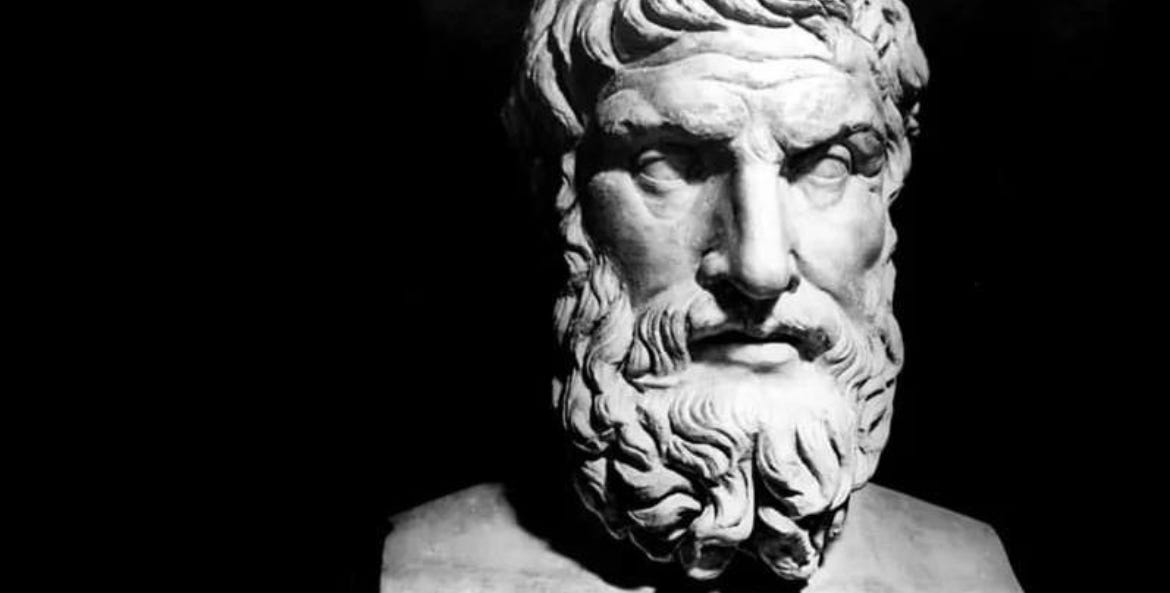
Sources warning: I am not a classical scholar so my only experience of Epictetus is through ‘The Art of Living’, a new interpretation by Sharon Lebell, some reading from the excellent School of Life’s publications and some books on Modern Stoicism*, such as ‘The Daily Stoic’ by Ryan Holiday.
Let’s have a round of applause for Sharon Lebell. How far her book is true to the original, I don’t know but she has done a fine job. The ‘original’, incidentally, wasn’t written down by Epictetus but compiled from his lectures by others. Amongst the students of his philosophy was Marcus Aurelius. His ‘Meditations’, another fine kick-ass guide to contentment, certainly bears the influence of Epictetus.
Epictetus was born a slave in about AD 55. He was fortunate that his master, Epaphroditus, Nero’s administrator, recognised his superior intellect and sent him to be educated by a famous Stoic teacher, Gaius Musonius Rufus. He eventually became his most acclaimed student and was freed from slavery. He taught in Rome until AD 94 when he was banished by Domitian, and spent the rest of his life in exile in Nicopolis, in Greece, where he established a philosophical school and taught for the rest of his life. He lived very modestly in a small hut and eschewed any interest in fame, fortune or power, living out the values he taught and which he believed would lead to a happy, fulfilling and virtuous life.
You can see why I’m a fan! I heartily recommend ‘The Art of Living’. It doesn’t pull any punches so don’t expect slow and gentle. This is self-help for anyone who wants short and to the point and isn’t expecting sympathy.
Here are a few of my favourite quotations to start you off:
Your happiness depends on three things, all of which are within your power: your will, your ideas concerning the events in which you are involved, and the use you make of your ideas.
It’s better to be a good person and fulfil your obligations than to have renown and power.
Humanity has no inherent pecking order, despite outward appearances. Everyone in this world is important. If you really want peace of mind and success in your endeavours, forego self-importance.
There is no shame in pursuing worldly success: it’s normal. Your trouble lies not in the pursuit itself, but how you pursue it. You allow your frenzied, misguided desires and fears to colour your judgement. So you over-evaluate the intrinsic worth of your pursuits. You bank on your pursuits to give you happiness, thus confusing means with ends. Understand that while the pursuit of such indifferent objectives is natural, neither failure nor success in attaining them has the slightest bearing on your happiness.
One of my own spiritual/well-being practises is to read a short passage from something inspiring every morning, before I get up. I have certainly read ‘The Art of Living’ in this way, possibly more than once. It’s ideal because it is split into very short chunks. So, incidentally, is ‘The Daily Stoic’. My clients often complain about how hard it is to change their mindset, to keep on challenging and reframing their thoughts, beliefs and assumptions – and I cannot deny it. It is very hard. But a good tip is to keep reading and re-reading whatever you find that keeps the challenge live – that keeps pulling you up short and reminding you that the old patterns of thinking are keeping you stuck in a way of life that is really bad for you.
You think that the endless compulsion to achieve will make you happy because that is what you have been taught, over and over again – and because you have rammed home that teaching yourself by repeatedly acting on it and giving it credence. You have been brainwashed. So take control of your own brain-washing. A daily reading of Epictetus would be a great place to start!
No posts
Comments
Nothing yet. Say the first thing.
Sign in to join the conversation.