
Welcome to Human Pursuits, the column that features need-to-know names and stories in media and other creative spaces. Today, musician Lockimara, on his new album, moving to New York, feeling at odds with his own voice, whether loops are annoying, and more.
I find August to be something of a haze.
The days are shorter, the nights are longer, and a sense of finality looms large. The season, once measured in months, is now being measured in days.
Invariably, I find these changes in the atmosphere require a change in audio.
Certain records scream late summer to me.
Here in the Pitch by Jessica Pratt.
Maggot Brain by Funkadelic.
Pressure Machine by The Killers.
Norman Fucking Rockwell.
A record doesn’t have to be released in August to sound like August (though it certainly helps). There’s something laconic at play. Simple ideas, presented with surprising intensity.
While it sounds almost nothing like the records above, Lockimara’s new record, Only Sun, Only Moon (out now), shares an important commonality, in that it is underpinned by a sense of longing and wistfulness.
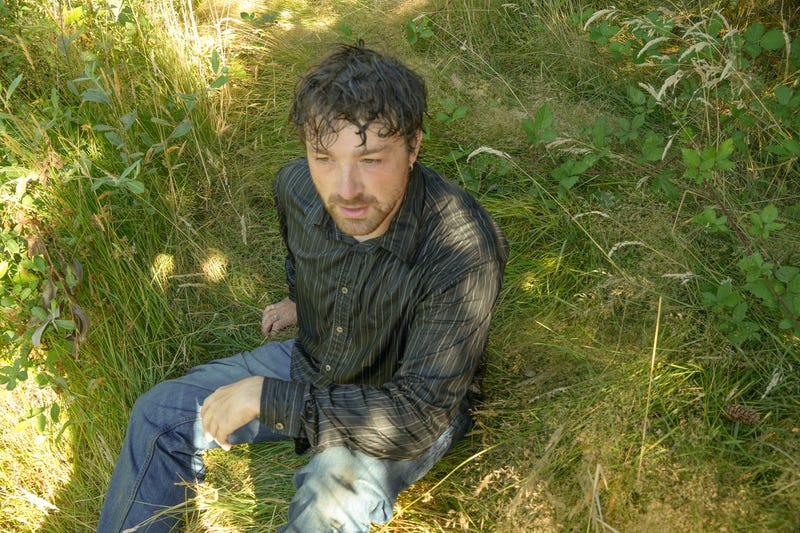
A little twee, a little emo, a little electronic, the record feels like you’re staring at songwriter Nicholas Gay with the sun behind his back. He is right in front of you, and yet he is somewhat opaque. Caught somewhere between the light and shadow.
Gay, who hails from Vancouver but now lives in New York, is sitting on a cache of new music, which he suggests might be better than this record. Which is certainly saying something, because it sounds great to me, at times reminiscent of Elliott Smith, the Postal Service, and A.G. Cook.
And so we had much to discuss.
Our edited and condensed conversation touched on the origins of his stage name, wanting to be comfortable, translating songs live, and how to keep Auto-Tune sounding fresh.
ES: You’re in New York, but you’re from Vancouver. What part of the city did you live in when you were here?
NG: I lived in a few different spots. I was sharing a house over on William Street, off Nanaimo with friends. My dad teaches at a small college within UBC, so they live in the Kitsilano area, closer to the school. They moved out there a bit ago, and I lived with them for about a year before I moved away.
ES: And you also had a layover in Montreal at one point, is that right?
NG: Yeah. I moved there when I was 18. To go to Concordia.
ES: What attracted you to Montreal?
NG: I was there in 2016 or 2017, just after the height of Mac DeMarco and all that stuff… My parents are from California, so I have dual citizenship, which is how I’m living here in New York. I debated whether to move somewhere in the States after high school or stay in Canada.
Ultimately, Montreal seemed like the best city in Canada for music at the time, and I already had a band that was doing well in Vancouver. Moving there was a way to move with people I knew and stay intertwined with close collaborators while moving somewhere that had a lot of fresh opportunities.
ES: Have you been back to Montreal recently? I’m going in a few weeks.
NG: I haven’t been in maybe two years. There was a time when I was going back once a year after university, but the city moves fast in terms of the hip spots and stuff like that. I’m not super up to date on where people are hanging out.
ES: Do you feel like Montreal moves faster than New York?
NG: I’ve yet to see. I haven’t even been in New York a full year yet. It’s a lot bigger here, and there are a lot of things going on. I don’t know yet what the turnover rate is of all that, but I wouldn’t be surprised if it’s fast.
ES: Are you in Brooklyn?
NG: Technically Queens—in Ridgewood.
ES: Oh, nice.
NG: Yeah. Real Queens residents might crucify me for saying this, but it’s basically Brooklyn geographically. You have all of Brooklyn, then Bushwick on the end, and then Ridgewood.
ES: Queens is a funny borough. I don’t know a ton about it, but it feels like it gets suburban in a way compared to the rest of the city?
NG: Totally. I like Ridgewood, though. It’s nice. It’s a bit more chill than Bushwick, but still in the vicinity of a lot of stuff, and a ton of musicians live here, so it’s cool.
ES: Are you doing music full-time right now?
NG: I just finished my master’s degree about two weeks ago, so I guess you could say, yes, technically.
ES: Laughs.
NG: That doesn’t really mean I’m making any money, though. I’m basically unemployed.
ES: What was your master’s in?
NG: Music production.
ES: Did you have to do a thesis or anything?
NG: I had to do a five-song EP. That’s floating around right now in my world, but I don’t know when it will come out.
ES: Do you think it could be part of the Lockimara project?
NG: I think so. Lockimara is just me, so I feel like I can do whatever I want. I’ve never been super married to any particular sound. Some of it is a bit of a split from my previous stuff, especially A Vision Again, which is more classically alt-rock. The newer stuff is taking some more sample-heavy directions.
ES: I don’t normally ask people what their band names mean, so apologies in advance, but what the hell is a Lockimara?
NG: It’s total gibberish. I had a former bandmate, someone I moved to Montreal with, and when I was starting this project, he was a big part of it. We were trying to think of what to call the project, and I think he said “Locky” and I said “Mara,” so we combined them into Lockimara. It hasn’t made sense to change it.
ES: Sick. I thought it Celtic or something. It has an Old English feel to it. I assumed it was ancient wisdom vibes.
NG: I’ll take it.
ES: You mentioned that the new stuff is integrating loops a bit more. How do you make a loop that isn’t annoying?
NG: I kind of think all loops are annoying. If you hear anything in a row enough times, it’s going to be annoying. I make a lot of pretty annoying stuff that never sees the light of day, so it’s not a one-to-one ratio for me. It’s about figuring out the context that makes something interesting, which usually involves mixing a few different elements.
ES: Can you expand on that?
NG: If I find a vocal loop or a chop that I like, or if I’ve cut up something from a stem split, on its own maybe it’s weird. Maybe I took an R&B vocal that’s not really in my genre and on its own isn’t very interesting. But then it’s about adding other elements.
Adding a distorted, fuzzy bass playing downbeat eighth notes was a big thing on this last album, along with messing around with stupid-sounding drums. It somehow adds a vibe. It’s about experimenting and putting things together that I haven’t heard in the same context before.
ES: Are you sitting down with a guitar and writing full songs, and then adding electronic elements in the studio? Or are you writing songs in the studio?
NG: About a third or half of the stuff on the album was recorded in a studio, and the rest was done at home using MIDI or loops… Traditionally, I’ve been more of a “sit down with the guitar” kind of guy. With this album, some songs were definitely written like that, where I wrote the parts and vocals on acoustic guitar and built around the bones of the song. Other songs were made straight in the DAW on the computer, messing around with loops and figuring out dynamics purely that way. That works for me because I don’t always stick with traditional song structure anyway. It’s about seeing how the energy flows, and if it sounds good, I work around that.
I have some kind of gender dysmorphia with my songwriting and my voice, in the sense that I just don’t like the way my voice sounds half the time. Something doesn’t click for me about the male perspective…
ES: Do you feel like that applies to the vocals too?
NG: I think so. For example, on a song like “Tastes Like”, my vocals are only in one part of the song, and the rest are just vocal chops and loops. On other songs, I was thinking about it more in terms of traditional songwriting—trying to create a back-and-forth between verse and chorus.
ES: I’m a big Midwest emo guy, and your songs aren’t necessarily that, but there’s an emotional undercurrent to it all, down to the guy-girl vocals, which I really love. Why did you decide to include a female perspective for some of the lyrics and points of view in these songs?
NG: That’s an interesting question. I think I have some kind of gender dysmorphia with my songwriting and my voice, in the sense that I just don’t like the way my voice sounds half the time. Something doesn’t click for me about the male perspective within my music sometimes. I really love the feeling that some of my friends who are femme bring to songs when they sing on them. And so I deploy that in a respectful way.
I just don’t love the way I sound on my music a lot of the time. Even though I think I have a nice voice when I want to, it doesn’t always seem to fit. Another guitar song with a dude vocalist—like, who cares? It’s more interesting to bring in a collaborator who brings a perspective that feels a bit more compelling to me.
ES: I love when Frank Ocean or Tyler, the Creator, tune their voices up, or pitch down. Use vocoders.
NG: I love doing that too. I just don’t like the way my voice sounds at its normal octave a lot of the time. I don’t know what that is.
ES: Do you have a plugin or a specific way you like to process your voice, or were you constantly experimenting and trying different sounds?
NG: I’m still figuring out how I like to do it. On my last album, I used a lot of Little AlterBoy from Soundtoys, which is a classic plug-in. For this one, I used this little Roland VT-4 Vocal Transformer box. It has pitch, formant, and Auto-Tune, and lets you change the key. I haven’t used it in a while… Sometimes it works and sometimes it doesn’t… But when it works, it sounds awesome and really seamless.
ES: Auto-Tune and vocal manipulation are basically a part of every producer’s toolbox right now. I was reflecting on how we keep finding ways to make that sound fresh. Your record uses it very tastefully, but it got me thinking that there might be a day it feels played out.
NG: I feel a bit wary of it for that reason. I love vocal transformation, but a year or two ago it got to be a little much. People got a little too excited, including myself, thinking, “What if it was alt music, but with T-Pain Auto-Tune?” I loved that, and people were mixing things like Drain Gang vocal production into indie music. I just want to use it in a tasteful way that services the song rather than using it as something in and of itself.
ES: You want it to exist in the context of your song, rather than be in the spotlight.
NG: Exactly, or to date the music in terms of the trend. Like, for a while in the ‘80s suddenly synths were everywhere and they were right in your face. Over time, people learned to incorporate them. They became part of the common vernacular.
ES: How has your approach to production, or the way you think about production, changed now that you’ve gone through formal schooling for it?
NG: Most of this album was made last summer before I finished, so I feel like I’ve gotten way better at production even since making this album. Better doesn’t necessarily mean better quality. My technical skill set has more backing now, and I know how to do a few more things. Before, I was pretty limited because I was self-taught and undisciplined. I wasn’t the guy doing hours of research on YouTube and learning that way. I was truly exploring. I knew how to do very specific things I had figured out, but I couldn’t do a lot of the basics. I’m a lot more confident in trusting my ear.
ES: Is it weird talking about a record where the material is older?
NG: That’s just the way it goes… It gives me a chance to appreciate something I’ve done rather than always moving forward, and to realize, “Right, these are good songs, and there’s a reason I made this big push.” That’s rewarding.
I wish I could release the stuff I’m working on now so people could see where my head is at in the current moment.
Being comfortable sounds awesome
ES: When you listen to these songs, do you think back to where you were emotionally and psychologically? Do you feel like that was a different person, or are you still kind of there?
NG: I’m probably more there than I want to be, though not in a horrible way.
ES: Laughs.
NG: You always hope you can say, “I’m way past that now,” but life is long and things take time to figure out. I wrote that album at the end of a transition period after moving to Toronto for a year. Now I’ve moved to New York for a year, so I’m having a lot of the same reflections about being in a new place, building community, and things I said goodbye to a year ago. It’s not super dissimilar. Things felt a bit different then, but the particulars are strangely similar.
ES: Are you someone who’s more comfortable being uncomfortable?
NG: No, being comfortable sounds awesome.
ES: Laughs.
NG: I have waves of wanting to push myself in a certain way, which is what led to moving to Toronto. But at this point, comfortable sounds great.
ES: Was it easier to move to New York after moving to Toronto?
NG: New York was easier because I was moving for a specific purpose—going to school—whereas Toronto was an open-ended “let’s see what this is like.” Moving to Toronto involved leaving my job, breaking up with a partner, and leaving family. It was a lot of upheaval, so Toronto was difficult because I was trying to rebuild a lot of different things at once.
ES: The album ends on an instrumental. Was the plan always for it to be an instrumental, or was there a thought at one point that you would add vocals to it?
NG: I tried to add vocals to that song, but I didn’t like them as much or couldn’t figure it out. It’s a weird, intangible thing where the song felt so good on its own, at least to me, and whenever I tried to add vocals, it killed the vibe.
ES: I know you’re a My Bloody Valentine fan, and it reminded me of the end of Loveless, where you have this dancey moment of energy. I thought it was great.
NG: Hell yeah. I hope other people feel the same way. I hope the vibe is there enough. That’s what I hope for all my music as I break different rules—that the vibe is good enough that it doesn’t matter.
ES: Is there much thought about how these songs are going to translate live?
NG: It has definitely taken a lot of thought because I made pretty much every song impossible to play.
ES: Not gonna lie, I was wondering how the hell you were going to do it.
NG: It’s been a mix. I have a sample pad, there are five people in the band—keys, two guitars—and the drummer also has a sample pad. It’s been a pain in the ass, but it sounds good.
Nicholas Gay makes music as Lockimara. He lives in New York.
No posts
Comments
Nothing yet. Say the first thing.
Sign in to join the conversation.