

Welcome to Human Pursuits, the column that features need-to-know names and stories in media and other creative spaces. Today, author Julie Buntin on her new book “Famous Men”, constructing complex characters, Philip Roth not giving a fuck, and why she wrote a letter to Olivia Rodrigo.
July is always somewhat bittersweet.
The days are long but getting shorter, the temperatures are hot but maybe too hot, and the resolutions we made in January may or may not be coming to fruition.
If you’ve read HuPu recently, you may recall that I resolved to finish The Count of Monte Cristo. You might also recall that my progress on this particular piece of fiction stalled a few months ago—about 700 pages in.
Currently, the book is sitting on my bedside, collecting dust. Will it stay there? Maybe!
It’s not that I don’t enjoy it. I do. I think.
It’s just that I keep encountering real page-turners—books filled with rich characters and nuanced scenarios that don’t require me to know anything about Napoleon’s first abdication.
Such is the case with Julie Buntin ‘s Famous Men, a book I finished a few months ago and cannot stop thinking about.
A study of sex, money, power and art, Famous Men centres on the life and career of writer Wilhelmina (aka Will) Miles and her relationship with a famous older poet and writer, Nathaniel Fellow.
While the subject matter feels en vogue, given the ongoing discourse surrounding age-gap relationships, Buntin’s writing explores these themes with timeless complexity, creating characters and situations that feel real and lived-in.
I’m hardly a professional reviewer, but the best way I can describe the book is that it made me feel as though I were walking in the ocean—the way a sandbar can suddenly drop off, revealing immersive, refreshing depths.
As with most people, Will’s motivations are something of a moving target, shifting depending on context and mood, and Buntin does a great job of exploring her patterns, her girlhood, and her humanity. I also appreciated that Famous Men features a lot of beautiful writing about Michigan—a state I have visited and ride for.
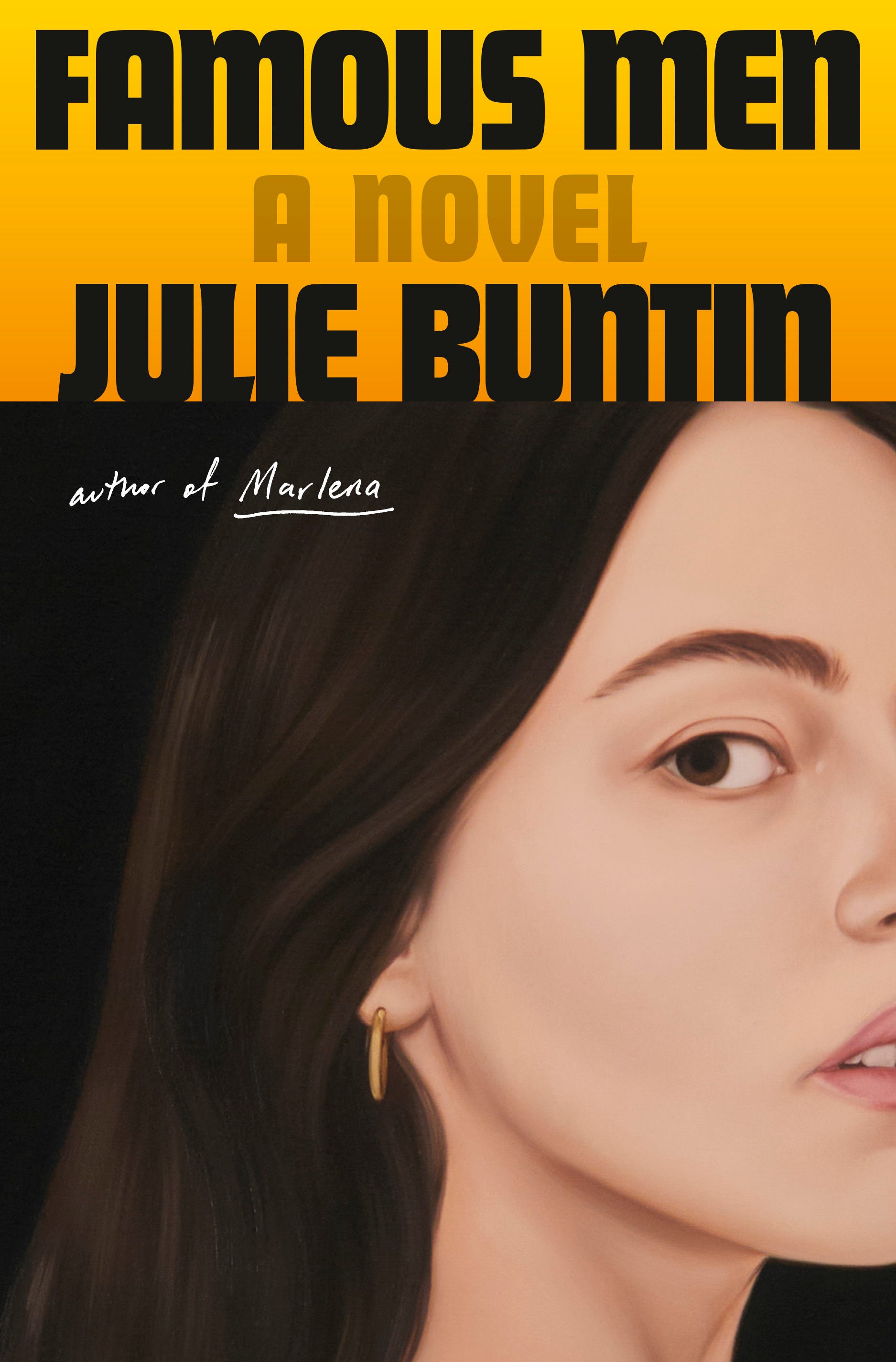
While I was not familiar with Buntin’s work prior to this, I want to read everything she publishes in the future. Apologies to The Count.
And so we had much to discuss.
Our edited and condensed conversation touched on her life in Ann Arbor, exploring complicated spaces, the relationship between real life and fiction, and more.
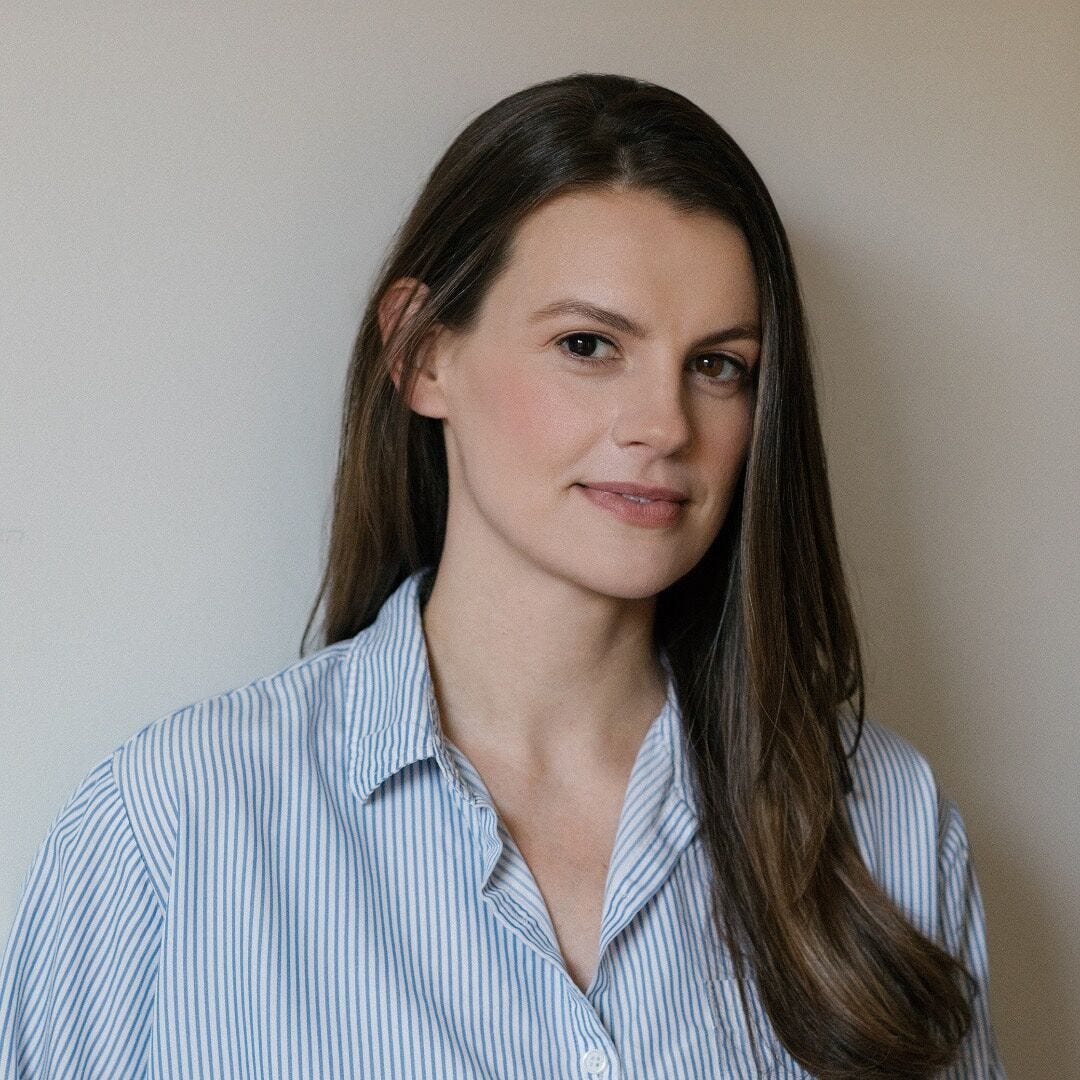
ES: I don’t always start with geography, but you’re in Michigan, right?
JB: Yeah, Ann Arbor.
ES: I only ask because I’ve actually been to your fine state. I went to a punk rock festival in Howell in 2013.
JB: I haven’t been to Howell, and I’ve never been to any punk shows in Michigan, but Michigan has all sorts of cool, passionate scenes. Usually, when I tell people I live in Ann Arbor they respond by asking me about our experimental film festival. They say “Hey, did you know about the film festival in Ann Arbor?” I have not been to any punk festivals in Howell, but I’m glad to know it exists.
ES: I don’t think it exists anymore. Laughs.
JB: Did you come to Michigan specifically for that show?
ES: Yeah. I was, like, 21.
JB: Right in your punk time.
ES: Unfortunately for everyone my punk time is eternal.
I was living out East at the time and my now-wife actually flew out, and we made the journey together. We drove through Detroit, and my main takeaway was that Howell is low-key pretty, but the roads in Detroit were terrible.
JB: I have a friend who lives in Detroit and they describe the roads as Swiss cheese… I think Michigan is beautiful, especially the southeastern part. Where I’m from is far up north, is really beautiful, too. People don’t always realise that, so I’m glad you do.
ES: Well, I was thinking about it because Michigan is almost a character in your novel—the way that it fosters the relationship, informs so much of Wilhelmina’s perspective, and relationships.
JB: I think that’s true, both for this book and my first book. I think I see place as having this really important role in the identity of the characters Famous Men. It’s definitely something Will and Nathaniel share. I don’t think their relationship would be possible without that shared landscape.
ES: Why do you think the idea of that shared landscape is interesting to you?
JB: Good question. It’s hard to answer because it feels so elemental to how I understand life… People from the same place have a kinship that goes beyond language, obviously, but that’s not exactly it, right? You might have some kind of overlapping sense of commonality if you’re from the same mid-sized city in whatever state, but I do think there is something quite particular about the feeling of alignment you might have if you’re from the same small, isolated town in a place that’s hard to get to but beautiful, or has its own special mystique. Will becomes interested in poetry because of Nathaniel’s work, but has an inclination toward that kind of thinking anyway. His work helps her find a way of talking about this place that she feels both trapped by and defined by.
I actually just had this funny experience where I met somebody here in Ann Arbor on a patio of moms. I felt this instant connection—I just really liked her, thought she was really funny, and something about her sensibility felt really familiar to me. 45 minutes later, I realised she’s also from northern Michigan, in a similar area as to where I grew up. So I do think there is some kind of sense of familiarity that clicks deeper than the usual way you might relate to somebody.
ES: That’s so interesting. I’m from Vancouver but so many of my friends here are from Alberta, and I do think there’s something to be said about relating to each other on an almost geographic level.
JB: One thing I was interested in, in a macro way, is the specific isolation of the place where Will grew up, which is a fictionalised version of where I grew up. I had some privileges that she did not have, and she has this simultaneous experience where she knows a lot about the things she is interested in, yet has not been exposed to the world at large. At the same time, she has been exposed to certain sinister things that might not have happened in other contexts. It was interesting to think about how this weird blend of inexperience and specialised knowledge would impact her character, and choices. She throws herself into things wholeheartedly, but also completely fails to understand how some of it works, or becomes overwhelmed in contexts that other people might find easier to parse. It’s a classic literary trope: the provincial outsider moves to the big city, and their dreams and ideals are tested. But that trajectory has always been interesting to me, and enlivening the specifics of it with places I know was satisfying.
ES: It was also your own trajectory, right? You moved to New York as well.
JB: Right. I’m interested in the relationship between real life and fiction, how they talk to each other, where those intersections are, where they break down, what we need from them as readers, and how writers play with them. What can we trust as truth? What do we need to believe is truth? There is definitely a layer of that in the actual plot of Famous Men…
Which is all to say, there are a lot of things about Will that are very much like me. She’s from a similar place, and she is interested in similar things. She doesn’t know who her dad is. I grew up knowing who my dad is, but he wasn’t a part of my life. My search for him did not look like Will’s, but I definitely know that aching question of, “Who am I if I don’t know who you are?”
At the same time, part of me feels bristly. There is another version of this novel that leans into all the ways we overlap—more autofictional, where she is an unnamed first-person narrator who is an avatar of me. But Will is a character with her own distinct life that is different from mine. I almost think of the autobiographical element with Will as more of a question of what an alternate world I might have lived in had certain things not happened... The “almosts,” or the “could-have-beens.”
I wanted to push toward a more complicated space, where I didn’t spell out for the reader how to interpret those [complicated] moments.
ES: Do you think readers have almost been trained to receive things as autofiction because that style is so prevalent?
JB: I think there are conventions of autofiction that this book simply does not have. Anyone who is an avid reader or practitioner of autofiction will automatically understand that it’s just not that. However, I do think it’s interesting that the standard-issue leakage between fiction and real life—which has existed as long as there has been fiction—is now implicated in different ways by questions of what’s real and what’s not. I almost think it has more to do with social media, branding, and how writers are trained and encouraged to tell the stories behind the books.
It’s been a bit harder to talk about this book than my last one, because with that one I had a direct real-life connection. I could say, “I lost a friend when I was in my early 20s, and my sister was struggling with similar issues.” I was gripped by the question of how destructive rural life can be for young women in these specific ways. What is different about this book is that while I can say I moved through these worlds and had some experiences in all of these buckets, the book itself didn’t arise from one plot strand in my life. The fictionalisation didn’t come from altering a real story; it came from a set of influences that are much more ineffable, harder to track, and very connected to how I think about writing. Those things are harder to talk about, and I actually think it makes the pitch for Famous Men less straightforwardly marketable.
ES: Could you expand on that? How is this a novel about the way you think about writing?
JB: I started the book when I was at the MacDowell Writers Colony in 2019, after Marlena had come out. I was in a place of having had my first book succeed beyond my expectations, and now I was at MacDowell—having never been to a residency before—supposed to write my second book. I felt like I didn’t know what I was doing, how to write a book, or anything at all. It felt impossible.
I was really stuck, and I wasn’t writing much, and I was feeling quite bad about myself. I was stewing in a soup of impostor syndrome—I’ve since learned that is pretty normal at MacDowell. Then, I found a copy of Philip Roth’s Zuckerman Unbound in my studio desk drawer. I thought it was embarrassing, funny, smart, and free—and the freedom of it felt hard-earned. You know that feeling when you read someone and realise they do not give a fuck? I was giving so many fucks, and this person was not giving any, or so it seemed to me. Being in that sensibility even for an afternoon was exhilarating.
Anyways, my studio at MacDowell had this giant window that didn’t have a curtain. I felt quite uncomfortable writing in there at night because the window was so big that I felt exposed no matter where I was… I had this prickling sense of wishing I could shut myself off from the world and being unable to. There was something about reading Roth, having that particular feeling, and experiencing the weird awareness that comes with being a woman and needing to know at all times if I’m safe… It all crystallized and I suddenly felt like I had questions I could write into, and experience I wanted to unpack. Many of those experiences were around writing.
Here’s a story that sort of illuminates some of the tensions of the novel. When I was promoting my first novel, Marlena, I had the wild privilege of getting flown out to the Netherlands to do some book events and press for the Dutch edition. I was staying in a hotel in Amsterdam with a library in the lobby—a place known for hosting writers—and after an interview in a private area in the downstairs space, a photographer appeared to take some photos. We took a couple, and then he asked if we could take the rest in my room—he said something about having taken many photos of authors in the library, how they would be more interesting with another backdrop. I’d left my hotel room in disarray—clothes everywhere—and I just very much did not want to do this. But that seemed sort of prudishly American, and wasn’t I being weird, and my publisher had spent all kinds of money getting me there, and he was a professional, and so I wound up following him up the stairs to my room. As we passed the front desk, Ben Lerner was checking in. Ben Lerner! “Oh!” I said out loud, to the photographer. And then I said very awkwardly and probably within Lerner’s earshot: “That’s famous American writer Ben Lerner!” Oof! I know who Ben Lerner is, but he definitely does not know who I am—and why should he? But that added a whole extra layer to the moments that followed, when I perched awkwardly on my bed in different positions, trying to ignore the bra draped over the desk, while the photographer grew increasingly frustrated. Did Ben Lerner have to do stuff like this? The photos, needless to say, were horrible. I don’t think I sold many copies at all in the Netherlands.
All of these things came racing into my brain, and I realised I could find a sense of story from there. A version of Will already existed in the draft I was stuck in, and I just picked her up and dropped her into this new context. I know it is a hard sell because it’s not a simple story to explain, but it really came from all of these things happening in my brain at once.
ES: For what it’s worth, it felt like the book was about the subtle ways men inform women’s relationships and perceptions of themselves.
JB: That’s a great way of getting right at it, and I think that’s true. An MFA workshop, at least the ones I was in back in the day, might have advised me to start the story when Will and Nathaniel encounter each other in real life. But I wanted to show that Will’s path through the world had already been tilted by these different male-gaze pressures on her, and so I started with her childhood. The work she was reading, her mother’s strange boyfriend, her school, her town. I don’t think those pressures are super unique to Will; they are pretty garden-variety teenage girl pressures. But I felt like I hadn’t seen them mapped as specifically and as complexly as I wanted to.
ES: Your book at times felt very harrowing. There’s that joke about music–”Oh this song is number one on the charts in my household”. These guys are famous to Will. And I think almost any woman who has interacted with men in her life probably has a “famous man” to her—someone who is infamous to her for doing XYZ, even if it was relatively harmless.
JB: Yeah. I think about moments that were really hard to write, where I had to be deeply in Will’s perspective. These are the moments where questions of autobiography become complicated. On one hand, I also experienced those things and was thinking about them, but I wanted to write someone who couldn’t see around it yet, who hadn’t been given the tools to do so.
Part of the journey of the book for her is: will she see around it? Does she see around it by the end? I hope that is a question the reader is left weighing, which some people might find frustrating and others might find fun.
ES: It’s fun, but in a dark way—like the way Uncut Gems is fun. Every time you think she is learning, you start doubting yourself.
JB: Exactly, maybe she’s not. There were moments where I wanted to rescue her, to give her a moment when she pushed back against herself. It was so difficult to be in her head. She is so socialised to think about Nathaniel’s comfort over everything else. It felt tricky at times… I know there are readers who feel frustrated with her; I, too, felt frustrated with her. But to me, that was what felt interesting and almost dangerous to write into.
We have all read stories of young women whose lives get derailed by an older man. It happens in fiction as it does in life. But I wanted to push toward a more complicated space, where I didn’t spell out for the reader how to interpret those moments. Living in that space allows Will to say, “I did not suffer,” even if the reader has a completely different opinion. That felt like a more honest way of talking about these dynamics, and more importantly, it felt truer to her. It felt like a way of talking about something I see in real life, in the environments I grew up in and among the women around me, that I hadn’t quite seen pinned down before.
ES: I was going to say, I found the book to be a nuanced look at gender dynamics. It’s often operating in the grey. You can read Nathaniel as a villain, but you can also see him as a pathetic old man. It is not cut-and-dry.
JB: Somebody asked me in another conversation, “Do you think Nathaniel is a good teacher?” and I said I didn’t know; some of his students would say yes, and some would say no. He does reprehensible things, and he is a caricature of himself sometimes. He’s pathetic and gross, but as a writer, I can’t spend that much time with a character and not also have some affection for them. And the same goes for Will.
Nathaniel doesn’t represent any one thing to me; he is a specific character in my mind. I think this is one of the things I want readers to swim in, as sticky as it is: he ruins Will’s life, but he also makes it possible for her to be a writer. Would she have had another way of getting there? Probably. Would she have known how to do that? I don’t know. The question then becomes: is it worth it, and how does she answer that?
ES: It also fosters questions around Will’s agency. So often we attribute a woman’s success to a man, and the book does an interesting job of interrogating that. At times, it seems Will is aware that she is destroying her own life; she evens seems to resent characters who suggest she isn’t in the driver’s seat.
JB: She thinks she’s doing it with canniness, that she’s opting into something and is smarter than he is. Sometimes she is smarter than him.
ES: You talk about your characters as if they are real to you. Is it hard to have readers and other people pick them apart and form opinions on them? Is it like dealing with children, or do you feel like a God to them?
JB: I have always been of two minds about this. Writers often say, “I just had to follow what my characters would do.” But the truth is, they do what I tell them to do. They are not real; they are strategic inventions in order to tell a story. However, when you spend five years with a character, the build-up of decisions you have made forecloses other decisions. In order to be faithful to the psychology of the invention you made, only certain things can happen next. In that sense, they do start to feel like they have their own agency.
When you spend five years with a character, the build-up of decisions you have made forecloses other decisions… Only certain things can happen next.
ES: Are you more of a logical or an intuitive person?
JB: Probably more intuitive, because I wouldn’t be able to tell you the strategy until the revision process. There is no strategy through the first draft; that comes later. I tend to leapfrog off of associations, starting with a memory or a feeling that is quite personal, and go from there.
ES: So you’re not approaching it with a story arc in mind, or even a broader theme, until you get that lightning flash of inspiration?
JB: Kind of. I don’t scaffold in advance, but I often have a sense of the ending pretty early on… It’s a bit like how a musician might know the sound they want to achieve at the end of a composition, or how they want to resolve a chord progression. It’s almost tonal rather than narrative. For this book, I was interested in the idea of a cycle: what if a character who thinks she’s running away winds up stuck back where she started? Does she restart, or is it the same cycle?
ES: Some people write with music on, and some don’t. Did you have a soundtrack for this book, or do you prefer to write in silence?
JB: I prefer to write in silence. I’m really sensitive to background noise. Occasionally, if Spotify spits out the right classical piano music, I can put it on repeat, but mostly I need quiet. I’m easily distracted, which is probably why I’m so slow to publish.
ES: It must be a lot harder when you have a five-year-old.
JB: A five-year-old and a two-year-old.
ES: Last question: reading the book, it feels very cinematic, like it was made for Hollywood. I could easily see this being adapted into a movie. Is that something that interests you, and has anyone been sniffing around the rights?
JB: I went through a lot of that with my first book, so I am a bit cautious now. I wouldn’t say “burned,” but there were just so many meetings, endless conversations, and highly enthusiastic people, followed by absolutely nothing happening. At one point, I even had to write a letter to Olivia Rodrigo because there was an idea that if we could get her attached to the project, it would move forward. My perspective is that an adaptation would be cool if the right people wanted to do it, but my sense is that 700 million people have conversations and then nothing happens. I don’t want to spend my life having those meetings; I just want to write my next book.
ES: That’s fair. My actual last question, then: when addressing that letter to Olivia Rodrigo, did you refer to her as Olivia or as Ms. Rodrigo?
JB: I referred to her as Olivia. I have no idea if she ever saw the letter; it was ferried off into a world of producers. I had actually never listened to her music before she was mentioned in those meetings, but I listened to her a lot in preparation for writing that letter, and I meant everything I said. I really like her now.
ES: Was the message sent as an email or an actual letter on nice stationery?
JB: I just wrote a typed letter and saved it as a PDF and sent it off to other people. It’s embarrassing to even talk about! That said, if she’s reading this and interested, she knows where to find me!
Julie Buntin is a writer, editor, and professor. She lives in Ann Arbor, MI.
No posts
Comments
Nothing yet. Say the first thing.
Sign in to join the conversation.