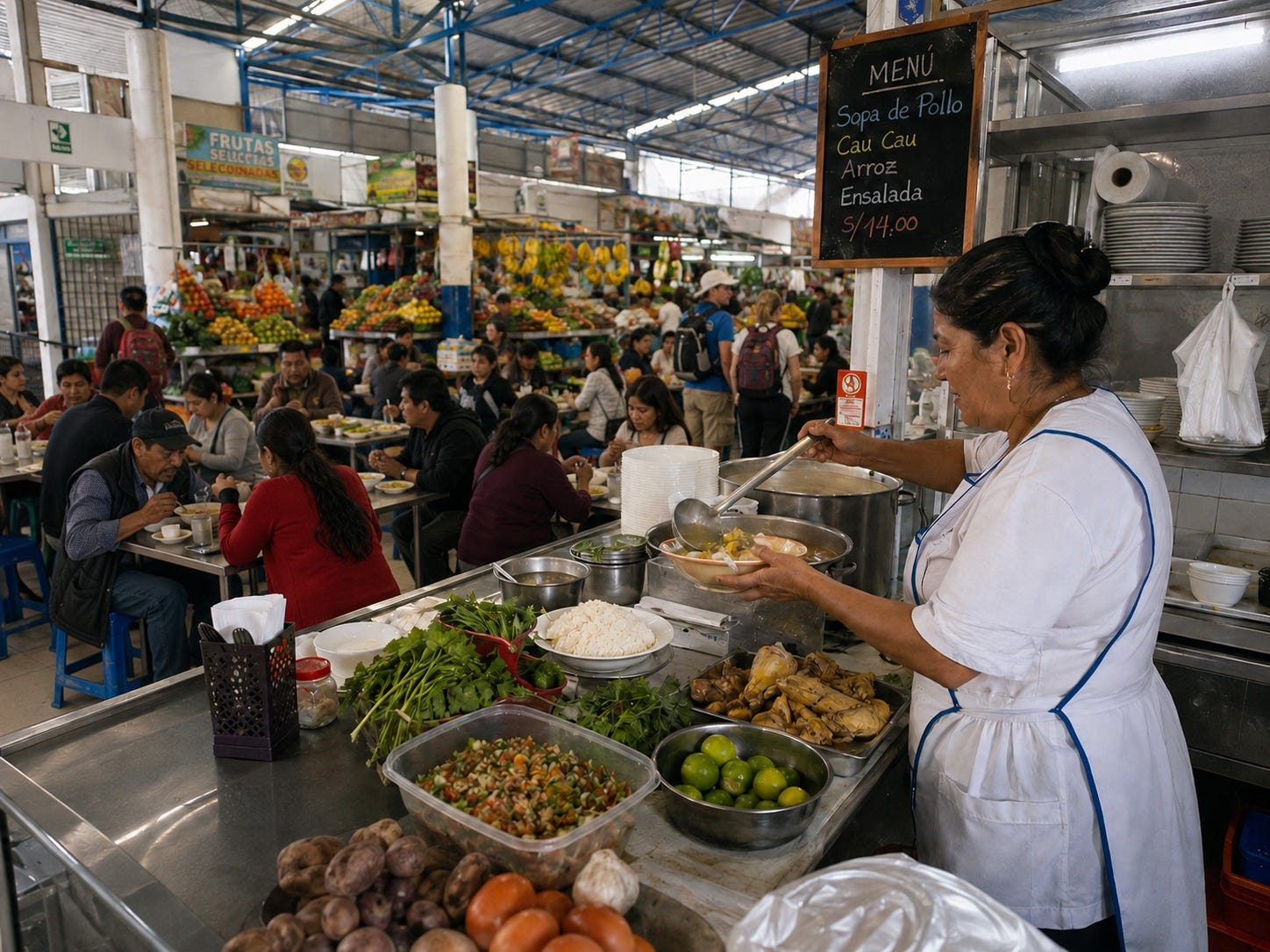
In Lima, Convenience Still Looks Like Food
What a city’s markets, menus, and street kitchens reveal about the operating environment beneath our diets

Essays and field notes on the Human Operating System: how work, technology, healthspan, behavior, culture, and environment shape how we function, recover, and adapt. By Oscar Trelles, author of The Human OS Manual.
Live Last read · last published · next check
What a city’s markets, menus, and street kitchens reveal about the operating environment beneath our diets
Why insight does not become change until the system has something repeated enough to trust
Why the space we keep filling may be the space where the system restores itself
Why the problems we treat separately keep producing each other
Enshittification, ultra-processed food, and the slow normalization of degraded inputs
Why The Human OS Manual is not about turning people into machines
On New York, identity lag, and what happens when old rooms meet new work
Why seeing the AI productivity trap is not the same as being free from it
Why performance under pressure depends less on intensity and more on the state from which decisions are made
What DES Málaga clarified about productivity, digital health, future skills, and the missing human operating layer