
Despite the explosion of AI and other technologies over the past decade, the way we produce and consume weather data has remained surprisingly static. For most people, a quick glance at a pre-loaded phone app is enough to get the forecast needed to prepare for the day.
Although we may spend only a few moments looking at this information, we tend to trust that the small sun, rain, or snow icons offer an accurate sense of near-term conditions. For decades, that was usually enough to decide whether to bring a jacket or an umbrella to work. But after living through several extreme events myself, I have started asking different questions. What does this information actually tell me? Where does it come from? And why, especially now, does it feel so out of sync with our lived experience?
To be clear, I do not expect a free weather app to provide every answer. But what feels particularly strange is that we live in an age of immense wealth and unprecedented advances in AI, yet we still struggle to reliably predict whether it will rain next Tuesday.
The technical reasons are undeniably complex, ranging from the chaotic nature of atmospheric systems to the computational limits of forecasting models. But perhaps we are asking the wrong questions. The issue is not simply access to weather information or the pursuit of perfect models. It is our relationship with that information.
Think about the people you know and spend time with. There’s almost always someone who follows the weather with near-religious devotion. In my life, it’s my dad. He tracks the forecast across every app and cable channel, narrating incoming fronts and tracking shifting storms as if he were part of the Weather Channel’s own meteorology team. But this isn’t true for most people in my life. And for those who are in the know, how many of these friends or family members could tell you what phase of the moon we’re in? What flowers are blooming this week? Whether this November has been warmer or colder than last year? Or if there are broader climatic trends that are not quite visible to the naked eye.
My guess: not many. We’ve become oddly disconnected from the physical world that shapes every moment of our existence, despite being connected more than ever through our devices. We glance at our phones, see a number and a sun or rain icon, and move on. The weather becomes just another piece of content we consume, no different from a news headline or a friend’s Tiktok or Instagram story.
Part of this disconnection comes from a basic but persistent confusion between weather and climate. For many people, the terms often mean one in the same, even though they describe different things. Weather is what the atmosphere is doing right now or over the next few days. It changes quickly and can be unpredictable. Climate, by contrast, is the pattern of weather over long periods of time, usually decades or longer. It tells us what we generally expect in a place, such as cold winters, hot summers, or a rainy season. Climate changes more slowly, but it quietly shapes ecosystems, infrastructure, and how societies plan and live. A simple way to remember the distinction is that weather is short-term and climate is long-term. Yet despite how important this difference is, the two are often conflated, and humans tend to struggle with slow, incremental change. That makes global heating especially difficult to perceive, even as it remains an urgent issue of the present.
For a long time, this detachment didn’t matter as much. Climate patterns were relatively stable. Weather models worked well enough. Sure, a “hundred-year storm” would occasionally devastate a region, but these were rare enough to feel like once in a generation events rather than something more chronic.
That era is over.
Today, the climate crisis has pushed us into a realm of extreme uncertainty that our forecasting systems, and our cultural habits, were not built for. Those “unprecedented” hundred-year events? They’re now happening every few years, sometimes multiple times per season.
This new climate reality demands a different politics of attention. We need a deeper, more intentional way of relating to the atmospheric and environmental systems we are intertwined with. A moral calling to genuinely understand the world around us, and to have agency in not only how we consume this information, but also play a role in producing it.
This matters for practical reasons: knowing how to prepare and adapt could literally save your life. But it also matters to build the kind of communities and communication frameworks we need in a time of climate crisis. Resilience isn’t just personal, it’s social. We’re stronger when we’re connected, when we’re informed, when we know which neighbors are most vulnerable and how to help them.
And so what would happen if we stopped being passive consumers of weather data and became producers of it?
What if knowing the weather wasn’t just about checking an app, but about observing rainfall in your own backyard, tracking temperature swings through the seasons in your neighborhood, noticing when the first frost arrives or when certain birds return?
What if this knowledge wasn’t locked away in meteorological agencies or insurance companies but distributed across communities, neighborhood by neighborhood, person by person?
This isn’t a new idea, it has deep roots in community science, in Indigenous knowledge systems, and the farmer’s almanac traditions that sustained communities for generations. Many organizations and efforts have been building this foundation for decades. Grassroots, volunteer driven networks like the Community Collaborative Rain, Hail & Snow Network have shown what is possible when thousands of people contribute daily weather observations. Citizen science platforms such as SciStarter and the Citizen Science Association support people in contributing meaningful environmental data. DIY groups like Public Lab offer guides for building your own low cost sensors and weather instruments. Community reporting platforms like ISeeChange and MyCoast collect photographic and narrative observations that document storms, flooding, tides, and other local events. And new AI initiatives are springing up everywhere, including one I’m personally working on called ClimateIQ.
Alongside these civic efforts, private–public initiatives have expanded hyperlocal observation networks. Netatmo’s WeatherMap, for example, connects personal weather stations across more than 175 countries, capturing neighborhood-scale conditions that are often missed by official stations. In some countries, including Norway, this data is already used to inform national forecasts and public weather information, demonstrating how community-generated observations can complement formal meteorological systems.
Yet these efforts still face major hurdles. Community-derived data often do not integrate easily with advanced forecasting systems, nor do they produce datasets that align with the formats and standards those systems require. This helps explain why agencies such as the U.S. Weather Service have not fully leveraged them. Participation also remains far lower than needed. Even where tools, networks, and long-standing community science traditions exist, contributing weather data is rarely a routine part of everyday cultural practice, despite the fact that many of us unknowingly generate and share vast streams of consumer data for commercial exploitation each day. This gap persists despite the growing urgency of a more volatile climate and the continued influence of neo–climate denialism.
What we need now is a shift in how we think about where weather information comes from and who contributes to it. We can’t assume that IBM’s Weather Channel, or the National Weather Service is the only source that matters. Nor can we rely solely on an aging network of federal and state weather stations located mostly at remote sites that often fail to represent the lived conditions of the communities most affected by extreme weather, especially those in dense urban areas.
I believe this simple shift, from consumer to producer, from passive recipient to active observer, could fundamentally transform our relationship with the places we call home. In doing so, it would build social resilience alongside higher-resolution weather information.
The weather app on your phone will still be there tomorrow morning. But with additional tools and shared insights, a more decentralized approach could cultivate a deeper sense of empathy and a greater willingness to care for a damaged planet that needs our attention more than ever.
I plan to set up my own weather station so I can be better informed about the decisions I make in daily life. I invite you to consider doing the same, and to talk about the weather more often with friends and family. Not simply as something to complain about, but as a way to understand how we adapt and remain resilient in a time of profound uncertainty.
Because the weather is not just information. It is where we live.
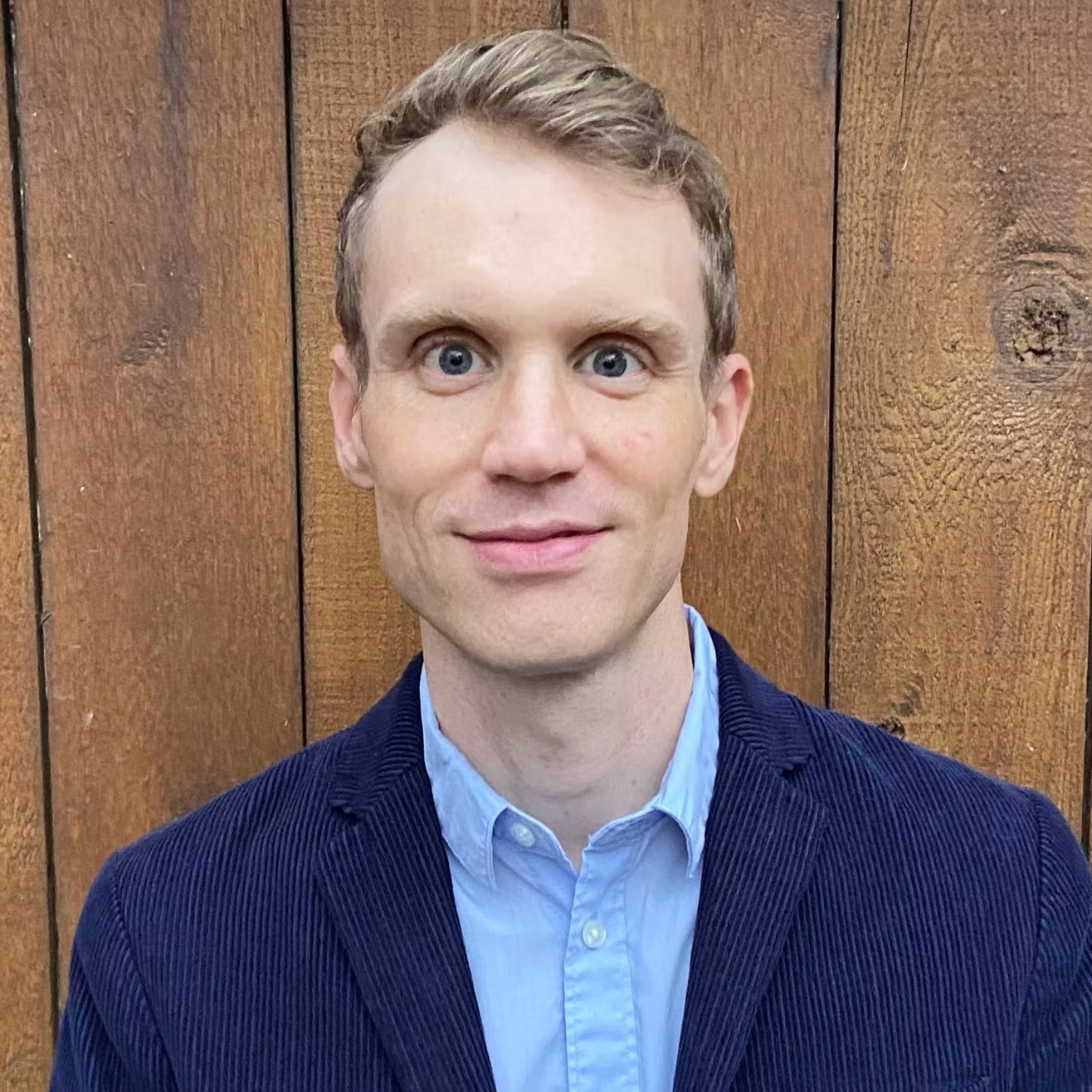
Christopher Kennedy is the Associate Director of the Urban Systems Lab at New York University and a lecturer at the Parsons School of Design. Kennedy’s work focuses on advancing climate resilience and adaptation in urban areas, and the effective implementation of nature-based solutions and community-based planning. Kennedy holds a BS in Environmental Engineering from Rensselaer Polytechnic Institute, an MA in Environmental Conservation Education from NYU, and a PhD in Educational Leadership and Management from the University of North Carolina.
Comments
Nothing yet. Say the first thing.
Sign in to join the conversation.