
The name on everyone’s lips seems to be “Tom Holland.” The 30-year-old is currently the star of the two biggest films in the world, The Odyssey and Spider-Man: Brand New Day, and if he ends up in Avengers: Doomsday (which does seem likely, although the cast list is a big hush-hush), then he’ll become the biggest box office star of the year. Spider-Man: Brand New Day crossed the $1 billion mark in its opening weekend, skyrocketing it to the highest-grossing film of 2026 after just a handful of days. Meanwhile, The Odyssey continues to chug along. It earned an additional $50 million this weekend domestically, and seems poised to cross the $1 billion mark soon.
While some of 2026’s film boom can be attributed to Tom Holland (as well as Zendaya, Robert Pattinson, Anne Hathaway, and Jon Bernthal), there’s clearly something in the water. Going to the movies is cool again, and the box office is showing that. Domestically, theaters have already earned over $6 billion total in 2026. Compare that with the $8.5 billion that theaters earned in 2025 in its entirety. If Brand New Day keeps raking in cash, we could see that mark easily eclipsed before the holiday rush. From 2015-2019, theaters were earning $11 billion a year, and while I don’t know if we can hit that number again in 2026, we’re clearly moving in the right direction. My siblings who rarely go to the movies have headed to the theater multiple times this summer. Oh, what a time to be alive (if you don’t think too hard about global warming or fascism.)
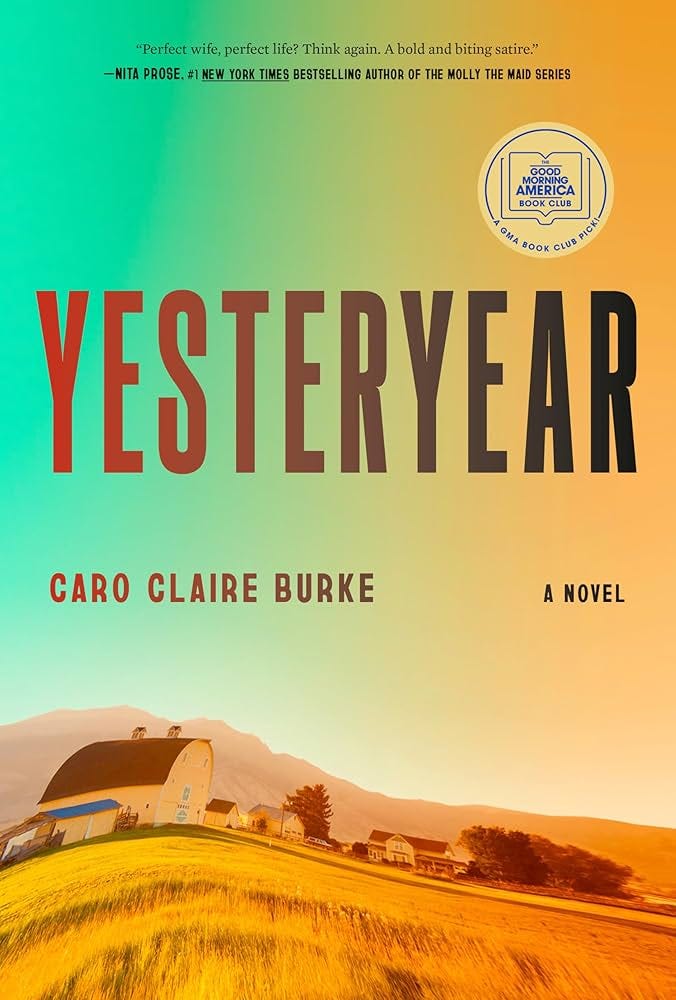
While the movie industry is surging back, the book industry continues to struggle in many ways. People are reading less, and those who are reading are largely sticking with romantasy and self-help. Serious literary fiction, non-fiction, and adult novels are having difficulty selling, with the exception of a few major breakouts each year. However, unlike breakout novels in the past, like Where the Crawdads Sing, Verity, and Milk and Honey, I do think that 2026’s biggest breakout, Yesteryear by Caro Claire Burke, is actually worth reading. Let’s dive in.
Awarded to THE standout figure of the week, recognizing exceptional talent across disciplines.
I’m always wary of long-running New York Times bestselling books, because I don’t trust that America, at large, has good taste in literature. We, as a nation, don’t read that much, and so when I see TikTokers effusively praising books like Yesteryear (which has sat on the NYT list for 17 weeks), I’m skeptical. I was pleasantly surprised, therefore, to find Yesterday not only well-written on a word-to-word level (it’s shocking how many modern books fail to meet the lowest of expectations), but also has plenty of interest to say.
Now, I will preface this by saying that, in some ways, I’m the target audience for Yesteryear, a novel about a tradwife influencer who wakes up one morning to find she’s seemingly been transported back to the 1800s. That’s because the world of Yesteryear is one I’m extremely familiar with. I grew up in rural Michigan on a dirt road in a town with less than 1,000 people. My parents were extremely religious Evangelical Christians who largely shunned modern technology and pop culture. I was homeschooled. I went to church multiple times a week. I had dial-up internet until I was in college (in 2010) and a flip phone until I graduated (in 2014). My mom quit her job when I was a baby to raise my three siblings and me, we weren’t allowed to watch PG-13 movies, and I learned dozens of ways to disprove evolution. I had friends who had 12 siblings, friends who could only wear skirts, and friends who got married when they were still in high school. So, as the son of a tradwife, I’ve also got some notes on the book.
SPOILER ALERT FOR YESTERYEAR MOVING FORWARD
Okay, let’s start with the twist, which I feel like is the novel’s weakest point. Early on, Natalie Heller Mills, a successful tradwife influencer and the daughter-in-law of a presidential candidate, seemingly wakes up in an 1800s Little House on the Prairie version of her life, and we are told two stories in alternating chapters. The first is her rise to fame, and the second is her as a modern woman trying to escape the old-timey version of her Idaho ranch. In the novel’s final act, however, we learn that in a The Village-style twist, Natalie and her husband, post-public scandal, opted to cut off their home from the world and live as if it were the 1800s, but thanks to some very selective amnesia/a psychotic break, Natalie doesn’t remember making this choice. While I understand that the twist was somewhat needed to sell the book, I think Natalie’s descent into madness would have been just as powerful without the gimmick.
Choosing to set aside this wackadoo twist, however, I found the narrative and commentary on evangelical life extremely compelling. As a little gay boy, I spent most of my childhood with my mom, my mom’s friends, and the other girls in our sequestered little enclave. And as an adult, I’ve got a front-row seat to the myriad ways that the religious patriarchy can break a woman. Obviously, women can speak to this more eloquently than I can, but it’s easy to see that girls within the evangelical system are made to be punished. There are no right choices to be made. There is no optimal path. There is no winning within the system. Being intelligent is a detriment, as is being pretty, as is being ugly, as is being devout, as is not being devout enough.
There are goals set for girls within Christian society, but they are nearly impossible to meet, and even if you do meet those goals, you are berated for not doing so in the correct manner. The only path forward is to shrink yourself to nothing. Every one of my friends growing up has either totally rebelled or become a dull, lifeless version of the person I knew in high school. Yesteryear very correctly illustrates how maddening and futile building a life as a woman in that setting is. I can see why Natalie would lose her grasp of reality and why she’d venture off into the woods. (I just don’t know if I buy the perfectly placed amnesia).
Yesteryear, while a romp, is a devastating read, because you can see how many wonderful lives and wonderful people are wasted and destroyed on this myth of a Christian woman who can have it all. These women are toiling for decades, receiving nothing but humiliation, while their loser husbands get whatever they want. And having seen plenty of wonderful women end up with loser husbands, I know what I’m talking about.
The two parts of the book that stand out to me, as someone who escaped this world, come in the novel’s final pages. The first is the revelation from Natalie’s now grown daughter Clementine who says:
“Do you know, Mother, what the hardest part of leaving you was? It wasn’t walking through the woods with the kids, or waiting for a car to stop. It wasn’t moving in with Grandma, all five of us in a single bedroom. It was months after I’d gotten to the other side, when I realized that every single thing you told me about the world was a lie. Everything was so much…better than I thought it would be. The people were nicer. The cities were cleaner…I just didn’t get why my family never wanted to be a part of it.”
While growing up as a gay boy in an Evangelical world certainly comes with a horrific set of obstacles, it also presents you with a well-trod path of escape, one that straight women don’t have. When I finally wandered into the real world (aka the H&M at the Meridian Mall in Lansing where I got a job after college), I was STUNNED to find that the secular world was unlike all the stories I’d heard. I’d been told that Christians were loving people, and everyone else was a monster who needed saving. Years of shock and confusion followed as I realized the bubbled world I grew up in was a fiction created by men who wanted to keep me locked in. I think there is apt symbolism in The Village-esque plot here, even if it’s not believable.
The part that really gut-punched me, though, is the letter that Natalie’s daughter writes to her.
“Hello, Mama. I miss you. Isn’t that funny? Even after everything, I still miss you. I miss your temper and your jokes and your strange little moods…I want you to know I’m sorry you got so lost in Yesteryear. I’m not sure if it’s your fault, but I don’t think that matters as much as some people say it does. I know it was hard for you either way. There’s a lot about our life that makes me sad, but do you know what makes me the saddest, Mama? How much beauty you’fe missed.”
When I think about the men I knew growing up, I feel very little sympathy. Yes, they’re victims of a centuries-old system, but they’re also the perpetrators of terrible abuse. When I think about the women, though, about my mom, my Sunday school teachers, and the friends I left behind, the primary emotion I feel is grief. Any anger I felt washed away long ago. Now I just miss the secret versions of those people I knew in private that must remain in hiding, if they still exist at all.
The term “tradwife” has recently grouped millions of women into a box that is easily criticized and satirized, and sure, some of that is valid, but I appreciate that Yesteryear doesn’t end mocking its main character, but rather with a deep well of woe for all these women who sacrifice their lives to be wives and mothers only to realize that there is no reward for either within that system.
Awarded to the best-dressed individual of the week, either a real-life human or an on-screen character.
On a happier note, Florence Pugh looked stunning in this Tamara Ralph gown at the London premiere. I know somewhere Beyoncé is pissed off that she didn’t get to wear all this fringe on the Cowboy Carter tour. It’s been a minute since we’ve seen Miss Flo on a red carpet, but luckily she’ll be all over the place for #Dunesday in a few months.

Awarded to the best use of the English language in the past 7 days.
You all know I love thinking about influencers, and Audrey Peters is an excellent influencer to people-watch. There is a transparency to her thirst for fame that I find oddly refreshing, and Rebecca Jennings’ feature that primarily focuses on her career is a FASCINATING read. 10/10. Highly recommend. It does leave me wondering what the future looks like for lifestyle influencers though. We’ve now seen several of influencer life cycles from the OG YouTubers and Vine stars to the chic lifestyle Instagramers and now the brazen TikTokers. Very few influencers have been able to make the jump from one platform to another, and even fewer have managed to catapult their influencing career to mainstream stardom. What does that mean for this “career”? What does life after influencing look like for these people? What is their next career move? This piece begins to ponder those questions, and I can’t wait to see how things evolve within the next few years.
Awarded to the individual(s) who deserve(s) an Oscar for their remarkable performance(s) on screen, large or small.
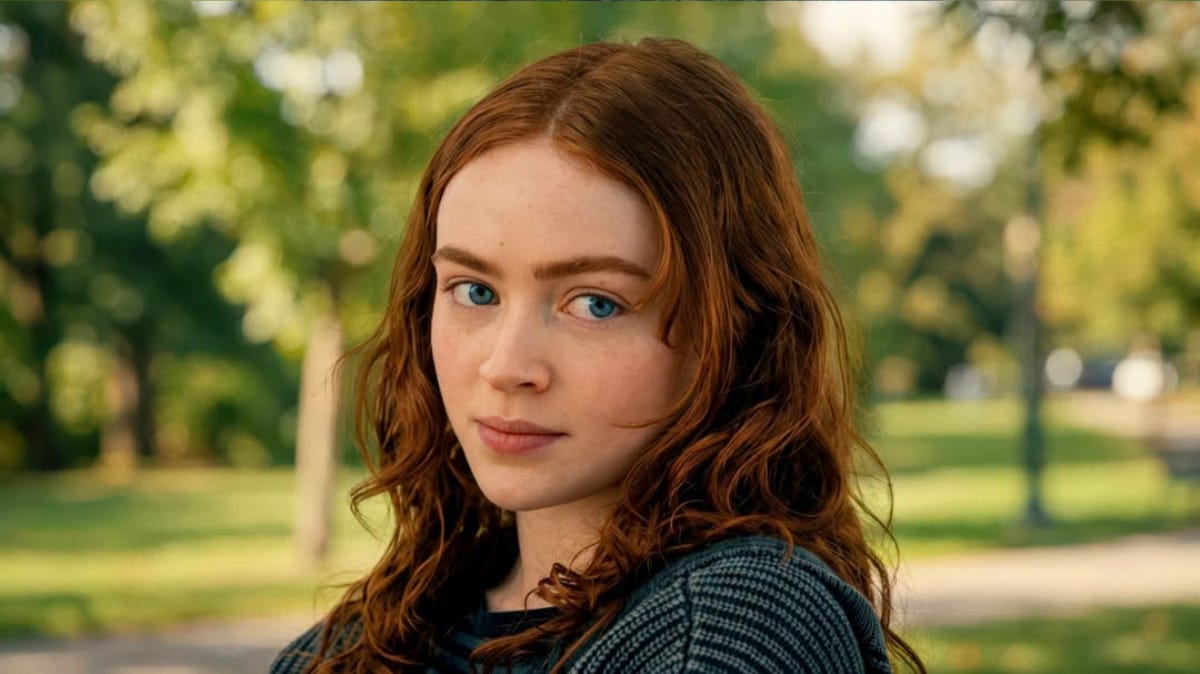
In an attempt not to spoil anything, I will just say that the Sadie Sink/Marisa Tomei scene really does prove that these are two of our finest actors. Sadie Sink will get that ingenue Oscar before long. Mark my words.
Awarded to the entity with the worst energy, most unwell aura, and bleakest constitution.
Perhaps my least favorite feature of the white, cis, gay community is that they believe so strongly that horniness is a personality trait. Just because straight people are (slightly) more discreet about their urges does not mean that being horny on main should be mistaken for being interesting. Unfortunately, this is not something Ryan Murphy seems to have realized. Instead, he just keeps making poorly conceived TV shows where being hot constitutes 80% of the plot. Is The Shards, about a group of hot young high schoolers in the 1980s being stalked by a serial killer, watchable? Yes, but largely because of how bad the show is. Ryan Murphy just keeps finding new hot twinks to build projects around, and at a certain point, we need to ask ourselves, “Am I interested in this plot, or am I just horny as well?
(And not to get too far into the weeds because I know the male/male power dynamic is different, but if an old straight man made only shows with hot young women, we’d all think that was a smidge creepy, no?)
If you’re going to engage with media in the upcoming week, this is what you should be engaging with.
MUNA will be my top artist of 2026 easily, and this acapella cover of “Dancing on the Wall” has reminded me that we need another Pitch Perfect movie stat. Give it a listen.
Sorry kids, but it’s time for the grown-ups to talk. If you’re a paying subscriber, feel free to read on for gossip, hot takes, and potentially controversial subject matter for your eyes only.
Comments
Nothing yet. Say the first thing.
Sign in to join the conversation.