
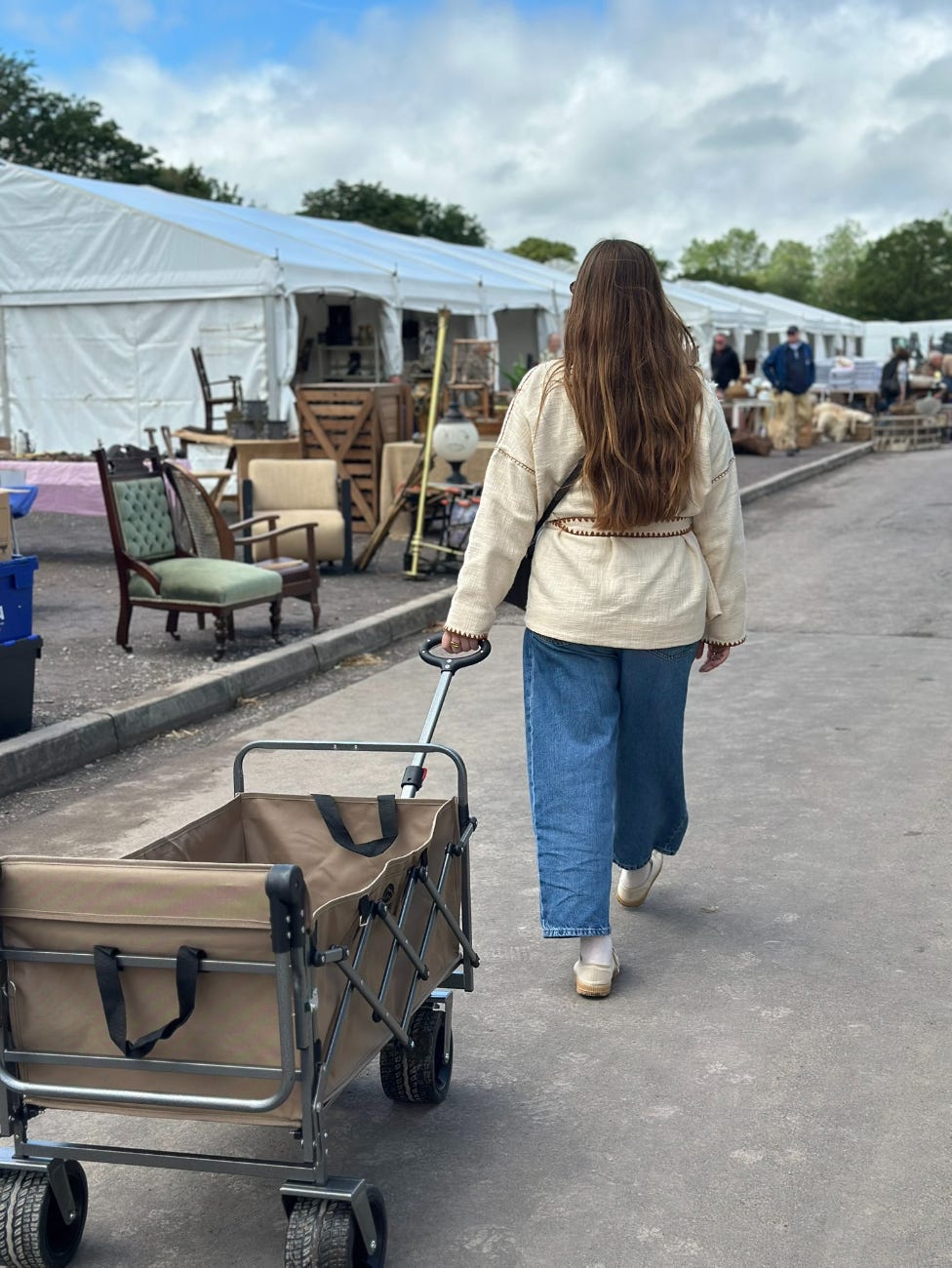
The best painting at a flea market is not necessarily the best presented. It might be hiding in a van, in a box, or at the bottom of a pile.
It might be covered in dust, leaning behind several others or hidden inside a frame that does absolutely nothing for it. There may be scuffs, chips and signs of age. It might be unsigned, and difficult to imagine anywhere beyond the chaos of the dealer’s stall.
None of those things necessarily means it isn’t good. After buying and selling thousands of vintage paintings over the last five years, I’ve learnt to look beyond how a painting appears in that particular moment. Frames can be changed, dirt can be cleaned and minor imperfections can often be addressed.
What matters is whether the painting underneath it all has good bones. Here are my tips on what to look out for to help you feel confident determining if a painting does in fact have good bones. If you’re buying vintage art online rather than in person, I’ve shared the three things I always check before committing to a painting here.
I’m not necessarily looking for technical perfection. Some of my favourite paintings are quite naive in style. They may not be perfectly proportioned or painted by a recognised artist, but they have something much harder to manufacture: personality.
Colour is often what stops me first. Then I look at the brushwork, composition and overall feeling of the piece. Does it have energy? Does it hold my attention? Is there something about it that makes me want to look again?
A painting doesn’t need to be large, valuable or academically accomplished to have presence. When something stops you at a flea market, do pay attention. Among hundreds of competing objects, that initial reaction is often worth trusting.
Don’t dismiss a painting because you’re not immediately sure where it would go. I’ve shared 10 art layouts that always work here, including plenty of ideas for smaller pieces.
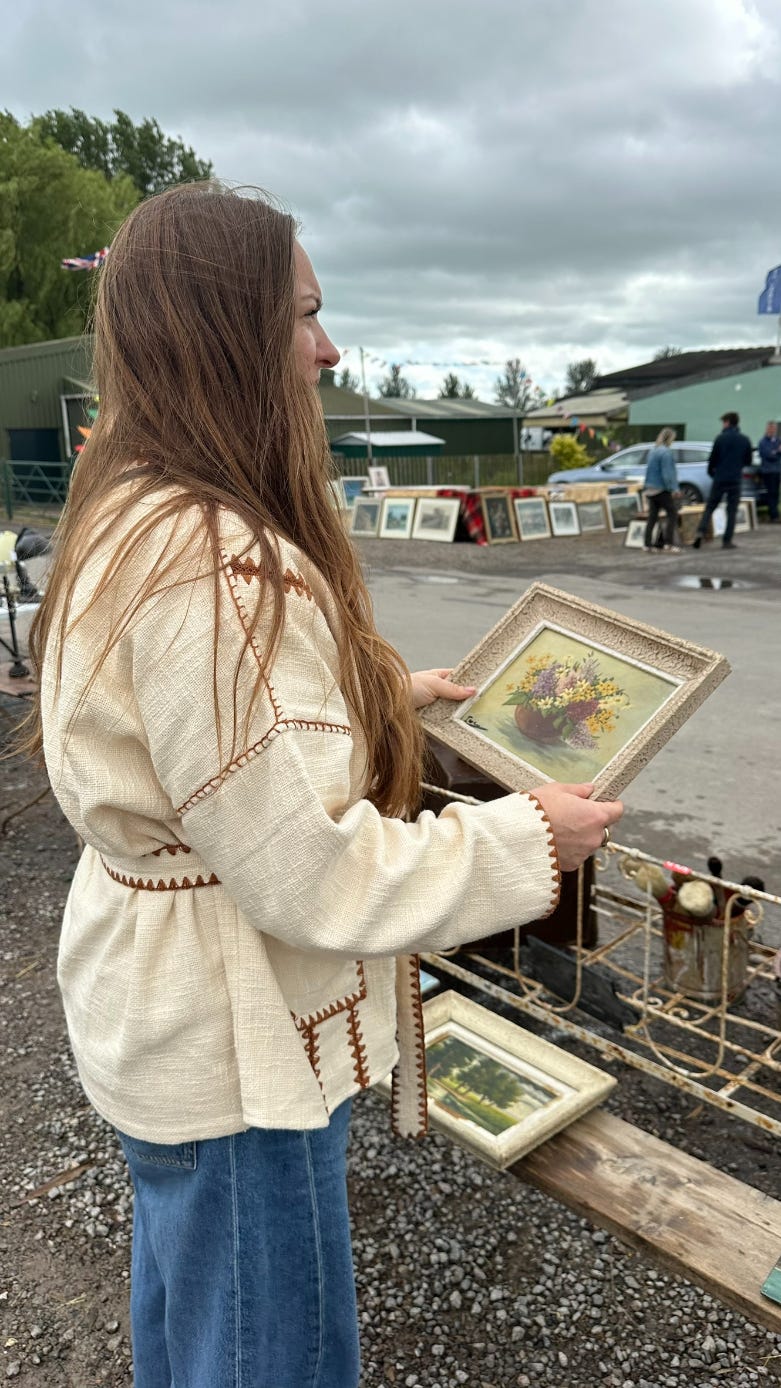
I see wonderful paintings hidden inside unattractive frames every day. A frame that is too dark, shiny, or ornate can completely change the way a painting feels. It can make the colours appear duller, the proportions feel wrong or the whole piece look far more “dated” than it really is.
Many buyers struggle to see beyond a poor frame, which is precisely why some of the best paintings are overlooked. The frame is incredibly important, but it shouldn’t be confused with the painting itself.
Original vintage frames can bring enormous charm and character, and I preserve them whenever possible. A few chips, cracks and signs of age rarely bother me. Sometimes a really battered frame can be more exciting than the painting inside it.
Good empty frames are always worth noticing too. If you love the frame, ask the dealer if you can buy the frame, they might not agree but you can ask.
I don’t believe a frame should be kept simply because it is old. If it is damaged beyond repair or isn’t doing the artwork any favours, I’ll happily change it.
Some of the best paintings I’ve sourced simply needed reframing to reveal how good they were imo.
I don’t overlook unframed paintings, they can easily be reframed.
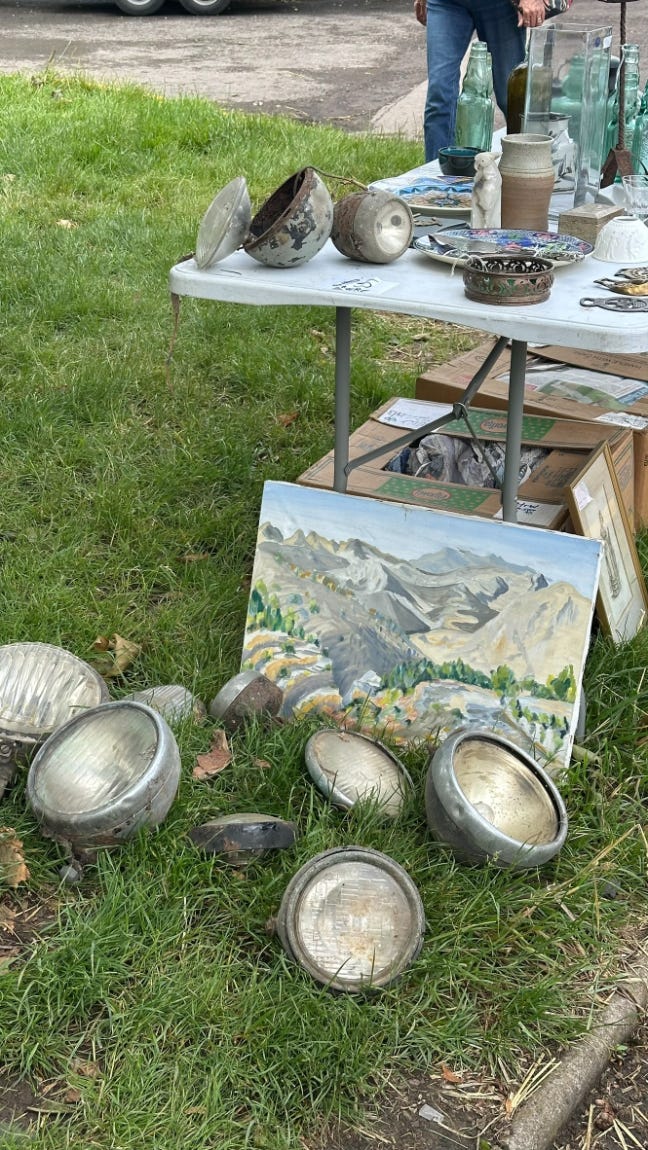
Vintage paintings are expected to show some age. Small scuffs, surface marks, frame chips and signs of wear are all part of their history. I would much rather buy a brilliant painting with imperfections than a mediocre painting in perfect condition.
The important distinction is between character and damage that could compromise the painting. Minor frame damage, a loose canvas and small surface marks can often be addressed. Significant tears, severe water damage, excessive warping, or questionable woodworm require much more caution.
That doesn’t mean every damaged painting should be left behind. Occasionally, a painting is good enough to justify the work. But it is important to understand what you are taking on, particularly if professional restoration or a completely new frame will be required.
A low flea-market price doesn’t automatically make something a bargain once those costs are considered.
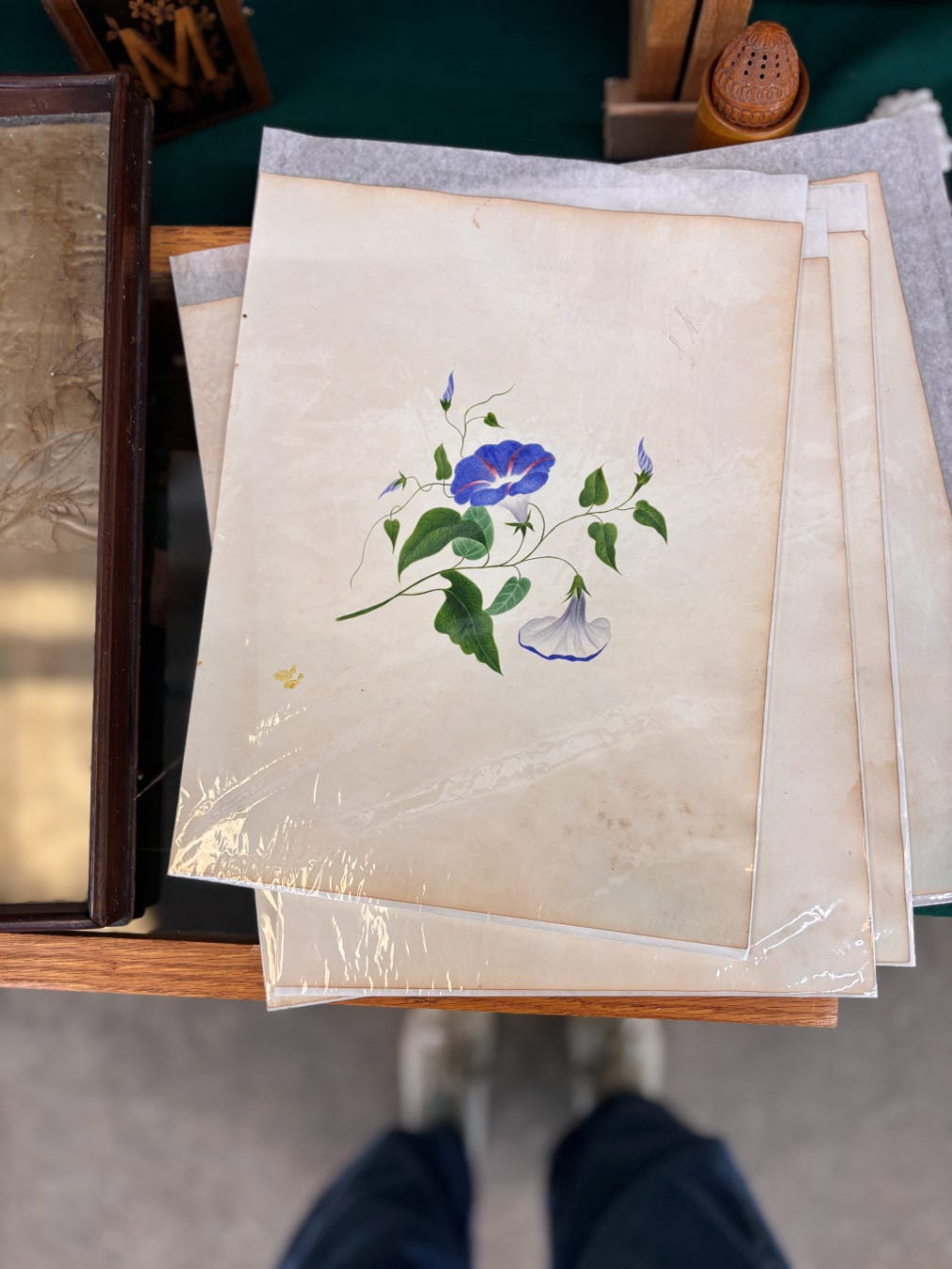
Below is an example of damage I can happily overlook. Firstly the frame is heavily scuffed, stained and has pieces actually missing. Secondly, there is a large crack running horizontally across the board. On another piece, these imperfections may both me enough to skip on a piece but looking at the piece as a whole, to me, its perfect.
It is very easy to get excited by the idea of finding an original painting at a flea market but being old, original or signed doesn’t automatically make a painting “good”.
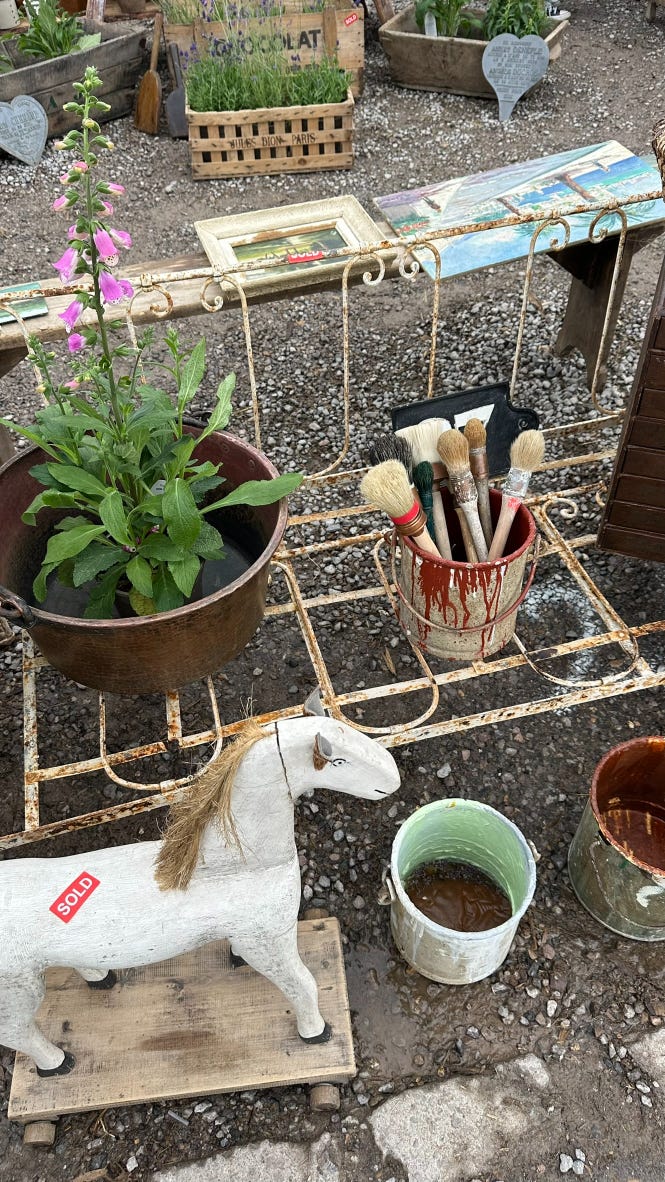
I would never buy a piece simply because it was an original oil painting, just as I wouldn’t reject something I loved because it was unsigned or unattributed.
For me, the artwork always comes first. A signature is a bonus (although I recently learnt that contemporary art is now often unsigned but certified - fascinating!) . Knowing the artist is another bonus. A date, exhibition label or piece of provenance adds another interesting layer. But none of those things can create colour, personality or presence where they don’t already exist.
If you wouldn’t want the painting without the signature, it is worth asking yourself how much you truly love the painting itself. I cant stress enough, just buy what you love.
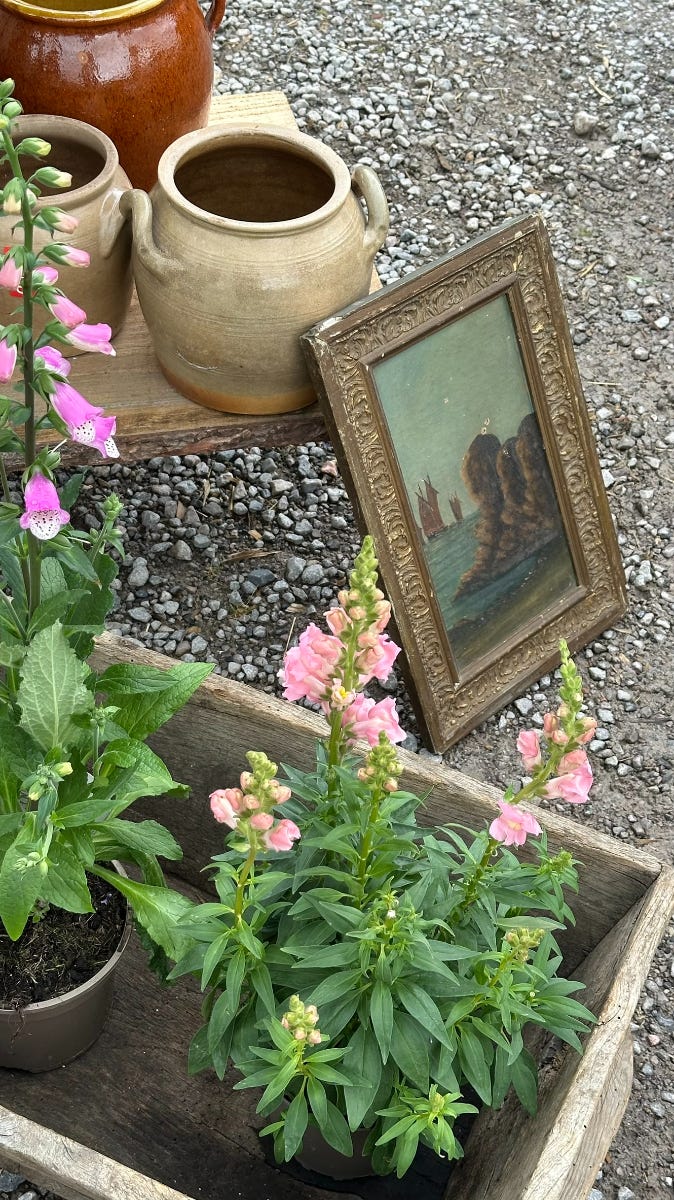
Flea markets can be overwhelming. There may be hundreds of paintings, prints, pieces of furniture and decorative objects competing for your attention.
You don’t need to look at everything. Pay attention to the paintings that make you stop, then look more closely. Consider the colour and brushwork. Look beyond the frame or lack of frame. Decide whether the imperfections add character or create a genuine problem.
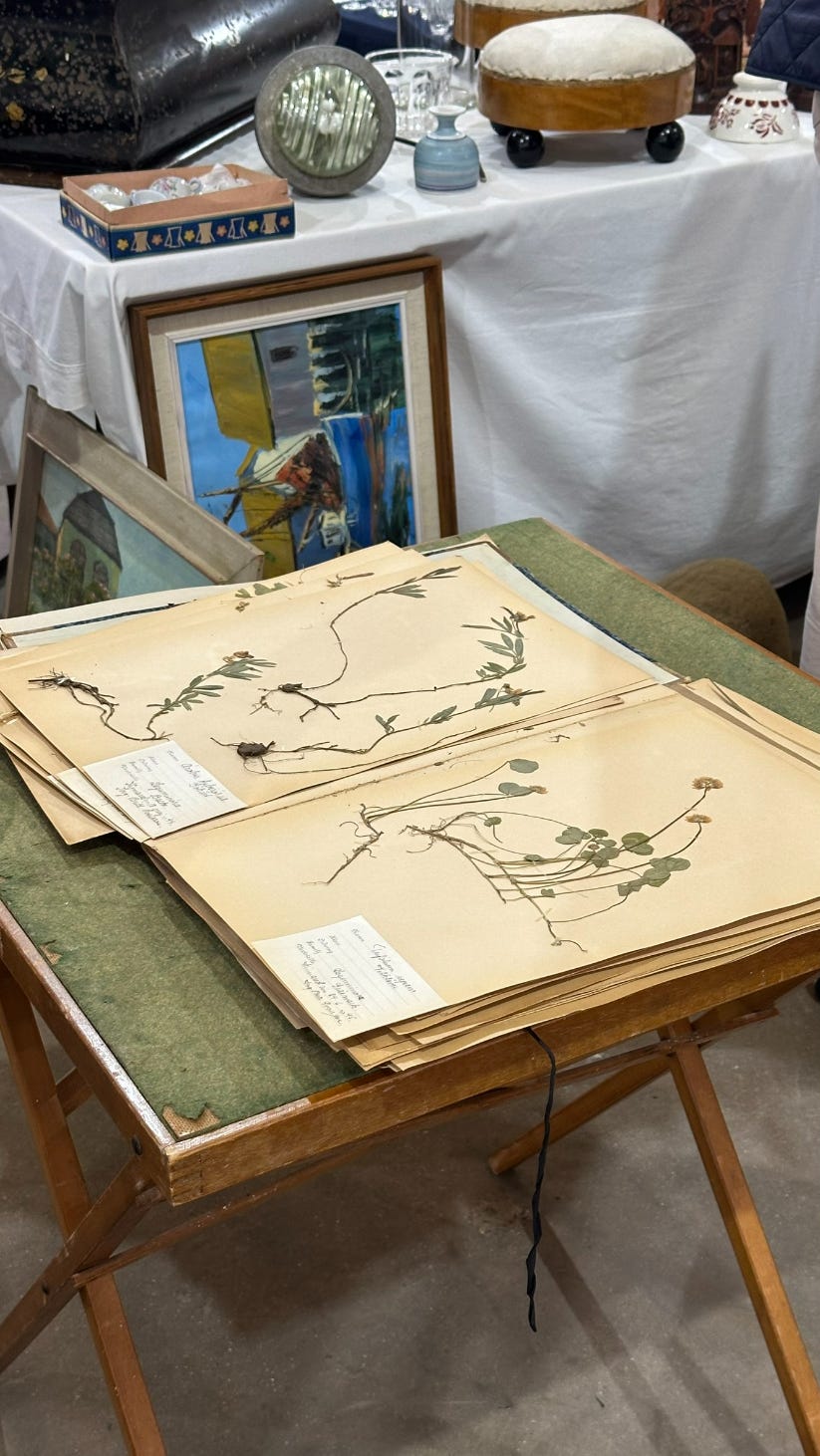
Then ask yourself one final question:
How would I feel if I came back in five minutes and it had sold?
If the answer is genuinely gutted, that usually tells you everything.
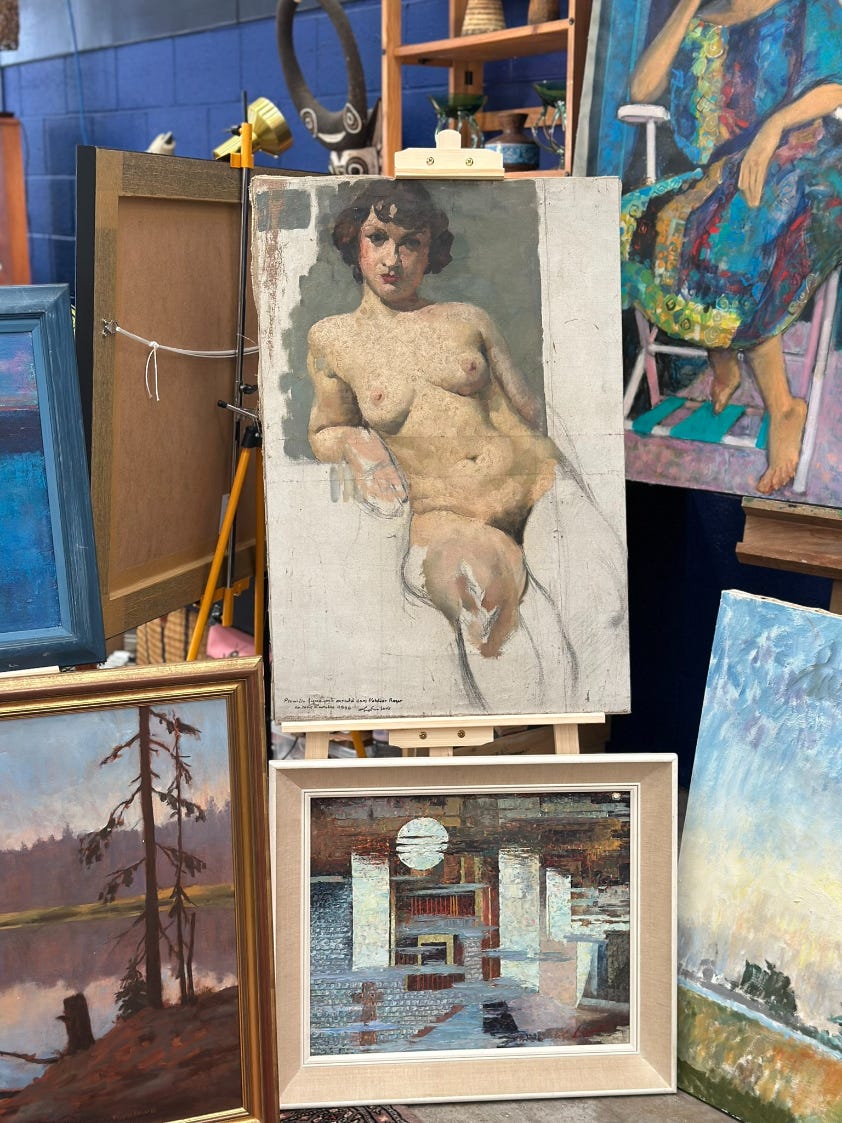
Spotting good bones isn’t about knowing the artist or identifying every period and technique. It is about recognising the strength of a painting beneath its current circumstances.
The best painting at a flea market may not be the largest, the most pristine or the most beautifully framed. It is often the one everyone else hasn’t noticed yet because its meant for you.
If you’re planning an antiques fair or sourcing trip in the UK, I’ve also shared exactly what I wear and bring with me here.
And once you’ve found something you love, don’t let it sit on the floor for six months. Here’s my guide to actually getting your paintings on the wall.
No posts
Comments
Nothing yet. Say the first thing.
Sign in to join the conversation.