
Dear friends of Huachuma Collective,
We have three bits of news to share today: A giveaway, a new podcast interview with two of Huachuma Collective’s co-founders, and a newly published article.
GIVEAWAY
(Feel free to skip to the next section if you can’t donate right now!)
Tomorrow is Giving Tuesday!
Our organization needs some vital “bridge funds” to span three months between active grants. These will keep our collaborators paid and our three projects operating: (1) The Huachuma Collective Garden & Nursery, (2) Monthly cultural events with Andean communities, and (3) the Huachuma Conservation Center in Marcahuasi (more info on this new project coming soon!!).
If you have the means to help this holiday season, or know someone who may be able to, your donation now would come at a pivotal time for the Andean communities in our network. Truly, any amount goes a long way in this work - whether it’s $5, $50, or $500. (For donations of $5,000 and up, contact us first for tax information).
To add some fun, all donations of $100 USD and up from now until the end of the year will be entered in a draw to win a private ceremony for you and a friend in the Huachuma Collective garden in 2025 (Airfare to Lima not included). For larger donations, additional entries will be added in increments of $100. We will draw the winner in early January. Our directors look forward to connecting with a lucky pair of you this year!
NEW PODCAST
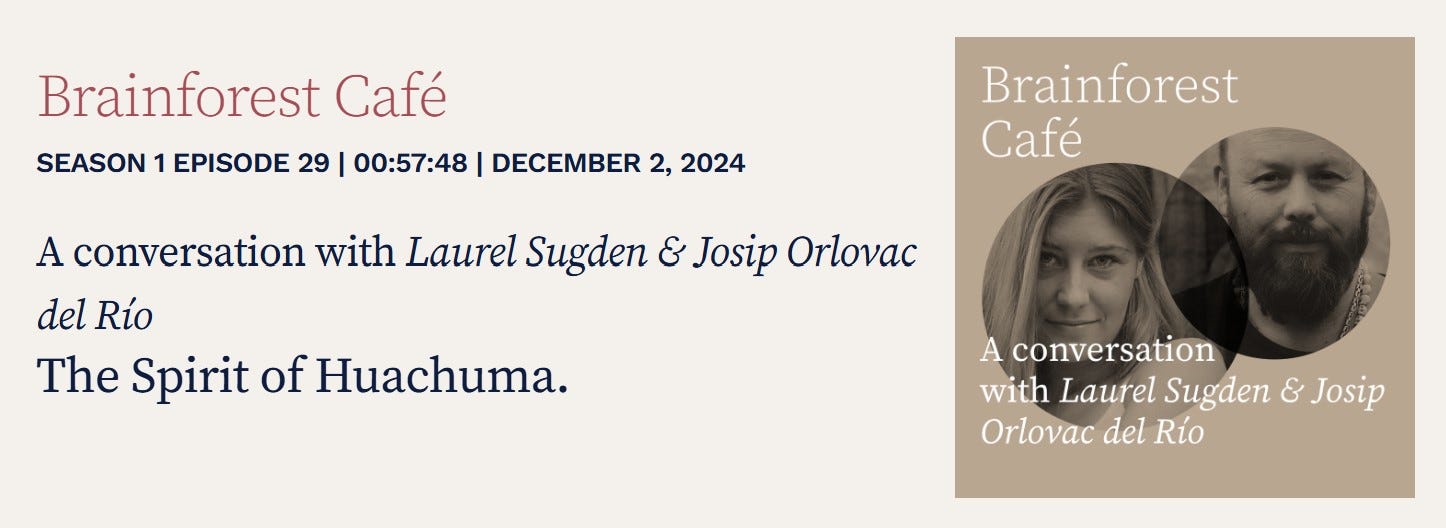
Dennis McKenna interviewed two of our co-founders on the Brainforest Cafe podcast, out today. We had a wonderful and wide-ranging conversation about the spirit of Huachuma, traditional ceremonies, and what reciprocity looks like for this plant. It’s an hour long and available wherever you get your podcasts.
“Explore Huachuma (San Pedro cactus), one of humanity’s ancient sacred medicines. Ethnobotanist Laurel Sugden and Maestro Huachumero Josip Orlovac del Río discuss its rich history, alarming decline, and the vital link to indigenous practices. Learn about threats from commercialization and spiritual tourism, and the urgent need for sustainable solutions. Laurel and Josip champion replanting efforts and reciprocity with indigenous communities.”
NEW ARTICLE
In 2022, we wrote an article reporting the results from an assessment of Huachuma’s sustainability in Peru performed from 2018-2022, which is still awaiting publication in a book. However, the article has been updated and is now available to read online on the blog of the McKenna Academy of Natural Philosophy!
An excerpt…
The cactus Huachuma was the sun and stars that illuminated thousands of years of cultural evolution on the coast of what is now called Peru. When the Spanish conquistadors sailed onto that coast and planted a flag, those who carried the knowledge of the plant were violently persecuted, and their practices were driven underground. But Huachuma shone on, the Southern Cross to their ship in the night.
In 2022, the knowledge and traditional uses of the San Pedro Cactus were declared “Intangible Cultural Heritage of the Nation” by the Peruvian government. The declaration recognized “the expression of a systemic and integral vision of a cultural universe” that people and plants have created together since the dawn of civilization in the Andes. It was the biggest legal leap for the cactus and its allies in 500 years.
“At last!” was the overwhelming response from the community of surviving elders in North Peru who still carry San Pedro’s tradition.
The ancestral cultures of Peru unleashed the power of the plant over 3,000 years ago during the rise of Andean civilization – civilization which coalesced around a psychedelic sacrament in a way that no other developed culture on Earth has matched. The cacti themselves were associated with flowers, the cosmos, and the regenerative cycle of water as it moves through the earth, holding a mediating role in a world where unpredictable weather was the limiting factor for human survival. Beginning with the unprecedented rise of Chavín, the “mother culture” of the Andes, in the first millennium B.C., a succession of cultures integrated the plant into the deepest levels of government, politics, health, and artistic expression. Much later, as the Catholic Fathers did their best to annihilate Andean religion, the descendants of those cultures were accused of witchcraft and communion with the devil for the crime of taking the same sacrament. “This is a plant with which the devil had deceived the Indians of Peru… which they used for their lies and superstitions,” wrote Father Cobo in 1631. “Transported by this drink, the Indians dreamed a thousand follies and believed them as if they were true.”
As the remaining San Pedro practitioners – called maestros (masters)or curanderos (healers) in North Peru – emerge from this long night of persecution, standing with pride in the sunrise of governmental recognition, the ruins are plain to see. The renowned healing cults of the plant survive in urban centers throughout North Peru’s coastal areas, where all-night rituals of San Pedro consumption called mesadas are still practiced on Tuesday and Friday nights. These rituals retain their Indigenous roots, but their practice also incorporates Catholic symbolism. Nearly all of the practitioners in the traditional world of San Pedro are over 60 years old, and many of the greats have already passed on. Their children are the first generation in 3,000 years of uninterrupted cultural relationship with San Pedro who are no longer learning to work with the plants. Many live in extreme poverty.
To add insult to injury, hundreds of miles to the south, in an idyllic valley far from the native habitat of the plants, people who are not from the Andes are making millions selling San Pedro to an exploding global community of spiritual tourists. The Ministry of Culture’s resolution makes a point of condemning charlatans who sell San Pedro ceremonies without a connection to the ancestral tradition.
Even so, what was missing from the document stood out more than what was included. There is an obvious hole in the resolution: a threat on the near horizon which puts at risk, more than any other single factor, the integrity of the ship on which traditional healers have sailed through the catastrophe of conquest only to emerge in the equally damaging dawn of the modern world.
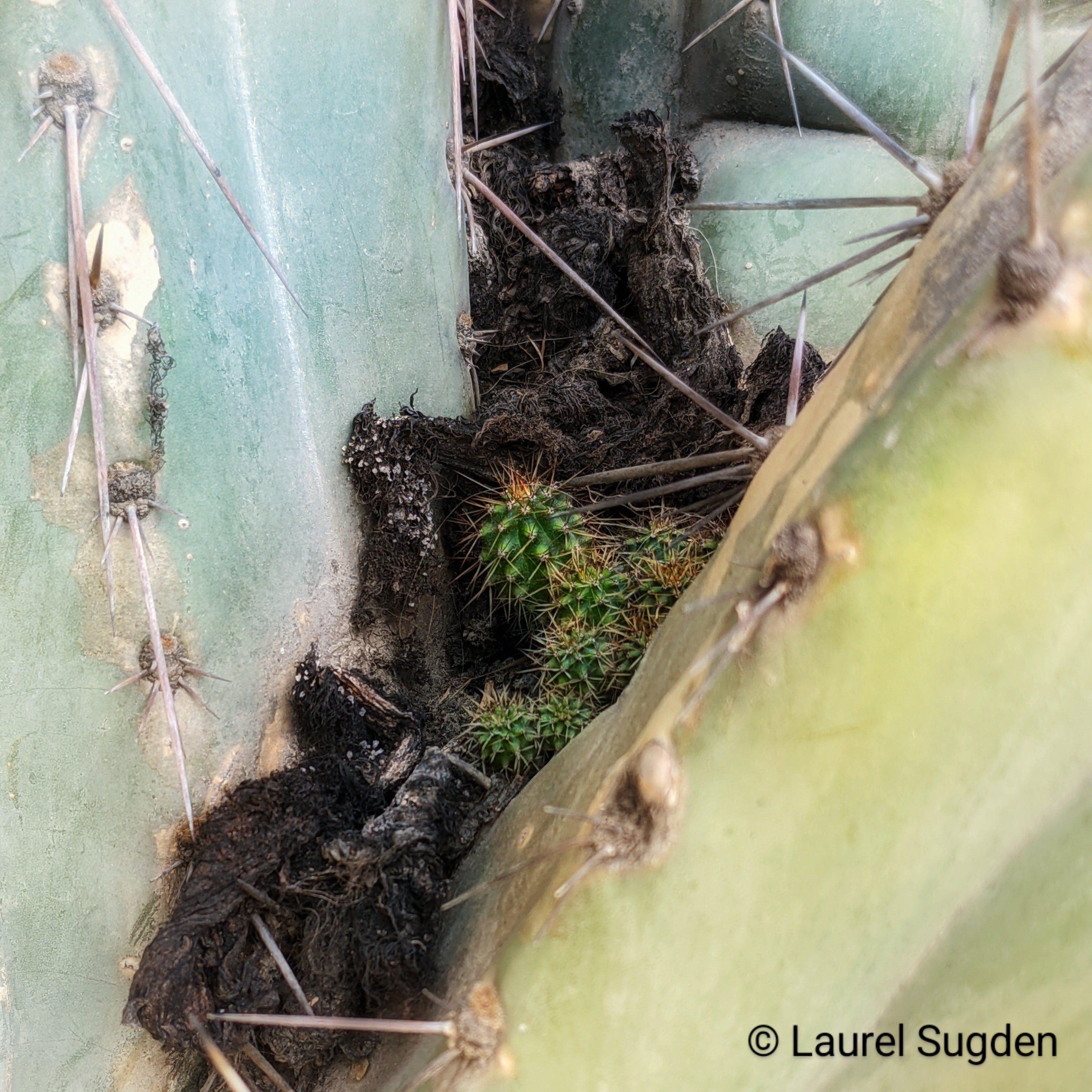
The document does not say a word about the fact that the San Pedro Cactus itself is endangered and disappearing in the wild….
Let us know in the comments what you thought! Thank you for giving your valuable attention, love, and dollars to the guardians of Huachuma.
Until next time,
Huachuma Collective
No posts
Comments
Nothing yet. Say the first thing.
Sign in to join the conversation.