
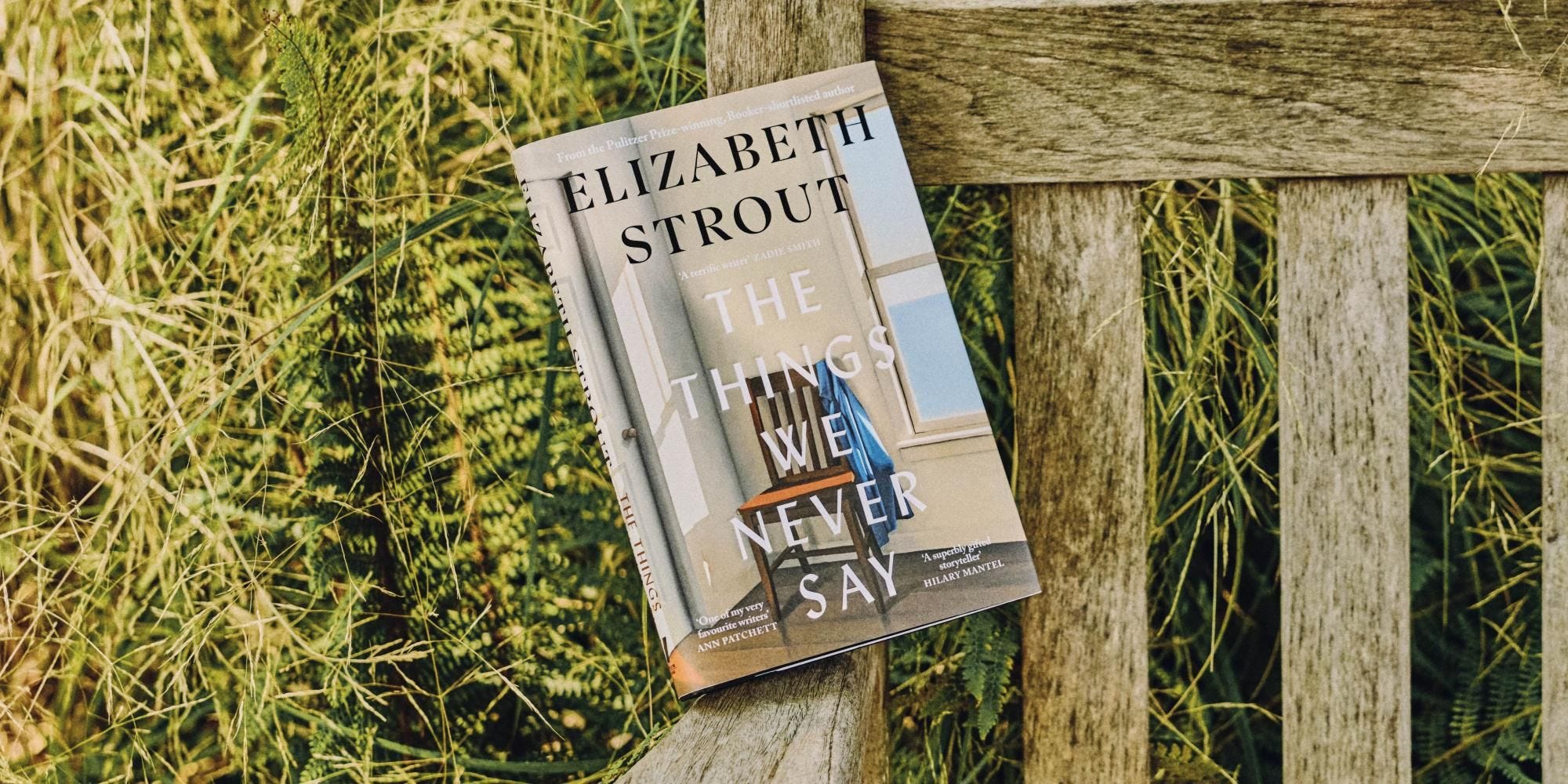
“Why don’t people ever say anything real?” wonders the 57-year-old protagonist Artie Dam in Elizabeth Strout’s new novel The Things We Never Say. It is a question that follows him everywhere he goes, and returns, only after he has had some realizations.
Longlisted for the Booker Prize, this slim and sobering work from the Pulitzer-winning author is bound to find her regular readers at home while also inviting new ones. Unlike many of Strout’s previous interconnected books featuring recurring characters like Olive Kitteridge and Lucy Barton, The Things We Never Say is her first standalone work in over a decade. The last one she wrote was The Burgess Boys in 2013.
However, Strout is very much at home with her new fictional world, comprising of mainly provincial, working-class folk finding their place in a singular world. They might as well be our neighbours. But for Strout, the ordinary life is anything but ordinary. She is peerless when it comes to exploring the interiority of these mundane lives, unpacking the strange behavioural patterns of the human condition. We not only see them, Strout suggests that maybe in many ways, we are them.
Artie Dam is a high-school history teacher in Massachusetts who, from outside, seems to be doing well. He and his wife Evie have their own home down the road; while their son Rob is married to Francesca, and live separately. On weekends, Artie takes out his boat to sail. But Artie is nourishing a grief of his own, feeling increasingly disconnected with his family, owing to a devastating tragedy that befell upon their son a decade ago. The aftermath has shifted their dynamic forever. Just as it seems that he is trying to find some semblance of togetherness, a decades-old secret involving Evie and Rob is dropped. This will haunt his perspective on everything.

But not merely that, Artie also sees the world around him change beyond his grasp. His students are restless and anxious, while the incoming 2024 presidential elections presents itself like another threat altogether. Without ever mentioning Donald Trump, Strout presents the bewilderment of what is happening in the world, the ongoing war, the devastation- in quiet paragraphs. The news of the election results arrive like a sudden fall, spread over one blank page within two brief lines. When Artie Dam finds out that his good friend, Ken Moynihan, might be a Republican, he spends an entire night awake in the reassessment of their equation. He fails to understand how anyone can be blind to the fact that ‘his country was committing suicide.’ This is Strout at her most political. Her work is also a great work of fiction on how Trump’s America is affecting its own men.
With The Things We Never Say, Strout employs the same flashes of periodic detail in her characters’ lives. Moments of new conversation and dialogue leave Artie Dam wondering about his own relations, with his father, or how much he has changed since he married Evie. These sudden pockets of realizations are where Strout exquisitely details the mysteries of human behaviour and how much our actions reverberate through the years.
Some of the finest passages of this book lie in the reestablishment of Artie and Rob’s equation. Their emotional dynamic shifts lucidly in the wake of the secret and Strout peaks in understanding how delicately we must hold on to our close ones despite life’s many unfair discoveries. Here, Strout presents no deficiency in holding back with her character’s lives, which readers may otherwise find in her interconnected novels. She does not withhold information and says that she has already spoken about this earlier in the previous book. Here, every detail counts.
Because it is a standalone work, Strout finds herself generously illuminating upon the unrecorded lives of her characters. She even moves forward in time suddenly, quickly capturing what happens later, without ever passing judgment. Even then, her prose is tremendously understated. Strout does so much with so little, more than any other writer I can think of. When Artie does arrive at the answer of the question that he first raised, Strout frames it easy: ‘It is a private thing, to be alive. He understood this now.’ Strout invites her readers to come at this juncture, without any rush. This is a gift of a book from one of our greatest living writers.
No posts
Comments
Nothing yet. Say the first thing.
Sign in to join the conversation.