
Global geo-political strife; a global pandemic; and the growth and dispersal of a revolutionary new technology promising (or threatening) to change everything.
That’s the 2020s, but it is a description that could apply to the 1910s as well — although, given that there are just a few hundred people over the age of 110 in the world, people can be forgiven for forgetting that we’ve been here before. Except for one very big difference — thanks to the huge explosion in connectivity and media, we are perhaps more aware (and in real time) of what’s happening to our world, although the flip side of the information boom is the misinformation one.
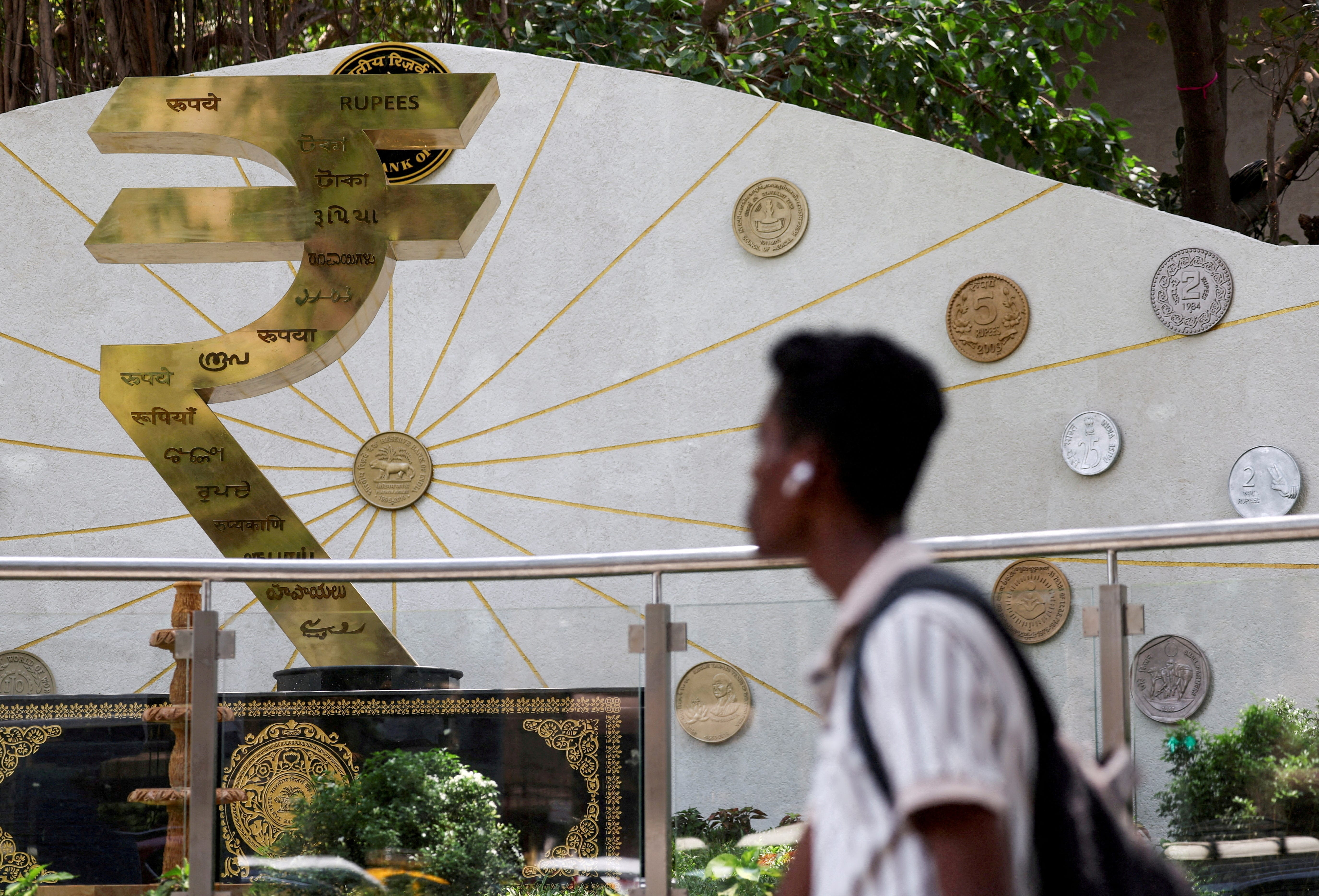
It’s always possible to find a parallel in history — especially if one looks long (and hard) enough. Thus, India’s economic situation today brings to mind its troubles in 2013, when it was one of the countries clubbed into the Fragile Five. The oil price hike, the rapid depreciation of the rupee, the challenges to the current account are all common to both periods. But every situation is also unique. Sure, India’s current account deficit is nowhere near the peaks seen in 2012-13, but India’s software business faces an existential threat — that there is no AI play in India, currently, is a reality we have to accept — and there is a real risk of remittances declining. That could jeopardise the so-called invisibles component of the current account. Add to this the capital account problem India has been seeing for a few years — primarily arising from slowing foreign direct investment or FDI inflows; so much so that the quarter ending December 2025 saw a negative net FDI number — and the real picture begins to emerge.
It isn’t a pretty one.
It’s also not a new story, as my colleague Roshan Kishore pointed out in his weekly Terms of Trade column, that looks at the post-reforms period. “35 years is a long time in the economic history of any country. Twenty-two of these 35 years were spent under just two governments: 10 under the Congress-led UPA and 12 under the current BJP government. The broad economic trend on external constraint has been the same under both: growing merchandise trade deficit; which increased to uncomfortable levels during terms of trade shocks, which has been sustained by rising invisible surplus and capital flows. Whenever this balance is disrupted, crisis beckons.”

In an Op-Ed in Hindustan Times, former Reserve Bank of India governor Duvvuri Subbarao, who was in charge during the 2013 crisis, said that what worked then in terms of managing the rupee, may not work now simply because the world is a different place. “The challenge before the government and RBI, therefore, is not merely technical management of reserves, interest rates or import duties. It is the management of expectations. Policymakers must act decisively without showing despair, intervene without appearing defensive, and communicate firmly without creating panic.
It is better, as Keynes said, to be roughly right than precisely wrong.”
That’s a different kind of blue.
Which is a nice segue into a 100th birthday that feels personal — that of Miles Davis. As my friend and former colleague (and also former editor of Hindustan Times) Sanjoy Narayan asks in this week’s Wknd issue, “A centenary year is a good time to ask the serious questions. Not just to celebrate (though celebration is warranted), but to seek the answers that serious music demands: Will this last? Will Miles Davis be listened to in another 100 years, the way we listen to Beethoven or read Shakespeare, as a primary, inexhaustible cultural resource?
Or will he, however beloved, be a period figure, his sound the artefact of a particular American moment that future ears can admire but no longer feel?”.
He answers: “My instinct, sitting with these questions, is that he will last. I’m happy to make my arguments for why”.
I agree.
I listen to a lot of Miles Davis. I also listen to a lot of jazz. Actually, I listen to music a lot — it’s always playing in my room.
Like Sanjoy, my favourite Davis album, and one I spin the most, is A Tribute to Jack Johnson.
This came a year after Bitches Brew, in which Davis pretty much wrote the template for fusion. And how! The musicians who played on Bitches went on to form legendary fusion bands: Wayne Shorter and Joe Zawinul went on to form Weather Report (Black Market is a Top 10 fusion album in my book); John McLaughlin went on to Shakti; Chick Corea formed Return to Forever (Light as a Feather is another Top 10 fusion album).
And Jack Johnson, which came out in 1971, is, to me, Davis showing the world what Rock music should be, or could have been had everyone had his talent.
My colleague Rachel Lopez has a Miles reading list in the same issue of Wknd. It’s a good list but with one gap, a book that regular readers may have spotted in an earlier avatar of my newsletter, Three Shades of Blue: Miles Davis, John Coltrane, Bill Evans & The Lost Empire of Cool by James Kaplan.
(Purists may also quibble about the list leaving out the authoritative book on Kind of Blue, by Ashley Kahn). Music is often about the vibe; so is Kaplan’s book, which looks at the musical journeys of the three jazz superstars who came together in Kind of Blue: Davis, John Coltrane, and Bill Evans.
It may sound — as some readers have often pointed out, and not in a positive way — that I know a lot, but that’s not true, at least not entirely.
But I do know a little about a lot. That’s Drew Goins’ description of himself in a fascinating article in The Atlantic on Jeopardy (he was a participant), and, at a broader level, trivia.
“To win on Jeopardy, you don’t need to learn everything. You just need to learn one thing about everything. The best method for knowing one thing about everything is to have been a curious child. I grew up reading, except for at the dinner table…”, he writes, and he could well have been writing about me, or some of my friends.
Not everyone who is curious becomes a quizzer like Goins. That requires a combination of curiosity, memory, and the ability to stop at a fact and say, “that’d make a good quiz question”. Sometimes, the only relevance of this information is that it is there — although, in my profession, it could also result in an interesting story. For instance, one of my colleagues (at my prompting) had been trying to locate (in vain) and speak to the former DRDO scientist who came up with an easy method of synthesizing Fentanyl that, in some ways, serves as the basis of the global trade in this drug.
But most of the time, all of us with this affliction (alas, I’m one too) end up being repositories of utterly irrelevant information.
And, in an age of peak information, we are discovering that there is a price to pay for this.
Till next week. Send in your bouquets and brickbats to sukumar.ranganathan@hindustantimes.com
No posts
Comments
Nothing yet. Say the first thing.
Sign in to join the conversation.