
The most perfect thing in the universe, according to Thomas Wentworth Higginson, a US politician and soldier from the 19th century, is a “bird’s egg”. I read up about Higginson many years ago, when I first read Tim Birkhead’s The Most Perfect Thing: Inside (and outside) a Bird’s Egg. It gets its name from Higginson’s quote. Birkhead, to whose work I was introduced by my son, writes engagingly on birds.
The egg, it turns out, is also the most perfect thing from the perspective of nutrition — it is a great source of protein, vitamins and minerals, and Omega-3 fats. Mostly, the eggs we eat are haploid, which means they are unfertilised, and contain only a single set of chromosomes. Some people use this fact to argue that eggs are just as vegetarian as milk.
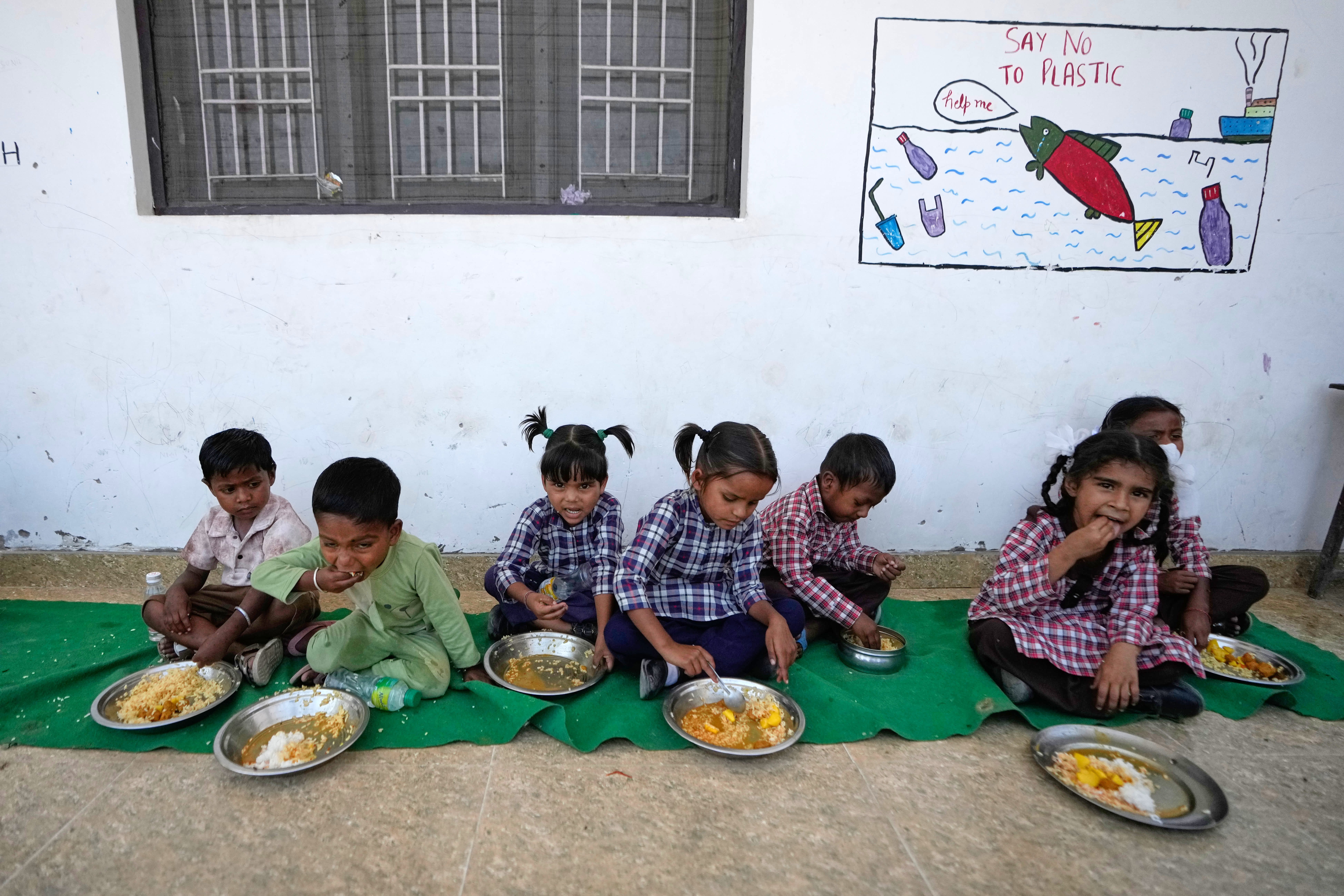
Eggs are in the news because West Bengal has just signed a deal with Akshaya Patra Foundation, part of ISKCON, to offer mid-day meals in the state. There’s been a furore over this, because Akshaya Patra, which already provides mid-day meals in many states (the Centre and states bear 50-60% of the cost of the meal; the foundation bears the rest) does not provide eggs — for religious reasons, not nutritional ones. There have been reports that eggs will stop being served in mid-day meals in West Bengal, but there has been no confirmation of this. Some states where Akshaya Patra provides mid-day meals, have gotten around the problem by asking schools to source and add the eggs (with Akshaya Patra paying them from the money the state gives it). And some states have had to reduce the frequency with which eggs are served on account of budgetary reasons (Maharashtra is one).
West Bengal, where almost 95% of the population is not vegetarian, is unlikely to take eggs off the menu, but the state’s new BJP government would do well to clarify its plans. And if it does plan to take eggs off the plate, it should tell us how it plans to ensure children get their protein.
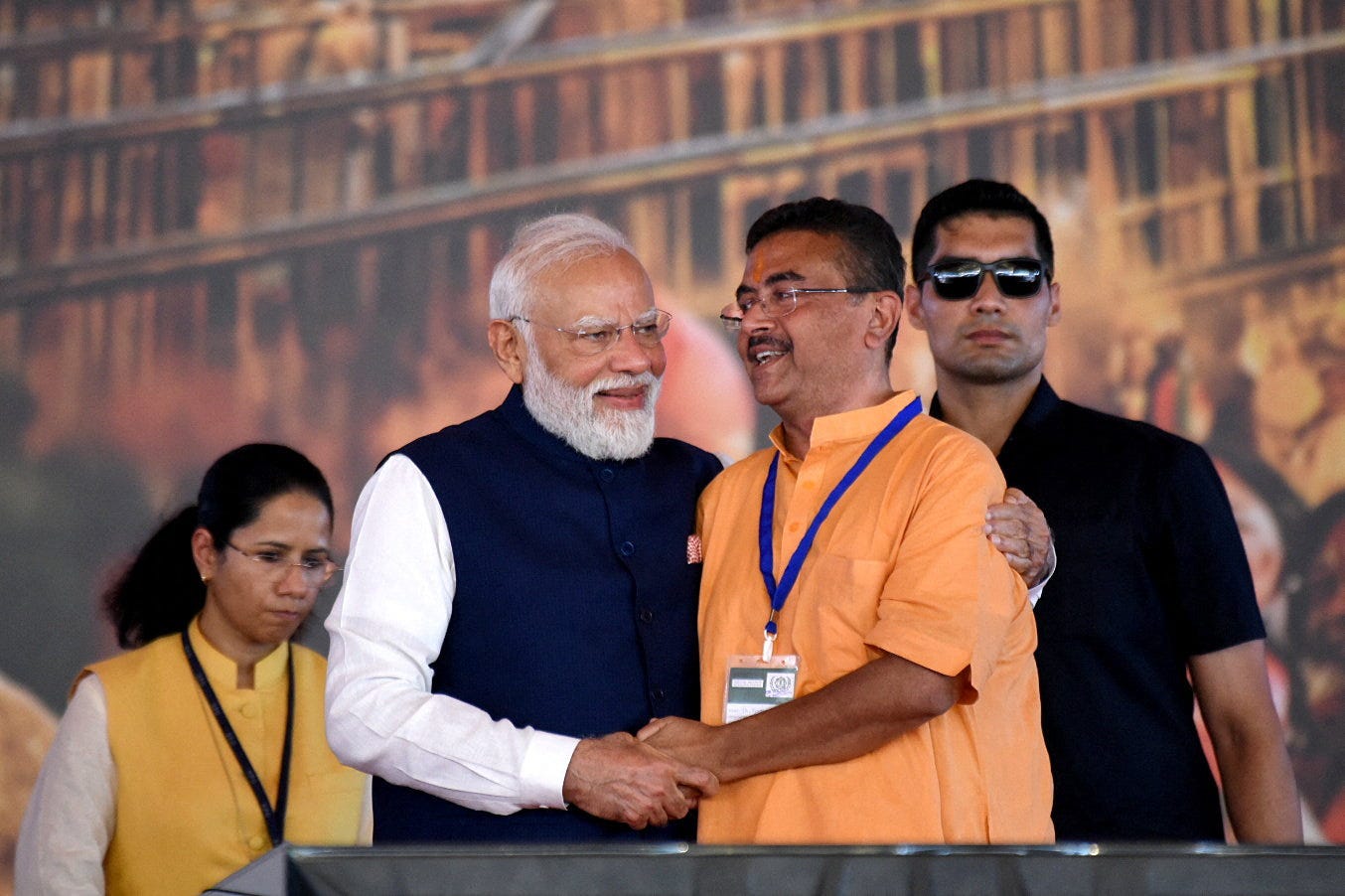
This is the first time West Bengal has had a BJP government. The defeat — and subsequent implosion — of the Trinamool Congress in the state presents an opportunity to review the relevance and strength of regional parties. My colleagues Roshan Kishore and Nishant Ranjan discovered that the number of non-Congress, non-BJP chief ministers is close to the lowest it has been in five decades. And not since 1991 has the Lok Sabha had as few non-BJP, non-Congress MPs as it does now. As they write: “The rise of regional parties was more about democratising representation to account for caste-based realities than a strong ideological revolt against Congress politics”. But the BJP’s success at consolidating the Hindu vote has meant that this no longer holds. And with welfarism becoming part of the politics of almost all parties, the authors explain that “parties such as the TMC, that thought they had perfected the welfare game” are discovering the limitations of that brand of politics. The message between the lines of that piece is clear: regional parties are in terminal decline. The historical significance of this comes from the fact that two of India’s three longest serving chief ministers have been from regional parties (the third was from the CPI(M).
It isn’t just regional parties that are on the decline. According to Roshan Kishore and Nishant Ranjan (again), the representation of Muslims in Indian politics has been declining.
The analysis is especially interesting because it is based on a database Ranjan created of all Muslim MLAs and MPs since 1952. This is an original database, the sixth built by the Hindustan Times data team. The others are on: Union ministers, chief ministers, governors, deputy chief ministers, and Supreme Court judges.
Among the key findings is that the representation of Muslims in the Rajya Sabha is at an all time low: as the authors point out, the BJP doesn’t usually push Muslim candidates; and the Congress, socialist parties, and Communists have become weaker across states, and cannot nominate as many Muslim candidates to the Rajya Sabha like they previously used to.
No talk of decline this week can be complete without a reference to the UK, which has seen six PMs in the last 10 years (and will now see a seventh). The UK’s problems, as my colleague Sreedev Krishnakumar explained, has less to do with Brexit, and more to do with its economic woes, which many blame on its neoliberal policies.

Andy Burnham, the man widely expected to replace Keir Starmer as PM, has touted his Manchester model as a cure for this neoliberalism, but it remains to be seen whether he can pull the UK out of the morass in which it finds itself.
That’s the newsy stuff out of the way.
Now, for indulgences.
This week, I read The Emergency Playbook, by Amy Edelman and Chris Begley — I too am obsessed with end-of-the-world scenarios — a work of non-fiction that seeks to serve as a how-to-manual (replete with checklists) to cope with all kind of apocalypses, minor and major. I found some of it practical, a lot of it budget-breaking, and all of it validating. There are others out there obsessed with end of the world scenarios.
The wife gifted me a Greg Lake (King Crimson; ELP) anthology, and some friends, Vampire Weekend’s eponymous album, and while I listened to both, Friday was devoted to the 50th anniversary edition of the Dead’s 1976 live album Steal Your Face, named after a line in one of their songs “He’s Gone”, first performed in 1972, which is about one of their managers, Lenny Hart, father of drummer Mickey Hart, who disappeared with around $150,000 of the band’s money. “… steal your face right off your head,” is the line, and it also ended up giving a name to the Grateful Dead skull-and-lightning logo that had been around since 1969, a skull, with a red and blue circle riven by a lightning bolt. That logo appeared on the album’s cover, and soon came to be known as “stealie”. The album is a compilation from the band’s five-night run at Winterland Ballroom, their last before an almost-two-year-long break from touring; 1974 was a good year for the Dead, but you wouldn’t have thought that if you listened to the earlier versions of Steal Your Face (the sound quality was bad; and there were no extended jams), and while the remastering has addressed the first to a large extent, there’s nothing it could have done in terms of the jams.
Till next week. Send in your bouquets and brickbats to sukumar.ranganathan@hindustantimes.com
No posts
Comments
Nothing yet. Say the first thing.
Sign in to join the conversation.