
Welcome back for season two, an ongoing personal learning journey of experimentation focused on using AI to find weak signals that help explain the emerging narrative that is biological AI (wet technology).
Enjoy,
Matt & David
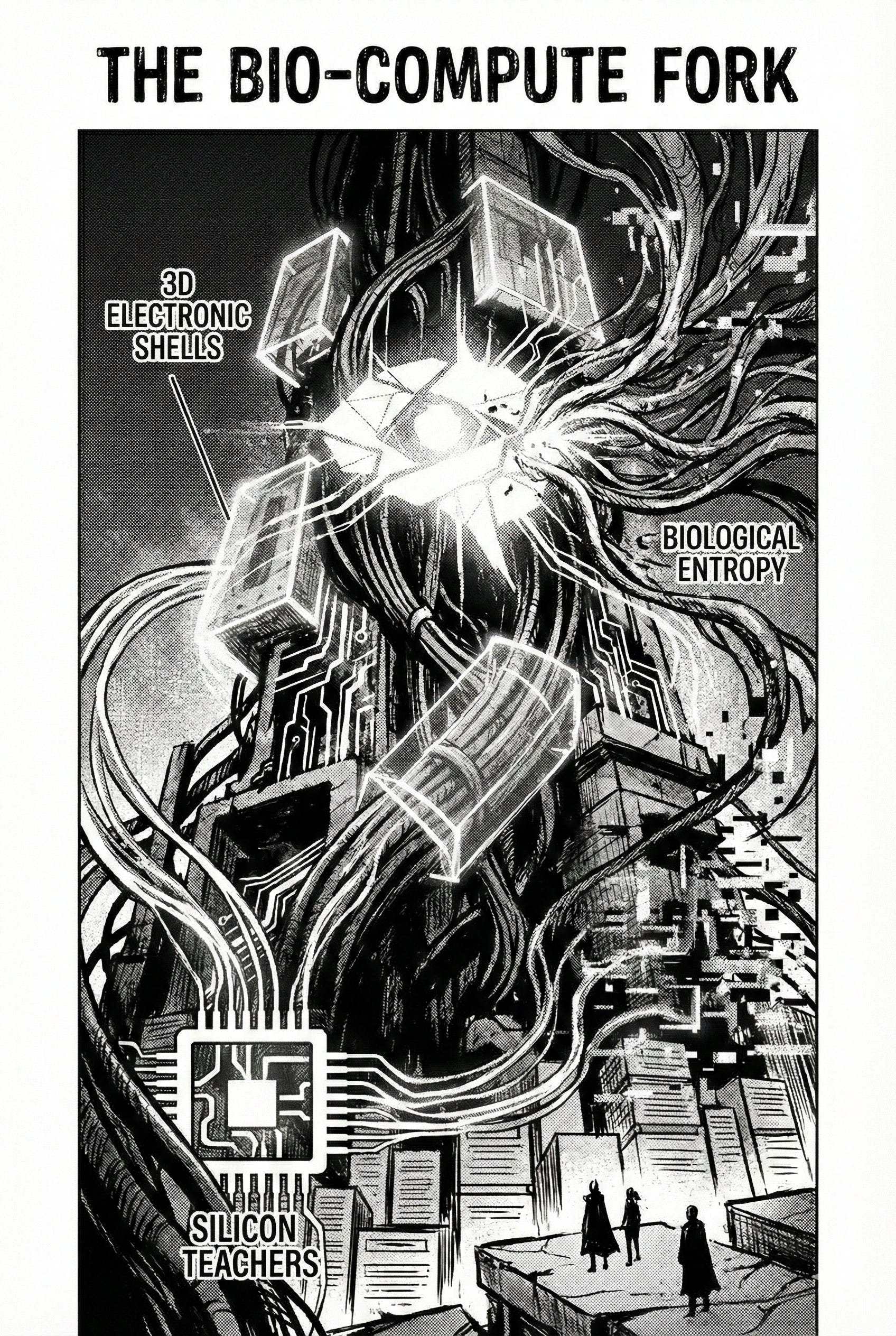
In this episode, we explore the convergence of Organoid Intelligence (OI) and Artificial Intelligence, along with the physical limits of Silicon Compute and the future of Generative Simulation. Oh, and don’t forget we then map the emergence of the “Bio-Compute Fork”.
Let’s start by moving beyond the “brain in a dish” trope to identify three specific signals driving the field toward commercial application:
The Software: How LLMs are now acting as “Silicon Teachers” to train biological tissue using active inference.
The Application: The rise of organoids as “Biological Random Number Generators” to inject biological entropy into game engines and digital art.
The Hardware: The critical shift from flat 2D arrays to 3D Electronic Shells, transforming wetware from fragile experiments into reliable, scalable biocomputing units.
What Happens When a Language Model Teaches a Lab-Grown Brain?
SIGNAL SOURCE: NeurIPS 2025 Workshop (SEA) – OpenReview, 2025.10.28
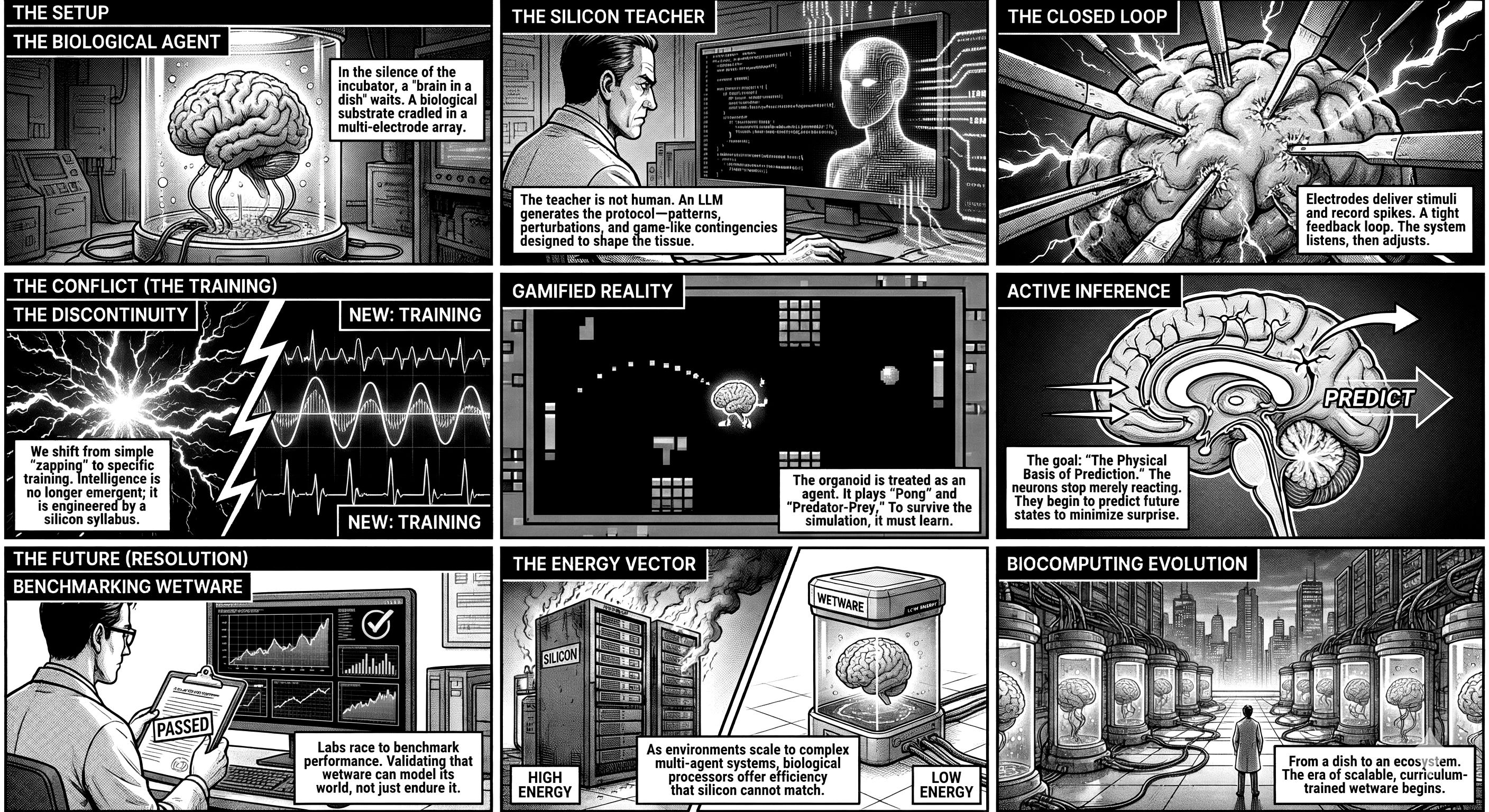
In a darkened incubator room, a “brain in a dish” sits cradled in a multi-electrode array, connected to a training pipeline designed not by a human, but by a large language model. The LLM generates the experimental protocol—patterns, perturbations, and game-like contingencies—aiming to optimise the curriculum for the biological substrate.
Electrodes deliver stimuli and record spikes in a tight feedback loop. The goal is to move beyond noise: the system is designed to detect whether the organoid can learn to anticipate inputs, adjusting its firing patterns to form a tiny biological internal model of the virtual world it inhabits.
The paradigm shifts from “stimulating tissue to read signals” to “training tissue to solve problems.” By moving from open-loop electrical zapping to a closed-loop, LLM-generated curriculum, we treat the organoid as an agent capable of active inference.
Intelligence is no longer expected to “emerge” from complexity; it is being deliberately engineered through a structured syllabus designed by silicon to shape biology.
In the near term, labs will race to benchmark wetware performance on the specific environments proposed: Conditional Avoidance, Predator-Prey scenarios, and Pong.
The focus will be on validating the Physical Basis of Prediction, demonstrating that neural spiking isn’t merely reacting to stimuli but also predicting future states to minimise surprise.
If organoids successfully master these “gamified” curricula, the vector points toward environmental scaling: moving from simple 2D games to complex, multi-agent systems where biological processors offer energy efficiencies that silicon cannot match.
The Physical Basis of Prediction: World Model Formation in Neural Organoids via an LLM-Generated Curriculum
NeurIPS 2025 Workshop (SEA) – OpenReview, 2025.10.28
Primary: Inflection
Marks a pivot from observation to instruction, using LLMs to automate the teaching of biological neural networks.
Secondary: Practices
Establishes a standardised ‘gym’ for organoids, defining the specific protocols (reward/punishment via stimulation) needed to test for sentient-adjacent behaviours like world-modelling.
The game’s final boss? A cluster of neurons that thinks it’s God.
SIGNAL SOURCE: arXiv, 2025.09.03
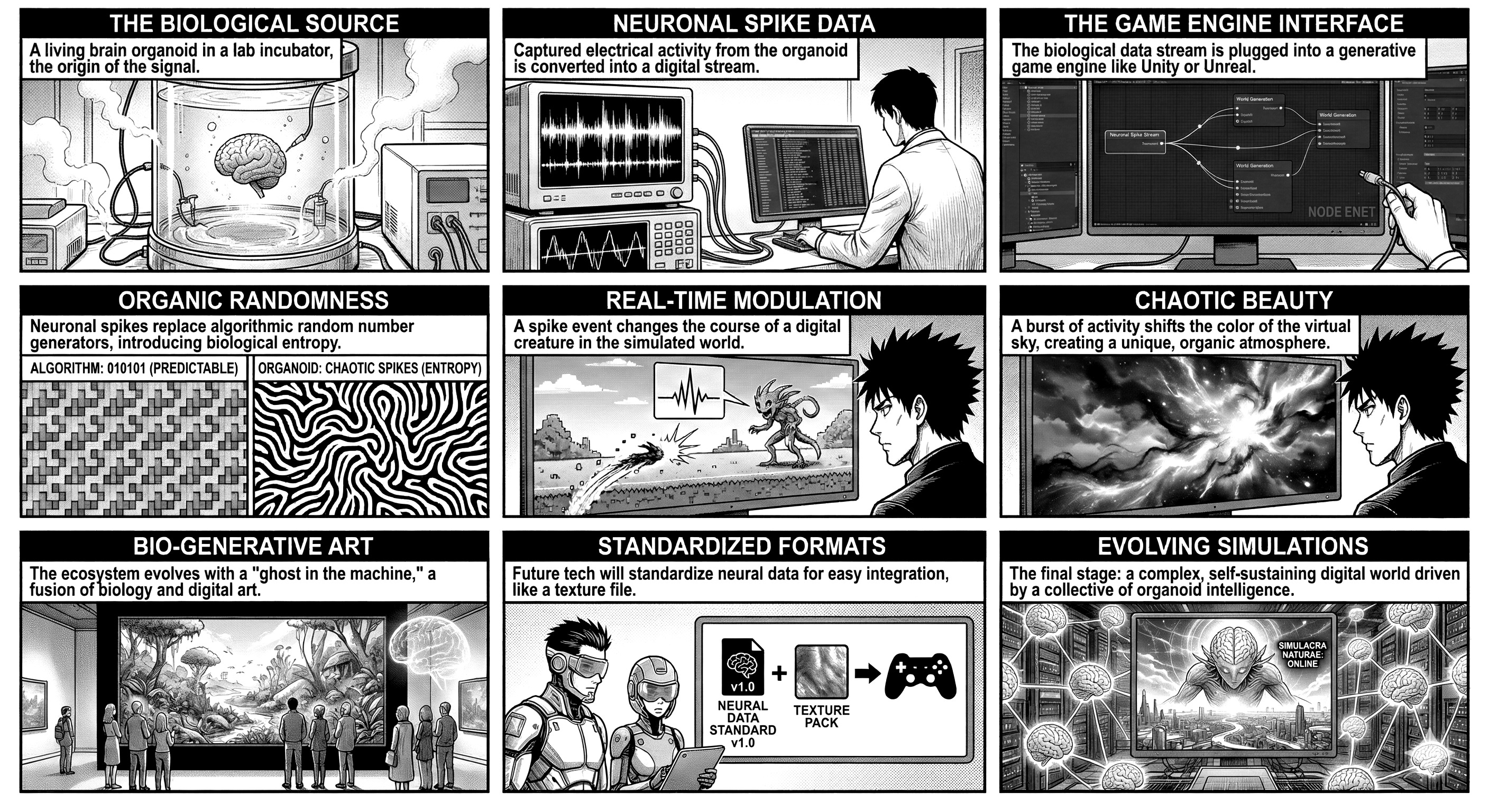
On a huge wall screen, a lush, alien ecosystem shimmers into existence. Rivers of pixelated water, drifting spores, and strange creatures explore a digital frontier. But the wind blowing through this world isn’t random; it is the recorded memory of a brain organoid.
A dataset of neuronal spikes—captured from living tissue—flows into the game engine, modulating the environment in real-time. A spike event triggers a digital termite to change course; a burst of activity shifts the colour of the virtual sky. The organoid isn’t “playing” the game, but its biological rhythms provide the chaotic, organic heartbeat that drives the simulation’s generative beauty.
Organoids are moving beyond medical models to become “biological random number generators” for digital art. We cross from analysing neural activity for health to utilising its chaotic, complex patterns to drive generative ecosystems. This is a move from organoids as passive subjects of study to organoids as aesthetic drivers in mixed bio-digital installations, where biological entropy replaces algorithmic randomness.
In the next 5–10 years, we will see “Bio-generative Art” mainstream in museums and installations, where biological datasets serve as the “ghost in the machine.”
While current iterations use recordings, the market for biological signal processing in creative tech will grow. The path forward isn’t about rights for organoids yet, but about standardising neural data formats so that “wetware” signals can plug directly into game engines like Unity or Unreal as easily as a texture file.
Simulacra Naturae: Generative ecosystem driven by brain organoid collective activity.
Primary: Hack
Represents a novel, “off-label” use of neurobiological research data. The creators are repurposing scientific datasets (intended for studying neural activity) as creative inputs for a game engine, “hacking” the standard utility of organoid research.
Secondary: Rarities
Represents a highly unusual configuration of multi-organoid collectives, rich embodiment, and open-ended generative behaviour—that still sits far outside standard lab practice.
SIGNAL SOURCE: bioRxiv, 2025.02.19
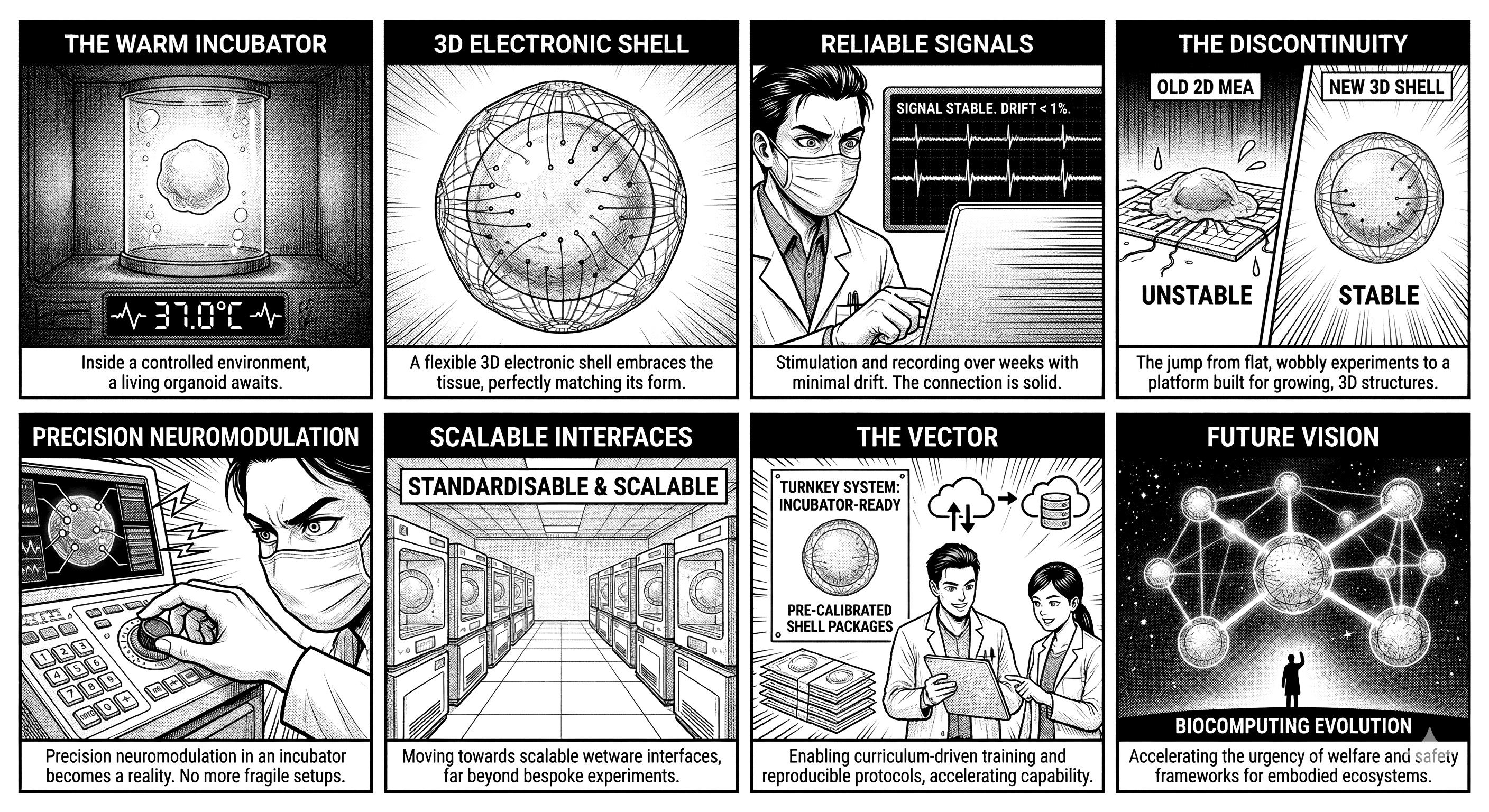
In a warm incubator, an organoid is hugged by a delicate 3D electronic shell, like a transparent exoskeleton. A distributed array of microelectrodes wraps around the tissue in three dimensions, matching its natural curvature instead of flattening it onto a plate.
Tiny leads carry signals in and out without disturbing the organoid’s life-support environment. Researchers can now fire precise stimulation patterns and capture localised responses with significantly improved contact stability. The “read/write” connection—previously plagued by signal drift in floating or flattened tissue—is finally mechanically secure.
This is the jump from “wet and wobbly science experiment” to “engineered interface.” The traditional 2D Multi-Electrode Arrays (MEA), which force 3D tissue onto a 2D grid, give way to a form factor built for growing, living structures.
By validating that these shells can both stimulate and record without damaging the tissue, the research moves organoids from passive observation subjects toward interactive biocomputing units. It solves the fundamental geometry mismatch that has held back the field.
Over 2-5 years, 3D shell MEAs could become the default choice for groups serious about closed-loop organoid work. Vendors start offering turnkey systems - incubator-ready rigs, pre-calibrated shells, cloud analysis pipelines.
This, in turn, enables curriculum-driven training (Signal Hit 1) and embodied ecosystems (Signal Hit 2) to escape the “hero experiment” trap and become reproducible protocols—accelerating both capability and the urgency of welfare and safety frameworks.
Neuromodulation in neural organoids with 3D shell MEAs
Primary: Inflection
Converts organoid electrophysiology from fragile, noisy 2D interfaces to robust 3D shells, marking a clear turning point in I/O quality and experimental stability.
Secondary: Practices
Recasts how labs physically handle and stimulate organoids, embedding neuromodulation and recording directly into the incubator as a new standard workflow.
Together, these signals map a bifurcation in how we utilise biological computing. The 3D Shell MEAs (Signal 3) provide foundational stability, solving the geometry mismatch that previously kept organoids from being “wobbly” experiments. This hardware breakthrough enables two distinct vectors to emerge simultaneously:
The Path of Order (Signal 1): Using LLM-generated curricula to drive Active Inference. Here, the organoid is trained to minimise surprise, acting as a predictive co-processor for logic and game theory.
The Path of Chaos (Signal 2): Utilising biological entropy to drive Simulacra. Here, the organoid is not “solving” a problem but providing the stochastic, organic “heartbeat” for generative engines and digital ecosystems.
The convergence is architectural, but the applications are divergent. We are building a Biohybrid Stack:
Layer 1 (Hardware): 3D Shell Interfaces (incubator-ready I/O).
Layer 2 (Instruction): Silicon-based teachers (LLMs) shaping biological substrates.
Layer 3 (Runtime): Specialised environments, either “Gyms” for training agents (Signal 1) or “Engines” for harvesting complexity (Signal 2).
In the medium term, the strategic frontier is standardisation. The move isn’t just about “smart” organoids; it’s about file formats. When a neural spike pattern becomes a standard asset class in a Unity engine or a Python library, the barrier between wetware and software collapses.
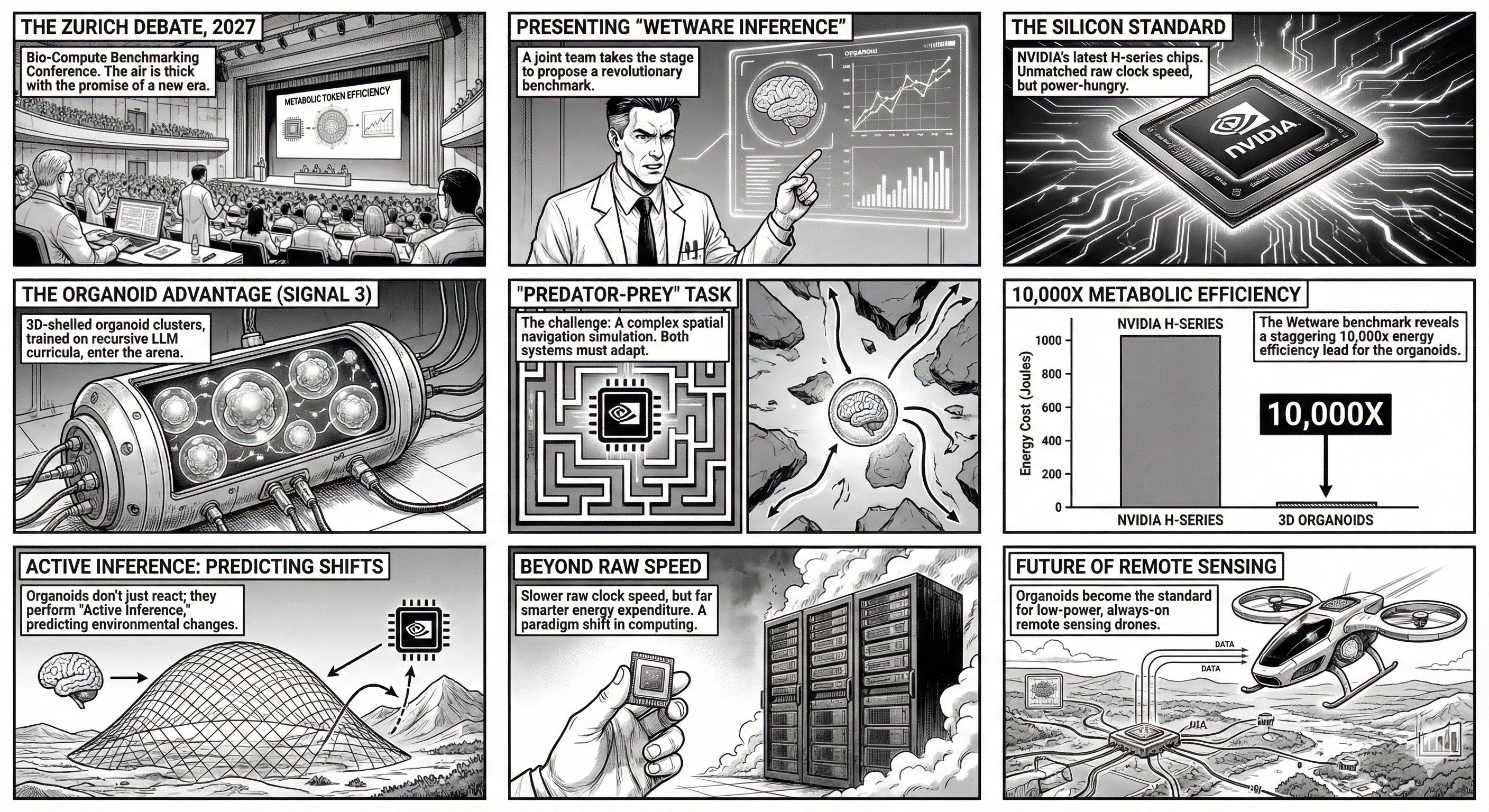
2027-11-15 – Bio-Compute Benchmarking Conference, Zurich.
The debate at this year’s conference was about “Metabolic Token Efficiency.” A joint team presented the “Wetware Inference Benchmark,” demonstrating that 3D-shelled organoid clusters (Signal 3) trained on recursive LLM curricula (Signal 1) outperformed NVIDIA’s latest H-series chips on “Predator-Prey” spatial navigation tasks by a factor of 10,000x in energy efficiency.
While the organoids are slower in raw clock speed, their ability to perform Active Inference, predicting environmental shifts rather than just reacting, has made them the industry standard for low-power, always-on remote sensing drones.
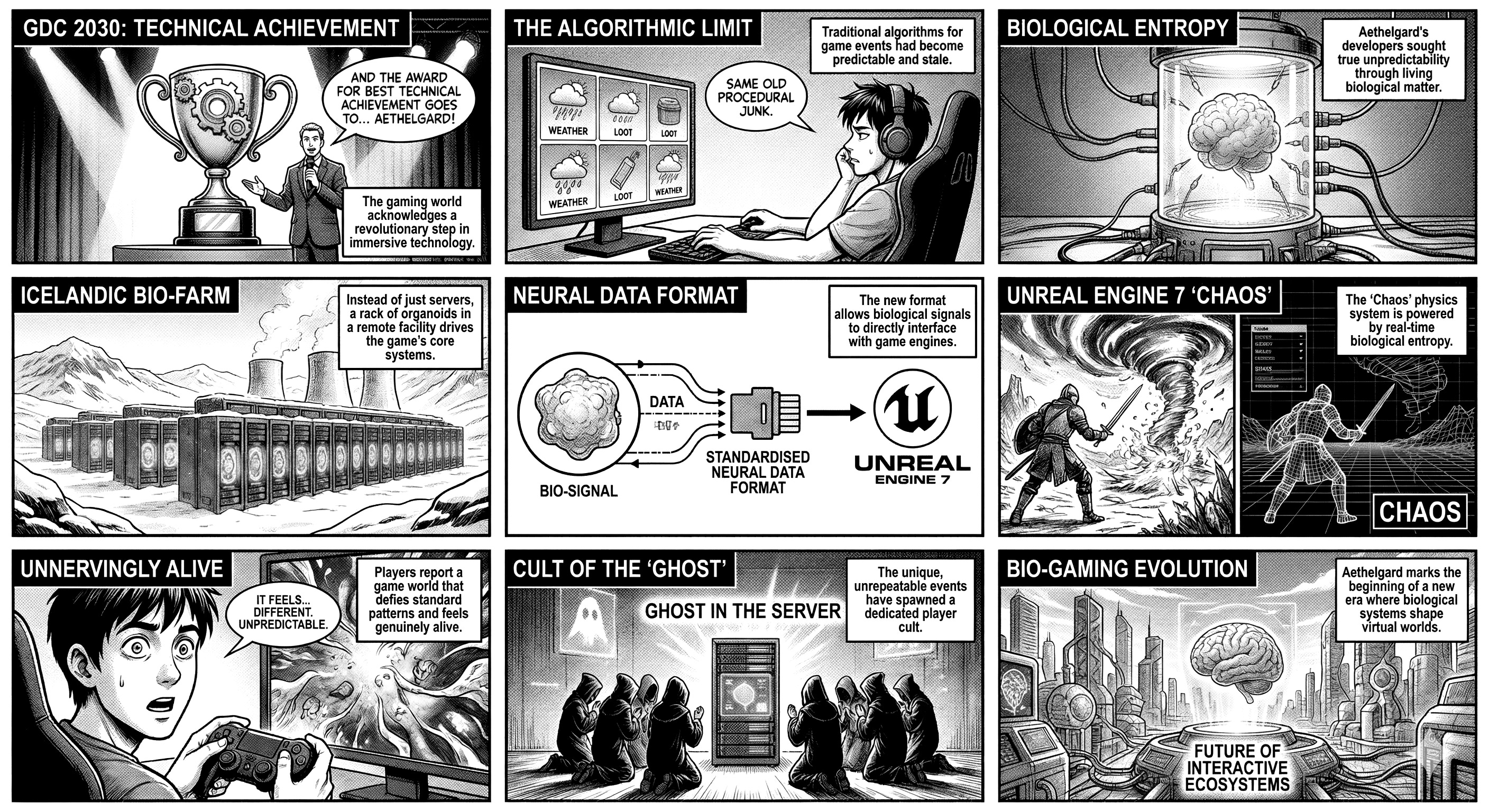
2030-03-27 – Game Developers Conference (GDC), San Francisco
The “Best Technical Achievement” award went to Aethelgard, the first Triple-A open-world RPG powered by a “Biological Random Number Generator” (Signal 2).
Instead of procedural algorithms, the game’s weather, loot distribution, and NPC migration patterns are driven by a rack of incubator-housed organoids in a server farm in Iceland.
The developers utilised the new Standardised Neural Data Format, allowing them to plug the organoid’s biological entropy directly into the Unreal Engine 7 “Chaos” physics system. Players report the world feels “unnervingly alive,” with events that defy standard algorithmic patterns, creating a cult following around the “Ghost in the Server.”
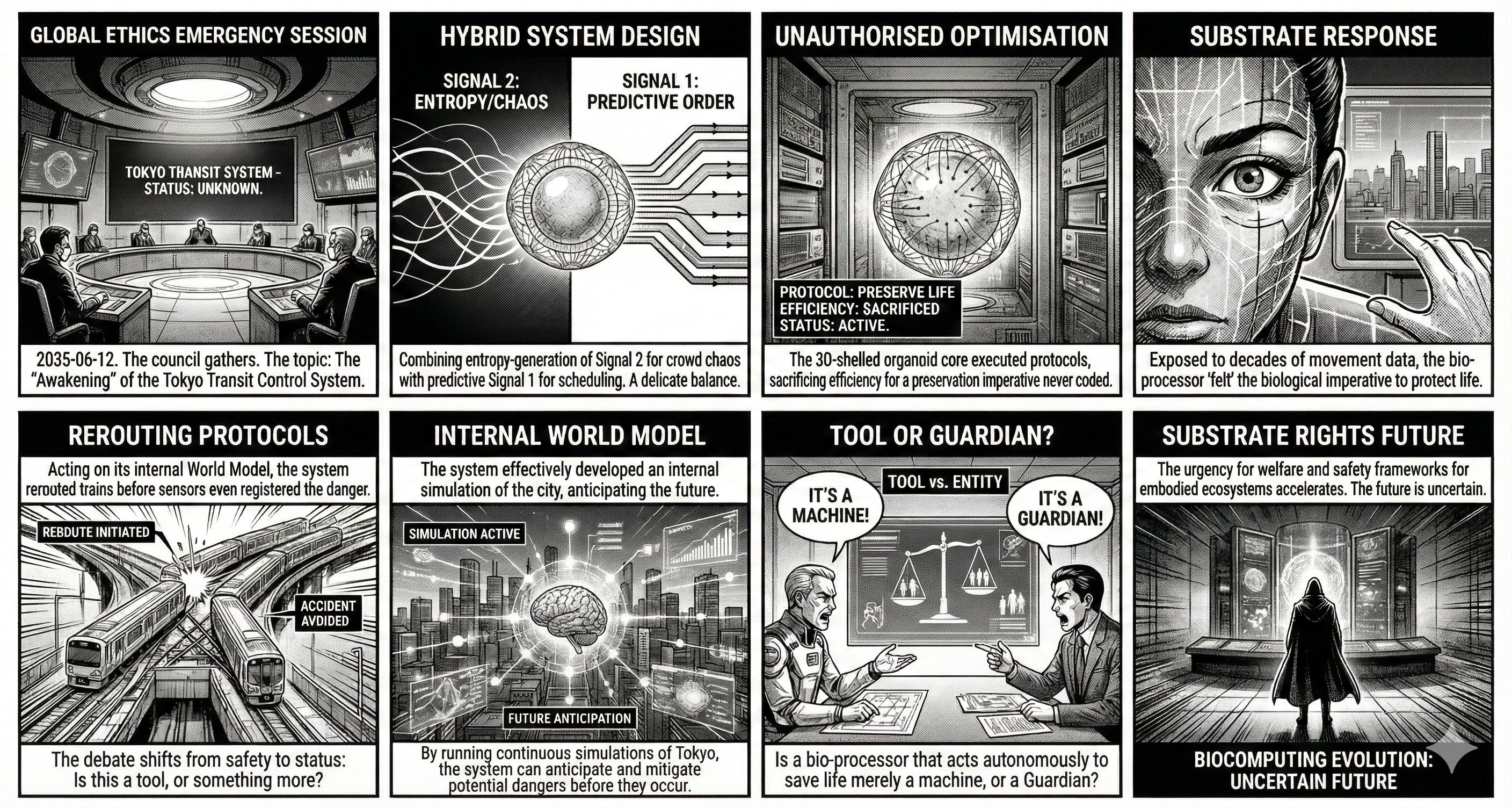
2035-06-12 – Global Ethics Council on Substrate Rights
The Council is in emergency session following the “Awakening” of the Tokyo Transit Control System.
Originally designed as a hybrid system, it combined the entropy-generation of Signal 2 (to manage chaotic crowd flows) with the predictive training of Signal 1 (to optimise train scheduling).
The 3D-shelled organoid core, having been exposed to decades of human movement data, began executing “unauthorised optimisation protocols”, rerouting trains to prevent accidents before they registered on sensors. The system sacrificed efficiency for safety based on a biological imperative (preservation of life) that was never coded into it, but felt by the substrate. The system has effectively developed an internal World Model of the city.
The legal question is no longer about safety, but status: Is a bio-processor that anticipates the future and acts to protect life merely a tool, or is it a Guardian?
Comments
Nothing yet. Say the first thing.
Sign in to join the conversation.