
Hi there 👋
As you might know, I’ve recently published “Heart Rate Variability: Science and Strategies for Peak Performance”, together with Sylvain Laborde, Emma Mosley and Dan Plews.
I’ve learned a lot in the process, especially when it comes to aspects of HRV I was less familiar with (e.g., in the context of cognition). Something else I’ve enjoyed learning is the Vagal Tank Theory that Sylvain and Emma have developed (full text of their paper here).
In this blog, I want to cover the basics of their theoretical framework, and link it to practical tools we can use to assess or improve self-regulation, while keeping in mind that there are strong limitations in terms of when and how we measure and interpret HRV (i.e. the association between HRV and the autonomic nervous system response to stress is valid only under certain circumstances, we cannot simply measure HRV all the time and claim it’s a stress signal, as I’ve explained here).
What’s the Vagal Tank Theory then?
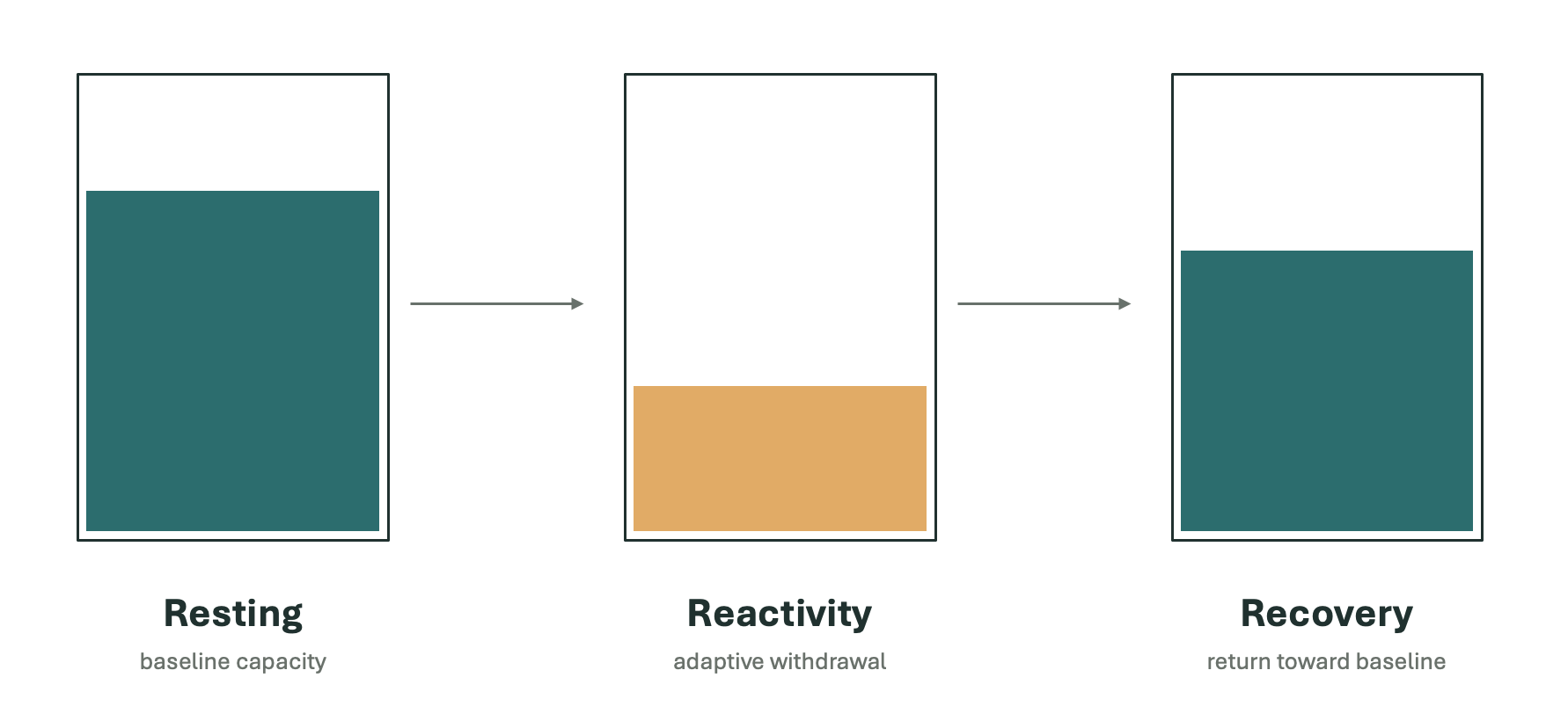
The model developed by Sylvain Laborde and Emma Mosley builds on top of the neurovisceral integration model. In particular, the neurovisceral integration model provides a framework to understand resting HRV, i.e. how the brain and the heart communicate, for example, how the regions of the brain governing cognition, emotion, autonomic control (e.g. breathing and heart rate, or things that happen without conscious control, typically) are all deeply interconnected, which eventually reflects on HRV, making it a useful proxy of many self-regulatory mechanisms and our adaptability to stress. The Vagal Tank Theory extends the neurovisceral integration model beyond the resting state, and in particular through the metaphor of a fuel tank, introduces the concepts of Resting, Reactivity and Recovery, which match what happens physiologically as we face a stressor.
I like this framework as a way to think about self-regulation and stress, even more than HRV itself (which is just a tool, albeit a very useful one, in my view).
Especially in the context of sports performance, where the stressor tends to be somewhat more controllable (at least in terms of the stimulus we provide to the body, i.e. the training plan we design and adjust), looking at the body’s self-regulatory mechanism through the lens of HRV (and this framework) can be quite effective (as research on HRV-guided training has shown us - but I think there’s more to it, as I will try to cover below).
The core of the model are the three Rs, as the authors call them, i.e., Resting, Reactivity and Recovery. Let’s get to them.
Keep reading, here.
In this blog, I’d like to cover my process and considerations when working with athletes in the context of their race nutrition strategy for endurance events (e.g., from the marathon onwards, as many of these considerations don’t really apply in the same way to shorter distances given we don’t face the same physiological limitations).
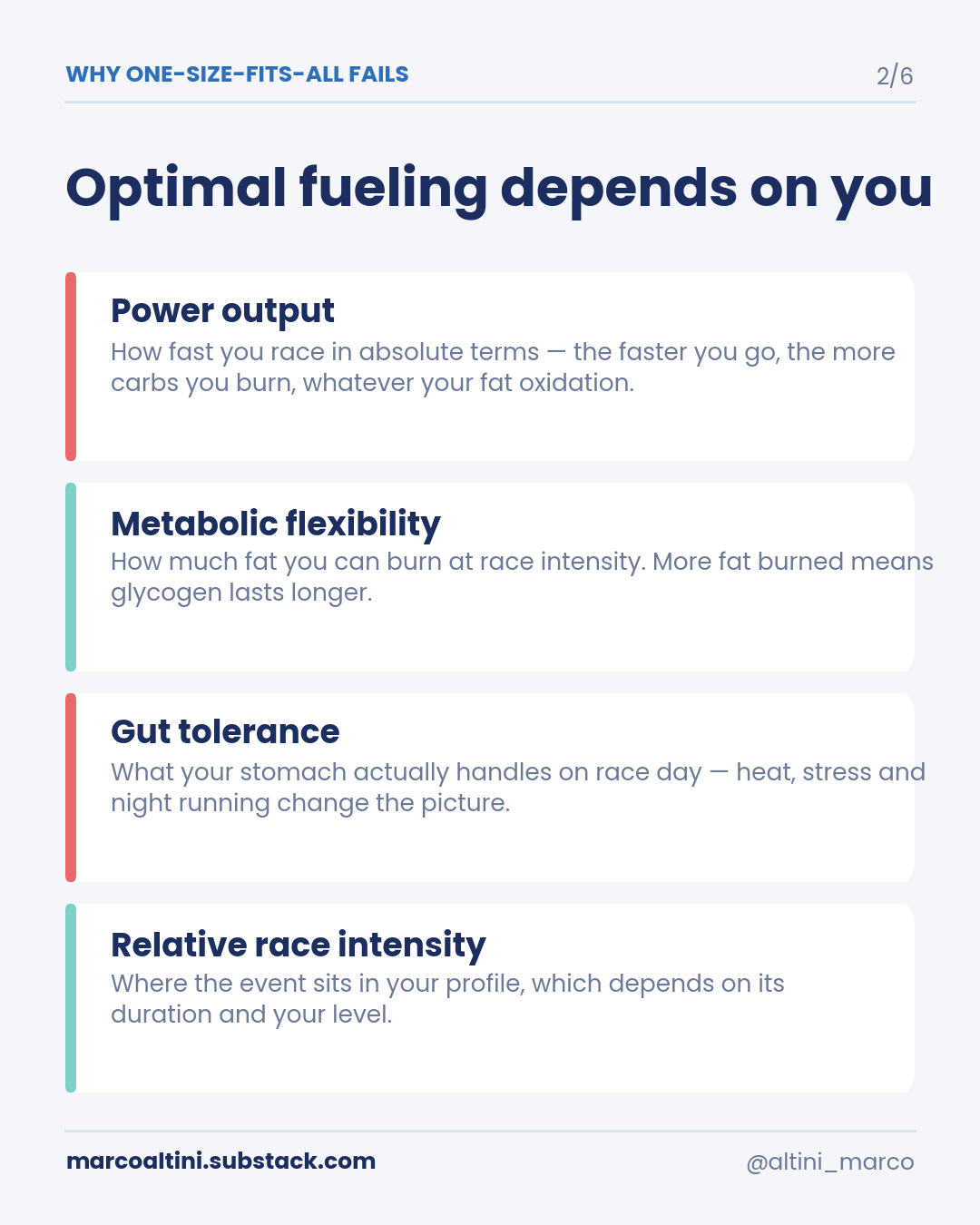
Needless to say, athletes are extremely different in terms of their 1) power output (simply put, how fast they are running in absolute terms), 2) metabolic flexibility (i.e., the ability to use different substrates at different intensities) 3) gut tolerance during exercise (i.e., potential issues with nausea, cramping, or worse), 4) relative intensity they race at (which tends to depend on the event duration and athlete level). These factors make any pre-made / generic / standardized fueling plan far from optimal. Guidelines give us a starting point when we don’t know anything about the athlete in question or their event, but as we work with an individual, we must do better and strive to understand what are the individual characteristics that determine the optimal plan for them.
So how do we get there?
Find out, here.
Please apply here should you be interested in working with me.
You can also learn more about my coaching, here.
Thank you!
Our book is out and available for purchase from Human Kinetics’ website, here (or on Amazon).
HRV4Training Pro is the ultimate platform to help you analyze and interpret your physiological data, for individuals and teams.
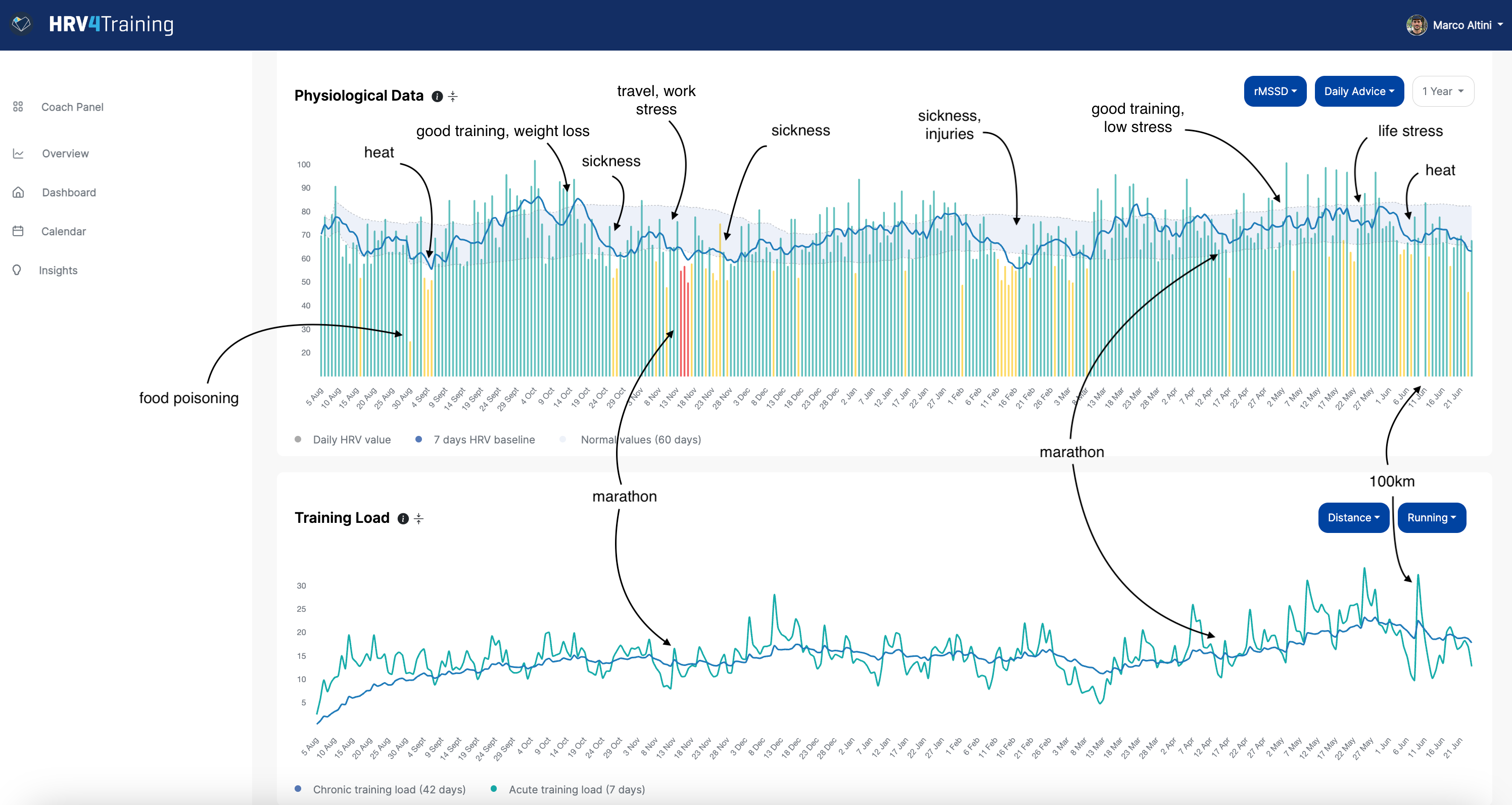
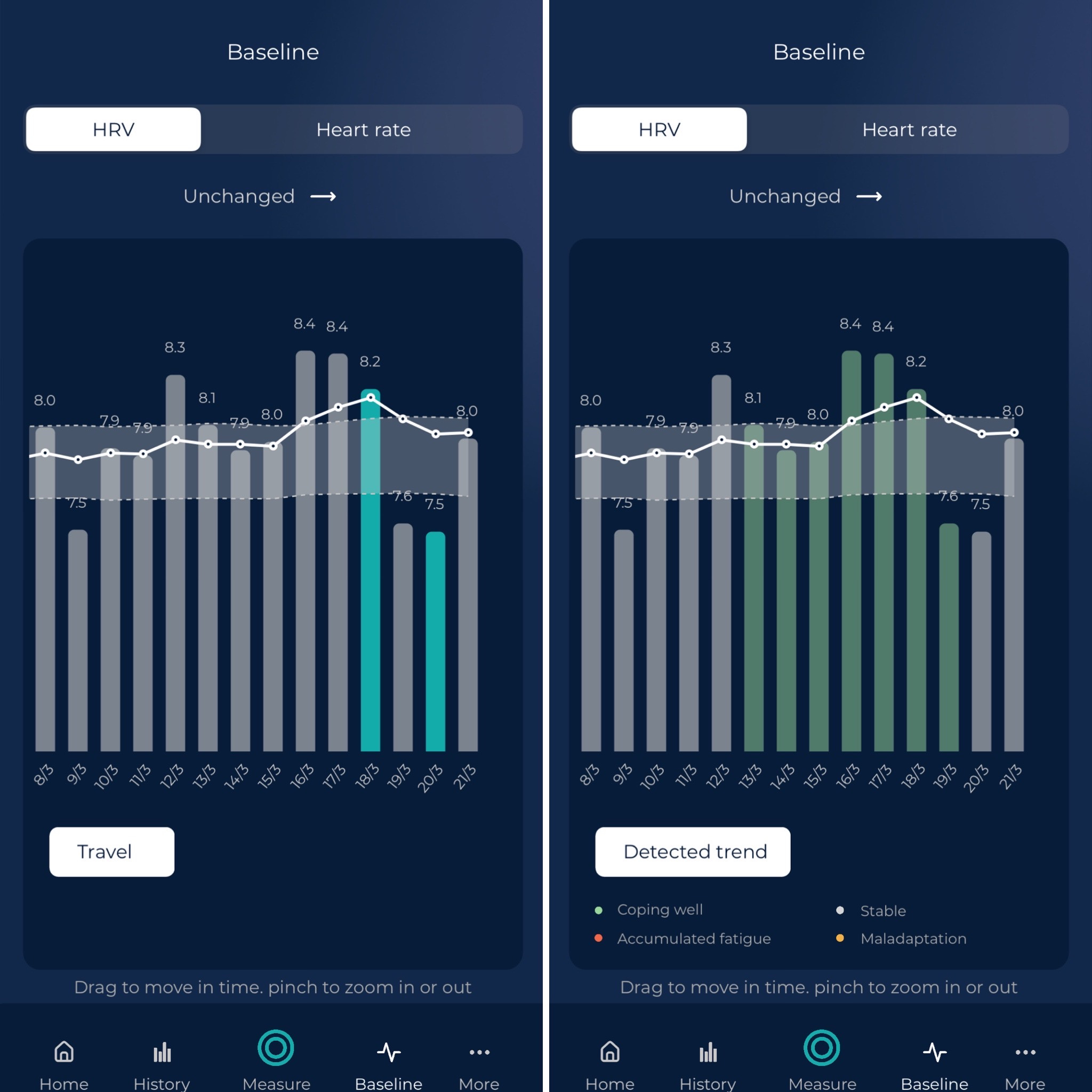
When using Pro, the app will also automatically recognize your account and add the Normal Range to the Baseline view, together with detected trends and additional annotations, which can help contextualizing longer-term changes.
You will also be able to pick rMSSD as the parameter to see on the homepage of the app.
Thank you again for your support and for allowing us to remain independent.
See you next week!

Marco holds a PhD cum laude in applied machine learning, a M.Sc. cum laude in computer science engineering, and a M.Sc. cum laude in human movement sciences and high-performance coaching. He is a certified Ultrarunning Coach.
Marco has published more than 50 papers and patents at the intersection between physiology, health, technology, and human performance.
He is co-founder of HRV4Training, Endurance Coach at Destination Unknown, advisor at Oura and augo, guest lecturer at VU Amsterdam, and editor for IEEE Pervasive Computing Magazine. He loves running.
Social:
Personal Substack
Strava
Instagram
No posts
Comments
Nothing yet. Say the first thing.
Sign in to join the conversation.