
This is an eight-part memoir series detailing my adventures with the Tucson Festival of Books and the associated Master Writers’ Conference.
Day 2 in Tucson, Sunday March 15, 2026
With the thermostat set to defrost, we sleep well in our hotel room. Much as we love sleeping with our cats at home—and they are super cuddly—Booster and Wilbur seem to relish taking turns finding new ways to wake us at odd hours every night.
I also like waking to find my internal clock is set two hours behind Arizona time. This grants me the rare chance to fake being a morning person, which I am not. For the record, Arizona doesn’t do Daylight Savings Time. I approve, because Daylight Savings Time kills people. There are studies.
One of my personality quirks that my tolerant husband has learned to live with is my compulsion to do certain rituals each day. Yoga, exercise, meditation, and journaling. And by rituals, what I mean is that these are not optional for me.
You might call me a neurotic person—and you would be right—but you should understand that I am a deeply happy neurotic person. I can’t understand why more people aren’t deeply, happily neurotic like I am.
If you told me that I could do only one of my rituals, there is no question which one I would pick. I would journal.
I journal a little each morning, a little each night. Also, sometimes during the day. Most of my life.
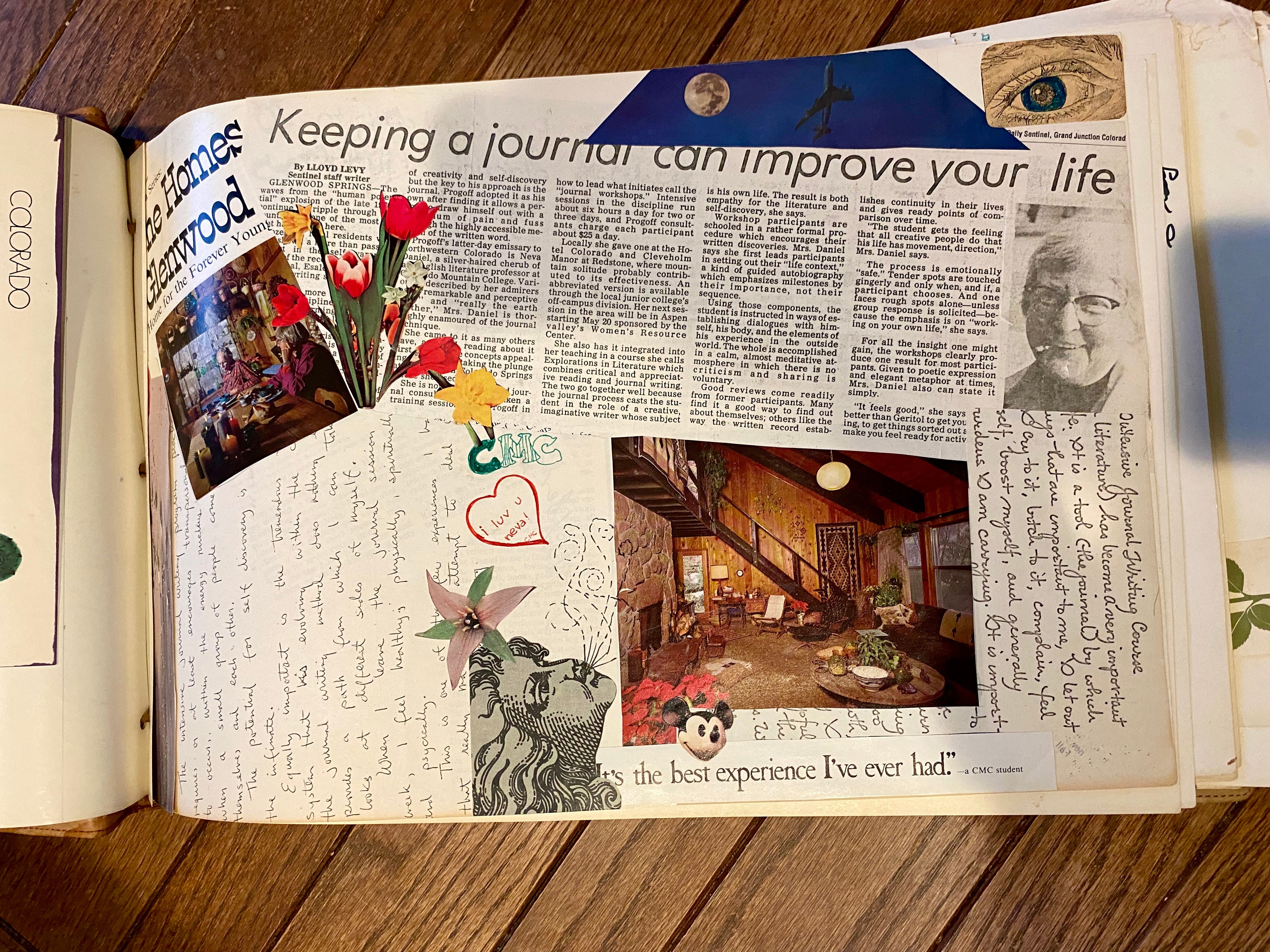
When circumstances prevent me from journaling, my brain fills up with scattered thoughts. The increased thought pressure hurts. I feel scattered. Anxious. I must release my thoughts onto paper.
Lest you think I am meandering, here, this topic coincides with the most important teaching that I received from the Master’s Writer’s Workshop. (Skip to Post 7 if you are impatient to learn what that is.) It is something that author Shobha Rao said, the day after this one. Stay tuned for The Rao Message.
Regardless of whether I am traveling or at home, I start every morning with journaling in this way:
I close my eyes. I tune out the world. I do not look at news. I do not look at email. My husband knows he should not talk to me or he will be In Trouble.
I used to write in notebooks by hand. Now, I pull out my beloved iPad and I type out a little Report: What Happened To My Consciousness Overnight. I am an investigative reporter documenting the wild dark forest of my unconscious. Someone’s got to.
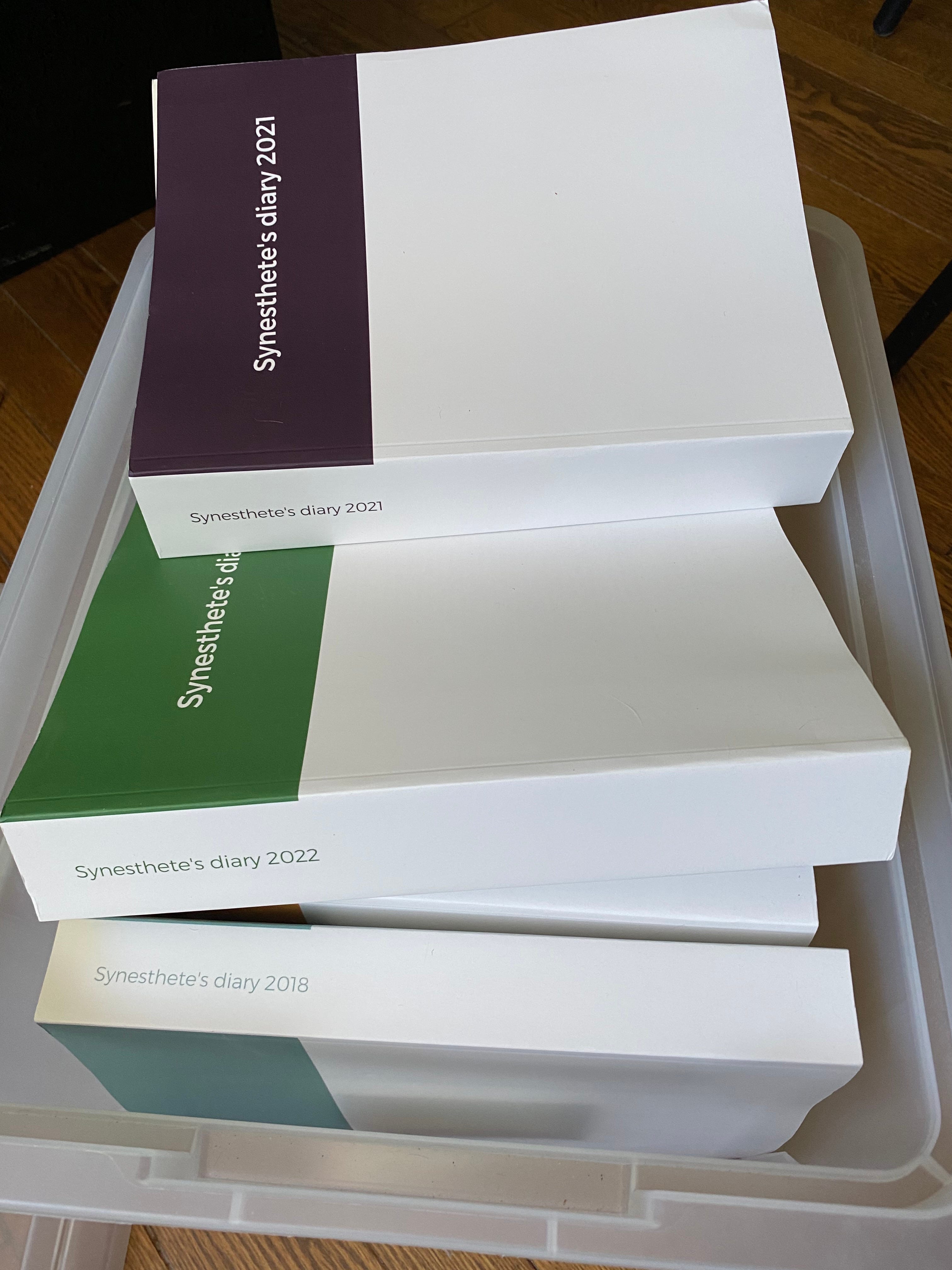
I love this so much.
As I mentioned in Day 1 in Tucson, my grandmother, Neva Daniel, a writing professor, was the first person trained to give these Jungian-based Intensive Journal workshops around the country. She was as obsessed with journaling as I am, so you have to wonder if our mutual drive to journal is genetic.
Sometimes I joke that I have to talk to my diary because no one else will listen. But really, I agree with my grandmother who said that journaling is a tool you use to find yourself and to find deeper wisdom within yourself. If you write long enough, wisdom falls out onto your page and surprises you.
______________________________________
About dream journaling:
I feel lucky if I can catch any dreams.
Neva taught her students that dreams are, in her words, “shy deer”. If you are not careful, dreams bound away and disappear forever.
Wait. Close your eyes. Let dreams come back to you. Do not even think of looking at the news. Do not talk. Eyes closed, I review a list of the usual suspects. Were there animals? Was I teaching? Working in a lab again? Traveling? Programming?
That trick often works for me.
When can’t remember my dreams, I feel stupidly bereft. If I go a number of days without remembering my dreams, I actually predictably get moderately depressed about their absence.
When I don’t remember my dreams for days, it feels as if a dear friend has disappeared without any explanation. I feel abandoned, hurt, and a bit worried. I wait and try not to panic.
After a dreamless night, I soldier on and journal anyway. I try to note anything about my inner state. An image. A color. An emotion. Every morning, there is always something to report.
______________________________________
The most important rule for journaling is to be utterly honest. Truth is where the beauty is. Truth is where the humor is. Truth is how you turn darkness into light.
Example: If part of me wishes my leaf-blowing neighbor would fall off our bluff never to be seen again, well, I write that down. I picture her broken body, the broken leaf blower, silenced forever. It’s horrible. It’s funny. It’s material.
______________________________________
I have dream music, too.
I often wake with snippets of lingering melodies, and I often notate these as well. I call these themes my Dream Music. I know that these themes are my original compositions because they are not very good. I have hundreds and hundreds of files of my not-very-good dream music motifs. It’s research. It’s material.
My Dream music themes are simple and repetitive, yet oddly soothing. They feel like the opposite of an earworm. (I get disabling earworms every day too, but that’s another essay. Honestly, I think earworms and Dream Music occupy different parts of my brain, and oppose one another.)
If my Dream Music interests me, I record it on Logic for iPad, or use a musical shorthand I have developed to write it down. My Dream Music themes may not be stirring, but my philosophy as a composer is that you can take any ordinary theme, repeat it, vary it, repeat that, and you something stirring will develop. I have turned some of my most boring Dream Music into my favorite compositions this way!
Good stories work this way, too. Stories present repetitive themes we can anticipate—foreshadowing—and new themes that surprise us. Just like in music. Humans are story-making creatures, always seeking the best balance of repetition and surprise.
______________________________________
I respect whatever comes up overnight, even if it looks or sounds like garbage. I am saving the day. I am saving my life. I am saving the lives of those around me. Because my diaries are scheduled to become public after my death, decades from now, everyone will know how much I hated my leaf-blowing neighbor.
This comforts me.
Here are my March 15th morning notes, which are typical:
First, though I feel I dreamed and slept well, I couldn’t remember dreams likely because I am stressed about meeting famous important scary people tonight. Fear fries my dreams. I keep having this interesting dream music which goes (orange) G 2 3 F /(yellow) E 2 3 4 / (red) Ab 2 3 G/ F 2 3 4…sometimes it starts on the A flat. There’s black round blobs in the bass, actually a beladi rhythm which is rather odd. I am sure I can do something with it. I love F minor with a C major mode, which this implies.
Sidebar on saving journals: I’ve become a volunteer for American Diary Project.
I have been journaling more than half of my sixty years of life. My digital archives have accumulated word counts in the millions, and all of my millions of words have been donated to The American Diary Project in Cleveland. I have decided to make all my words public eventually.
If you want your journals saved, or family member’s journals saved, and if you want the choice of keeping them private or public on a certain date, check out the American Diary Project. Reading journals helps us to empathize with others, even with those who may be very different from us. I love their mission. Saving people’s lives.
___________________________________________________________
My other morning ritual is yoga. I’ve been hooked on yoga for over thirty years. Motivated by the horror of anticipating hours of plane flight immobilization, I even did yoga before our 2:30 AM trip to the airport.
Morning yoga wakes my muscles and their surrounding fascia. I imagine this activates all these brain centers that keep track of said muscles and fascia, too! Like, hey, brain, remember how this body has a big toe? Don’t let that big toe pathway go dead.
Yoga is like a little massage, with the benefit of avoiding strangers touching me. (Because normal people say they love paying for massages, I have repeatedly tried massages. I hate massages.) That week, I twist my wrist doing yoga on a slippery hotel bath towel. It’s recovered.
All journaled and stretched, I prepare for the Tucson Festival of Books.
The Festival requires clear “stadium bags” to ease screening attendees. I assume this is a side effect from the subset of Americans claiming the Bible proves they have a right to conceal their sidewinder missiles while visiting children’s playgrounds.

I had packed official clear stadium bags that I bought through the University of Wisconsin, thinking it would be fun to show off the red badger logo, maybe make connections that way. I fill these bags up with nuts, apples, water bottles, and sunscreen.
As we drive to the campus, I check my phone. Our cat sitter texts that our cats “let her sleep in”. I breathe relief. Miraculously, the power is still on at home. Two feet of snow fell overnight. More is on the way.
Prior to our travel, warnings circulated of a record-breaking storm of the century on its way. Everyone was running to The Pig (that’s the Piggly Wiggly for the rest of you) for supplies. Everyone was calling their plow people.
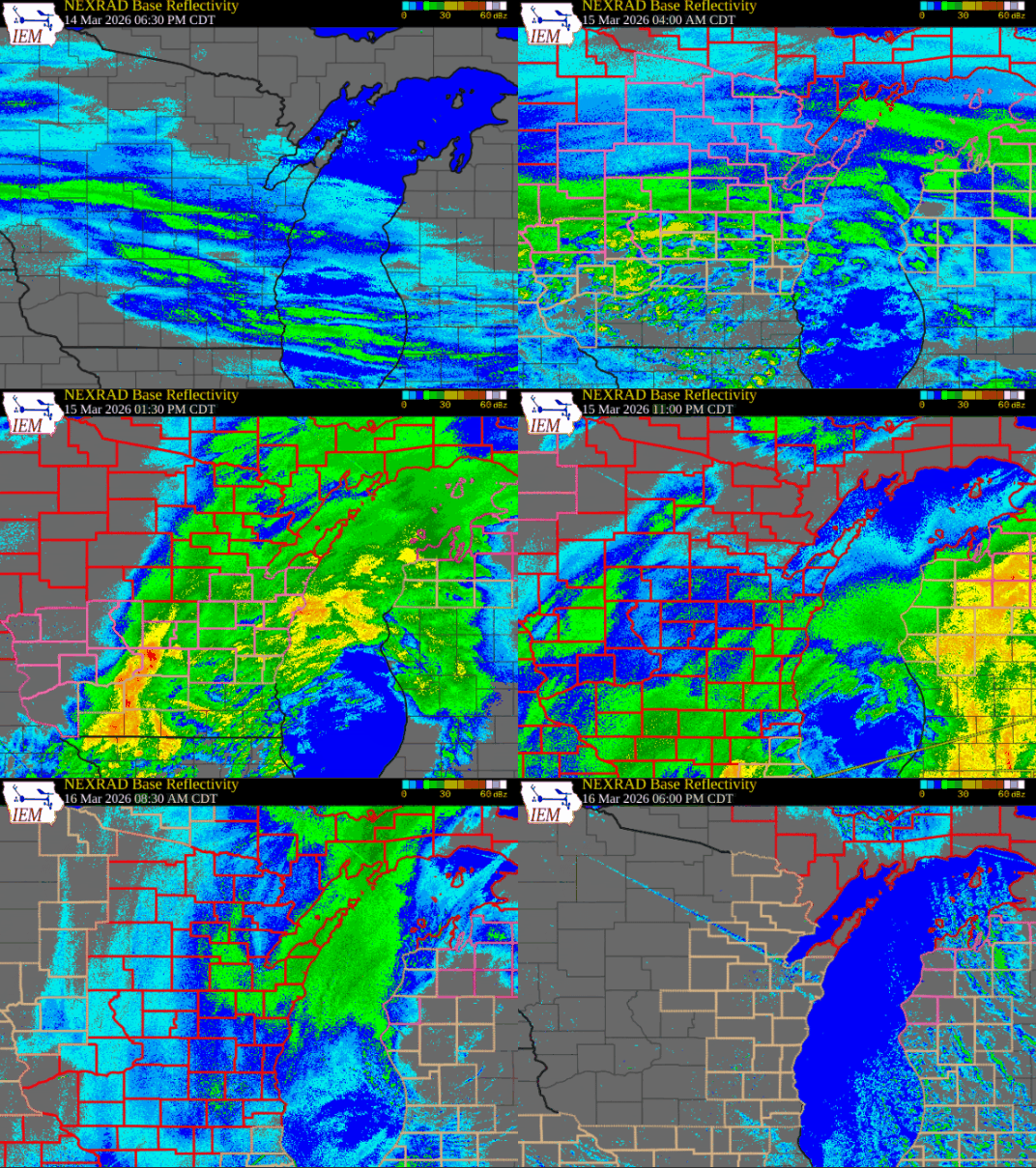
With any storm, our power goes out. Fortunately I have a tough cat sitter who has been through power outages in my house before. She knows how to use our Franklin Stove to heat our kitchen and to cook. She even cheerfully told me, after that blackout, that she had been a Girl Scout and loved winter camping. Such a sitter deserves hazard pay.
As we drive to the event, I read that everything is canceled in Door County. Classes, church, events, everything. Everyone on social media shares thick blankets of snow. Police bulletins advise that for safety, residents should not leave their houses. Plows are stuck waiting for a second plow to free them.
Reviewing the Door County news, I feel a strange mix of guilt and good fortune for the storm to confine a really great cat sitter inside our house.
Finally, arriving at University of Arizona campus, we join a long line for Salman Rushdie. At the last minute, we are turned away. The 700-seat auditorium is full. Disappointment.
Most of the other large venues would be full, too. Pointing at the schedule, I pull at Tim’s arm. “Carl Zimmer!” I have a lot of favorite science writers, and Zimmer is one of my top favorites.
We race across the mall. We find Zimmer in a tent, speaking alongside a couple of other science writers that I didn’t know. They seem worth knowing:
There is Sharon Udasin, author of Poisoning the Well. Udasin is talking about efforts to give environments and animals legal rights. Citizens United turned corporations into people. Why not offer those rights to rivers and mountains and livestock, too?
Also, Chris Berdik, author of Clamor: How Noise Took Over the World—and How We Can Take It Back.
I am starstruck.
Panting, taking our seats, I want to shout out to Berdik. I want to tell him I am neurodivergent. How I’ve struggled my whole life to mask sensory sensitivities just to fit in. I want to show Berdik my pockets full of earplugs. I want to tell Berdik that he is my hero and burst into tears.
Being a coward, I do none of these things.
While Berdik warns us about the dangers of unwanted noise, a protest march grows louder and louder. In one of these rare moments of cosmic irony, Berdik’s message about unwanted noise is silenced by protesters marching past our tent. Banging drums, playing kazoos, someone shouts through a megaphone, protesting Trump’s Iran War. I’m betting everyone present agrees with these protestors.
I once had a writer friend of mine make a snide remark about one of our Door County anti-ICE protests. He had said, “Yeah, I’m sure that’s going to change a lot of minds.” He seemed to be implying that the protesters were wasting their energy.
His comment rubbed me the wrong way. If the sole purpose of any protest was to change minds, well then, he might have had a point. But protests are about more than changing minds. Protests send a societal signal. Protests send a message that people are not happy. Protests are a historical marker. Protests are red flags. We must allow society to send signals that something is wrong.
Everyone in the audience side-eyes one another and chuckles as we wait for the noise makers to move on. Berdik then resumes explaining how noise is bad for us.
After the science writers wrap up their talks, Tim and I wander over to the student union for lunch. There, over meals spicier than we are accustomed to in the Midwest, Tim regales me with stories of his being a mechanical engineering student at the U of A.
Tim’s goal was to become an astronaut. Astronaut jobs are hard to find. Tim ended up designing rocket parts for Hercules, (watch Tim’s eyes light up any time spacecraft is mentioned), then he moved on to designing safety syringes for Becton Dickinson. (You’ve probably been punctured by Tim’s most successful invention, the Insyte Autoguard Shielded IV safety catheter.
Everyone I know has been stabbed by Tim’s invention, including me, numerous times. And do we get any royalties for the billions that BD makes off Tim’s work? Sadly, no. Thus Tim’s interest in filing patents.)
Over lunch, Tim shares undergraduate stories:
A tragedy in 1978, when a fighter plane crash landed right near his dorm, killing two students.
How Tim was asked to be an extra on Little House on the Prairie (Episode 805: A Wiser Heart) when the show filmed on the campus. (Yes, you can spot young Tim in that episode.)
How Tim used to love to sneak into the music building to practice the piano. How he was angered, one day, when this band that no one had ever heard of had taken over the room for a concert, preventing Tim from playing his piano. Tim didn’t like their music. Reading the sign over the door, Tim had thought the band had a stupid name: R.E.M. He’s still not a fan. We bonded over that.
Looking at the time, we jump up. The next round of simultaneous talks is starting. Rooms fill up. We keep getting turned away. We randomly jump into the next talk we can find that isn’t completely full. We find ourselves listening to a panel of mystery writers discussing their latest books:
May Cobb: All the Little Houses
Zoe Wallbrook: History Lessons
Longing hits me. I miss reading books like these. For the next few months, I would instead be stuck deciphering An Introduction to Bioinformatic Algorithms.
Listening to these talks, I feel vicarious joy that these engaging writers have found success. And agents. Sigh. I had an agent, but she retired. I miss having an agent. Someday I hope to find another. I am motivated.
As the mystery panel wraps up, having learned our lesson missing Rushdie, we race across campus to get in line early. We do not want to miss sci-fi and fantasy writers Martha Wells and T.J. Klune.
Crossing the campus mall, I catch a glimpse of two women who look familiar. I stop in my tracks and call out their almost-identical names.
The women turn around, recognize us, and laugh. Ann and Anne are, like me, members of Wisconsin’s Write On Door County. Small world.
We share hugs. Tim discloses with pride that we are there not just for the Book Festival, but the masters workshop that I had won entry into through the Festival’s writing contest.
I resist the reflex to shrug off the praise. It feels good. I feel like a Real Writer.
We share stories of book talks, as well as our amazement over the clobbering that our Door County homes are enduring with record-breaking snow.
After saying goodbye, we find the next line. We are reassured we will get in. As the line grows, we do like everyone else and sit on the pavement to wait for the auditorium to open.
During all this fun, I am increasingly aware of my nerves. That evening, the masters workshop will have a reception. I imagine this is where I will finally meet The Famous Writer People. National Book Award-winning people. People who will read my writing. People who will judge me.
I take deep breaths. I relax my face muscles. I start using all my Jedi tricks to recalibrate my nerves.
It doesn’t help that I am surrounded by all these strangers, nice strangers clutching stacks of books, yes, but they are all chattering around me. The chattering sounds fill my head with multicolored sparks. I am vibrating with multicolored sparks.
As a little girl, I would fight panic, unable to escape sounds that didn’t seem to bother anyone else. I did not want to leave my house. I fought agoraphobia.
As a big girl, I have learned to adapt:
I always carry earplugs and other noise canceling gear. I tuck in my air pods, turn on the noise canceling. Ahhh. The crowd noise still jars me, but it is manageable.
Air pods are great for sensory-disabled people like me, but (not that Apple is listening or cares) they hurt. I would like to not feel like I am inserting Lego pieces into my ear canals. Also, I always have to wear a headband over them, because they are custom-made to fall out and find a forever home inside the nearest sewer grate.
I wait. I stare at my phone. New grades coming in. What’s this? 8 out of 10?
I am socked in the gut. I’m trying so hard in this class.
I read the grader’s message:
Your raw data from sites 8 and 22 is all wrong. It’s very different from the assignment spreadsheet. In fact, these two positions are probably paired, with all conditional entropies being 0. I don’t understand where this error may have come from. Your work is fine other than that.
I am shocked. I was confident I had done this assignment correctly. It had not been easy, either. I go through the files again. Then, I see what happened.
The homework gave us two Excel spreadsheets, each with DNA bases in a sequence, each for the same gene. But the order of bases on one spreadsheet was scrambled with respect to the second.
I had not seen that. I had thought I would save time by pasting data from one sheet onto the other, assuming the order was identical. This had been a reasonable assumption. I had, in fact, calculated everything correctly. I had just made an assumption that the order of bases would be the same on both sheets. It seemed unfair.
Interestingly, all my nerves about meeting the Famous People that evening just disappeared. Some objective part of myself is going, hey, here’s a way I can deal with my nerves. Get wounded over some unfair judgment.
The graders words are merely factual, but they sting. Your data is all wrong. I want to cry. Eighty percent, a low B, for an assignment that I understood and did correctly, all because of my stupid, hasty copy-paste assumption.
Tim is sympathetic. He rubs my back as we wait in line.
(Later, I would craft a letter suggesting this homework be rewritten for future students, with a clear warning that one spreadsheet had data scrambled with respect to the other. That suggestion was graciously accepted, and I was even invited to do the assignment over. I declined; I didn’t want any possible unfair advantage over my fellow classmates.)
Finally, we are ushered into the auditorium to see Wells and Klune.
If you don’t know Martha Wells, she’s written a lot of sci-fi and fantasy books. She’s probably most famous for her Murderbot character. Murderbot is designed to be a killer robot, but it really just wants to be left alone so it can watch soap operas.
Tim and I are big Murderbot fans. We’ve read all the books. Like Murderbot, we are introverts. Like Murderbot, I hate eye contact.
Tim doesn’t seem to mind eye contact. He never complains about it.
For me, eye contact is too stimulating. Eye contact makes me feel electrocuted. I love Zoom meetings because I don’t have to make eye contact. You might catch me faking eye contact when I stare at the spot just between your eyebrows. I am glad someone else gets this, even if they are just a fictional robot.
We are excited to see Martha Wells in person. I might even make eye contact with her.
Tim hasn’t read TJ Klune, but I have, and I keep pushing Tim to do so. Klune is best known for normalizing gay and trans characters in cozy, fun, fantasy settings. I love his tone and quirky characters. Putting on my writer’s hat, Klune is particularly talented at using punchy little nonverbal dialog cues. These, I take literal notes on, in my Writer’s Notebooks.
I’d missed Klune at a Write On Door County event, but having watched the recording after the fact, I have an idea of what to expect. His humor, derived from a self-depreciating honesty, is the best kind of humor.
During the talk, Klune reminds us that a gay character doesn’t come out just once. They must decide with everyone they meet. It’s not one-and-done, in other words. I think this is a salient point.
I’m not gay, so don’t know if it is wrong for me to compare Klune’s message with my neurodivergency. Yet I feel there is overlap I want to explore.
I normally do not “come out”. I do not disclose to people that I meet that I have extreme sensory issues that I can never turn off. Why? I don’t want to make anyone feel uncomfortable. Also, synesthesia is hard to explain.
I do, however, want to tell a person that when they click their pen while they are talking to me, tiny white flashes explode in my head and I just want to rip that pen out of their hands and stomp it to little tiny plastic pieces and then I want to set those pieces on fire, just to make all the flashing stop.
I am grateful for people like Klune who can bravely explain to audiences about what it’s like to be born different.
Audience questions are taken. A teacher asks them to comment, complaining that his students feel they must use AI even when asked to formulate an opinion.
Wells and Klune visibly react. They are riled up. They have a lot to say on this.
Wells and Klune clearly hate that people selling books written by AI.
_________________________
Side note: For the past 8 years, my husband Tim has been programming Maffle, an AI shelter for creatives. We are close to releasing this browser-free, end-to-end encrypted platform on phones and desktops. It’s in beta testing. People ought be able to protect their creative work from getting scraped and repurposed without their permission by AI.
We are not opposed to AI. AI is solving important, live-saving questions in medicine and science. For my programming and debugging, AI is invaluable. In fact, AI will be locally available on Maffle, confined to user’s devices and not dangling on a string from any tech company including Maffle. No eco-destroying data centers are required. We want to help shape this powerful tool so that it can be used as wisely and as ethically as possible.
_____________________________
Martha Wells goes on in an impressively knowledgeable manner about the nuances of AI. “It’s not alive,” she says, her eyes flashing. “It’s just a machine.”
Klune says he had a fit when he learned that cover art for one of his books was created by AI. He demanded that instead, a real human be paid for their art.
Wells and Klune are clearly furious that the works of real writers and artists and musicians are now competing with AI-generated content, created from the biggest copyright infringement in human history.
Hearing them talk is motivating for Tim.
Leaving the venue, I start getting nervous again. The reception. Meeting the Famous People. As we drive back to our hotel room, I stress. What to wear? What to say?
I know I am not alone in feeling like an imposter at times.
I like my way of dealing with Imposter Syndrome.
I do this: I admit I am imposter.
Go ahead, say it with me:
I AM AN IMPOSTER!
Take all the air out of the idea. Embrace your imposterhood! As in journaling, honesty is power.
Perhaps we are all imposters in some way. We can form a club.
[Part 6: Where I finally meet the other writers]
Comments
Nothing yet. Say the first thing.
Sign in to join the conversation.