
This is an eight-part memoir series detailing my adventures with the Tucson Festival of Books and the associated Master Writers’ Conference.
This optional section provides historical context about how my grandmother and and her colleagues helped start Tucson’s first writing conferences. You can safely skip ahead to part 4 if you want.
Then, standing in that Tucson Bookmans bookstore, it hits me. I get goosebumps all over. My grandmother Neva helped start the first Tucson writer’s workshops.
Which, decades after Neva’s death I am now invited to.
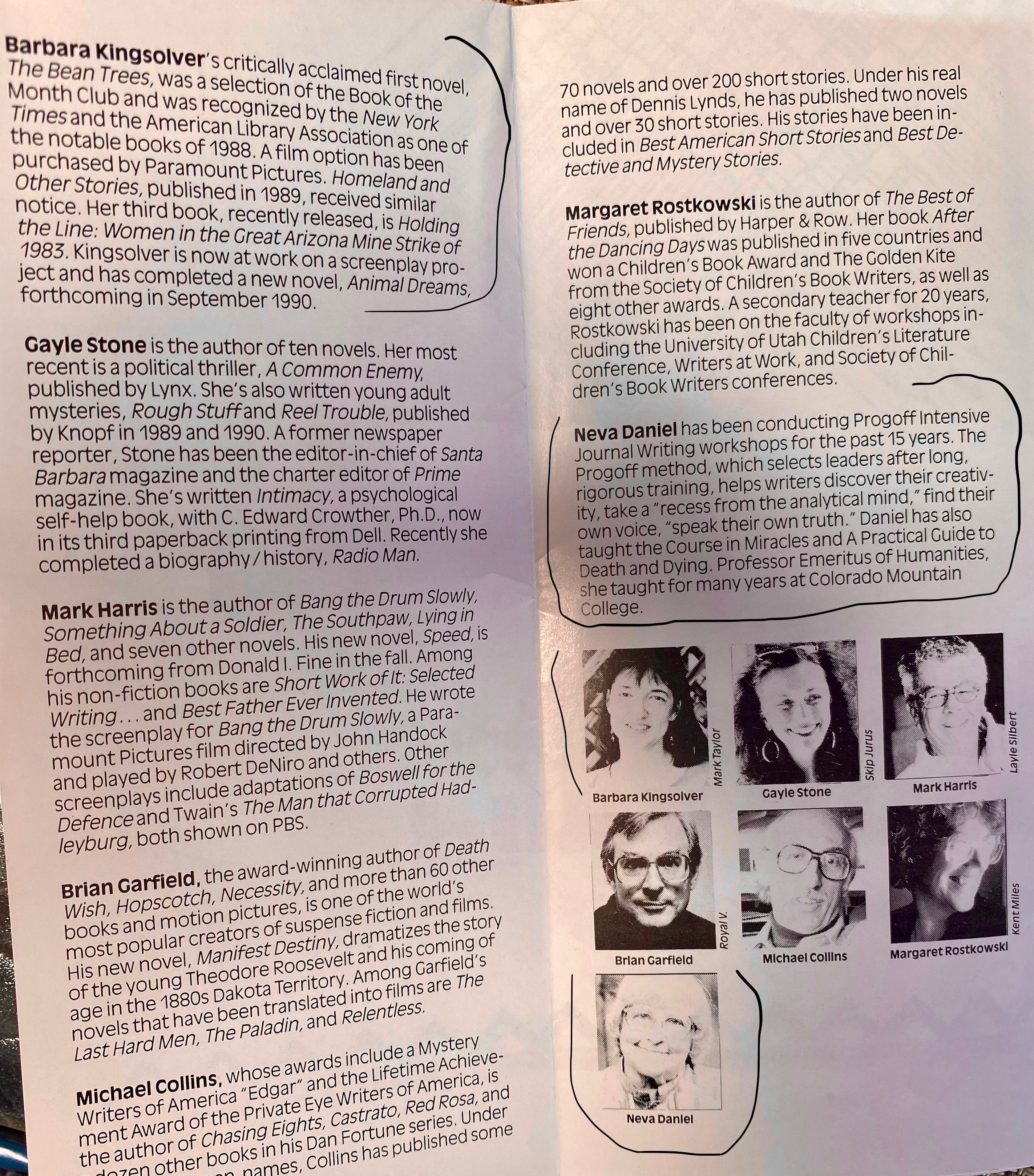
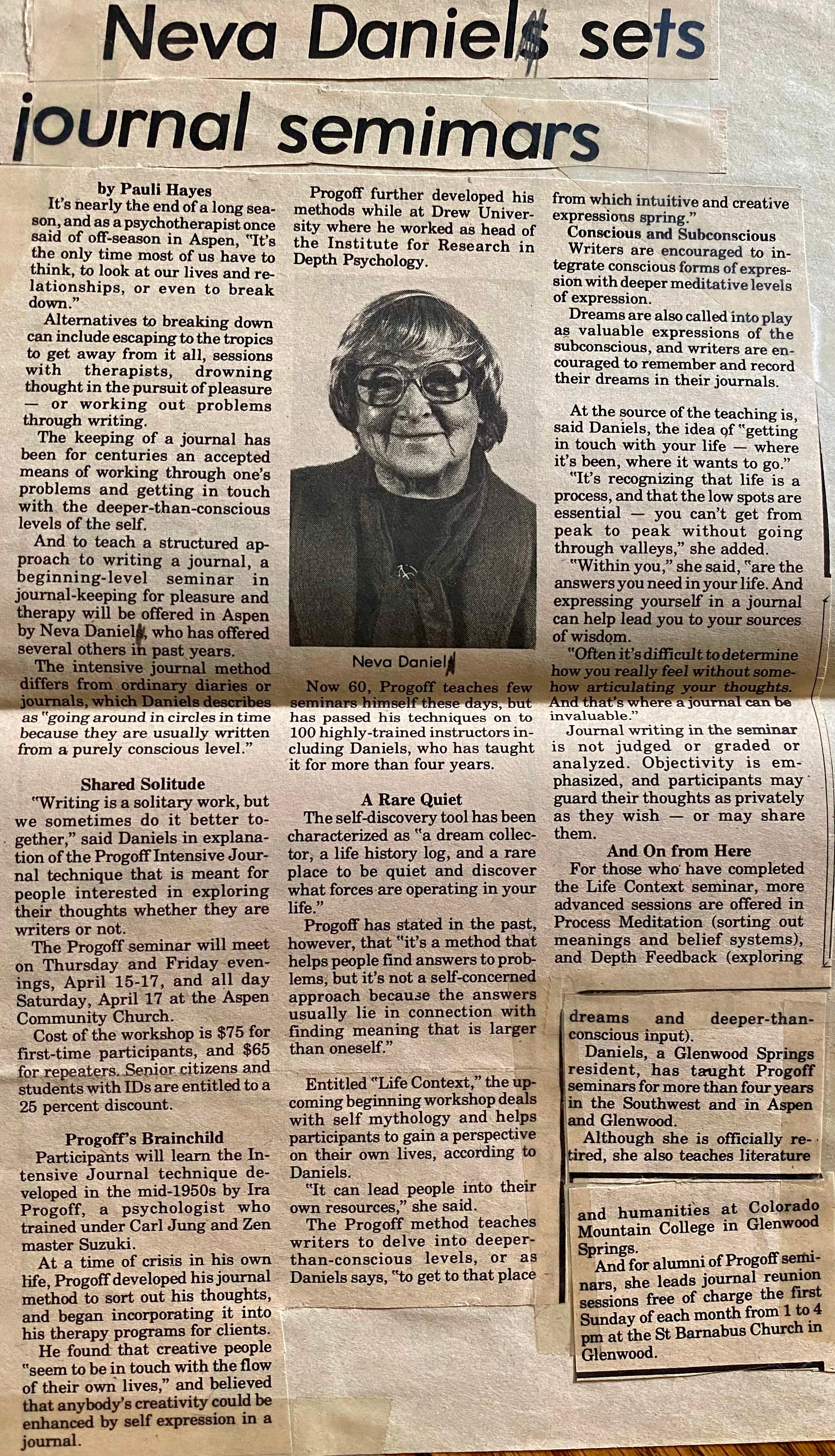
Neva Daniel wasn’t an Arizona native. She lived and taught in Colorado, but regularly visited Tucson to give workshops at Pima Community College.
A few years ago, I was only half-surprised to discover clues of her past presence in Tucson. I found her workshop textbooks in that very Bookmans in Tucson.
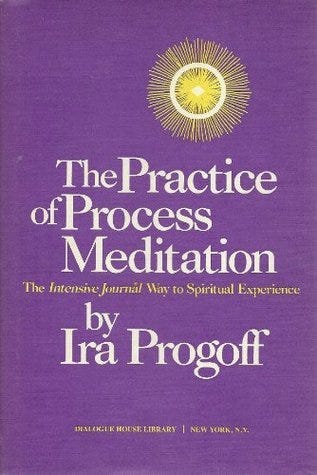



Like, The Practice of Process Meditation: The Intensive Journal Way to Spiritual Experience, by Ira Progoff. Also, Progoff’s “entrance meditation” books. These invite you to link your meditation to your journaling: The White Robed Monk, The Well and the Cathedral, The Star Cross, The Cloud of Unknowing.
You have to work to find such esoteric books. I have zero doubt these books came from Neva Daniel’s Intensive Journaling Workshops.
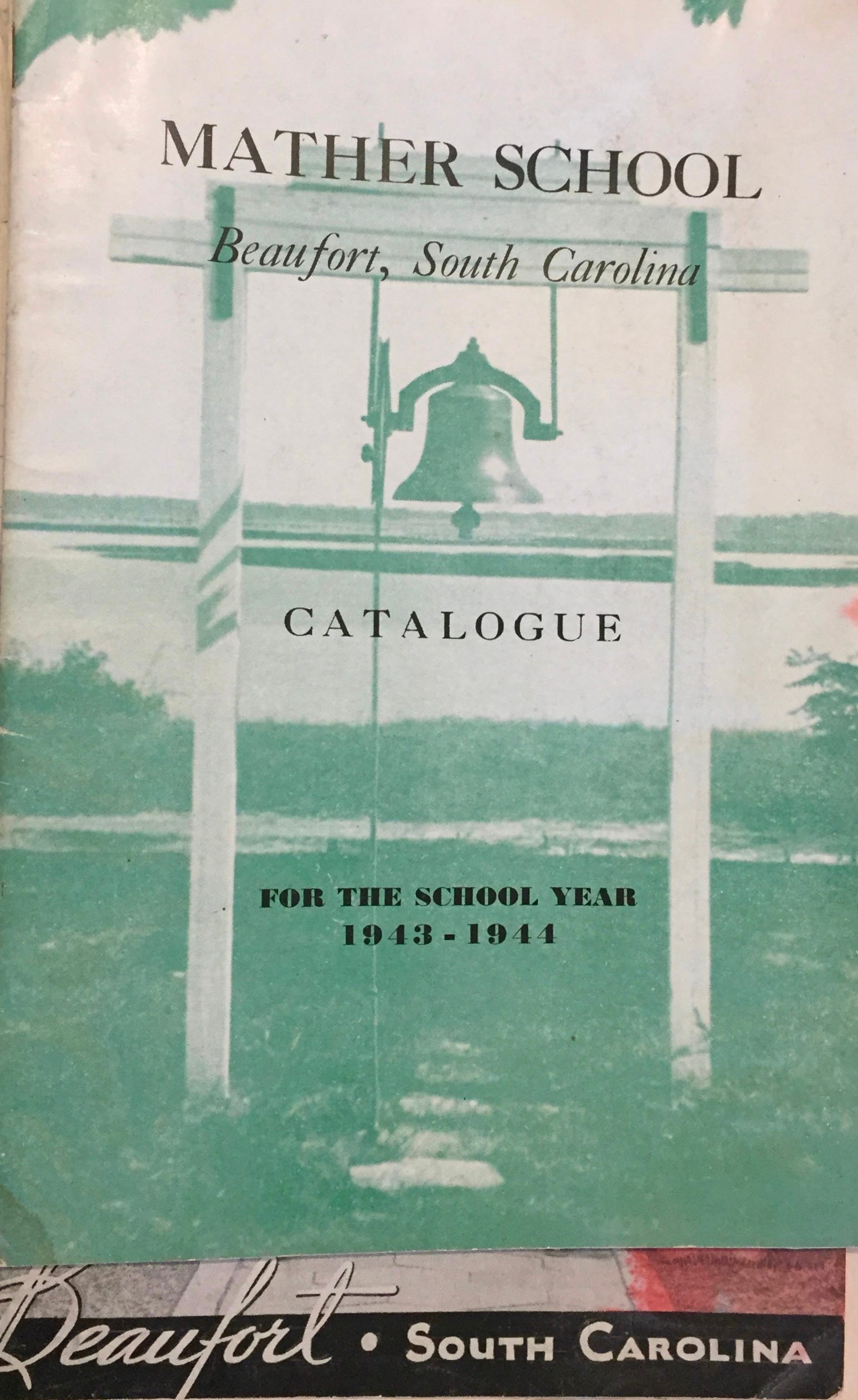
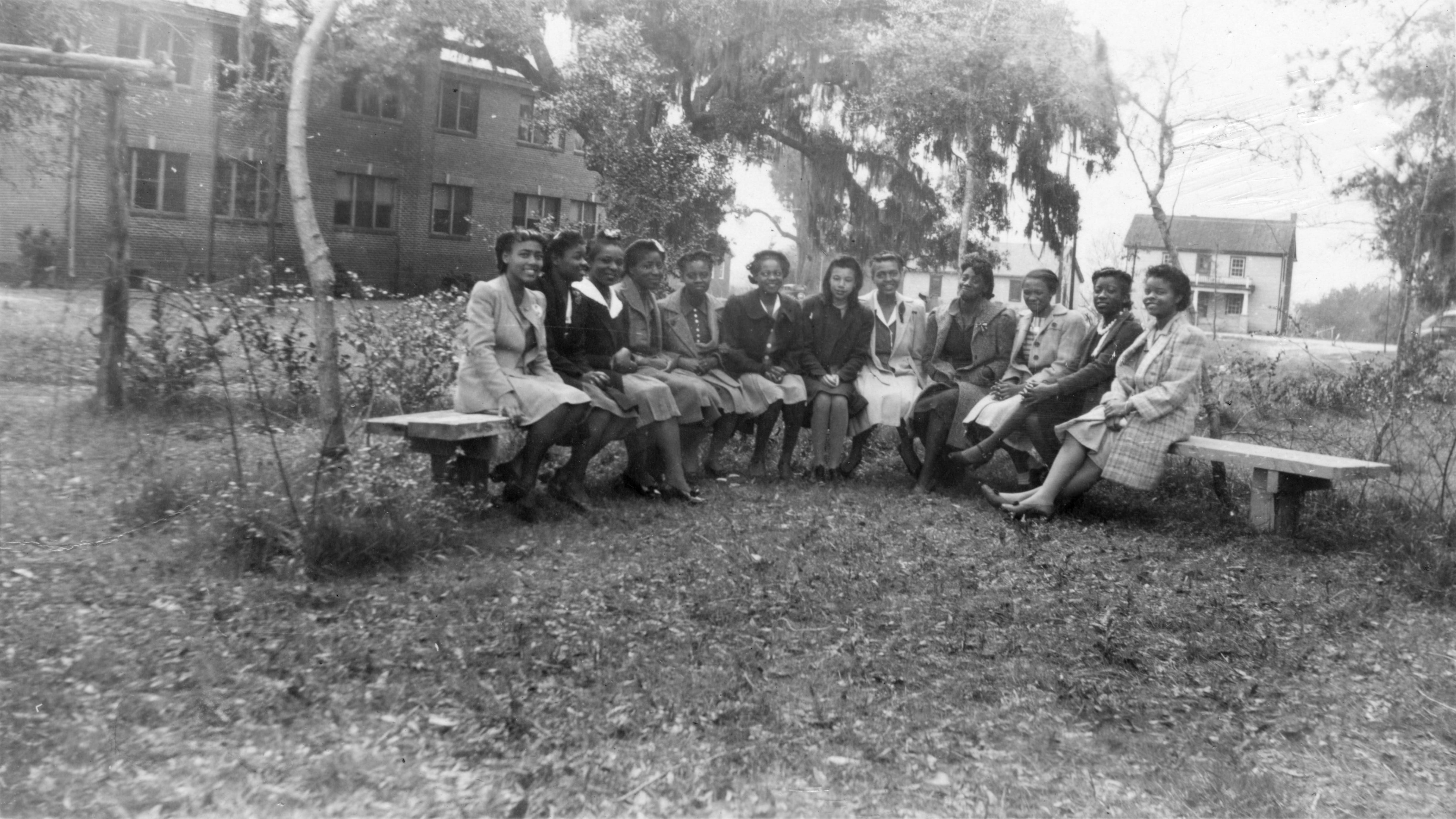
Some history: in the 1930’s, Neva first taught at South Carolina’s Mather School for Colored Girls, where some members of the community punished Neva and her family with the same discrimination they used on Neva’s Black students. (My mom recalled being treated as if invisible, not being allowed to use the white’s facilities.) This experience forever galvanized my mom and her family against the racism which they experienced firsthand.
Neva later taught at Arizona’s Orme Ranch School, Colorado Women’s College, and La Junta’s Otero College.
Then, Neva decided to get her PhD. I still don’t grasp her self-designed degree. She combined two of her favorite subjects: Shakespeare and something called General Semantics. Here’s the only thing I know about General Semantics: a guy named Korzybski published a book on General Semantics called Science and Sanity in 1933. The only catchphrase I know from his work is The map is not the territory. It has to do with how words are not the actual things they represent. I’m sure it’s deeper than that. There you go.
Neva had everything she needed for her PhD except for one class. But she was unable to finish statistics. As someone who loves statistics, I regard this as a tragedy.
Neva was not immune to family turmoil.
By then Neva’s older daughter, my Aunt Sharon, was showing signs of the schizophrenia that would keep Sharon mostly housebound for the rest of her sixty-plus years. Neva had her hands full with Sharon.
Neva was married, but had gotten tangled up romantically with someone she had worked for as a secretary. The Rev. Horace Westwood was an English Unitarian minister who was also married. Neva considered divorce at least a couple times, but ultimately reconsidered what she called an “impossible” situation.
In her public writings, Neva speaks with pride about her efforts to rededicate her marriage to Norvel Daniel. My grandfather Norvel was a complicated, cantankerous, and frequently hilarious Texan who shared Neva’s passion for literature and the arts. Norvel would end up teaching alongside Neva as well as working as a college administrator.
Neva never seemed bitter about not getting her PhD. I would have been bitter.
Finally, Neva became the very first professor at the new Colorado Mountain College. The first campus built was in Leadville, Colorado. Neva said the college almost didn’t survive the first couple years. Then, it took off. More campuses were built. After moving to Colorado’s Glenwood Springs campus, Neva become an Emeritus Professor of Humanities.
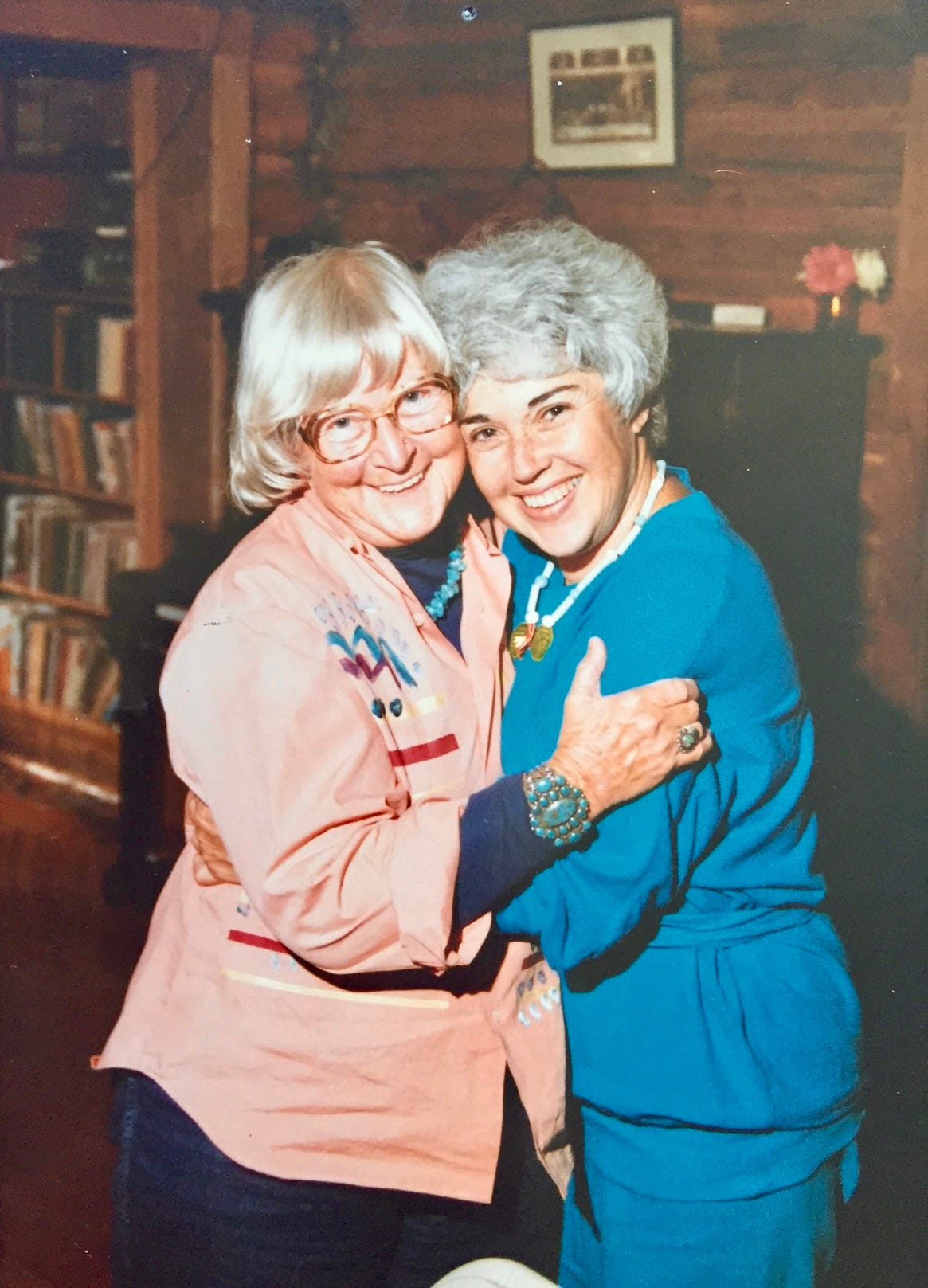
Neva was always getting captivated by some emerging idea. She would study the subject thoroughly. She’d fly across the country to meet the people responsible for those ideas. This included Judith Skutch (A Course in Miracles), Ira Progoff (Intensive Journaling), Angeles Arrien (The Fourfold Way) and Deepak Chopra. (This was before anyone had heard of Chopra, when Neva referred to him as “this young Indian fellow with exciting ideas.”) When Neva was 80 years old, she flew to Chicago to meet Eugene Gendlin so that she could teach his focusing technique.
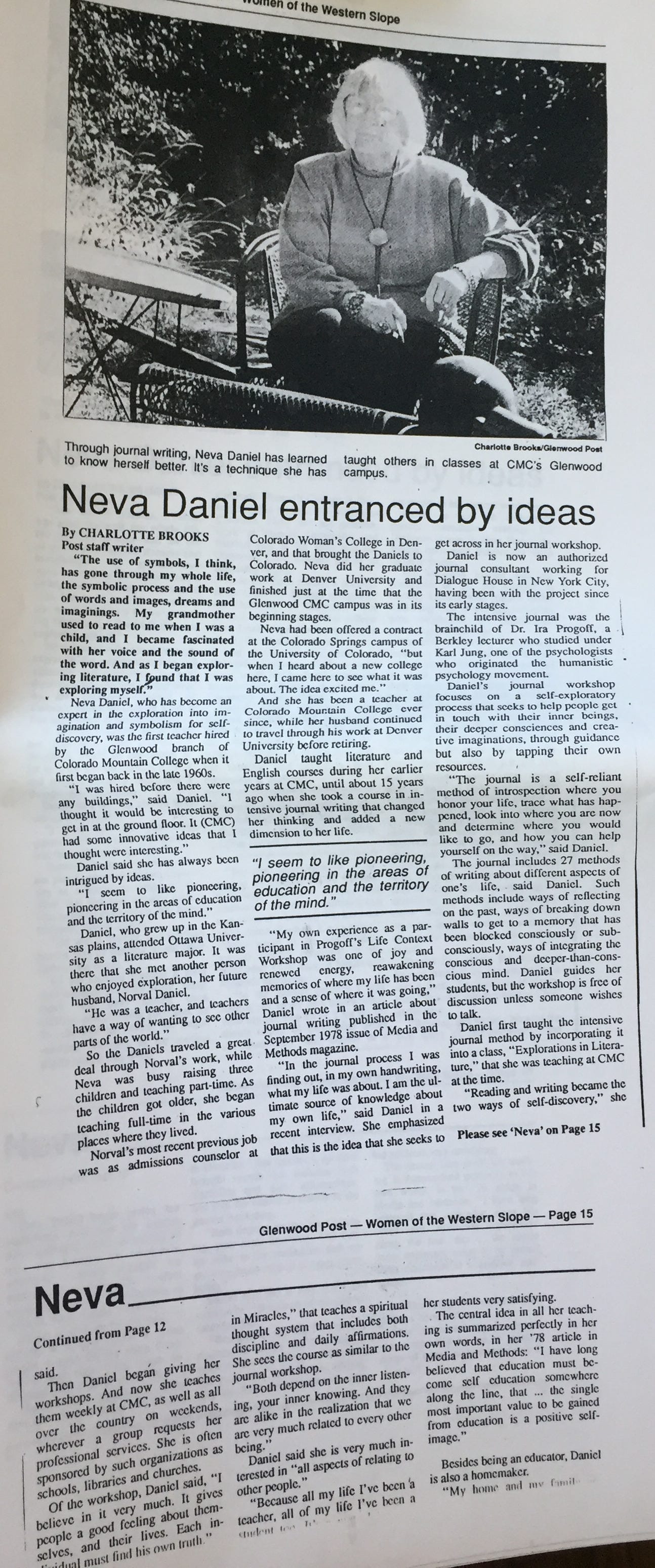
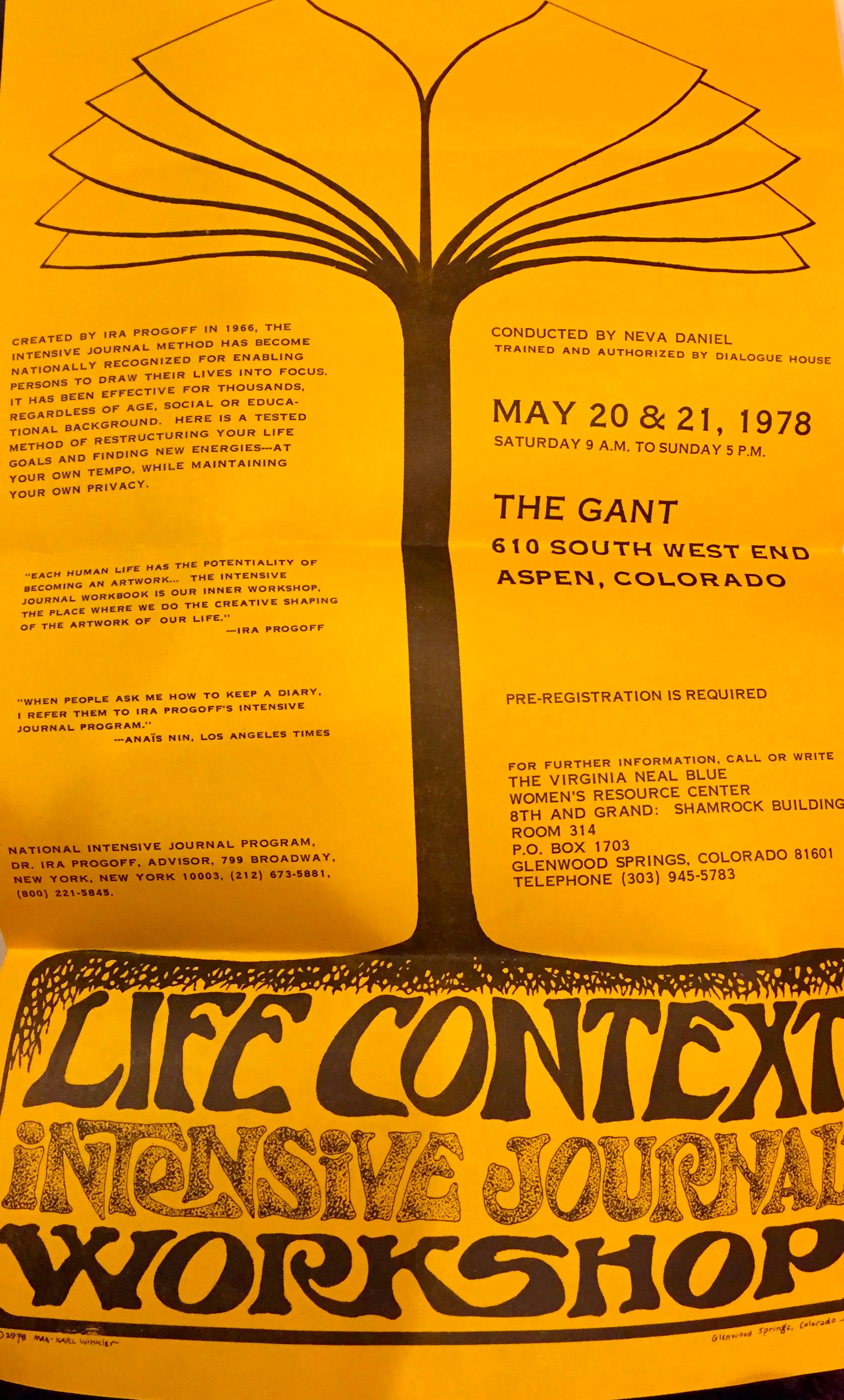
Then Neva would teach others what she had learned. Often, using Shakespeare. She gave A Course in Miracles workshops. She taught Gendlin’s Focusing. She taught people how to do Enneagrams.
Anything to do with symbols.
“Symbols form a bridge to your subconscious, where the truth lives,” Neva would say.
What Neva fell in love with in the 1960s was a journal writing technique taught by Jungian scholar Ira Progoff. She traveled to New York to meet Progoff and trained under him. She traveled around the country giving workshops on this writing technique.
Her favorite place to give these workshops, she claimed, was Tucson. She loved Tucson’s crisp desert light and would snap her fingers, saying, “Out here, the air just snaps.”
In the bookstore, I pick up one after the other of her Progoff texts and leaf through them, willing memories to somehow materialize through the pages. I even find some student’s notes inside. The notes suggest someone was planning a color-coded journal.
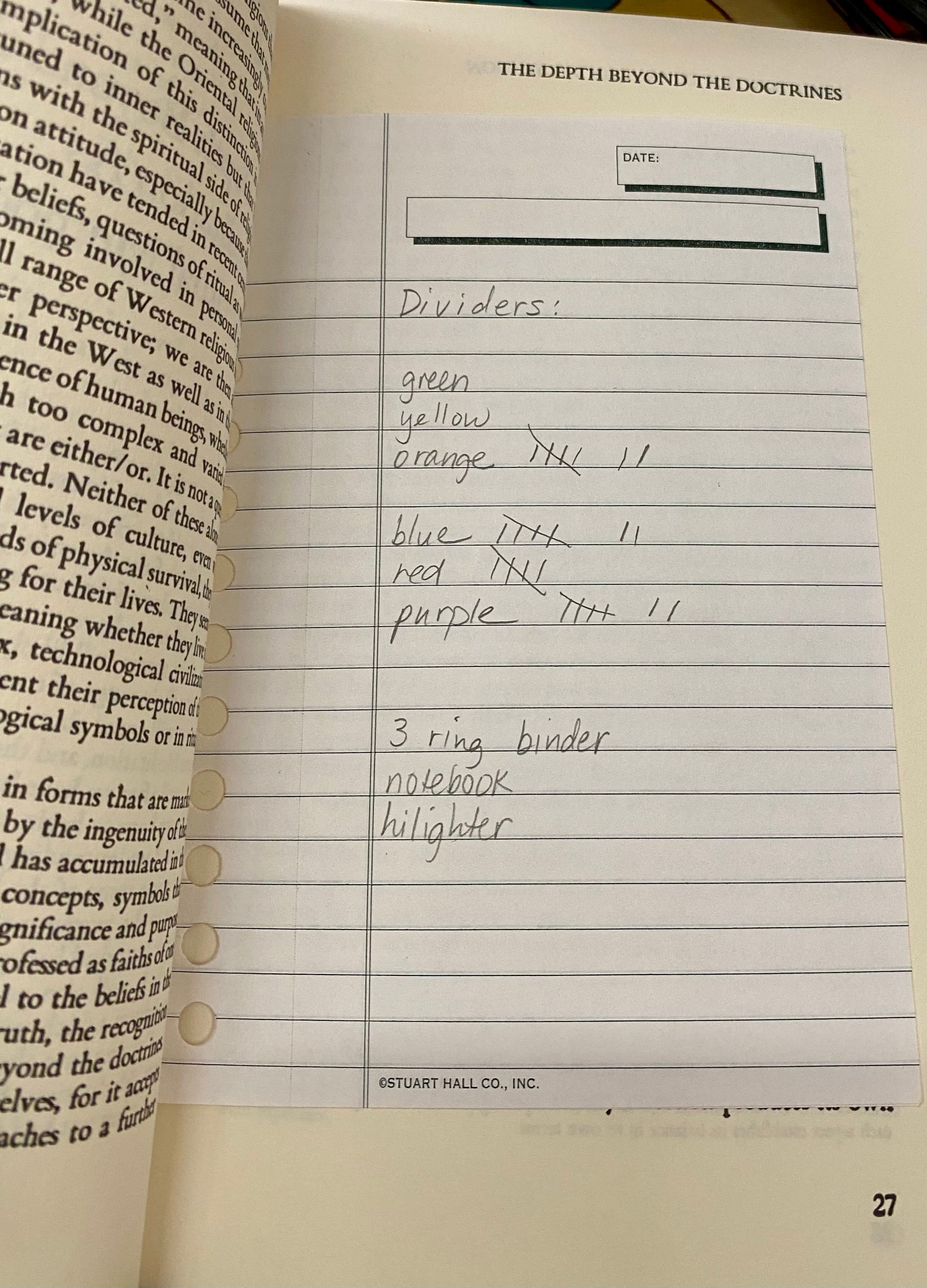
I don’t know how to bow to these ghosts of my ancestors. Since I’ve inherited Neva’s annotated collection of Progoff texts, I don’t need to buy more. Instead, I take pictures of her student’s notes on the pages and hold on to their energy that way.
Then, it hits me. I get goosebumps all over. Neva is the reason I am at the writers’ workshop.
That’s because Neva got captivated by another new idea. People dismissed this idea, but she persisted. She loved the idea that a community could hold an event called a Writers Conference.
Neva helped start the first writers conferences in Tucson. These began at Pima College. Long after Neva died in March 2000, these conferences grew and bloomed, finally morphing into this humongous Festival of Books, now at the much larger University of Arizona.
What I am there, in fact, to experience for the first time ever.
Let me back up.
A year ago, I determined to meet a longtime friend of my grandmother’s. I had seen the name Meg Files in my grandmother’s journals. Also, I knew that Meg had written this amazing poem about my grandmother. I loved Meg’s Sketches of Neva so much that I had put it to music.
I found Meg, as people do these days, through Facebook, and learned she now lives in Tucson. Here is what the Internet says about Meg:

Meg Files is a writer and a teacher. Her books include the novels Meridian 144 and The Third Law of Motion, Home Is the Hunter and Other Stories, The Love Hunter and Other Poems, Lit Blue Sky Falling, A Hollow, Muscular Organ, The Beasts, and Writing What You Know, a book about using personal experience and taking risks in writing. She taught at Pima Community College for 30 years, where she chaired the English and Journalism Department and directed the Pima Writers’ Workshop. She directs the Tucson Festival of Books Literary Awards and Masters Workshop.
What’s weird is I actually have Meg’s first book, Meridian 144. It’s been sitting on my bookshelf for about 30 years. I didn’t realize it had any connection to my grandmother or to Meg. I love sci-fi, so I misremembered that it was just one of many sci-fi books I’d picked from a free book pile or sale.
I had a vague half-memory that after my grandmother died, I might have taken the book from one of Neva’s many gigantic bookshelves, as the family was all being encouraged to remove things from Neva’s home, which everyone called Dulce Domum, before it was sold. That must be how I got it.
Last year, I felt a jolt as the author’s name on the spine came into focus. Wait, Meg Files! I knew that name!
I had just been archiving my grandmother’s writings. Meg wrote that amazing poem for Neva. My heart raced. I opened the book and to my amazement, a letter to Neva fell out of it. In this letter, Meg was writing to her friend Neva about her excitement that her book was finally published.
I knew I had to contact Meg. I could give her this letter back, for one thing. Meg responded graciously and suggested that we meet and share stories about Neva.
Meg had taught alongside Neva at Colorado Mountain College, and like many, adored my grandmother’s playful and curious personality. Meg was one of many who called Neva Yoda. Meg and Neva had worked together to create Tucson’s first writers’ conferences, and Meg has been running the associated Masters Workshop, she told me, for the past fourteen years.
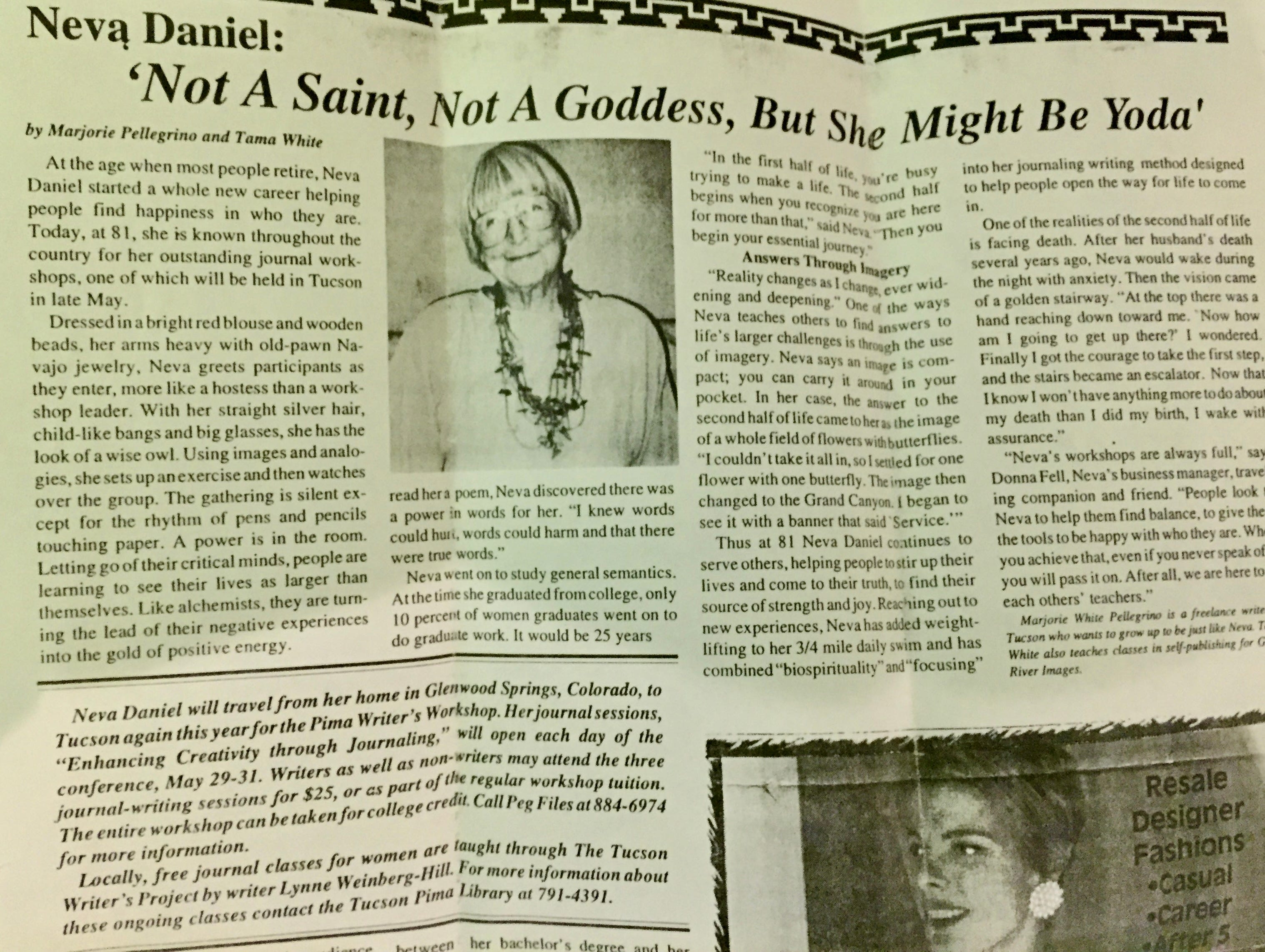
So, last year, on our annual trip to Tucson, Meg and I made plans to meet.
Meg seemed just as excited as I was to meet. Over a beautiful, outdoor lunch surrounded by colorful gardens, we shared tales of Neva. How Neva loved gardening. Roses. Baking desserts. I’ll never forget how, on one visit to her home, Neva hung her head and regretfully sighed, saying dramatically, “I’m afraid all I have to serve you is cookies, a pie, a cake, and some brownies.”
And then there was all the snakes! Neva’s home was filled with snake figurines. In a powerful dream, snakes had given Neva the message that no matter how society might regard you, you should learn who you are—perhaps through journaling—and courageously live your truth regardless of what society thought. Even if you might be a bit snake-like.
Here’s a funny story Meg told me, and typical of Neva’s playful personality.
Neva’s students would drive her back and forth from Colorado to Arizona so she could give her workshops. Along the way, at every restaurant, Neva would announce, “It’s my eightieth birthday!”
Everyone made a fuss and the servers rewarded her with free dessert. It wasn’t her birthday.
Meg also told me that, in the 70s, when she and Neva asked around about starting the first writers conferences, they were told that writers conferences were a fluke and wouldn’t really go anywhere. Sure, they were told. Go ahead, try it, why not.
The way Meg tells this story, it sounds like they were being patted on the head and treated with some condescension. They tried it.
When the first writer’s workshops got underway in Tucson, Neva taught alongside this new writer that captivated her. She loved her personality and her writings so much that she mailed me an autographed debut novel.
I was preoccupied and working away in graduate school in Salt Lake, but I found the time to read the book. I liked it so much I bought copies for my lab mates. It was The Bean Trees, by Barbara Kingsolver. I wish I could go back and time to tell Neva that Kingsolver would later get a Pulitzer for Demon Copperhead. If only Neva had lived to read that one, too.
Last year, as Meg and I were finishing our lunch and our stories, Meg suggested that I enter a writing contest associated with this Tucson Festival of Books.
I almost didn’t do this. At the last minute, I submitted The Colors of Losing My Mom, a piece about caregiving for my mother. I had no idea this piece would win me a place in the Festival’s Masters’ Workshop.
I wish I could tell Neva. Hey, look what you started. Look where I am now.
Here’s a Neva’s quote:
“Look beyond what appears to be, and fate will bring Synchronicity.”
[Next: Part 4: The night before the Festival of Books]
Comments
Nothing yet. Say the first thing.
Sign in to join the conversation.