
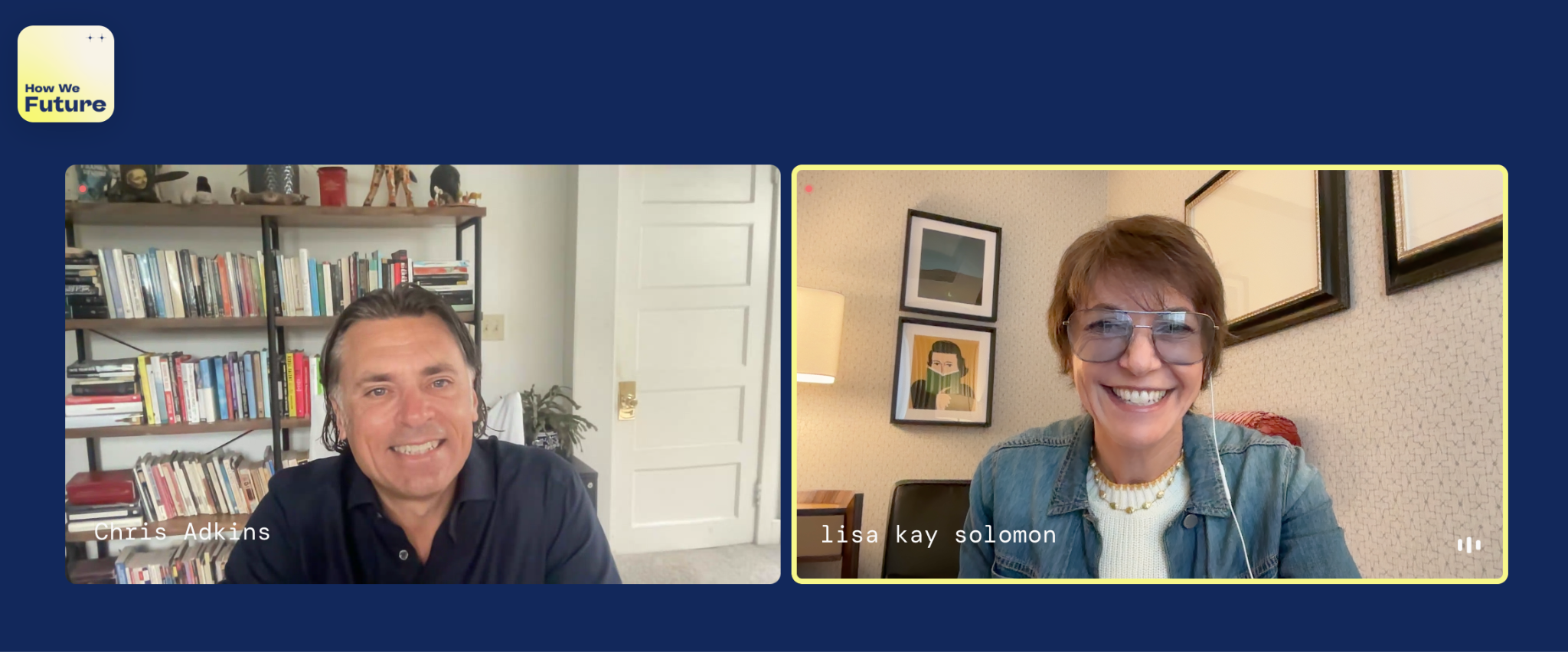
Continuing the theme of big ideas for this season, this week’s guest on How We Future is Chris Adkins focusing on the science and leadership of empathy.
Chris and I met over a decade ago at a leadership conference for Chief Learning Officers and have been nerding out about leadership ever since. I remember our first long conversation going deep about Adam Grant’s breakout hit, Give and Take (still one of my all time faves) and comparing notes on experiential learning approaches in our classrooms.
Every conversation with Chris is both a neuroscience and social science learning adventure. And, importantly, he openly shares his own personal experiences of becoming a more effective leader which makes his approach that much more human and impactful.
Often my favorite moments are when Chris goes to what he calls “Latin-town,” where he describes the linguistic origins of foundational words to help us understand their meaning in a much deeper and informative way. For example, did you know that the word Attention comes from the Latin word attendare (to stretch) + at (towards) and translates to “what we stretch towards?” And the word Intention is the counterpart of attention and means what “we to stretch into.” I find that history both fascinating and instructive.
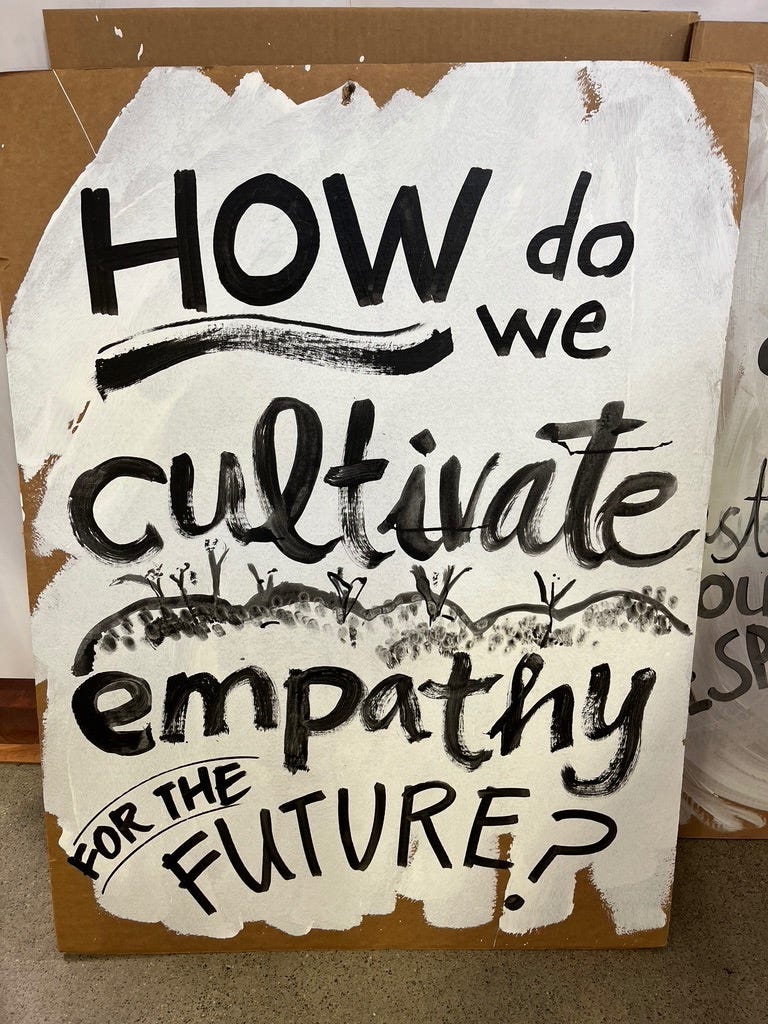
Here are a few of my favorite lessons from our conversation:
What is empathy, really?
Empathy is one of those words that gets tossed around a lot, often being used interchangeably with similar concepts like sympathy or compassion.
Chris defines empathy as the ability to “stand under another person’s experience.”
Our brains process empathy in three distinct ways, each wired differently:
Cognitive empathy: Understanding what someone is thinking
Affective empathy: Understanding how they’re feeling
Motivational empathy: Understanding what they actually want
Most of us default to one aspect, trying to understand someone’s perspective through logic or emotion.
But deep empathy requires getting curious about all three, which takes time and intention. Chris calls this “intentional attention.”
Sounds simple, but it takes a lot of self-awareness, humility, and importantly slowing down.
Can we learn to be more empathetic?
Chris teaches his students specific practices: mirroring (playing back what you see), mentalizing (imagining what someone might feel), perspective-taking (stepping into someone’s shoes). Students will often try these new practices in pairs or trios to develop competence and confidence in applied empathy.
Chris also emphasizes a simple but powerful sequence: pause, reflect, connect. It sounds obvious until you realize how rarely we actually do it. All too often we move from meeting to meeting, conversation to conversation, without really thinking about the experience of the other people in the room.
Chris and I talked about how brains are wired for social connection - both positive ones, like when we laugh together and share special moments, and bad ones, like when we feel threatened by unwelcome changes and surprises. It’s another reminder that taking a few minutes at the end of the day to connect with someone at a human level can be the most important outreach we do.
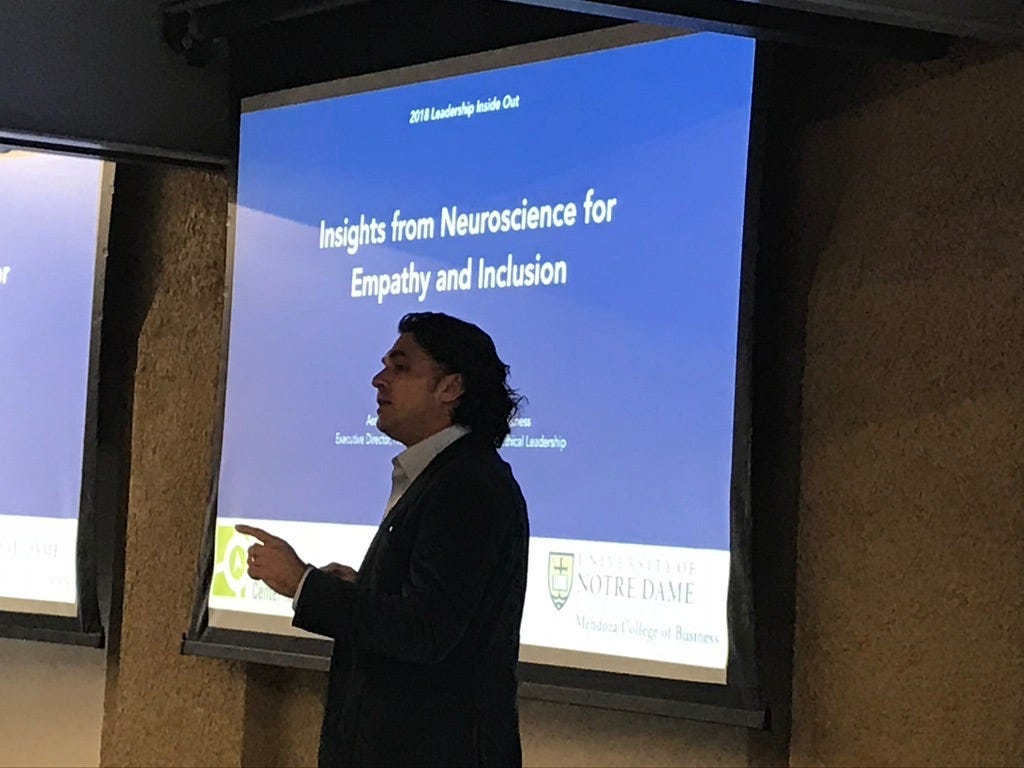
Empathy, like many of the themes we’ve explored this season, is not a fixed trait. We can get better at empathy by practicing it. Starting with ourselves.
Chris shared how he gets into an empathetic mindset every day before he teaches. He does something called the arrival sequence.
He puts on the same song (one that stills him). He looks at Notre Dame’s golden dome. Then he thinks of three leaders who changed his life—his high school soccer coach, his best boss (now passed), and his best academic mentor. He goes back to how they showed up and how that made him feel. He steals their moves.
It takes two minutes. And it helps him get present in the moment.
You can design your own arrival sequence. A song, a memory, a photo of someone who believed in you. This practice helps you arrive as your best self for the people you’re about to be with, not just wander in.
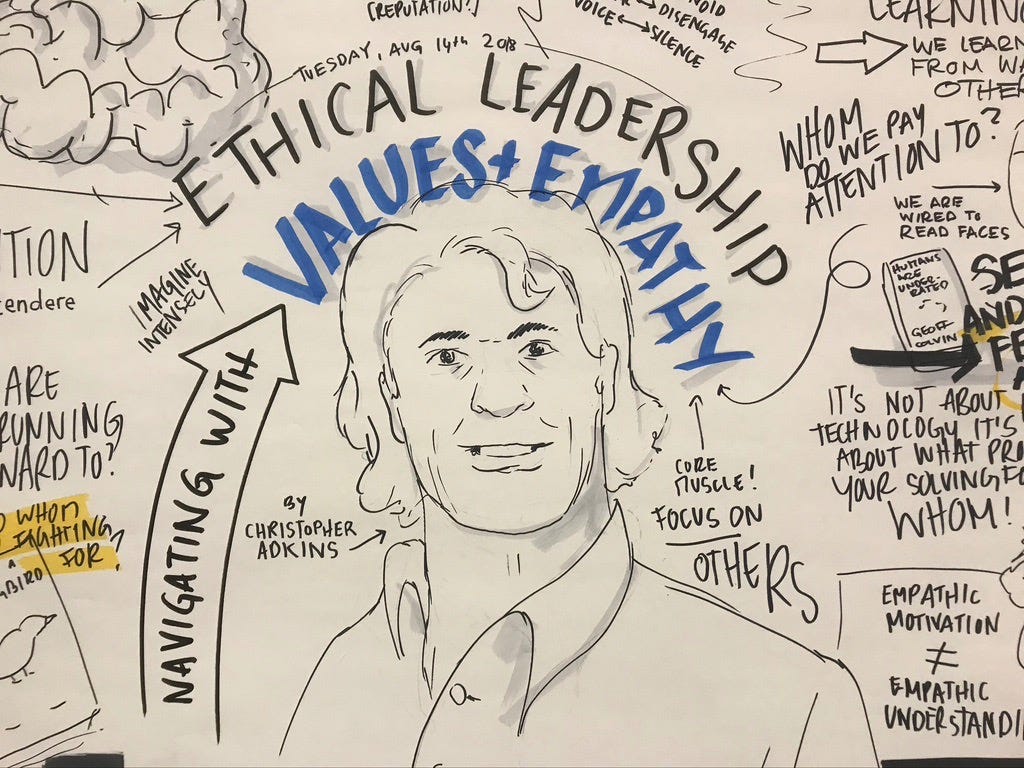
In a world demanding more speed and more screens, the discerning empathy Chris is advocating for – exploring cognitive + affective + motivational empathy —is exactly what we can’t automate or outsource. It’s not a soft skill; it’s a rigorous daily practice.
You don’t need to overhaul your life to start. You just need to live in the moment, ask follow-up questions, and listen to others. Listen to the full episode to hear more about how to hone your empathy skills and connect more deeply.
Want to contact us? Email hello@howwefuture.com
No posts
Comments
Nothing yet. Say the first thing.
Sign in to join the conversation.