
Welcome to How To Speak Data!
In this newsletter:
Books I recommend
Details about:
“Why we’re building Ridge AI”: Episode 6 of The AI Analyst with Ellie Fields. She’s going to explain why she’s focusing on embedded analytics with her new company.
Chart Chat #72: “`Show and Tell”. We’re going to each share a recent project, describing the ups and downs along the way.
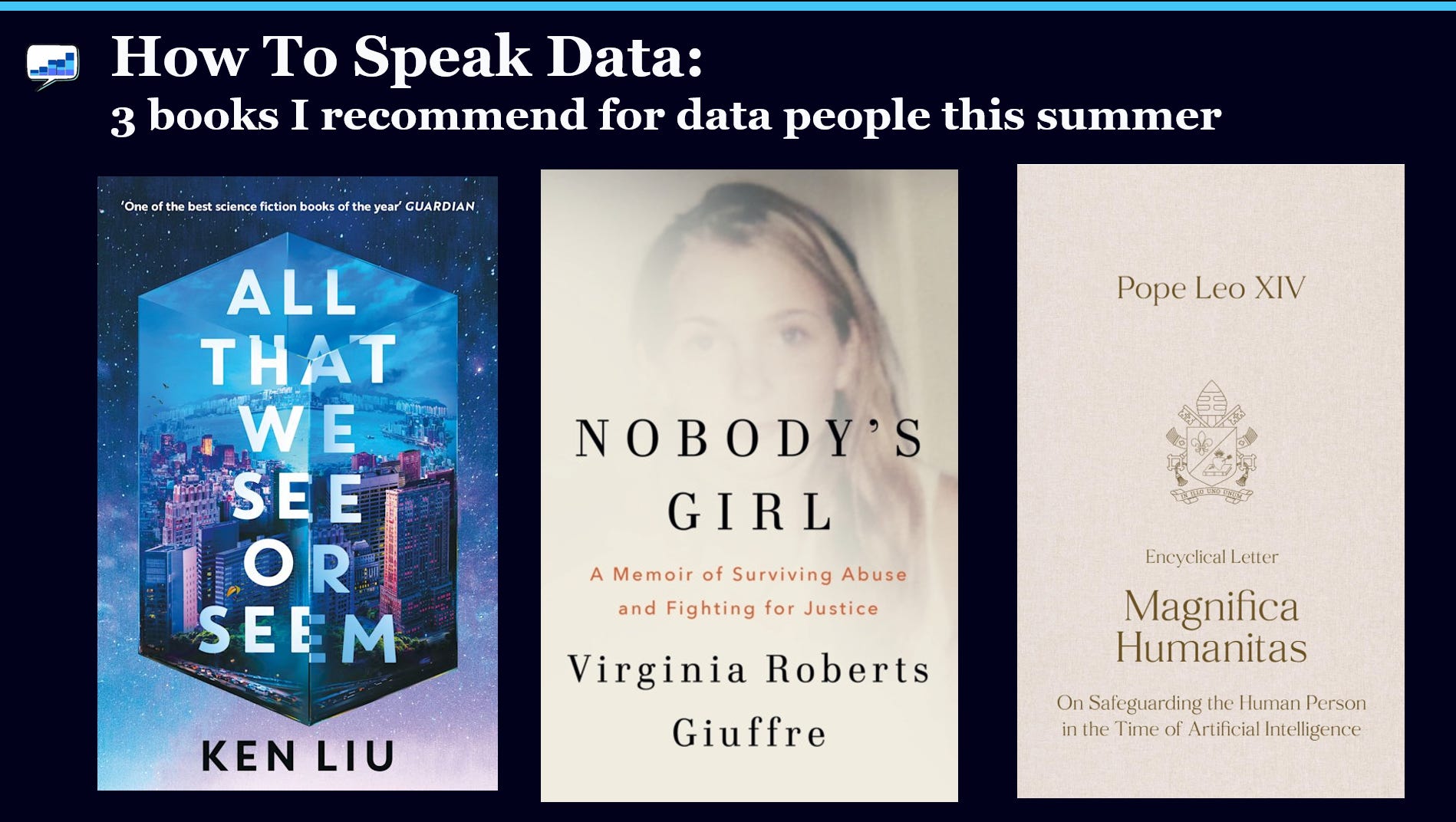
I’ve written many posts over the years recommending data-adjacent books. I enjoy hearing from people who go on to read them and the recommendations you send me; I’ve discovered many a great book thanks to you.
My summer 26 list (below) might seem to push the boundaries of being “data adjacent.” They all belong to a theme that everyone connected to the technology industry must consider: power and inequality.
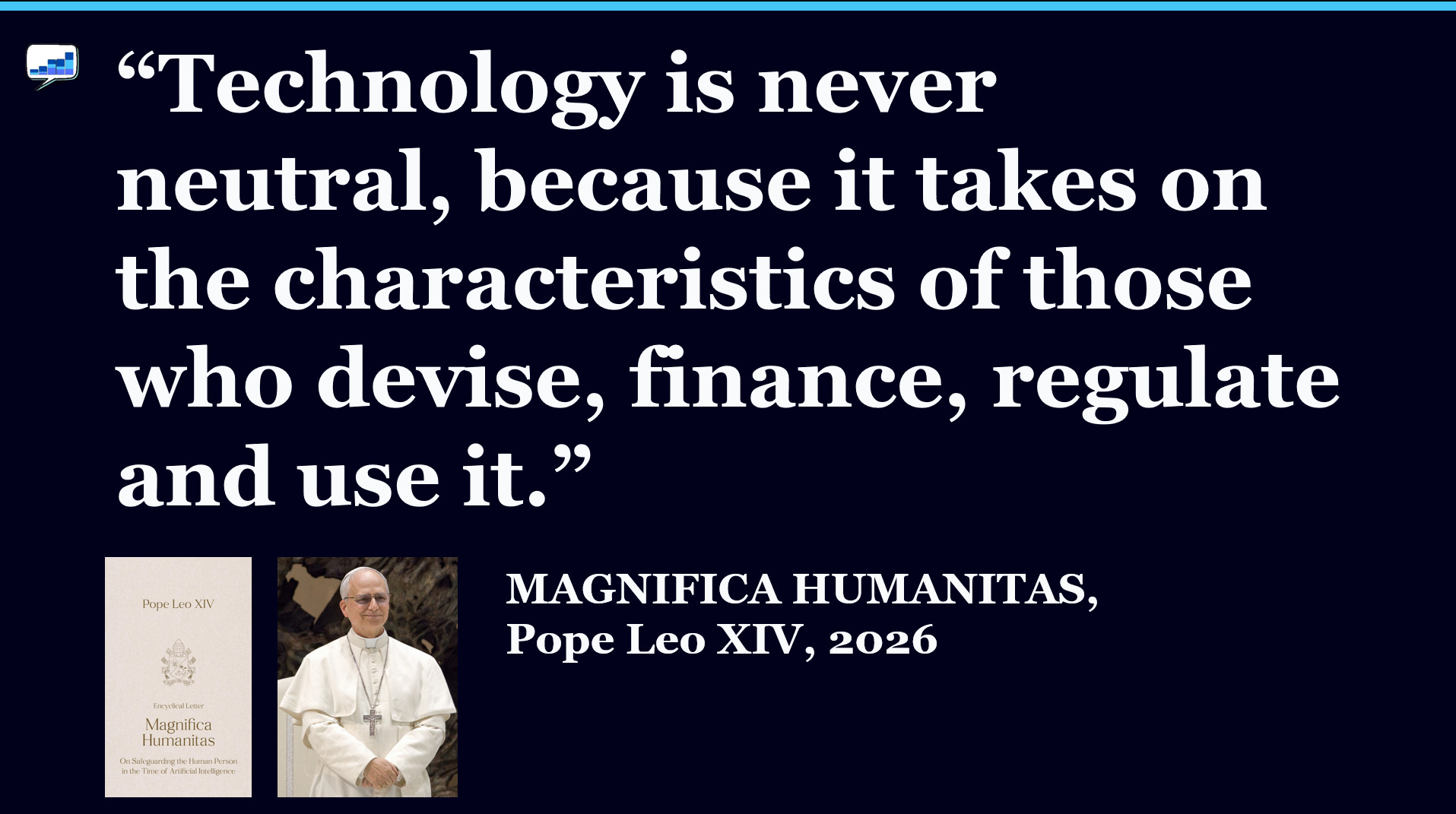
You’ve probably read many other people’s takes on the Pope’s encyclical on AI. You might have even popped the URL into a chatbot and asked for a summary.
I decided to sit on my back deck and read it. I recommend you do too. An AI summary will not get close to capturing the clarity and depth of this important AI assessment. [FYI, at 47,000 words, it’s half the length of To Kill A Mockingbird].
“When such power is concentrated in the hands of a few, it tends to become opaque and evade public oversight, increasing the risk of distorted forms of development that give rise to new dependencies, exclusions, manipulations and inequalities.” (paragraph 95, Magnifica Humanitas)
The encyclical is, among many things, a statement against the centralisation of power.
It’s in favour of a more communal sharing world.
It’s against a restriction of people’s rights, opportunities, status, and freedom.
It’s in favour of regulation that works for all, not the few.
I am all in favour of the Pope’s viewpoints. I continue to use AI and work with it, but as I have written before, I despise a great deal of Big Tech’s theft from us: of our knowledge, of our natural resources, and of our attention. The encyclical is a worthwhile counter to the flood of pro-AI slop.
[Note: I see irony in this recommendation. The Pope is right to call out the problems of centralised power, but the Catholic Church is hardly innocent of these problems. Take your pick from the exclusion of women, cover-ups of child abuse, banking scandals, etc.]

Why is this book in a list of books for data people? Everyone should read it. All should bear witness to the abuse perpetuated by Epstein, his associates, and his enablers. For that reason alone, I include it.
Words I write here can’t convey the horror of reading the abuse Giuffre suffered. It’s a tough book to read. But reading it is nothing compared to what Giuffre went through during the periods of abuse, and after, as she fought for justice.
Sticking to the theme of this newsletter, her book also overlaps with themes that the Pope writes about: power corrupts.
If we’re to work in the data industry and make use of AI tools, we are part of a machine that supports the collection of great wealth and power.
Reading this book forces me to confront the real-world consequences of unchecked power. I highly recommend this.
Want some fiction to lighten the load? Well, this is a near-future dystopian sci-fi novel, so you’re still going to be challenged. In this book, Julia, a young hacker, follows the trail of Elli. Elli is an “oenirofex”, a dream artist, who weaves an audience’s dreams together through a shared landscape.
Do I recommend this for the plotting and the language? No. The twists and turns are clunkier than a Dan Brown novel. The dialogue is bad. And there are caldera-sized plot holes.
But that’s no problem. Partly because Dan Brown novels are fun, so why can’t this one be a romp, too?
The sci-fi in the book is excellent. We’re taken to some time in the future. It feels like it’s set only 4 or 5 years ahead of today. AI has taken over, people have withdrawn into talking to their own agents, and surveillance is inescapable.
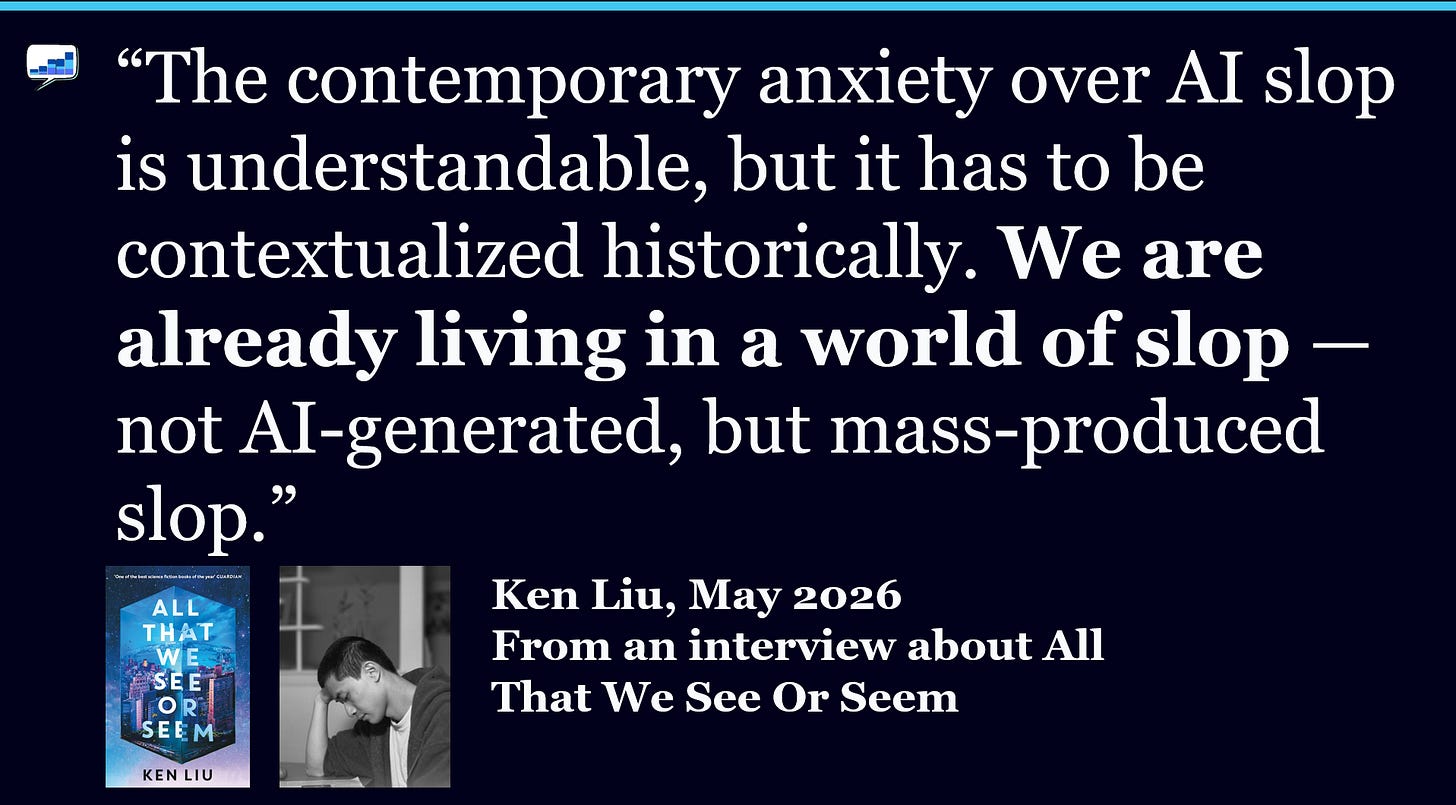
Before becoming a full-time writer, Liu was a software engineer and a corporate lawyer. As my personal interests increasingly focus on the impact of tech on society, his meta-commentary on the topic resonates with me. He also explains in this interview that he tries to remain neutral as an author and let the reader draw their own conclusions.
That’s my list - if you’ve read any of those, let me know your thoughts. If not, what have you been reading this year that’s been useful for all of us in the data world?
Before you leave:
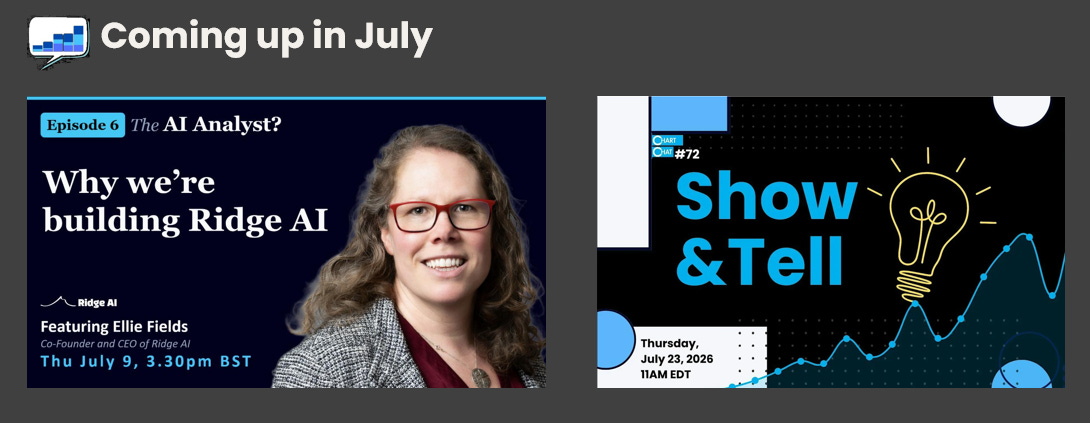
Do sign up for “Why we’re building Ridge AI” on my next episode of “The AI Analyst?” with Ellie Fields.
Further ahead, it’s Chart Chat 72 on July 23rd. We’re all going to share some recent projects, along with the highs and lows of each. I’ll be sharing my Add To Playlist explorer (a work in progress you can see here)
No posts
Comments
Nothing yet. Say the first thing.
Sign in to join the conversation.