
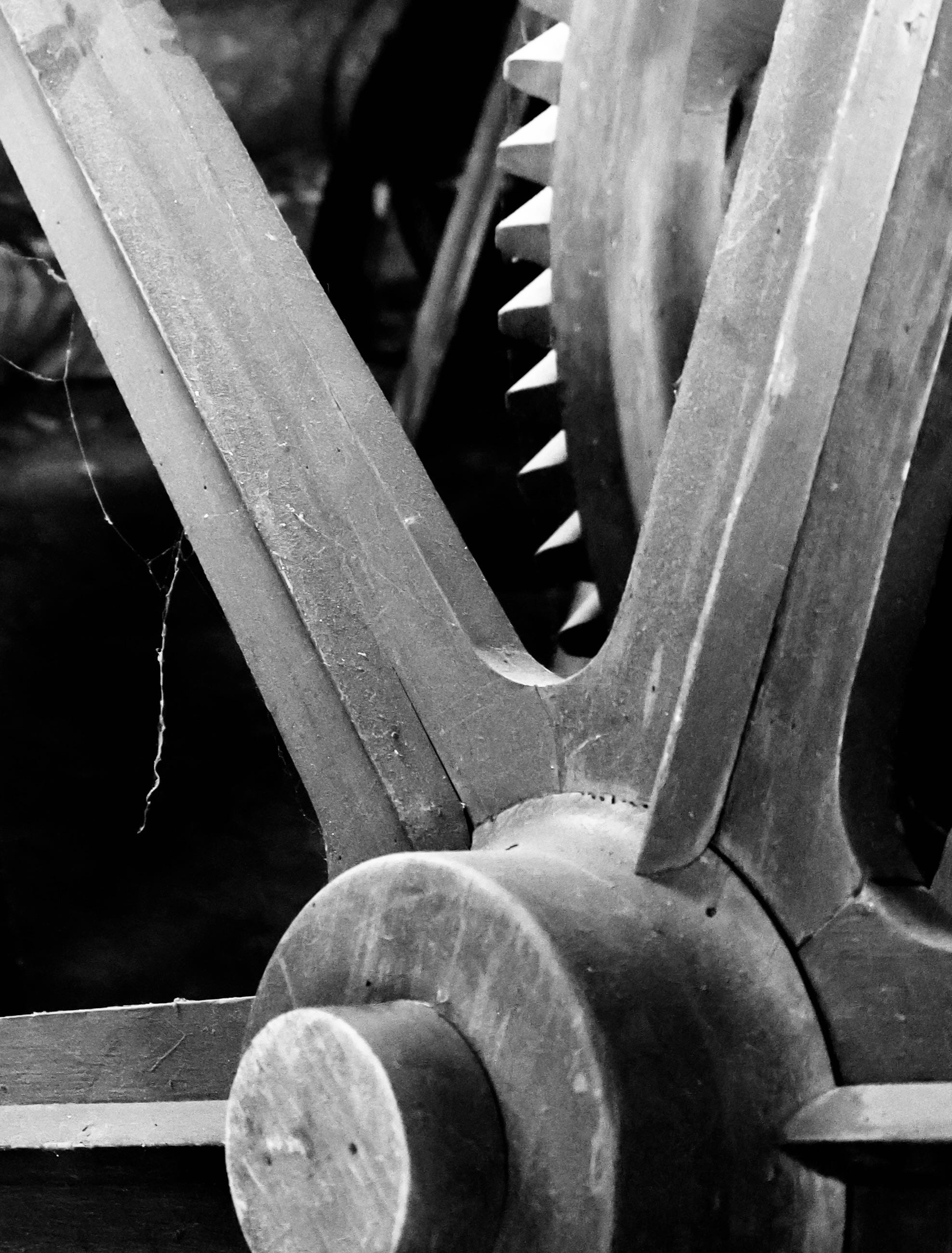
Part of May Woolsey’s story depends on understanding why and how her family came to California around 1859. Luther Woolsey came for a job as machinist and a pattern maker, and as I didn’t know what a pattern maker was (and is), I had to find out. Paul Helman, a historian with the CA Railroad Museum, suggested I visit a living history site, Knight’s Foundry (1873) in Sutter Creek.
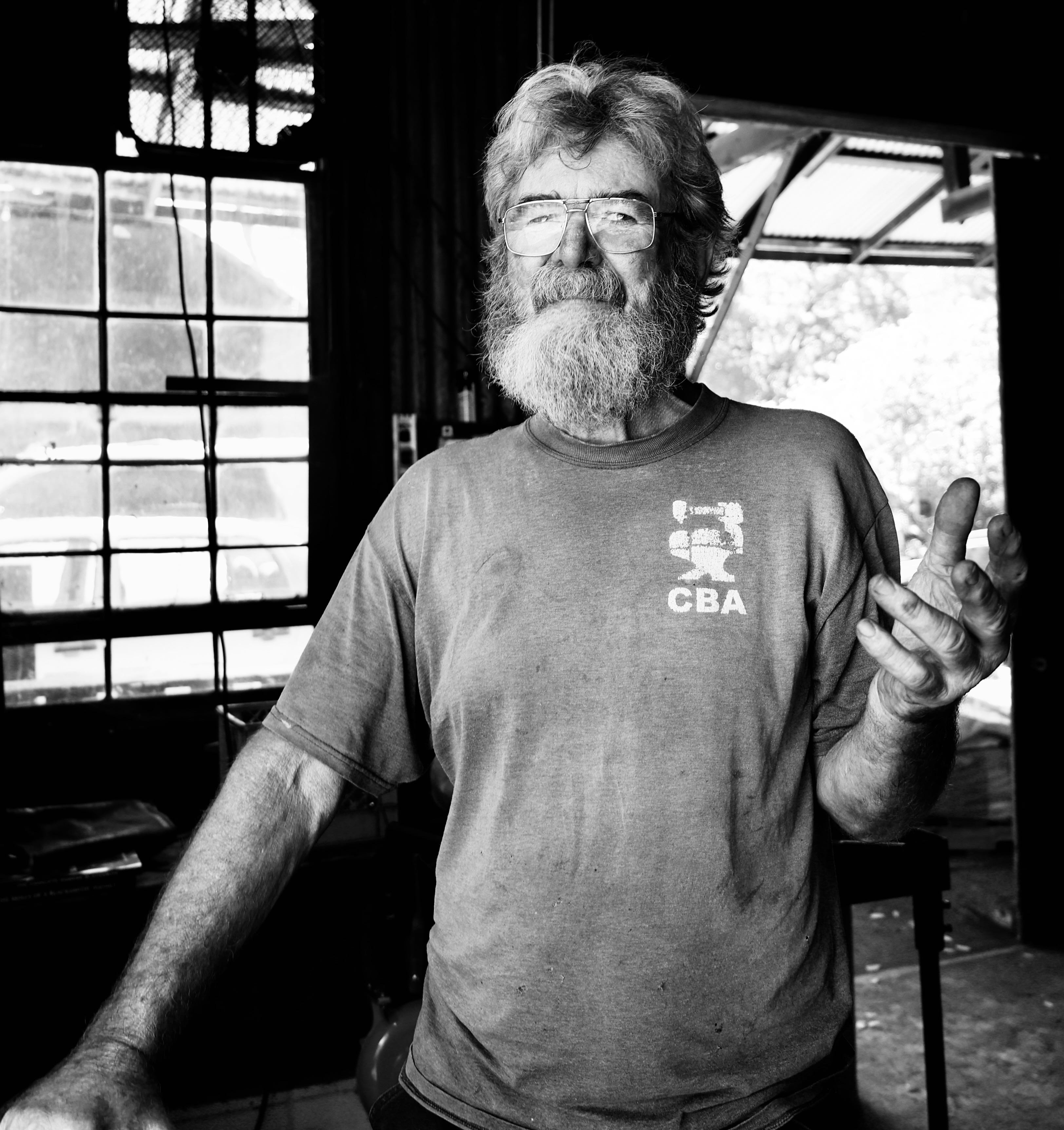
I arrived at the Foundry as it opened, hoping to avoid other visitors who, I freely admit, are annoying when they get in my shot. It was a perfect day, and it’d been years since I’d driven those Gold Country roads, full of vistas and old gold mines. Starting at the blacksmith’s shop, I peppered a volunteer docent named Erik Lander with so many questions that he gave up and offered me a personal tour.
Luther Smith Woolsey was born in New York State in 1829, near Syracuse. The record of his family is one of the artifacts in May’s trunk. His ancestors came to New Amsterdam (NYC) from England in 1623. He was one of 14 children.
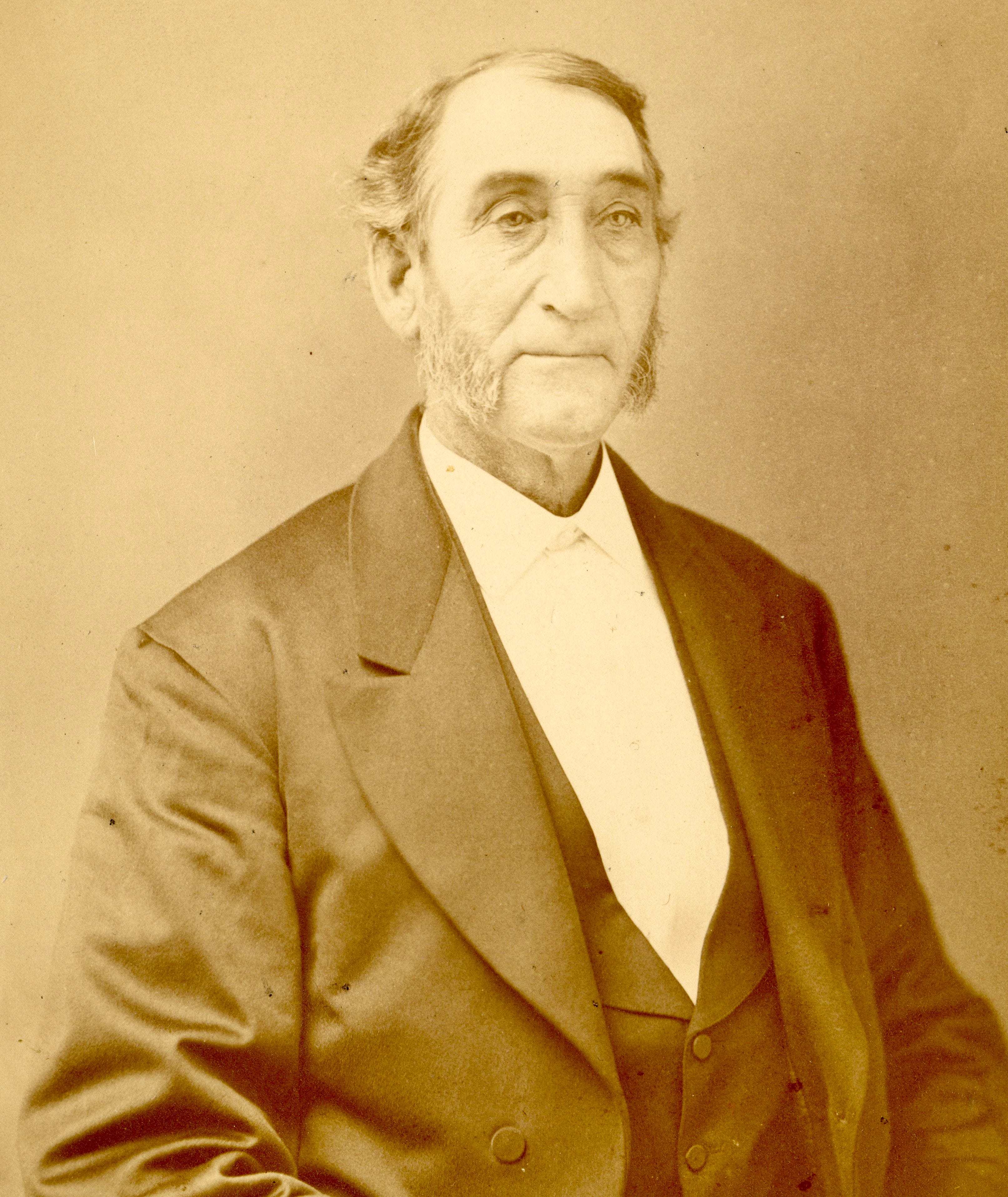
Luther (1832-1895) and Mary Ester Woolsey arrived in Sacramento about 1864 and bought their first house. I wondered how a machinist could afford to buy the houses they lived in, but the docents said that patter makers were the highest paid workers, other than foundry managers. They had a comfortable middle-class and socially connected life in Sacramento.
Luther worked for Pacific Foundry, then as a pattern maker for Miners Foundry in San Francisco. He started as a machinist at the Saccramento Iron Works, and from 1869-1903, a pattern maker for the Central and Southern Pacific at the railroad shops in Sacramento. The Woolseys left Sacramento around 1869, and moved back to Sacramento around 1875.
Besides meeting Erik, I was again lucky; a docent at the pattern making area was actually a pattern maker. Let’s use a term that I’m more familiar with as a ceramic artist: a positive form from which to make a mold, and from the mold, a negative form, then reproductions. Back then, patterns were made from wood, precisely created by hand. From engineering drawings to a pattern, mold making to metal pours, this foundry served a global market for all sorts of machines.
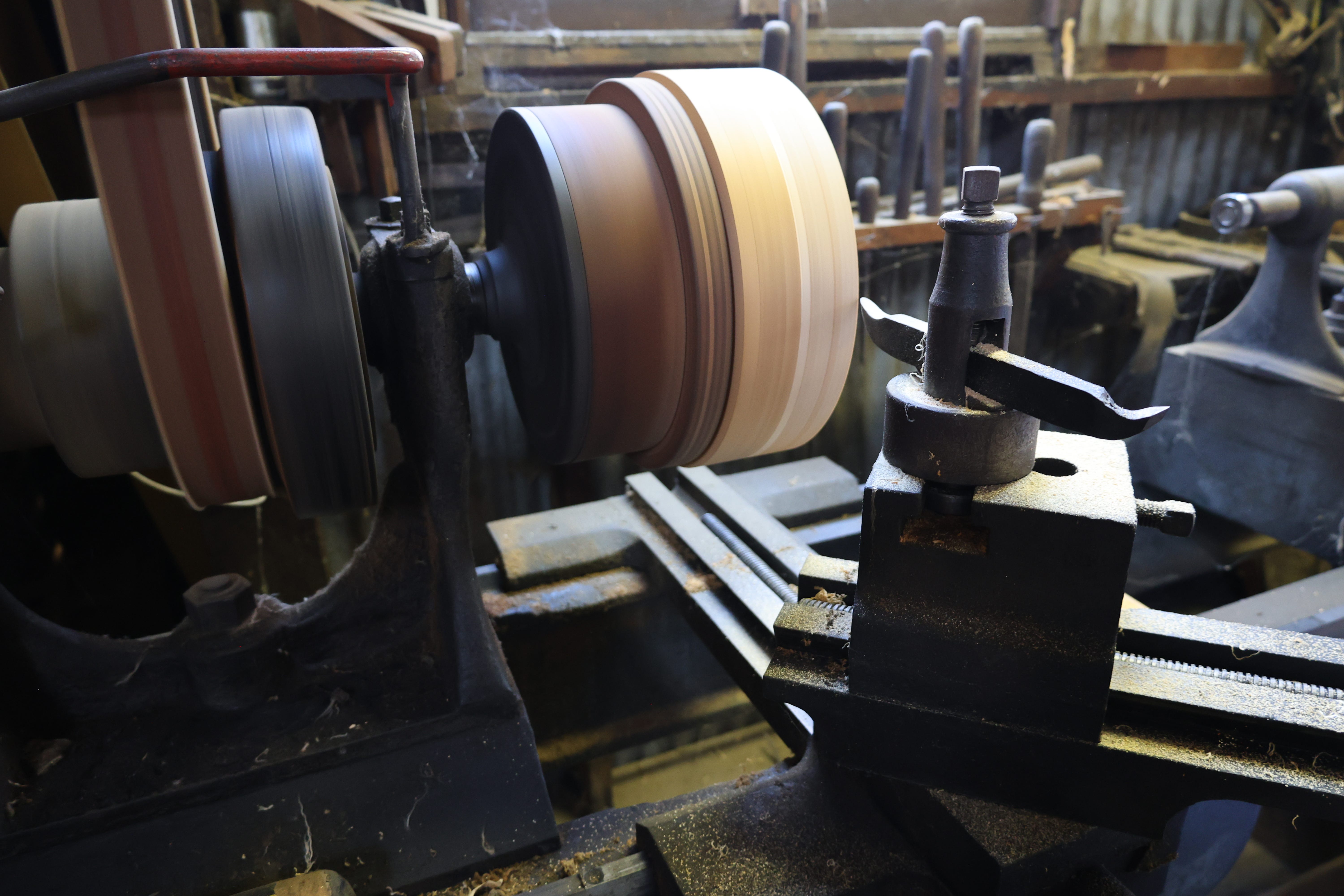
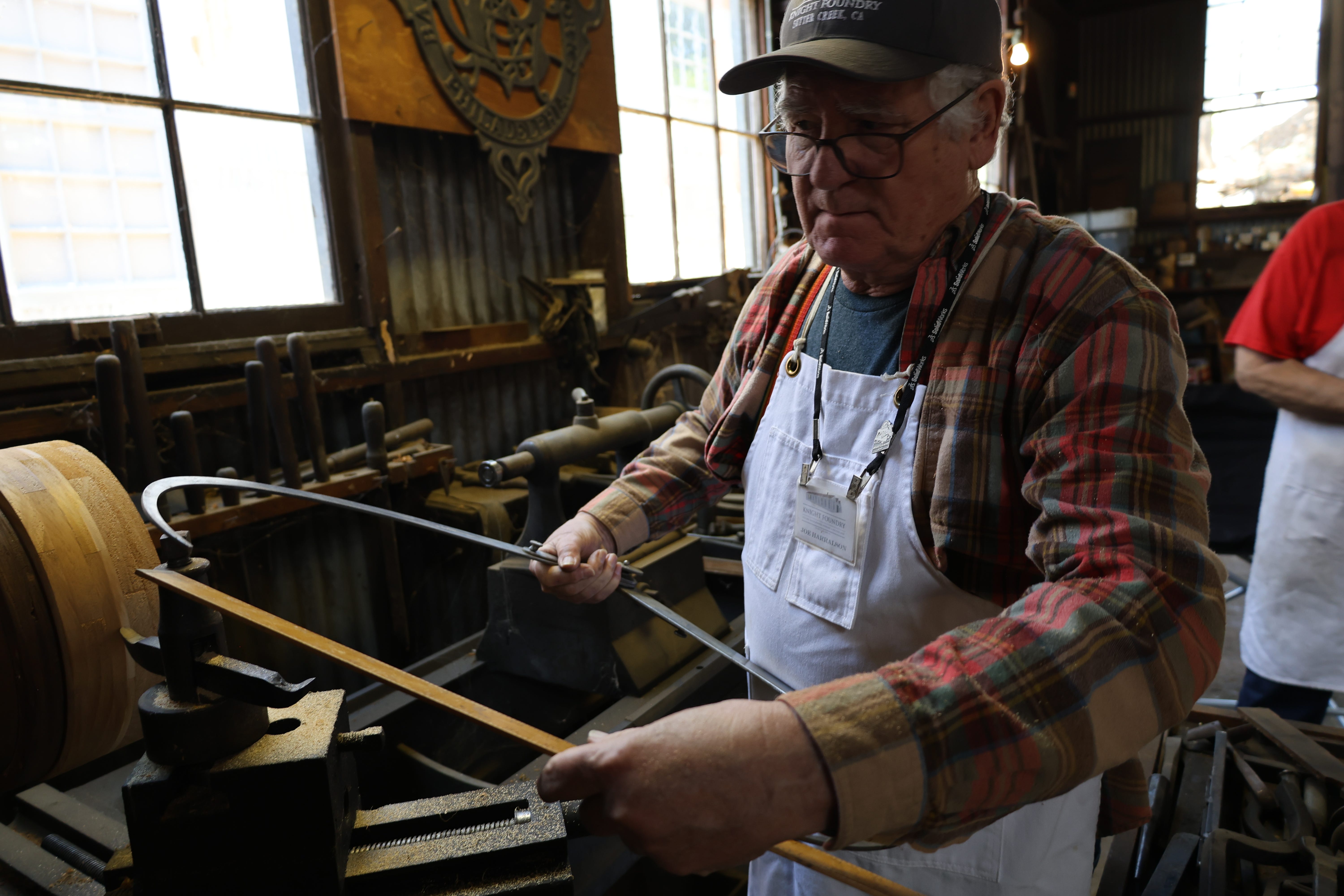
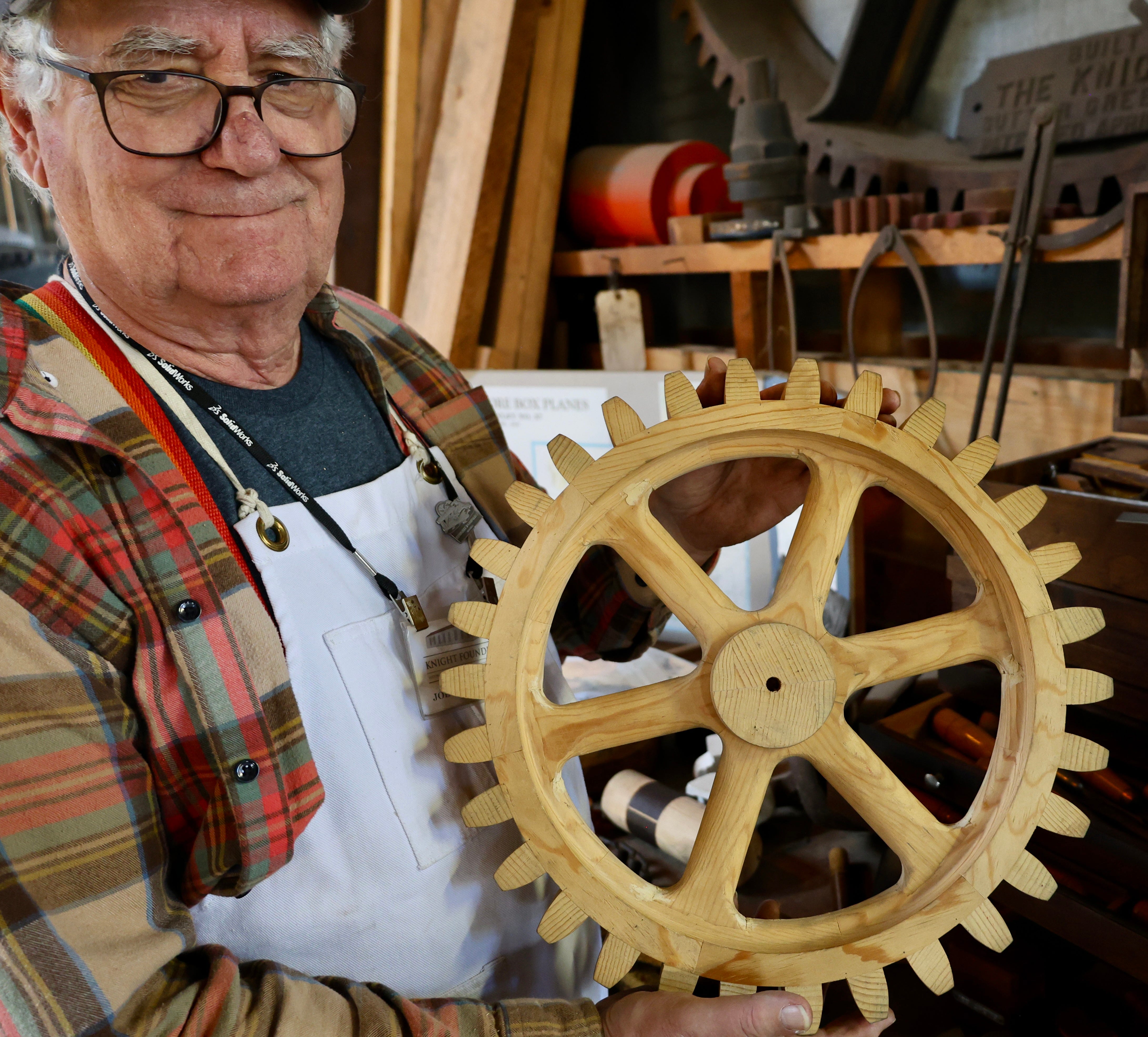
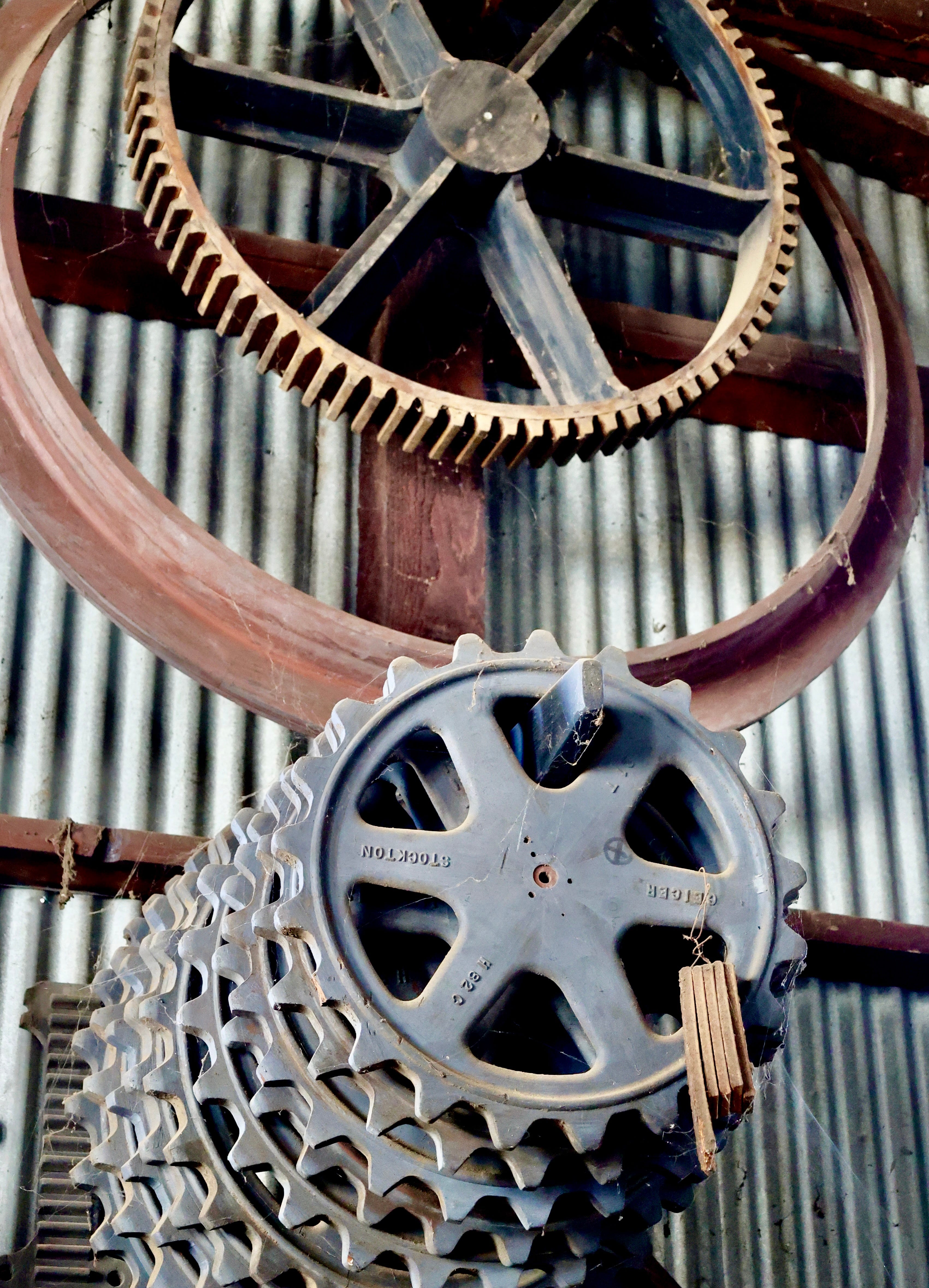

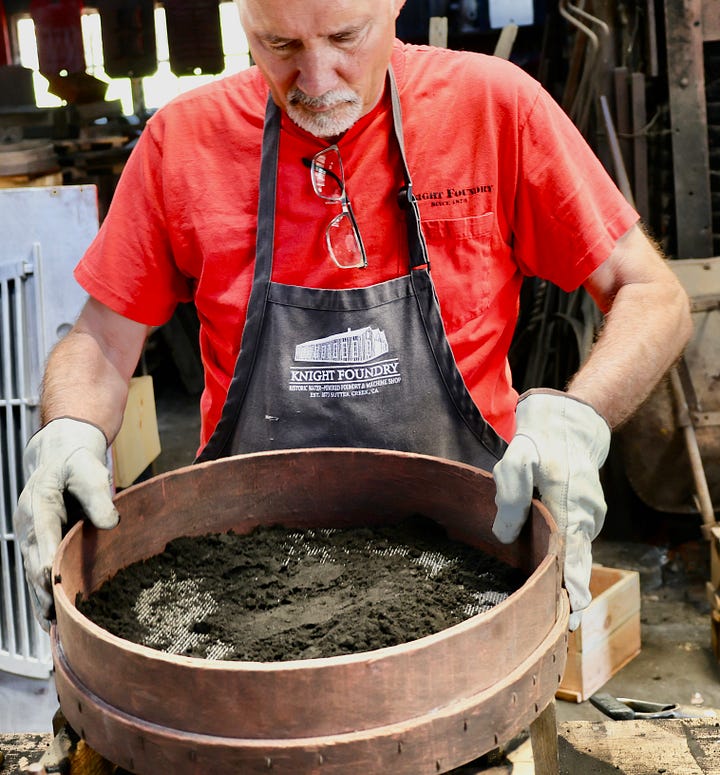

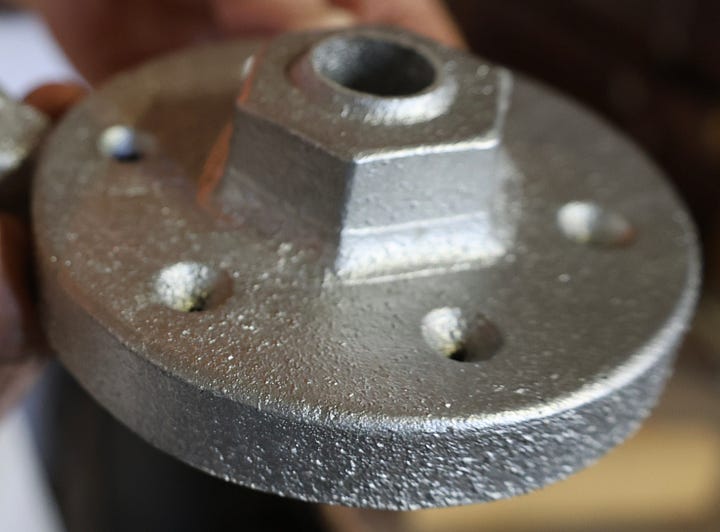
The wood pattern was just the beginning of a long, complicated, precise process, that included a phrase that caught my attention: Symmetrical Distribution of Errors.
A pattern maker was one of the most skilled trades in a railroad machine shop. Luther made the wooden forms used to create sand molds for cast iron parts, and flat, true surfaces were essential. A pattern that wasn’t true produced flawed castings.
Symmetric distribution of errors is an analytical concept. Luther wasn’t likely part of this finishing process, but the sound of the words made me curious.
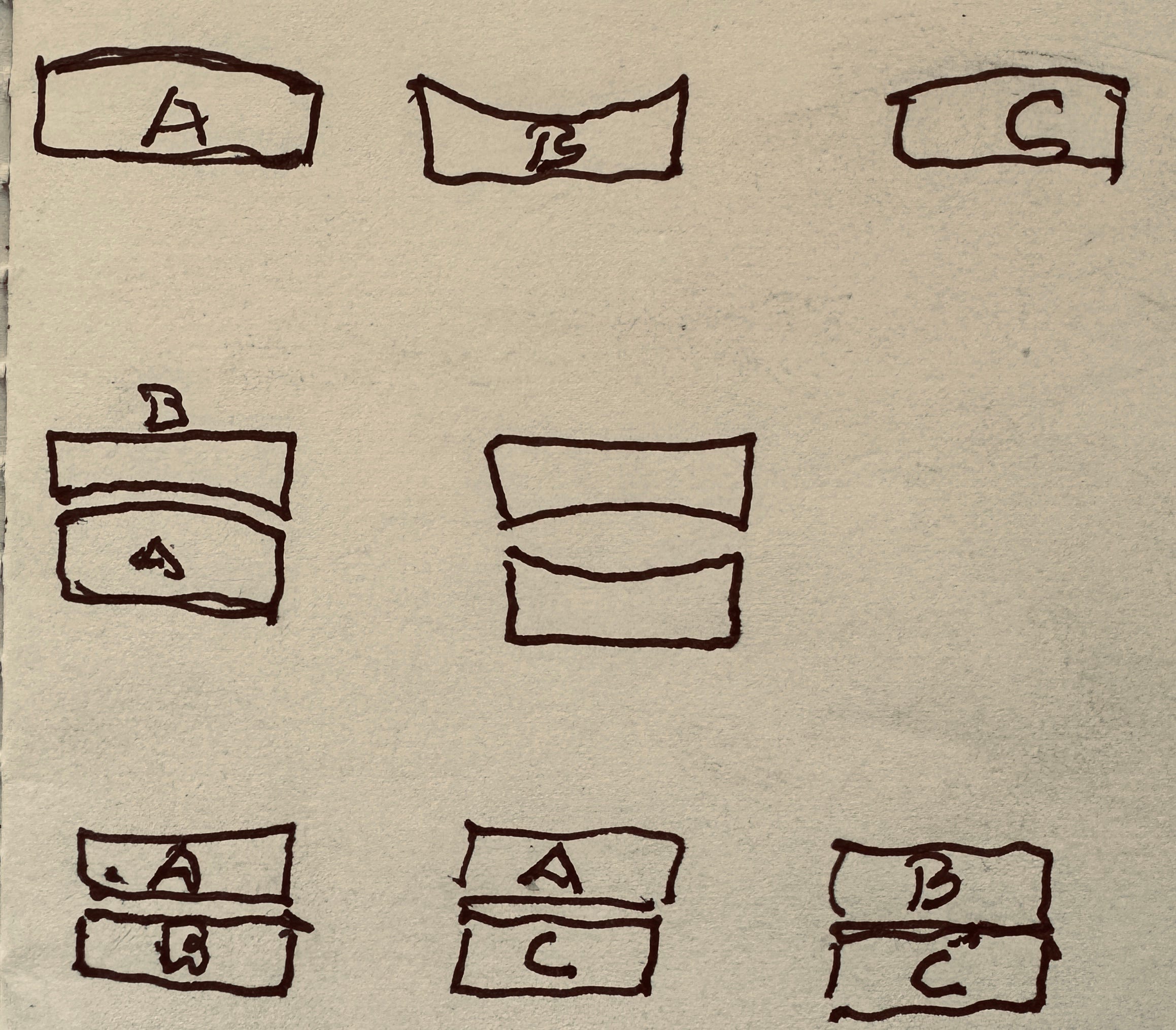
The Whitworth three-plate method was the second part of the finishing process that Erik mentioned.
A precision engineering technique that exploits symmetric errors. Starting with three roughly flat cast iron surface plates A, B, and C, the worker hand scrapes surfaces to progressively refine them.
The three pairings are worked in rotation: 1) A against B with a blue transfer matererial, scrape the high spots 2) B against C repeat 3) A against C repeat. Then cycle back and repeat: A/B → B/C → A/C → A/B. By rotating which plates are scraped against each other, no single mistake survives all three combinations. Three plates, scraped against each other in a specific rotation, will mathematically converge on true flatness because a consistent error cannot survive all three combinations. The errors balance out and true flatness emerges.* (My interpretation of a Claude AI explanation.)
Knight’s Foundry is a living demonstration of another time, all hand work, now replaced by computers, faster, accurate, and emblematic of “the industrial revolution.” How terrific to get a hands-on understanding of what Luther did.
I thought about an interview with a fellow who’d worked for the State Water Project. This was around 2015, research for our book Water: More or Less, and he said he was worried about the “institutional knowledge” that was going to disappear when all the older water guys retired. What’s going to happen to all this 19th century knowledge when these amazing docents retire from volunteering?
Comments
Nothing yet. Say the first thing.
Sign in to join the conversation.