
Filmstack LA In-Person Meetup #8 is happening THIS SUNDAY the 8th!
As usual, the event will be held at 4PM in Highland Park at The Hermosillo. Should be another big one! A lot of folks have already signed up and the event is being featured on Luma’s LA homepage and newsletter (again)!
Slamdance was a total trip. It’s been a long while since I’ve been in a room with so much energy and excitement surrounding a single core concept: The industry is fucked and we’re here to un-fuck it.
I’m super grateful for Ted Hope for giving me the opportunity to share my dangerous idea with a packed house last Monday.
Everyone showed the eff up and I feel like I failed the assignment by making my presentation too long and eventually getting scythed off stage by the grim reaper Dan Mirvish.
But that’s life. Or I guess it’s Death…?
In any case it was a ton of fun and I wanted to share the full presentation here for anyone who didn’t get a chance to see it on the 23rd, and anyone who didn’t catch the end of it – which is everyone – because I ran into the 10-Min time limit.
For those of you familiar with my Substack, a lot of this will feel very familiar. If it feels like I compressed my entire newsletter into a 10-minute presentation… well, yeah, that’s kind of what it is…
Either way, I hope you enjoy!
Below is the full presentation with key slides. Please message me if you’d like the full presentation.
My name is Jon Stahl.
I’m a TV comedy writer who worked in the writers’ room of the final two seasons of the HBO show Veep and wrote for the Fox animated sitcom HouseBroken. Now I’m producing my own digital series and writing the Substack newsletter How Not to Be a TV Writer.
What follows is adapted from my NonDē Dangerous Idea presentation, delivered on February 23rd at Slamdance.
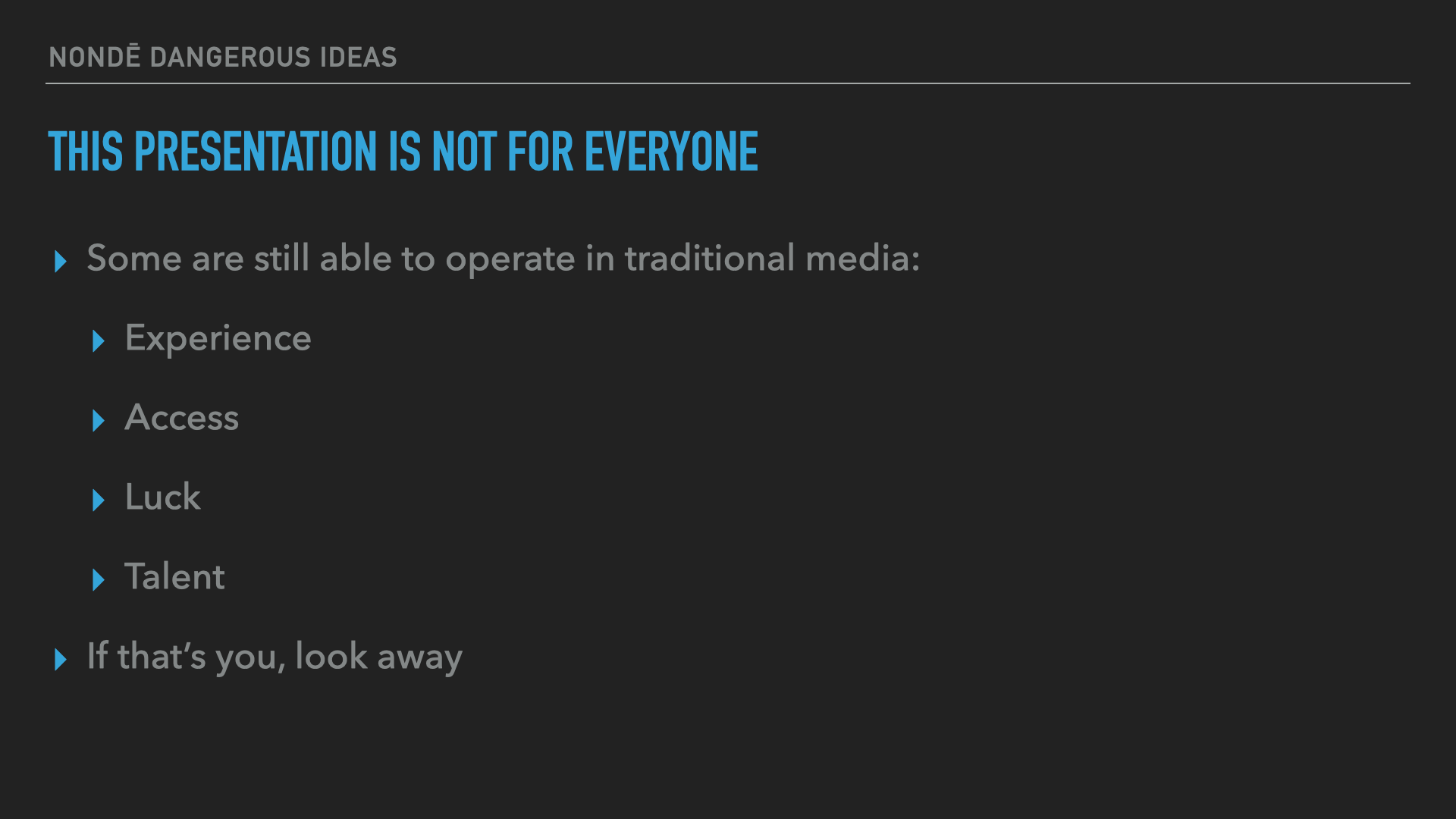
I want to start by acknowledging that some people may still be able to carve out a niche for themselves in traditional media — through some combination of experience, access, and luck, they’re able to forge a career much as they always have.
This presentation is not for them. It’s for everyone else.
It’s also for anyone you want to share it with, so please do!
Whether you know it or not, whether you like it or not — you have a new job description.
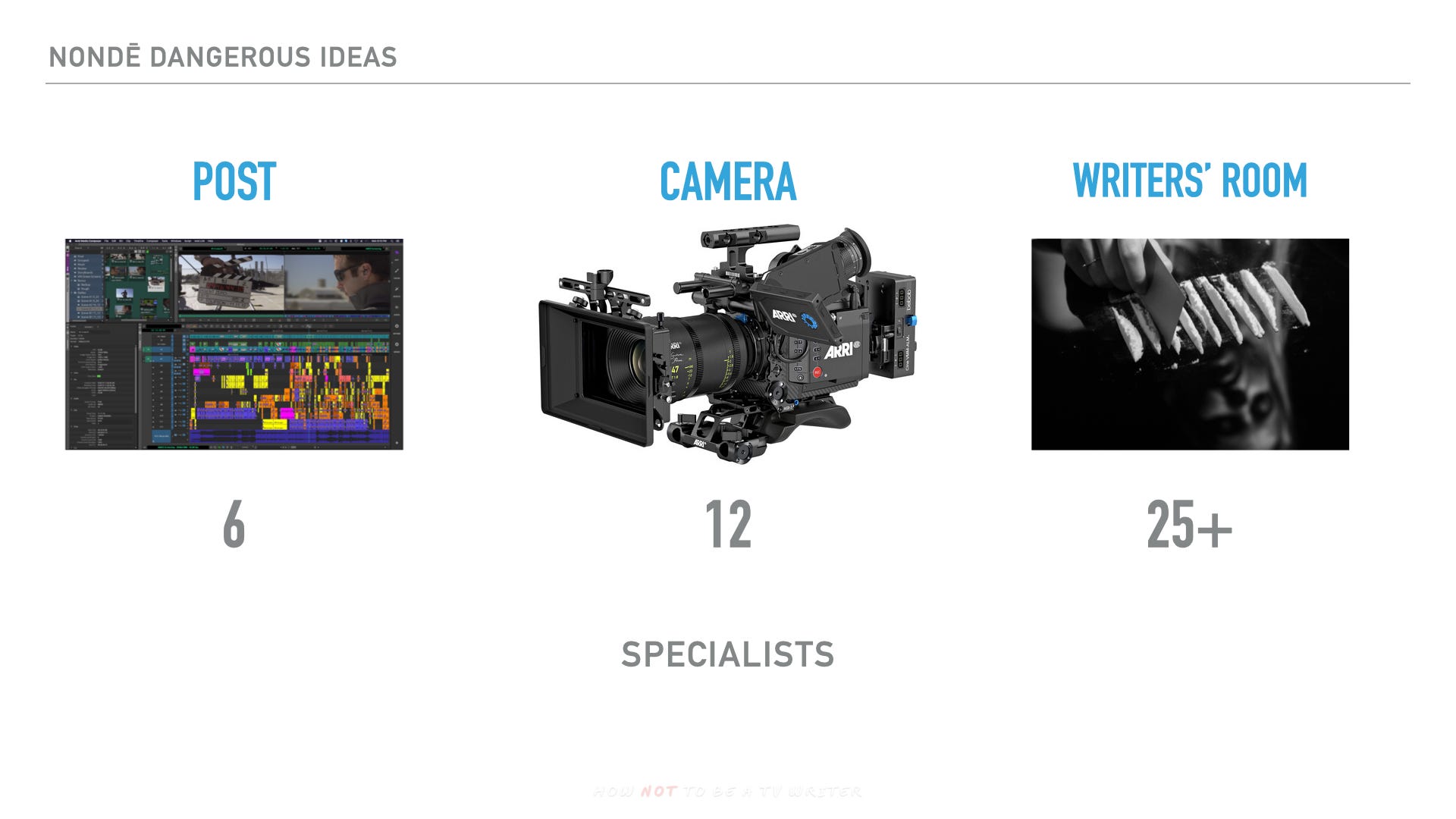
In the traditional studio model, a large budget meant that a post team could consist of six or seven people, a camera crew could be a dozen, and a writers’ room could be staffed with as many as 25 writers. All of these people had one job that they got really good at. They were specialists.
That was the golden age of television.
And if it isn’t painfully obvious — that golden age is no more.
In the new entertainment reality, the NonDē movement demands that you are the writers’ room and the production office and the camera crew and the art department. You have to be everything.
This will inevitably change as you gain leverage in the system. But if you want to adapt — and I suggest that you should — as of right now, you should consider yourself a generalist.
That means in addition to the writers’ room and the production office, you’re also the studio. Which is terrifying. But it’s also kind of exciting, because a studio gets to make the really big, important decisions about what stories get told.
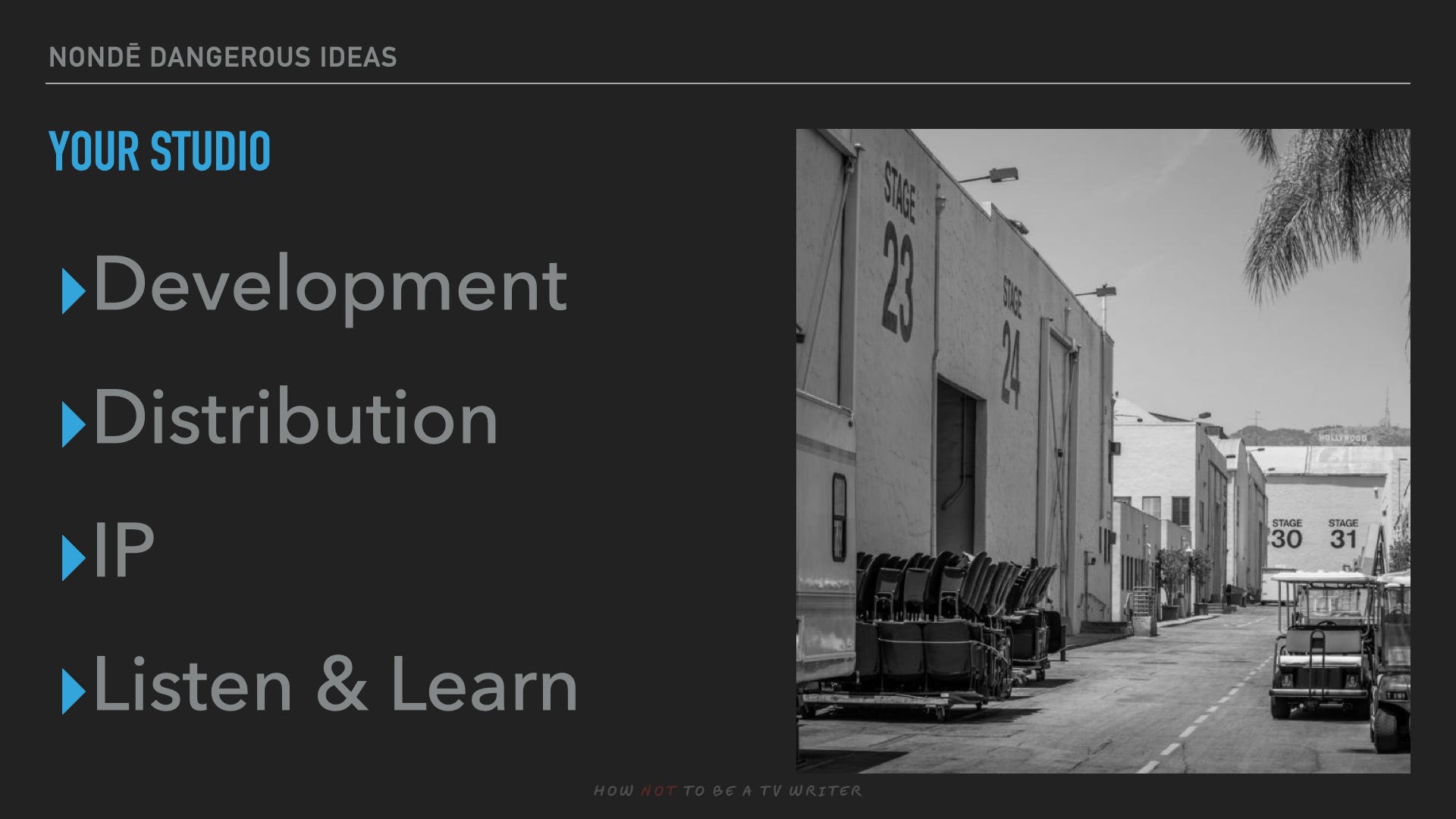
As a studio, you need three things: a development process, a distribution strategy, and an IP pipeline. You have to build all three yourself. You also have to be willing to learn and listen. Where does this learning happen? I’ll get to that in a second.
Just know that the pilot model is fucked. And it was fucked long before the strikes, long before AI, long before the creator economy was fully realized.
What fucked it?
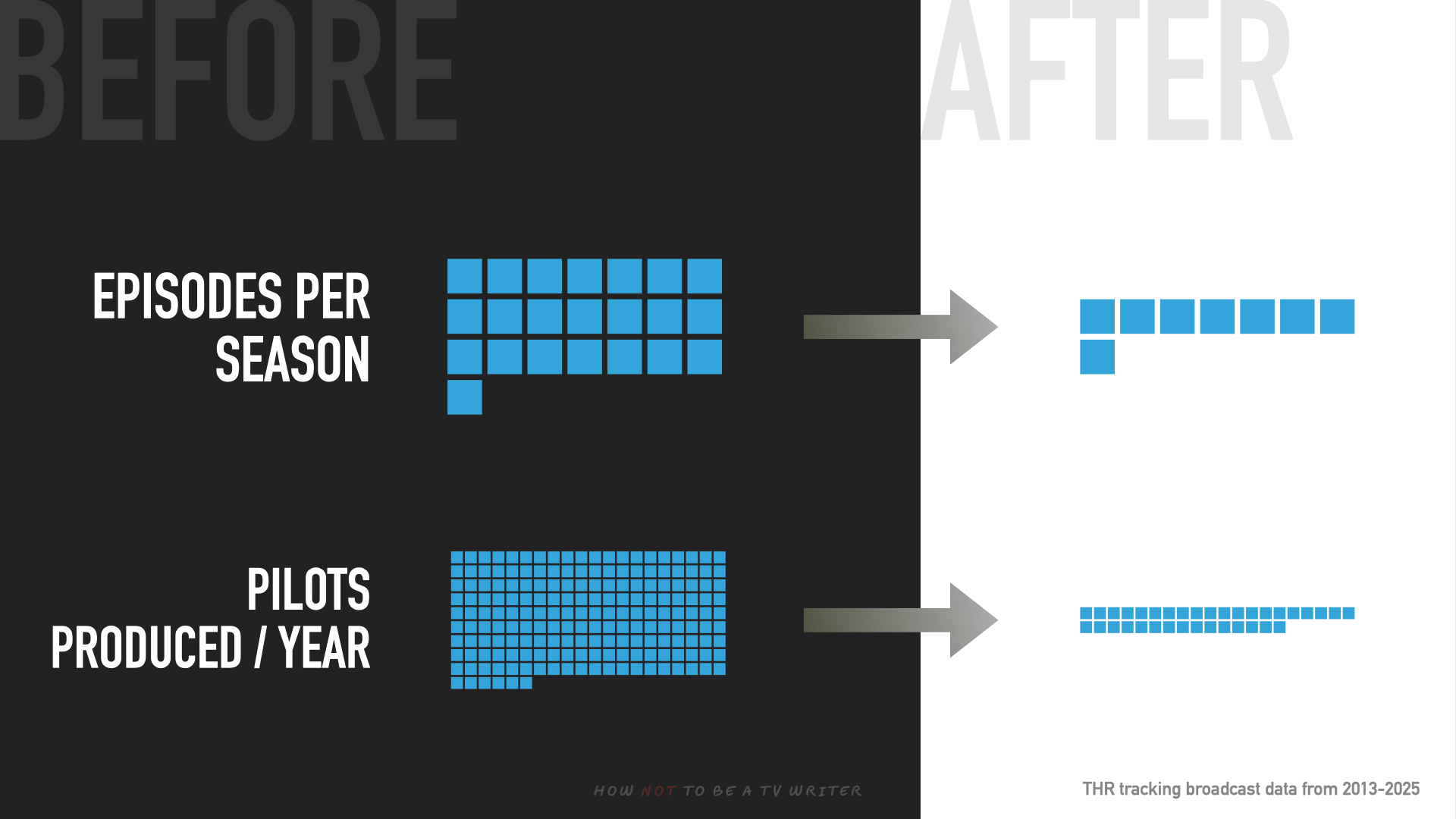
When streamers replaced pilots with straight-to-series orders, they were taking a gamble on a new model. Instead of testing a concept by producing a single, less expensive pilot episode, they purchased a script and spent much more to produce a full eight-episode season.
But this also shifted risk onto the creators. When every green light consists of eight full episodes, studios can afford fewer of them — and they’re only going to make that bet on a sure thing, or as close to a sure thing as they can get. Which is why Taylor Sheridan has nine shows on TV and I have none.
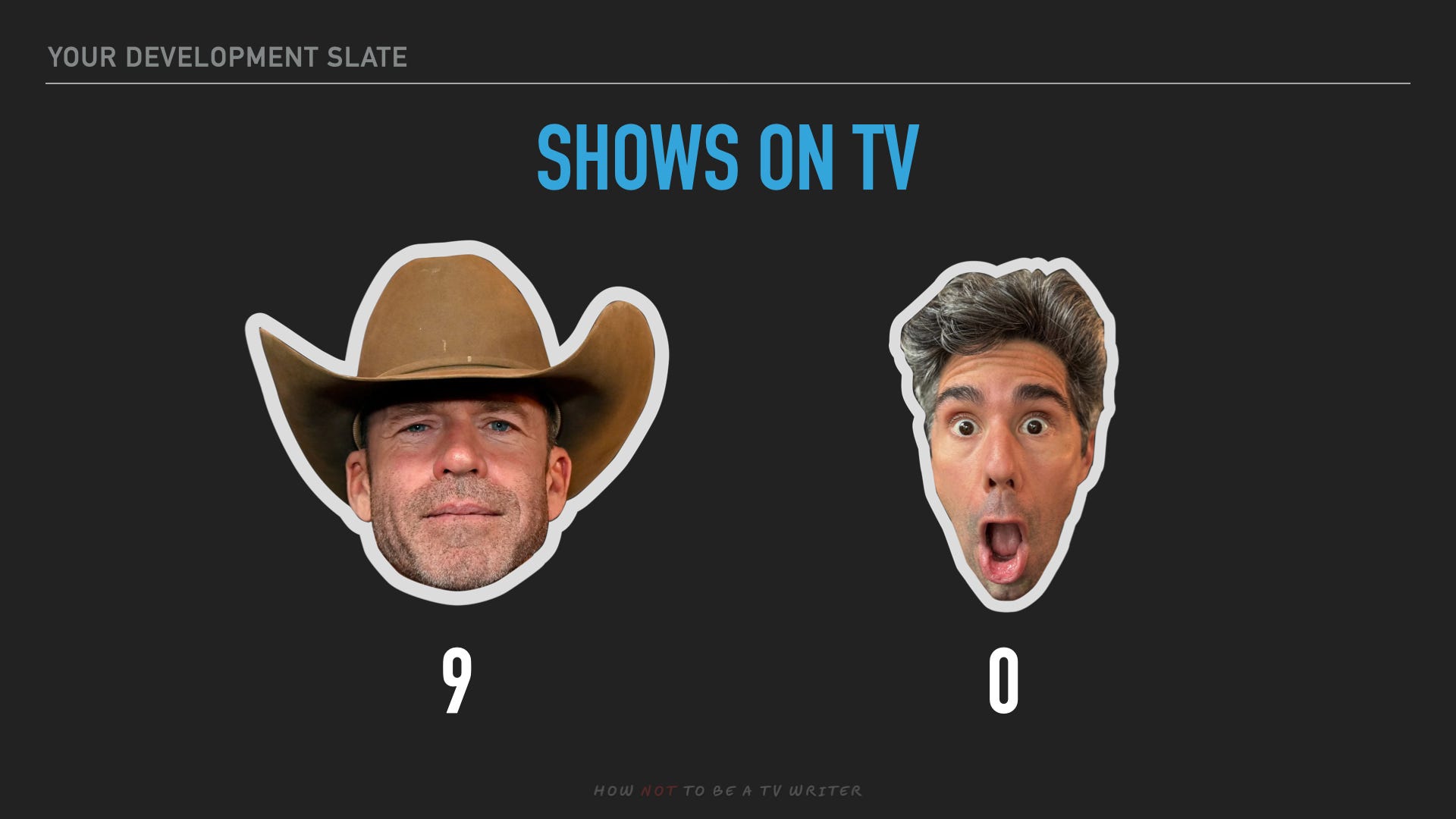
A new pilot model is emerging outside of the traditional studio system, in the NonDē ecosystem. It’s happening on social-first platforms like TikTok, YouTube, and Instagram. And you do not have to be Taylor Sheridan to take advantage of it.
I myself am producing 10 pilots this year. That’s right — 10 pilots. Which sounds completely unhinged. But that’s not even the worst of it, because in this new model, pilots aren’t merely single episodes anymore.
A pilot now consists of a run of episodes. It could be two, like my web series Casen Pointe: True Crime Detective. Or four episodes, like one called Upstage that I shot in December. Or it could be 36, like the pilot I shot this past weekend with 25 actors and a crew of seven.
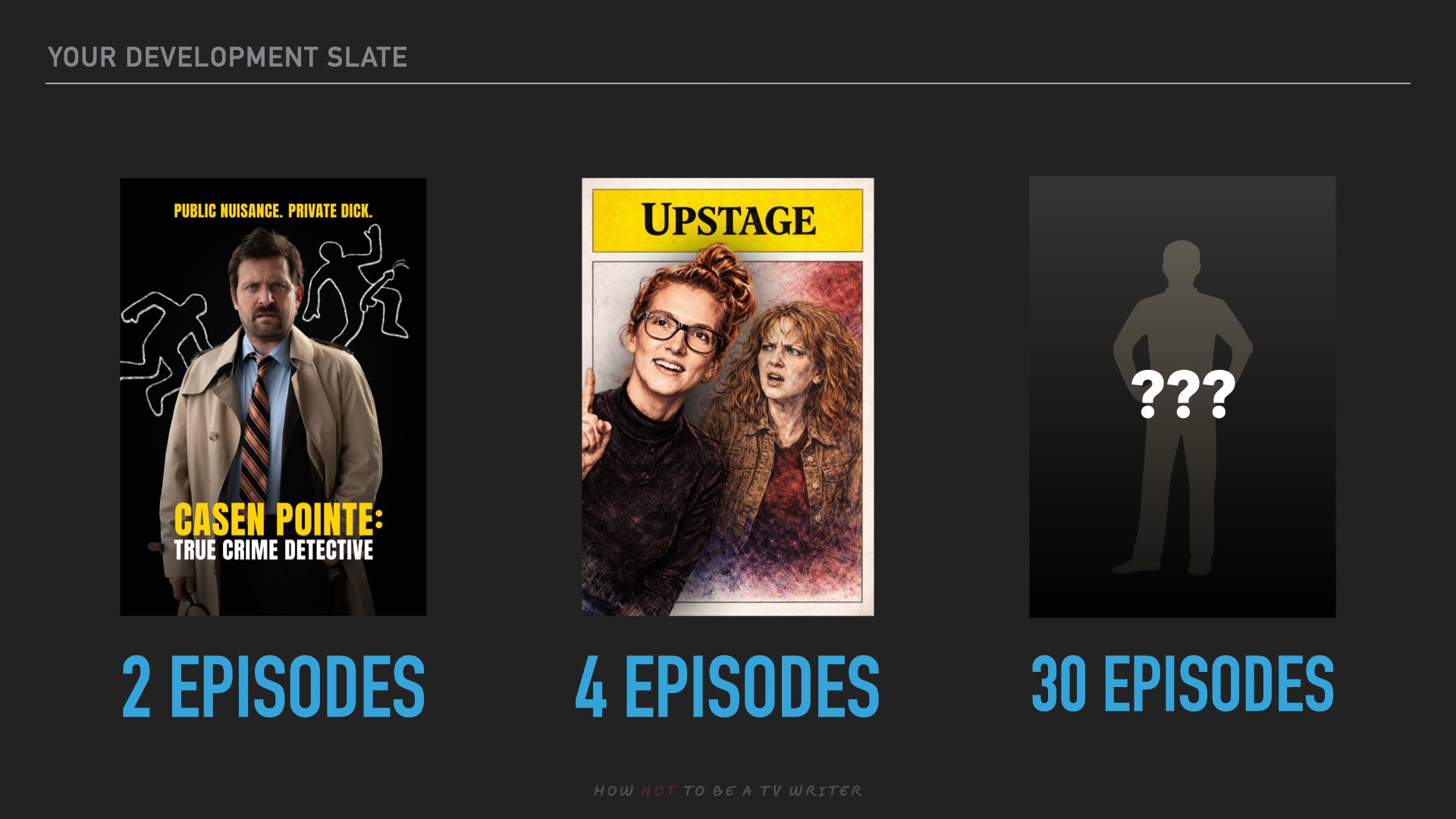
Why so many episodes? Two reasons:
The more episodes you release per pilot, the more data points you have to determine what resonates, what doesn’t, who your audience is, and who they are not. And here’s the thing — even the flops contain valuable data.
By putting my stuff on YouTube, I’ve been able to see exactly where people drop off, demographic data, watch trends, and thumbnail click-through rates in painstaking detail. By pure viewership metrics, Casen Pointe was not great. But even though the viewership numbers weren’t good, I’ve already gotten insanely helpful data out of it.
For instance, the thumbnail click-through rate was 11%+, which is exceptionally high, meaning I did a good job capturing the fun of the show in the key art. There was a high drop-off due to a cold open that was slower than I would have liked. But after minute one, retention stabilized — which means that once people realized what they were watching, they stayed.
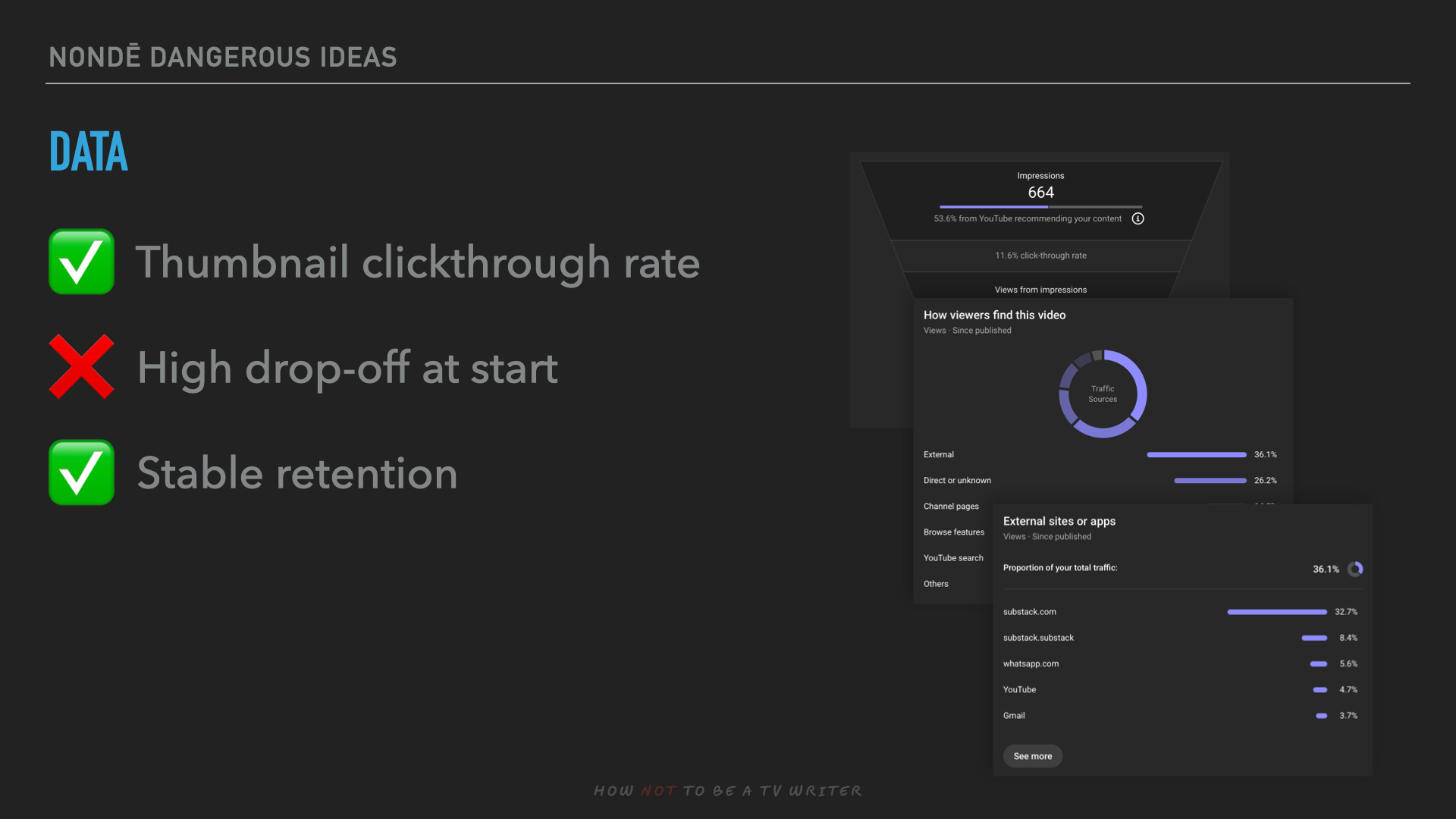
This data will be incredibly valuable as I produce other series.
On these testing platforms — YouTube, Instagram, TikTok — you have a better chance of one of your episodes getting discovered and shared if you release multiple of them. Ideally as many as possible. Remember that over 500 hours of video are uploaded to YouTube every single minute. If you want to give your series the best chance of getting noticed, you cannot rely on merely one episode anymore.
The same logic applies to the number of series you test online. Which, in my case, if you don’t remember: 10.
Why 10 specifically? I’m a believer in the power law, which comes from the world of venture capital. The power law states that 90% of portfolio returns are generated by 10% of portfolio companies. I believe that success ratio applies to creative projects as well. So in order for one of my projects to find its audience, I have to make 10 of them.
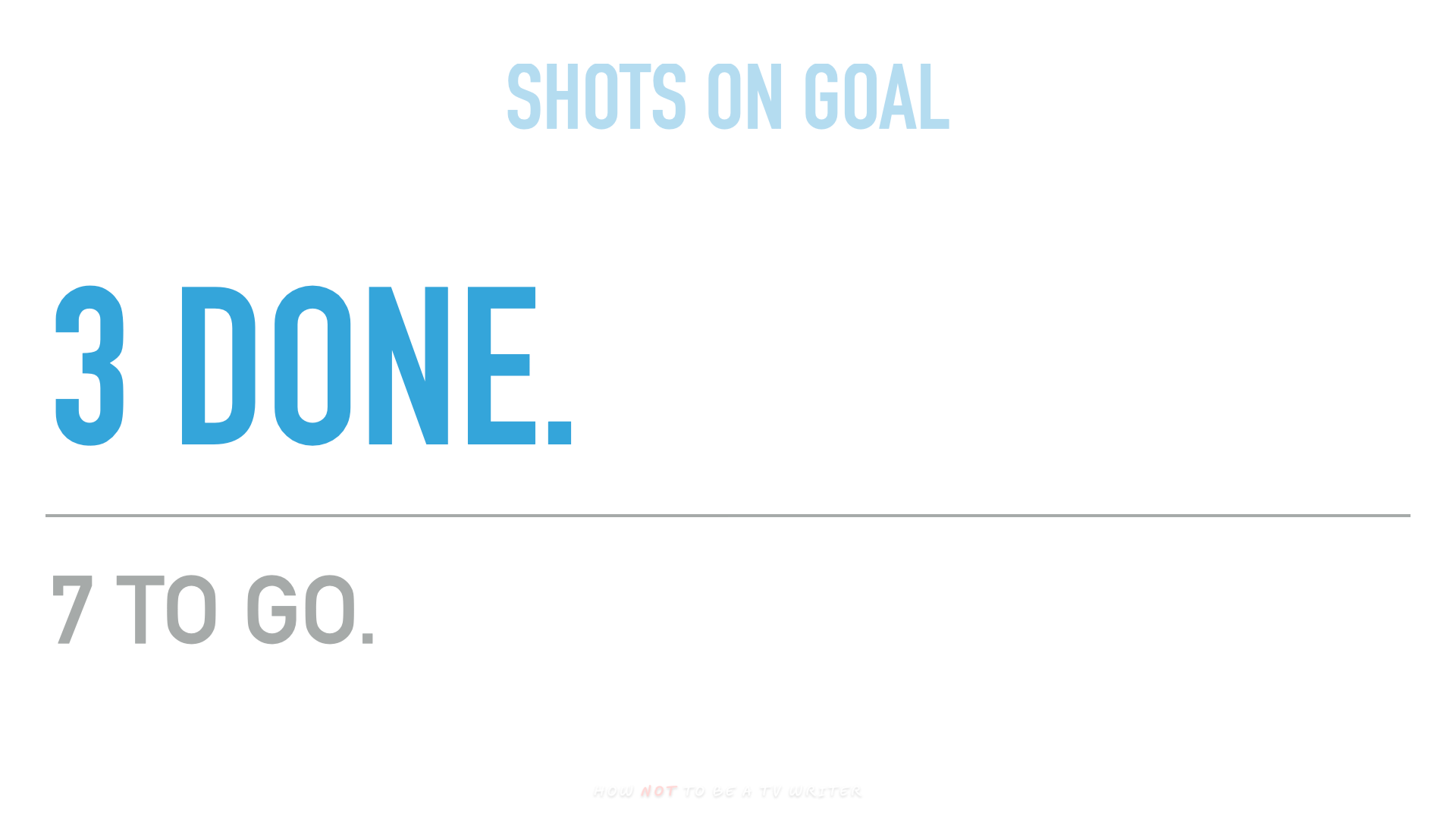
With each of those projects consisting of several episodes, I’ve produced three so far. That means I have seven more to go.
I’ll do a separate post on this 10 pilot “strategy”, so make sure you subscribe:
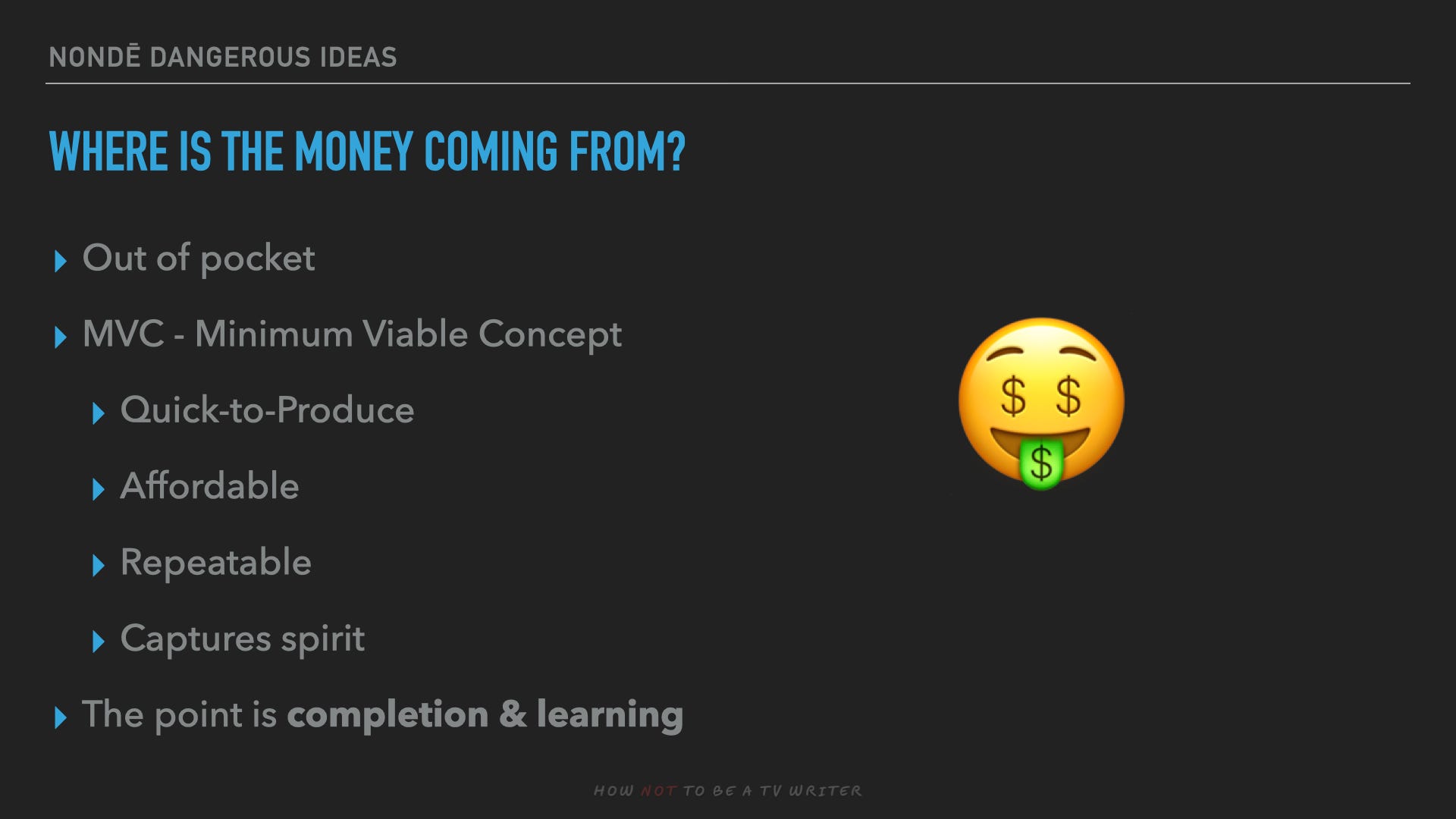
Where is the money coming from? It’s all coming out of pocket and it’s all speculative. But the good news is I’m not spending a fortune on each one of these projects.
That’s because my process revolves around something called an MVC — Minimum Viable Concept.
I lay out the idea at length in a previous post, but in case you haven’t read that one, the idea is simple:
When you’re first getting started, you don’t have the resources to make the big thing, so you make a much smaller version of that thing that still captures what’s great about it.
The point of an MVC is to come up with a concept that’s fast to produce, affordable, repeatable, and captures the spirit of the concept. The point here isn’t perfection — it’s completion and learning.
Think of it like a proof of concept where the goal is not to impress some gatekeeper, but instead to test the story and characters in the marketplace.
That’s the new development process.
But content without distribution is just a hard drive full of failure. As a studio, you also need a distribution strategy.
The old model was: write enough scripts to prove you’re good, gain access to a hard-to-reach gatekeeper, and given enough luck and talent, get a green light.
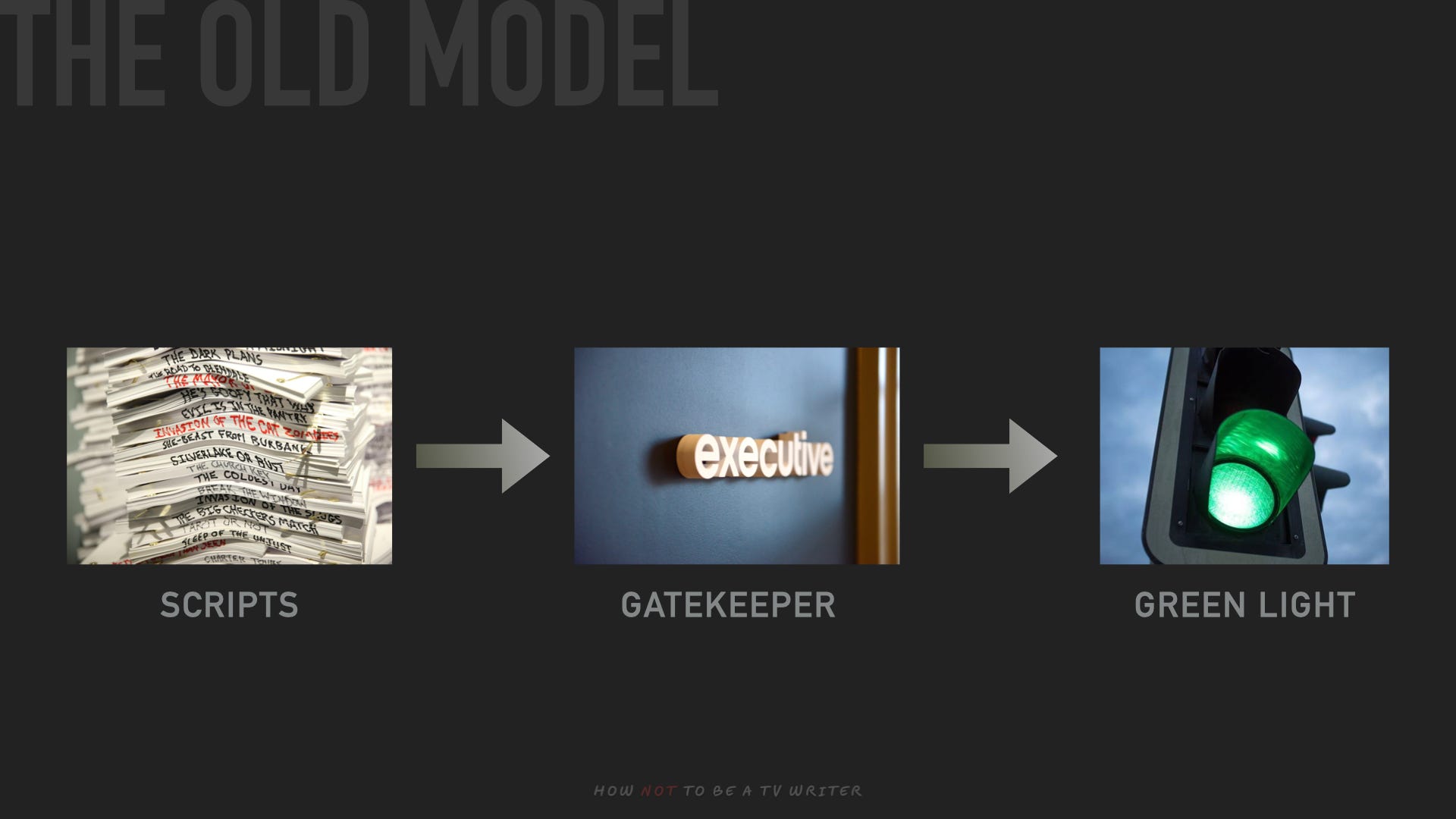
The new model consists of building up an audience online — sometimes over the course of years — and rallying them around a big project you’ve been working on concurrently, alongside your usual content.
We’re still in very early days, but there are success cases to examine. In case you’ve been living under a rock, a creator named Markiplier recently released an independently produced movie called Iron Lung. Because he had a built-in distribution of tens of millions of devoted followers on YouTube, the film’s debut went viral. It screened in 3,000 theaters, and off a $3 million budget, the film made $30 million in a week.
To be fair, he started with an audience of 40 million followers that took 10 years to build. So what can you do to bootstrap an audience when all you have is a story to tell — not millions of existing followers?
If I had a surefire answer to that question, I would not have driven to the Slamdance event in my shitty 2010 Mazda hatchback (photo below).

But Markiplier’s slow-and-steady climb is not the only way to build an audience. Back in the spring, a performer from Groundlings, Jay Renshaw, created a character named Chit — an awkward coworker persona — and started posting sketches featuring this character on YouTube and TikTok. Within a couple of months, the channel had blown up.
This isn’t to say that followers on social media is the same as a dedicated fandom. But by expanding your reach, you’ve got a better chance of your most devoted fans finding you.
My plan to shortcut the process is by partnering with established creators who have an existing following. It’s exactly what we did this past weekend when we shot the 36 episodes of that micro-series I mentioned.
I’ll let you know how it works out. If you want to follow along to watch me crash out in real time, please make sure you’re subscribed:
You’ve got a development process and a distribution strategy. The last piece of any studio worth a damn is IP.
What’s the one thing that the best-performing shows have always had at their core
Nudity.
Just kidding.
Compelling characters.
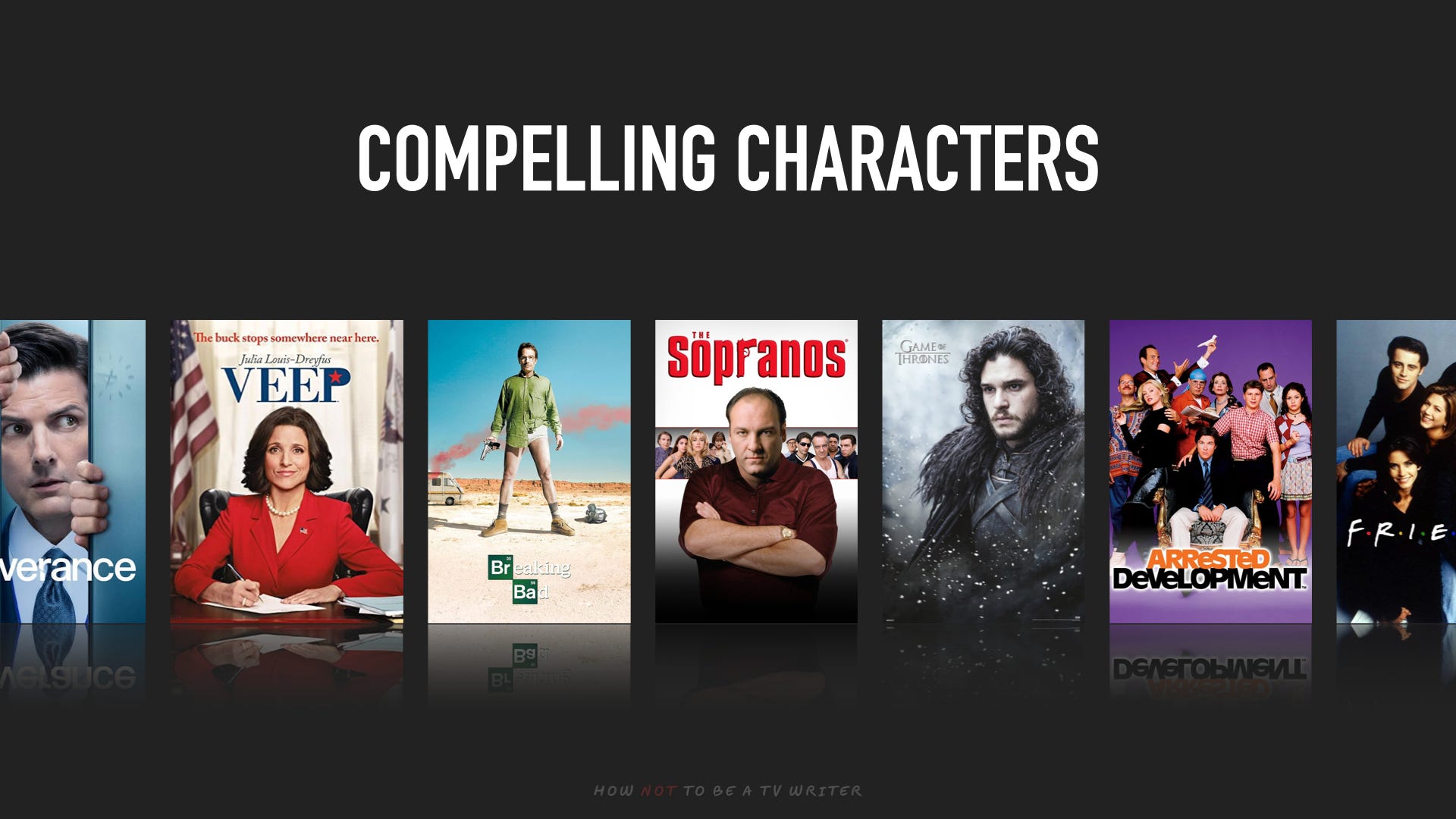
Compelling characters are what drive audiences to come back week after week after week. This applies equally to successful online content as it does to big-budget TV shows. That hasn’t changed.
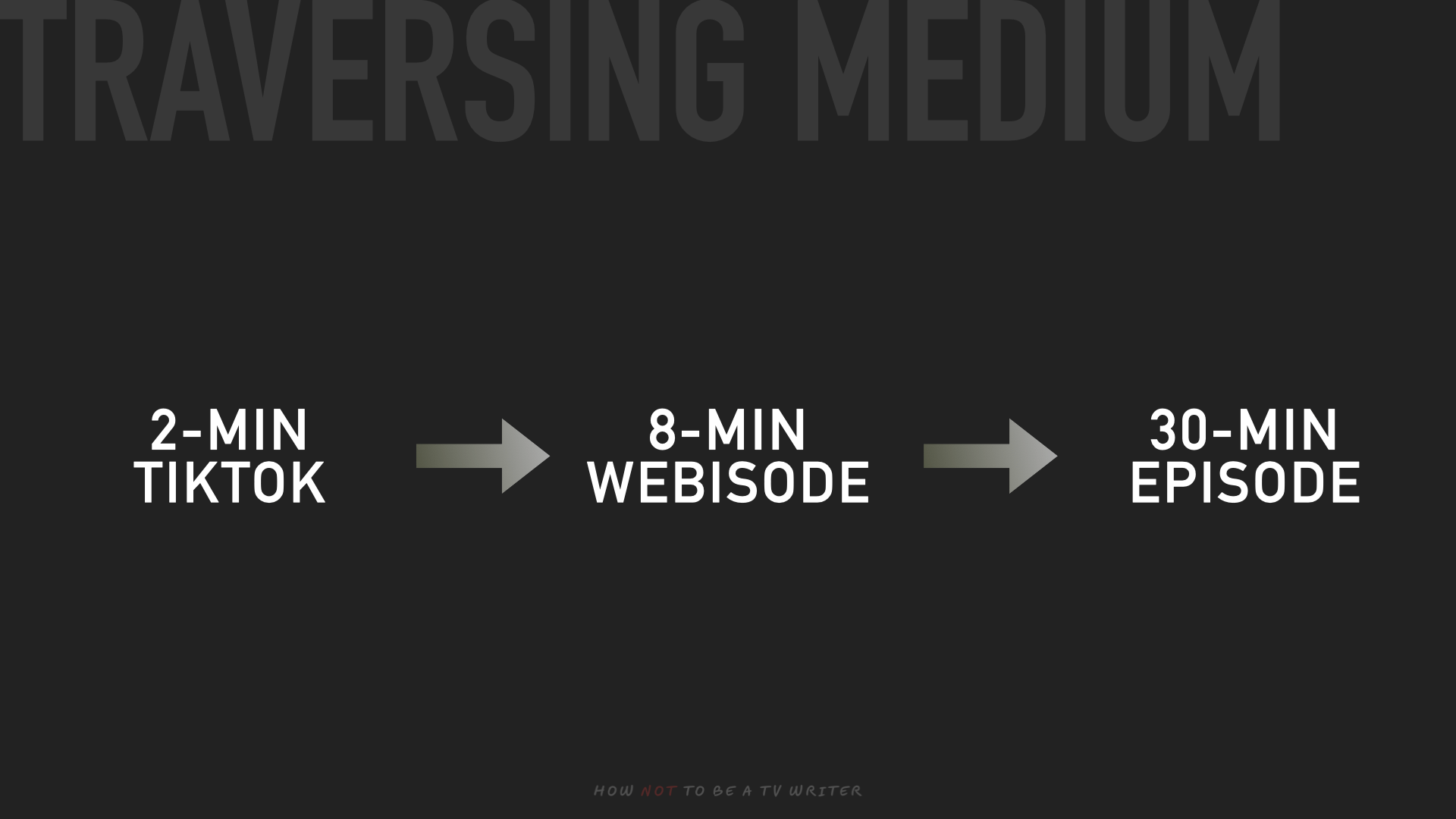
What has changed is that these characters now need to be able to traverse mediums. If you create something for a two-minute TikTok short, you have to ask yourself: how well can it work in an eight-minute episode, or a full half-hour episode?
I know this is a lot. But the message underlying all of it is very simple.
The system changed. What makes something great never did.
You are the studio. Now’s your chance to prove it.
Stay tuned,
Jon
PS: Some info below. A lot of it is redundant because you’re reading this on Substack! But still helpful.
Comments
Nothing yet. Say the first thing.
Sign in to join the conversation.