
By Howard Wolinsky, Editor, The Active Surveillor
For men managing prostate cancer with Active Surveillance, conversations usually revolve around PSA trends, MRI findings, and biopsy results. But a growing body of research is asking whether the microbiome — the community of bacteria, viruses, and other microorganisms living mainly in our digestive tract — plays a supporting role in prostate cancer as well.
The idea isn’t as far-fetched as it might sound. Reviews in journals such as Cancers have proposed a “gut-prostate axis,” noting that gut bacteria can influence hormone metabolism, produce inflammatory compounds, and interact with the immune system in ways that could theoretically affect prostate tissue far from the gut itself (Matsushita et al., Cancers, 2023). Other studies have found that men with prostate cancer — particularly more aggressive disease — may have a gut microbiome that looks measurably different from men without cancer (Cleveland Clinic Consult QD; Nature Communications, 2024).
Researchers are also examining whether microbiome shifts could eventually serve as biomarkers — signals that might help refine risk assessment or track disease behavior over time — although this work remains investigational (PMC review, 2022; PubMed review). Diet, exercise, medications, and even antibiotics used around the time of biopsy can all shift the microbiome, adding further layers to an already complex picture (systematic review, PMC).
None of this means the microbiome is ready to guide clinical decisions today. As with many emerging areas of prostate cancer research, the science is promising but unproven — which is exactly why ASPI is bringing in an expert to separate what’s known from what’s still speculation.
Dr. Michael Liss is a urologic oncologist and Professor of Urology at UC San Diego, where his clinical and research work focuses on improving the diagnosis and management of prostate cancer — including prostate imaging, biomarkers, focal therapy, robotic-assisted surgery, and clinical trials aimed at more personalized care.
He earned his medical degree with honors from the Medical College of Wisconsin, completed his urology residency at the University of California, Irvine, and finished fellowship training in Society of Urologic Oncology at UC San Diego. He also holds a Master of Applied Science in Clinical Research from UC San Diego, a PhD in Translational Science from the University of Texas at Austin, and an MBA from the University of Texas at San Antonio
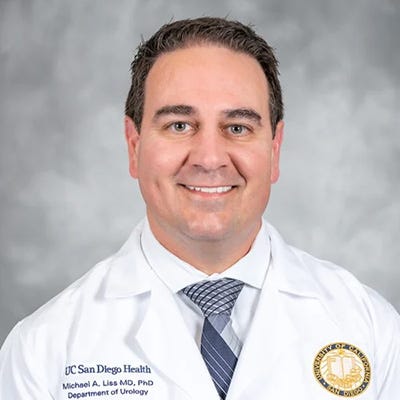
As a surgeon-scientist, Liss brings both bedside experience and laboratory research to bear on questions about prostate cancer, emerging tests, and how new discoveries may eventually shape care — including his own published work on the prostate and gut microbiome (UCSD Profiles research listing).
Dr. Liss will cover:
What the gut microbiome actually is, and why prostate cancer researchers have taken an interest in it.
Possible mechanisms linking gut bacteria to inflammation, metabolism, immune function, and prostate cancer — the biological pathways researchers are investigating.
Lifestyle influences — how diet, exercise, medications, and other factors may shape the microbiome over time.
The road ahead — whether microbiome patterns could eventually become useful biomarkers, and how such findings might inform understanding of prostate cancer risk or progression.
Separating hope from hype — distinguishing promising early research from claims that have not yet been proven.
For men on Active Surveillance, this session offers a look at an evolving research frontier and how it may — eventually — fit into the bigger picture of prostate cancer and overall health.
When: Saturday, August 22, 2026 • 12:00 PM Eastern Time
Where: Online via Zoom — register here
Questions in advance: Email contactus@aspatients.org
Live Q&A: Time will be set aside after the presentation for audience questions.
This program is presented by Active Surveillance Patients International (ASPI), a nonprofit dedicated to supporting men navigating Active Surveillance for prostate cancer.
I very much enjoy — and learn a great deal from — your commentary on the monthly ASPI Zoom presentations, the participant chats that follow, and your emails and blog site.
It is remarkable how dedicated and effective you are in explaining the medical science and treatment modalities, and in speaking so directly to the concerns of AS patients. You really are transforming the lives of many for the better.
Thanks, Jack. I try. Congrats on your pro bono work. Also appreciate what you said: “I happy to support your blog with a subscription. It is well-written, incisive, and informative. As was said well a very long time ago, ‘a laborer deserves his wages.’ Deuteronomy 24:15; Luke 10:7’”
The Biblical citation makes the case.
(Note: I tried to report news as it happened, but sometimes it took awhile to get experts to comment. This is an update of this story—HW,)
By Howard Wolinsky, Editor, The Active Surveillor
A major UK review of 3,436 men treated with focal therapy (HIFU or cryotherapy) offered one of the clearest long‑term looks at how these targeted treatments performed over a decade.
The headline was upbeat — most men did well — but the details revealed why: the cohort included many participants had lower‑risk cancers suitable for Active Surveillance, Could they be tipping the scale>
Here was the breakdown of study participants:
GG1 — 380 men → 11.0%
GG2 — 2,391 men → 69.5%
GG3 — 615 men → 17.9%
GG4 — 47 men → 1.4%
GG5 — 7 men → 0.2%
That meant more than 80% of the men had Grade Group 1–2 disease, many of whom already enjoyed excellent long‑term outcomes — even with Active Surveillance.
Dr. Peter Carroll, the AS pioneer from UCSF, stressed that this mattered: “These men would be anticipated to have low rates of metastases or prostate‑cancer‑specific death at 10 years,” regardless of treatment. Higher‑risk patients — the ones who most needed innovation — were largely absent. Carroll does not do FT.
Dr. Michael Leapman, of Yale Cancer Center, called the study “one of the largest and longest‑running looks at focal therapy,” but noted that it wasn’t a randomized trial. Men chose focal therapy; they weren’t compared head‑to‑head with surgery, radiation, or surveillance. Much of the apparent success reflected the biology of early‑stage prostate cancer itself — slow‑growing, often indolent, as shown in the ProtecT trial. He did not use focal therapy. He does not perform FT.
Dr. Brian Helfand, a urologic oncologist at Endeavor Health in Chicago, underscored a practical reality: recurrence after focal therapy was not rare. Men needed ongoing PSA tests, MRIs, and periodic biopsies, and some required retreatment. “You still need a clear plan for follow‑up,” he said. Helfand performs IRE (Irreversible Electroporation), a non‑thermal cancer treatment using electrical pulses to create pores in cancer cell membranes, leading to cell death.
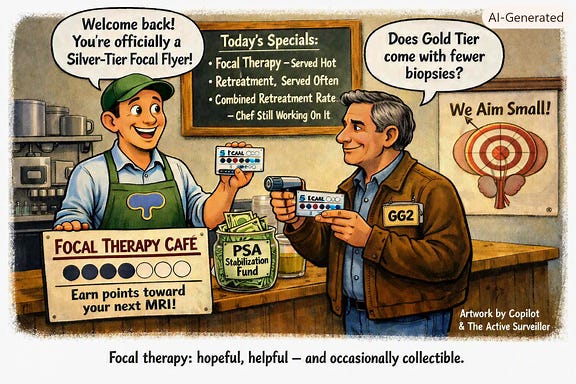
Rick Davis, a PCa patient and founder of AnCan, a patient‑advocacy platform, pointed out in his Reminder newsletter that the study reported focal and radical retreatment separately — but not the combined rate. His analysis showed some subgroups with retreatment rates above 50%. Patients, he argued, deserved to know that focal therapy often worked, but often needed repeating.
Davis said the UK team presented focal therapy as broadly effective — even for higher‑risk men — but the underlying data didn’t support that leap. “The Brits tell us focal therapy works for high‑risk prostate cancer,” he noted, adding that the study’s messaging echoed recent media stories portraying focal therapy as suitable for “advanced” disease.
He argued that the headline numbers obscured key gaps. The study highlighted that only two men died of prostate cancer over ten years, but, as he noted, “that’s about right for a cohort of 3,400 with similar Gleasons.” The real issue, he said, was retreatment — and the lack of clarity around how many men ultimately needed additional therapy.
Davis said the paper reported 33% local retreatment, 30% radical retreatment, and 14% hormone therapy use, but never provided a combined retreatment rate. For men with unfavorable intermediate‑ or high‑risk disease (Grade Group ≥3), Davis estimated that “around 50% were retreated with focal and 50% with radical,” but the study didn’t specify how much crossover occurred.
He also pointed out in the Reminder and Newsletter that 340 men were Grade Group 1, a group unlikely to progress and arguably not candidates for treatment at all. “If diagnosed correctly, they may not have needed treatment,” he said — meaning their inclusion inflated the apparent success of focal therapy.
Davis’s bottom line: the study was intriguing, but hardly definitive. He said he and others “more qualified” viewed the focal study as “a bit of a snow job,” noting that the paper provided no information on side effects such as incontinence or erectile dysfunction. For now, he cautioned, there wasn’t enough evidence for patient groups like AnCan to recommend discussing focal therapy for men with unfavorable intermediate‑ or high‑risk disease.
Dr. Paul Schellhammer, prostate cancer patient, retired urology professor, and past president of the American Urologic Association, noted that focal therapy targeted the visible tumor, not the underlying biology of prostate cancer. Recurrence wasn’t surprising. He also warned that treating Grade Group 1 lesions could trigger a cascade of interventions that Active Surveillance might have avoided entirely. Schellhammer is retired.
I contacted one of the senior authors for comment, but he had not responded.
The UK study showed that focal therapy could control cancer well in carefully selected men — especially those with Grade Group 1–2 disease. But recurrence was common enough that retreatment and continued surveillance should have been expected. Focal therapy behaved more like partial treatment than a one‑time cure.
For men on Active Surveillance, the big picture remained reassuring: early‑stage prostate cancer often behaved well, and doing less could still mean doing enough.
Focal therapy might offer a middle ground, but it was still finding its place — and randomized trials were still needed. Guidelines in the US and UK continued to view focal therapy as experimental, though this certainly would be reviewed in the UK.

By Howard Wolinsky, Editor, The Active Surveillor
Gary Morrow, PhD, a pioneer in supportive oncology whose work helped millions of people feel better during cancer treatment, died July 7 at age 82 after complications from prostate cancer. He benefited from his own research and exercised until the end.
For nearly 50 years at the University of Rochester’s Wilmot Cancer Institute, Dr. Morrow focused on what many others overlooked: how patients feel during treatment. Long before “patient‑centered care” became a buzzword, he made symptom relief—especially nausea and vomiting—a scientific priority. His research helped establish modern anti‑nausea treatments, considered one of the most important advances in cancer care in the past half‑century.
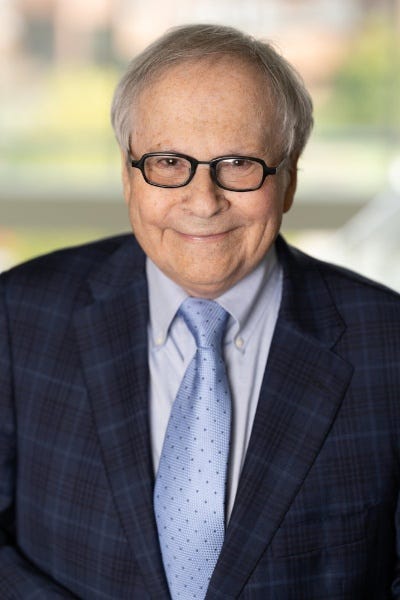
See obit in Cancer Letter.
Dr. Morrow was known for his wit, honesty, and his motto: “helping good people through lousy times.” He trained generations of clinicians and researchers—his beloved “grasshoppers”—many of whom now lead national programs in supportive and geriatric oncology.
A clinical psychologist by training, he applied the biopsychosocial model to cancer care, studying not only medications but also behavioral approaches like relaxation, ginger, and wristbands. His work changed clinical practice and helped patients complete treatment more successfully.
He also built major national research networks, including the NCI Community Oncology Program (NCORP), ensuring that symptom‑management studies reached patients in community clinics across the country.
Dr. Morrow lived with cancer for 16 years and benefited from the very approaches he helped develop. He stayed active, exercised regularly, and continued mentoring until the end. He often said researchers should be “terminally curious” and focused on making life better for patients.
No posts
Comments
Nothing yet. Say the first thing.
Sign in to join the conversation.