
This substack is all about how to utilize social media to sell more books. And you can absolutely do that without having a massive following! I started with 0 and had been marketing my book for around nine to ten months when I hit NYT list with around fifty thousand followers. I know many NYT, USA Today, and international best selling authors who have around 1,000 followers. However (big caveat here) those authors typically have big publisher endorsement who are running ads and working behind the scenes to sell books (certainly not ALL authors with a smaller following, but many). And, whether we like it or not, there’s a sense of social proof that comes from content that resonates. So why do we want more followers?
And when that visibility turns into followers, those followers become part of your community, that trust is being built, your journey is being revealed, and that casual scroller turns into an avid fan of yours.
Because this isn’t just about making more content. It’s not even just about getting more followers. It’s about having an engaged community.
Gary Vee posted a video talking about how we’ve gone from the age of social media and entered into an era of interest media. It’s transitioned from our social network to the algorithm showing us what we’re interested in. Now, for the most part, I agree, and that concept is what we’ll actually be capitalizing on when it comes to growing your following. That being said, I believe there’s still massive opportunity for social connection to build from interest media. But in order to do that, you have to start with becoming discoverable.
In your insights you can see your data for the last 30 days (by content type). Here’s a look at my post stats - this is where and how I’m connecting with my audience!
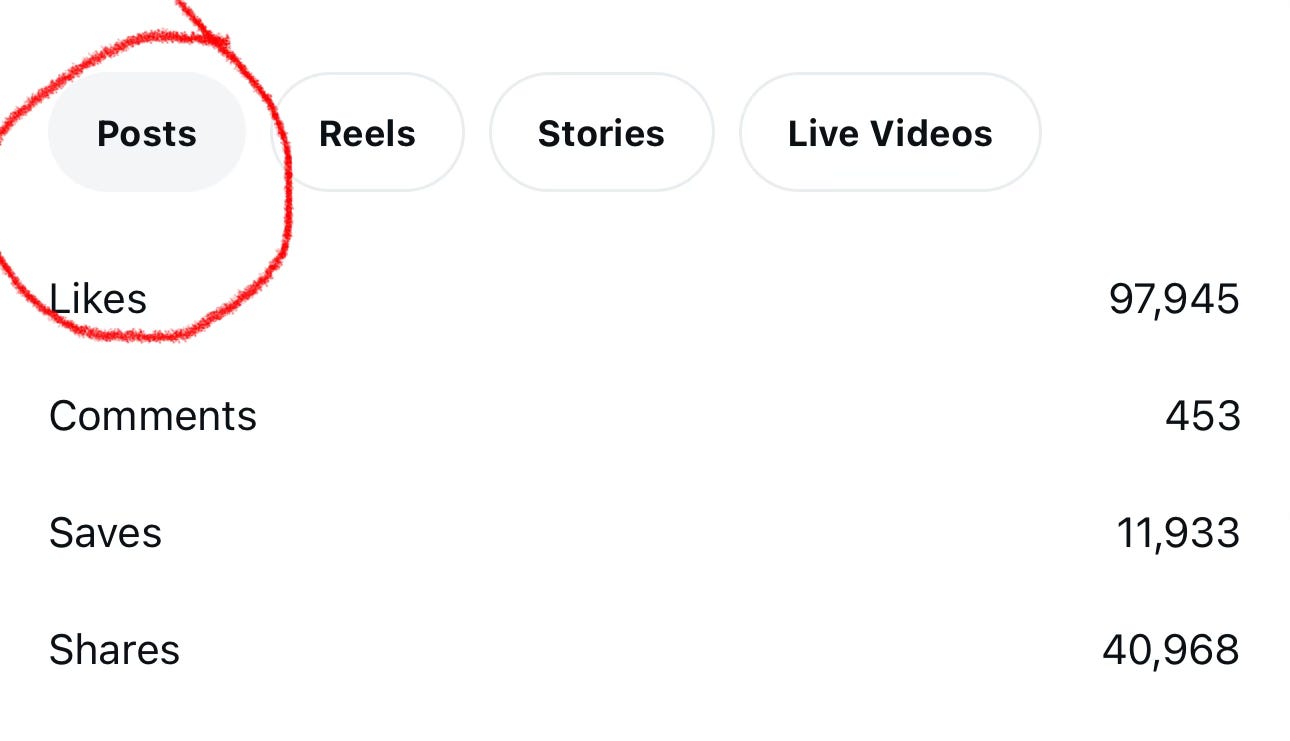
To do this, you must know your ideal audience! A lot of authors I’ve talked to have had trouble knowing who their ideal audience is. And to that I say, the answer is actually much more simple than you think. Your ideal audience is you.
Your book(s) are a reflection of everything you’re interested in. The themes, the tropes, that character archetypes, how the world operates, that was all born from an inherent interest in those things. Chances are, you were also influenced by specific books, films, shows, etc. And those things should have worked their way into your hook. (If you haven’t nailed your hook yet, start here, because you’re going to need it for what comes next).
So, let’s dive into specific ways to create shareable, relatable content that reaches your ideal audience and how that can be used to relate directly back to your book and, the main goal, selling that book!
Let’s go back to your ideal audience first:
If you asked your best friend or partner: “What’s something I’m obsessed with? What do I talk about all the time?” Chances are, they’ll have an answer (or two). If you then asked them: “What’s my book about? What are the main themes?” Again, chances are, they’ll have an answer. I frame it this way because sometimes it’s easier to get some distance between you and your own answers. Hearing those answers through someone we know and trust and who knows us can shed some different light on just who your ideal audience is. So, once you have the answers to those two questions, find the overlap!
You’re obsessed with Lord of the Rings and talk about it all the time? Your book has themes of epic adventure and the corrupting nature of power? HELLO IDEAL AUDIENCE.
You’re obsessed with Supernatural and have a mug with Sam and Dean’s face on it? You’ve been to the conventions and have a framed pic from a photo op? You’re constantly rewatching the old episodes and your book has a tortured but loyal main character who uses humor and snark as a defense mechanism? HELLO IDEAL AUDIENCE.
You get my point here, right? All those things you’re obsessed with, the ones you intentionally or unintentionally wrote into your book - that’s who you’re aiming to reach. The other day in our paid subscriber live, Dave asked me:
How do you do market vocabulary research?
He referenced this video below as an example.
This isn’t market vocabulary research. This is me. This is what I think about. Dream about. I want to dance in the forest under a full moon. I want to live in a castle made of books. I want midnight margaritas in the Practical Magic house and a trip to Stars Hollow. And the vibes in my books are very similar! So when I create content around those pillars in an aesthetic, shareable way (like the above) then when the right people see it, they’re going to relate to it. They’re going to send it to their witchy friends or post it to their stories.
We’re going for engagement, shares, reposts. All to build a community of people who are vibing off the same things as you. Then, when you post about your book, they’re automatically primed and ready for it. I recommend talking about your books in almost every piece of anchor content anyway. Whether it’s in the caption, a comment, or, if it’s a carousel, in the last slide.
So, let’s dig into some different types of anchor content you can copy and utilize for your own ideal audience with an example for each.
What’s unique about this type of question is that you’ll see there’s no call to action (which I’ve talked about in past posts). The CTA here is inherent because if you’re giving options that people have a visceral reaction to, that they’re obsessed with, they’re going to want to make their answer known in the comments.
This works for ANY GENRE and there are a hundred different ways to phrase questions like this:
You can only choose one [book boyfriend].
You can only choose one [fantasy world to enter].
You can only choose one [magic power].
You get the idea!
Aesthetic quotes are one of the easiest pieces of content to create. They can even be YOUR QUOTES. Quotes from your book. How meta.
I basically made a list of all the things I love and then addressed it to the other girlies who might love the same thing. This is subtle SEO at its finest. You’re training the algorithm on all your favored words. When people interact with it, it’s learning to show it to other people who are interested in those things. You are literally attracting your people based on all the things that make you YOU! It’s becoming a community.
Yahhhh, okay, this is a big one. A couple different ways you can make memes. I, of course, use Canva because I keep the same template and just change the wording. I’ve created a simple, identifiable brand that way. Again, this should be simple. Not overwhelming. You’re going back to those little thoughts that pop up when you’re trying to go to sleep at night or you’re in a boring meeting. To use the LoTR example again: let’s say you’re sitting in that meeting, ready to dig your eyeballs out with a spoon, and you think, “What I wouldn’t give to be drinking mead in the Shire right now.” Now, you can create a whole carousel of variations on that. “What I wouldn't give to have an eccentric uncle disappear at his birthday party and an old wizard blow smoke boats to the stars.” And just on and on. It doesn't have to be all LoTR - but the theme should be similar in all.
And just so you can see what I mean about always relating things back to your book, here’s the last slide of a carousel where each one started with “Why I love Dean Winchester.”
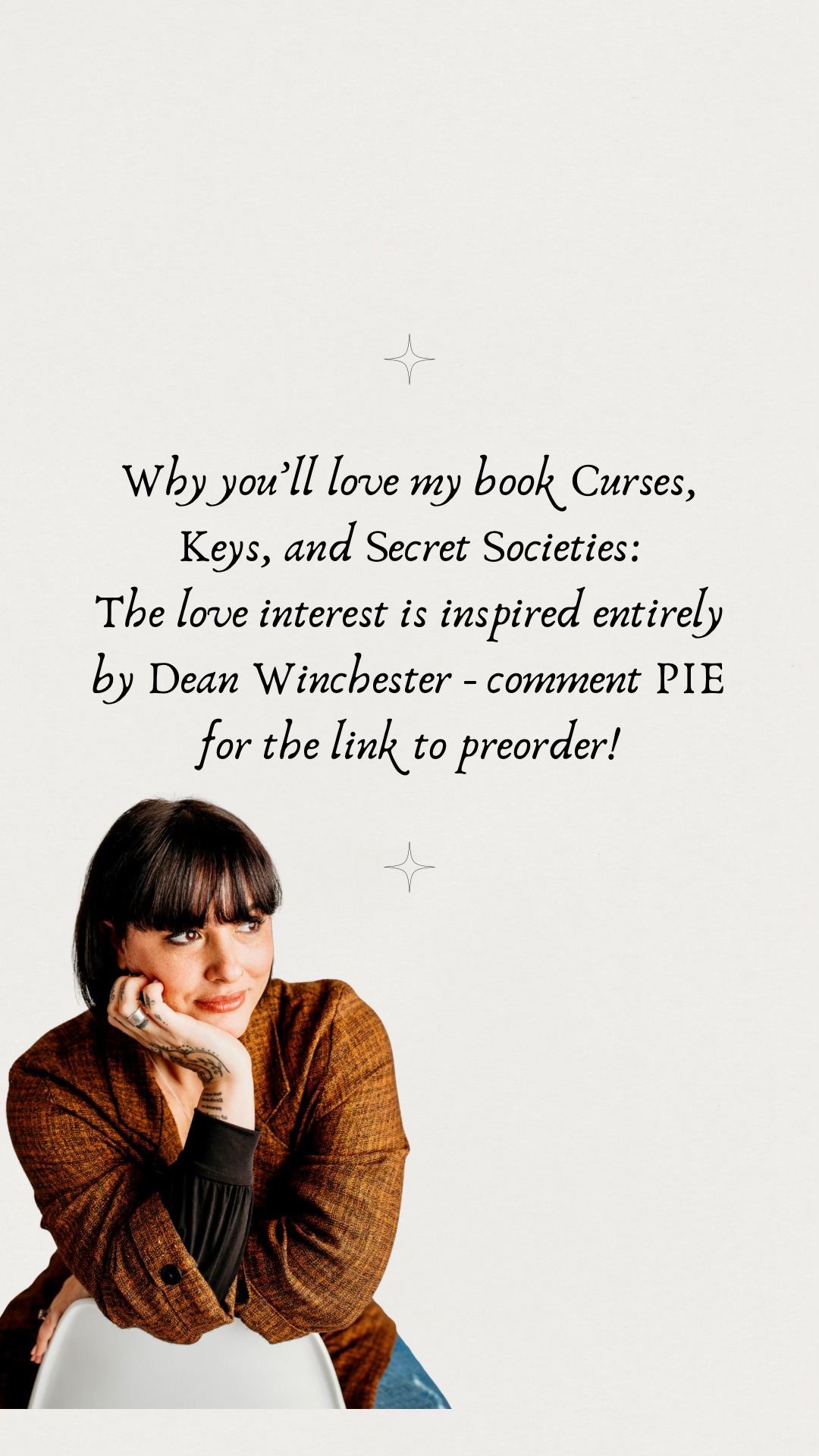
I so sincerely hope you see how easy it is to create a community through pillar content that relates back to YOU! More visibility, more eyes on you and your work. More opportunities to sell more books.
Oh and by the way, these types of posts work on Threads, Bluesky, and X as well. You just take the same exact copy from your memes/quotes/etc. and make individual threads/tweets of them! You can also take an individual slide from one of your meme carousels and turn it into a reel or TikTok. Remember, it’s all about keeping it simple and reusing the same content in different formats and on different platforms is where it’s at!
You don’t need to chase trends or pretend to be someone you’re not to grow online. You just need to show up as you. The version of yourself who’s excited about your stories, your world, your weird obsessions, your “I could talk about this forever” energy. That’s what magnetizes people.
So this week, I challenge you to look at your content and ask:
- Does this reflect who I really am?
- Does this connect back to what I love most?
- Does this make me excited to post again tomorrow?
Because your energy is the algorithm!
The more you align with what lights you up, the easier it is for your ideal audience to find you.
Have questions? Ask them in the subscriber chat!
Comments
Nothing yet. Say the first thing.
Sign in to join the conversation.