
One of the most radical conceptual shifts in physics was the move from thinking only about isolated objects to thinking about fields.
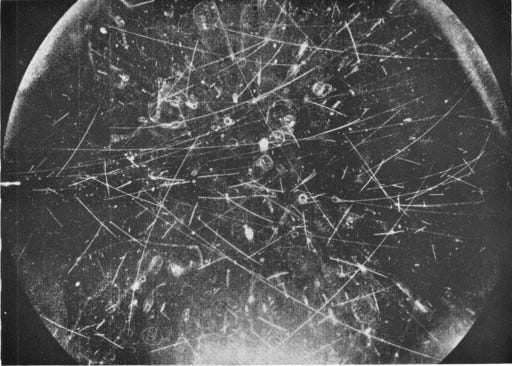
Faraday’s lines of force — later formalized by Maxwell — revealed a stranger truth: what a particle can do depends not just on the particle itself, but on the structure of the space around it. The object matters. But so does the field that gives it infinite possibilities.
Something similar is happening in AI research.
The unit of progress is no longer only the lone scientist, the single lab, or the private model. It is the field: the shared substrate of models, papers, datasets, evals, tools, environments, tacit knowledge, and institutional norms that determines what kinds of contributors can exist at all.
A good scientific field does not merely reward genius. It manufactures the conditions under which more people can become unusually useful.
That is what I mean by the super-contributor field.
This tension is not new. Modern science was built around a strange and fragile bargain: you get credit for discovery, but the discovery itself becomes part of the commons. Newton’s famous line to Hooke — that he saw further by standing on the shoulders of giants — is often treated as a sentimental quote about humility. But it is really a theory of scientific compounding. One mind extends another. One result becomes the platform for the next. One instrument changes what an entire generation can see.
The Royal Society encoded this almost aggressively in its motto: Nullius in verba — take nobody’s word for it. Science advances because claims are not allowed to remain private revelations. They have to become inspectable, contestable, reproducible, and reusable.
Before joining OpenAI, I was a PhD student at Stanford, studying probability theory and the behavior of information in strategic, networked systems. I loved the work. I loved the academic freedom. I loved the intellectual atmosphere: the feeling that some important idea might be hiding inside a conversation at Coupa Café, or in a whiteboard argument that started as procrastination and ended up as research.
That life felt like a dream in many ways. Granted, spending hours alone in front of unsolvable high-dimensional equations is not everyone’s dream. But it was mine.
And yet, very quickly, I realized that most of my time was not spent doing the thing I loved most. It was spent applying for grants, finding compute, trying to get access to GPUs, and negotiating around the basic fact that the rest of the world is profoundly GPU-poor.
If you have ever done AI research outside a major lab, you know this condition intimately. The ideas may be abundant. The talent may be real. The questions may be beautiful. But the experimental apparatus is somewhere else.
Often, the practical solution is collaboration with industry. Graduate students and academic researchers partner with labs because the labs have the machinery required to run the experiments. In my case, that meant working with Anthropic. At first, I experienced this as a personal frustration. Then I realized it was a structural fact about the field.
Academia still produces many of the ideas, but industry increasingly owns the machinery required to test them at frontier scale. Stanford’s AI Index reported that nearly 90% of notable AI models in 2024 came from industry, up from 60% just one year earlier, while academia remained a leading source of highly cited research.
That is a strange equilibrium: one part of the system generates many of the questions; another part increasingly controls the experimental apparatus.
In physics, something similar happened when science moved from tabletop experiments to particle accelerators. In AI, it happened when the lab bench became a GPU cluster.
To me, this felt like both a moral dilemma and an economic inefficiency. Why was I doing academic research if, in practice, I had to rely on industry to do the experiments that mattered? Something about the system felt misaligned. I loved academia. But I could not escape the conclusion that if the research I wanted to do required a frontier lab, then perhaps I should go where the machinery was.
A few months later, I joined OpenAI.
I joined in June 2024, before o1 had been released publicly. Internally, the gap felt almost physical. A few months later, the world would see the first version of what OpenAI described as models designed to “spend more time thinking” before answering. But before that public moment, there was the uncanny experience of living inside a future that had not yet been announced.
For someone who loves science, being that close to the frontier felt almost indecently exhilarating. The models were better and the questions themselves were alive. You could feel, day by day, the boundary of the known world moving under your feet.
But part of me also felt uneasy.
Science is a field of cross-pollination. One idea discovered here helps another idea discovered there. A failed experiment in one corner can save months of wasted effort somewhere else. A training recipe, an evaluation harness, a negative result, a weird behavioral failure — each of these can become a handle for someone else to grab.
When too much of this remains inside the walls of the few institutions powerful enough to discover it, the field loses something. Not only morally, but scientifically. The compounding slows. The number of people who can meaningfully contribute shrinks. The frontier becomes legible only to those standing directly on it.
Of course, the opposite argument is also real. This is not a harmless technology. Frontier AI systems are powerful, increasingly general, and potentially dangerous. The safety case for caution is not a public-relations excuse; it is substantive. Not every model should be open. Not every capability should be released. Not every artifact should be made available to anyone with a laptop and a bad idea.
But that cannot be the end of the argument.
Feynman once defined science as “the belief in the ignorance of experts.” The point is not that experts are useless. The point is that even the best experts must remain interrogable. A field becomes scientific when its strongest claims can be questioned, reproduced, extended, and sometimes embarrassed by someone outside the room.
So the question is not whether AI should be open or closed. That frame is too crude for the technology we are building.
The better question is: how do we build a field where the most important ideas can compound, without pretending that every artifact is safe to release?
Over the past two years, I think the answer has started to change.
Openness in AI no longer means “a PDF on arXiv” or “weights on Hugging Face”. Increasingly, it means the release of entire research substrates: models, datasets, training recipes, evaluation harnesses, logs, intermediate checkpoints, and environments that let other people reproduce, inspect, and extend the work.
Llama made strong open-weight models widely usable. DeepSeek-R1 made reasoning-model techniques feel suddenly much more available to the external community. Open-R1 tried to turn that release into a reproducible research program. OLMo pushed an even more radical version of openness: the full model flow. And projects like Marin are experimenting with a still more ambitious idea: open development, where experiments are documented as they happen, including the failed ones.
That matters because science is both a collection of results and a collection of handles.
The more handles a field exposes, the more people can grab the frontier.
This is why environments and evals matter so much. OpenAI Gym did not solve reinforcement learning, but it gave researchers a shared arena in which algorithms could be compared. SWE-bench did not solve software-engineering agents, but it turned the vague question “Can the model code?” into a more concrete one: can it resolve real GitHub issues under a shared harness?
A field accelerates when its questions become executable.
The best analogy may not be software at all, but biology.
We do not begin every medical discovery by experimenting on full human bodies. We begin with cells, organoids, yeast, flies, and carefully controlled systems where a mechanism can be isolated. Only later do we ask whether the result survives contact with the full organism.
AI alignment and interpretability may increasingly follow the same path.
Small models are becoming the model organisms of AI. They are not the final object of concern. No one should confuse a small model with the full frontier system any more than one should confuse a mouse with a human being. But model organisms are useful precisely because they are simpler than the thing we ultimately care about. They let us observe mechanisms, test interventions, generate hypotheses, and build theories before the full system becomes too complex to understand.
Superposition, sparse features, weak-to-strong generalization, scalable oversight, multi-agent cooperation — these are questions where the first useful result may come not from the largest model, but from the cleanest experimental setup.
Frontier scale still matters. But scale is not the only scientific instrument.
Sometimes the microscope is more useful than the telescope.
This is where independent and academic researchers can matter enormously. Not by pretending they can always compete with frontier labs on raw training scale, but by doing the kind of work that scale alone does not solve: careful interpretability, mechanistic analysis, mathematical abstraction, controlled experiments, theory-building, evaluation design, and the study of how insights transfer across model sizes and architectures.
The frontier lab asks: what happens when we push the system to its limits?
The broader scientific field asks: what is the system, and why does it behave this way?
Both questions are necessary. Neither is sufficient alone.
The right historical analogy may be neither the lone inventor nor the private company, but the scientific commons built around expensive shared infrastructure.
CERN did something similar for the web. By making the World Wide Web available royalty-free, it allowed a scientific information-sharing tool to become global infrastructure.
AI may need its own version of this: not naive openness, not reckless release, but a serious institutional commons where models, evals, safety research, datasets, training recipes, and experimental results can be inspected and extended under norms appropriate to the risk.
This will become even more important as frontier systems grow more expensive. If the cost of training frontier models keeps rising, then even “open” models near the frontier may become too expensive for any single university or nonprofit to produce alone. The future of open AI research may look less like a lone lab publishing a heroic artifact and more like a consortium: universities, nonprofits, companies, governments, and independent researchers pooling resources to maintain a shared scientific substrate.
Percy Liang at Stanford has been advocating for versions of this for years, and projects like Marin are early attempts to make the idea real: a fully open model lab, where the artifact is not only the model, but the process by which the model comes into being.
The key requirement is that open research cannot drift too far from the real research frontier. If open communities study toy problems that no longer touch the capabilities, architectures, or failure modes of modern systems, then openness becomes ceremonial. It produces papers, but not compounding.
This is why researchers inside frontier labs have a responsibility to remain deeply connected to the external research ecosystem. The information asymmetry is real. People inside labs see things earlier. They know which bottlenecks are disappearing, which problems are becoming central, which assumptions have quietly died.
If that knowledge never flows outward in some responsible form, the broader field cannot aim properly.
I am not pessimistic about this. Many researchers inside labs remain deeply engaged with conferences, academia, open-source communities, and external collaborators. Most major labs fund some form of external research, publish selected work, support academic partnerships, or provide mentorship. The membrane is imperfect, but it exists.
And I suspect it will matter more over time. Because AI may become one of the largest open scientific fields the world has ever seen.
In some sense, it already is. AI has always had an unusually fast epistemic metabolism. In many fields, a result can spend months moving from submission to acceptance to publication. In AI, a result can appear on arXiv, be discussed on Twitter, implemented on GitHub, reproduced in a Colab, critiqued in a blog post, and beaten by a graduate student before the original authors have finished their camera-ready.
This is chaotic. Sometimes embarrassingly so. But it is also one of the reasons the field moves so quickly.
AI inherited something from physics preprints, something from open-source software, something from internet culture, and something from startup speed. It is not always dignified. But it is alive.
The future of AI science will not be purely closed or purely open. It will be something stranger and more interesting: frontier labs pushing the limits of scale; open communities turning those limits into shared technique; academics and independent researchers probing the mechanisms; governments and institutions funding shared infrastructure; and new norms emerging to keep the whole system from becoming either reckless or stagnant.
The question is not whether every model should be open. That is too blunt.
The question is how to build a field where more people can become super-contributors.
A super-contributor field is one where the right artifact, released at the right level of abstraction, can turn a graduate student into a frontier researcher. Where an eval makes a vague problem executable. Where a small model makes an invisible mechanism visible. Where a training recipe saves a thousand duplicated failures. Where a negative result prevents an entire field from walking into a wall. Where the knowledge produced by powerful institutions does not die inside them.
Science has always depended on this bargain.
Credit belongs to people. Knowledge belongs to the world.
AI will test whether we still believe that.
SoC (Stream of Consciousness) are short musings on AI, philosophy, and the directions intelligence is starting to take in our life.
I also love that stream of consciousness abbreviates to SoC: a system-on-a-chip compresses an entire architecture into something small and self-contained.
That’s what I want these pieces to be too — compact architectures of thought.
— With Love, Houda
No posts
Comments
Nothing yet. Say the first thing.
Sign in to join the conversation.