
Please fasten your sandals; this homecoming gets morally turbulent.
We all know that Odysseus wants to reach Ithaca. What The Odyssey asks is how many people must die before one man’s determination stops looking heroic. The answer arrives through thunder, blood and some of the most physically overwhelming filmmaking I have seen in years. This is not merely a journey home, but a legend being dragged into the light.
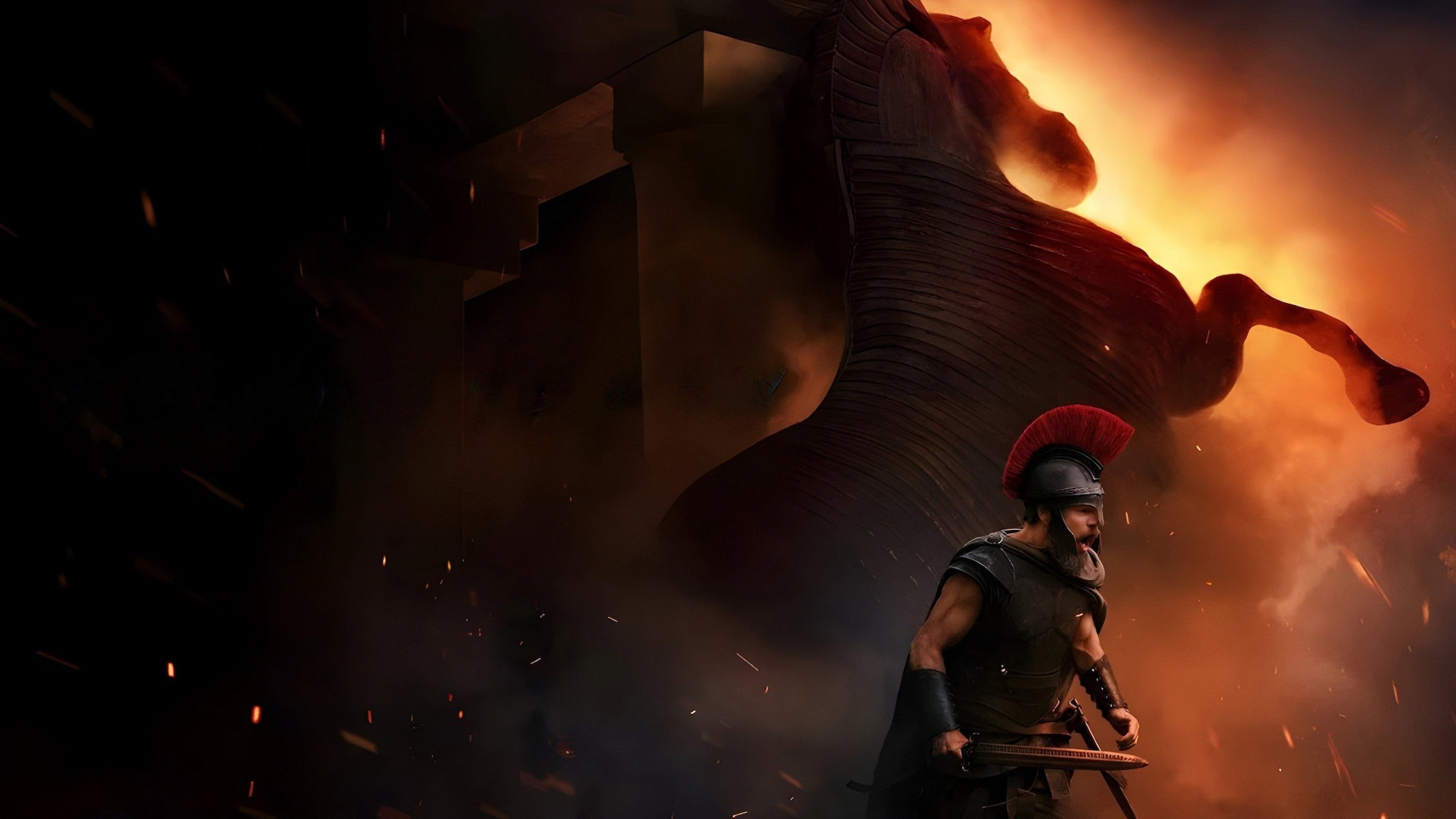
Odysseus (Matt Damon), king of Ithaca, has been missing since the fall of Troy. His wife Penelope (Anne Hathaway) struggles to preserve his kingdom as the ambitious Antinous (Robert Pattinson) and other suitors compete for her hand and the throne.
Their son Telemachus (Tom Holland) refuses to accept his father’s death and sets out in search of answers. Meanwhile, Odysseus crosses a hostile world of monsters, witches and vengeful gods as every step towards Ithaca demands another sacrifice.
While remaining close to the original, The Odyssey redirects characters and reshapes details without making changes simply to announce its own cleverness. The result feels recognisable, yet distinct enough to begin a legacy of its own. Some episodes receive considerable space, while a few are dispatched almost as soon as the necessary information has been delivered. A better balance could have made the film twenty minutes shorter without angering Poseidon.
Even at its busiest, the narrative rarely becomes overwhelming. Nolan trusts us to keep pace with the lies and schemes, while wisely leaving some parts of the original aside. In lesser hands, this much mythology would arrive with a glossary, a family tree and someone constantly asking, “So what you’re saying is...” Here, the many places, characters and detours remain accessible, and adding more would only have overcrowded an already very full ship.
Penelope’s predicament is convincing as a political trap, but the film never entirely resolves my old frustration with the source material. How many years can one woman endure a house full of men drinking her wine, eating her food and discussing ownership of her future before she begins sharpening the cutlery? This could have been an opportunity to expand her resistance beyond endurance and strategy.
Unfortunately, the sacred law of hospitality is discussed a little too much. Zeus’s law is invoked so often that, by the end, I felt qualified to enforce it personally. The first references explain why the suitors’ behaviour is more than just rude. After that, each repetition feels like Zeus tapping the sign while the audience assures him that, yes, they have read it. More awkwardly, the film elevates an aristocratic code of hospitality into universal morality. Apparently civilisation can survive war and plunder, but refusing a stranger food and shelter is where the gods draw the line.
Odysseus may be destined for heroic songs, but the film refuses to polish away the blood behind them. When the film returns to Troy, victory no longer looks like proof of genius, but like the beginning of a moral debt that follows him long after the war has ended. Even Athena’s diminished role makes sense, as the film shifts its focus from whether Odysseus will return to whether a man shaped by such choices can ever truly come home.
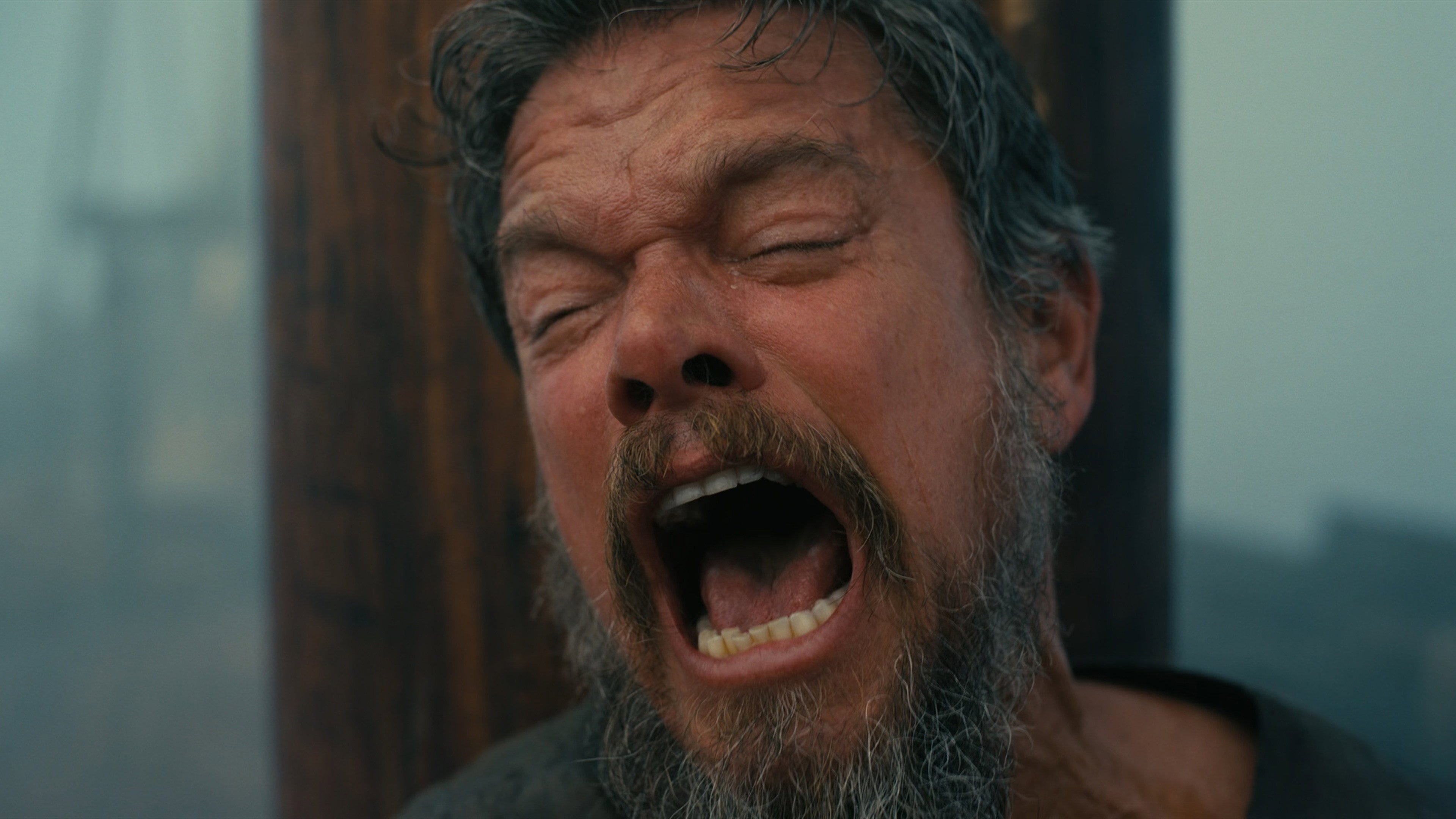
Matt Damon is fantastic as Odysseus. He does not soften the character’s cruelty to protect his heroic status. His Odysseus is compelling without asking us to forgive him, balancing exhaustion and flashes of brutality in a performance that never lets heroism become innocence. Anne Hathaway lends Penelope a different kind of strength. She transforms stillness into resistance, making every glance seem like another day on which the suitors have failed to break her.
Robert Pattinson imbues Antinous with an oily sense of entitlement that renders the character immediately unpleasant. He moves through Ithaca like a man who has already chosen the curtains for his future palace. Tom Holland gives the weakest performance, although that is a brutal comparison in this company. Telemachus’s inexperience sometimes works in his favour; at other times it seems as though he is waiting for the scene to reach the emotion he rehearsed.
I was left cold by Charlize Theron’s performance as Calypso. Her limited screen time did not help, and she never found the emotional depth required to make her bond with Odysseus seem real. Theron is at her most compelling when she is given something tangible to push against or something to run from. Lupita Nyong’o needs only a few minutes to give Helen and Clytemnestra more tragic weight than several larger roles receive across the film.
The film’s greatest strength is the way it makes everything feel so physical. The ships have weight, the water has force, and the warriors look as though they might tumble out of the screen and continue the battle in the front row. This physicality also lends the mythological elements greater power. A monster is more frightening when it enters a world whose ground, sea and bodies already feel solid beneath our feet.
There is salt, leather, mud and blood. The world does not resemble a collection of immaculate digital surfaces waiting to be admired; it is a place in which bodies must endure the consequences of every collision. After last week’s strangely weightless “live-action” Moana, I found this enormously refreshing. Here, real actors and set pieces occupy and dominate the space, rather than polished images from which every trace of life appears to have been buffed away.
The sets, armour and costumes do not appear especially concerned with historical accuracy, but that has never bothered me. Most designs look plausibly ancient, or at least similar enough to the popular image of antiquity to fit the setting. As this thoughtful article argues, the anachronisms feel less like mistakes than part of a long tradition of reshaping the story for each new audience.
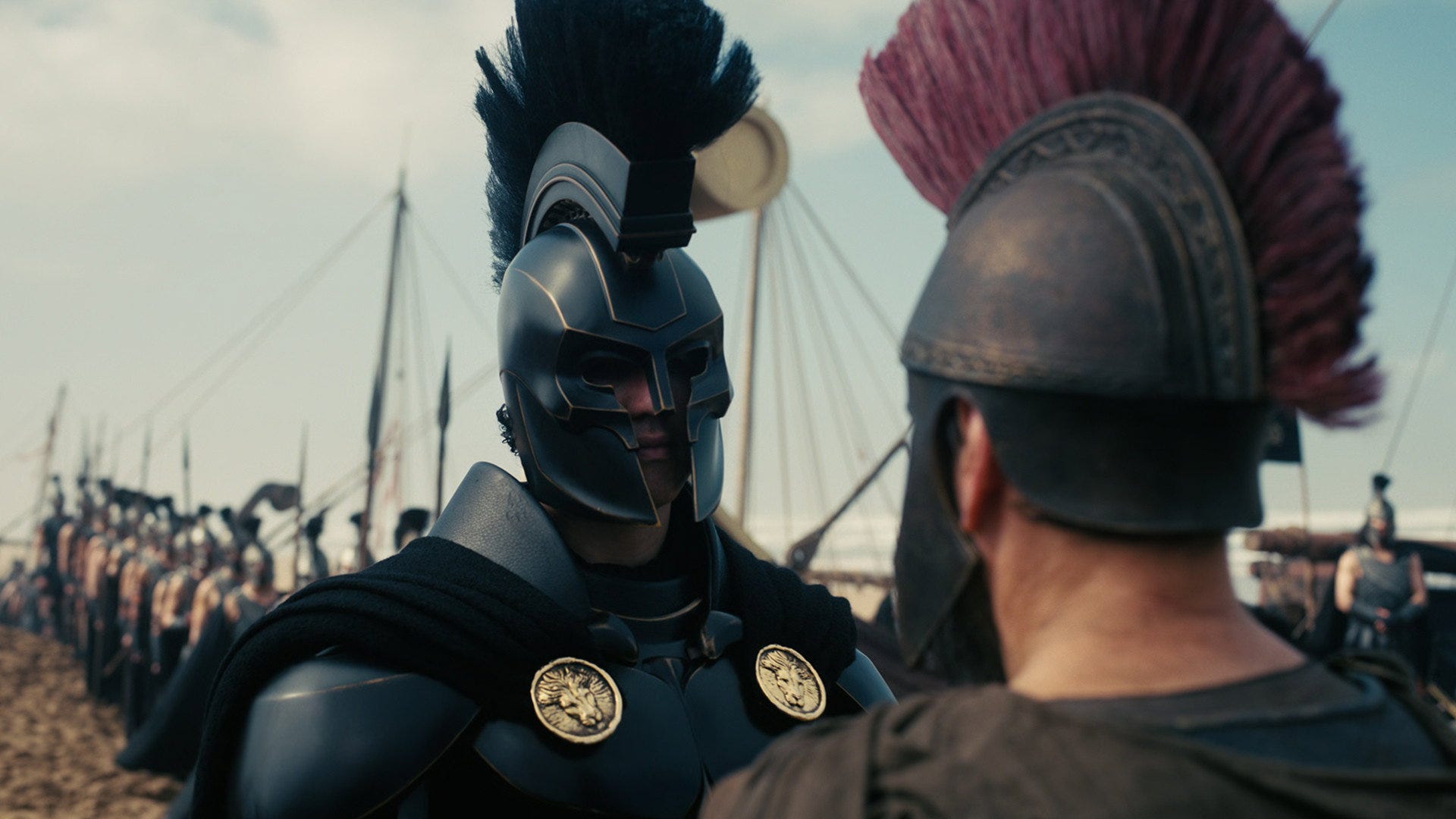
You’ve probably seen the memes by now, so we need to talk about that one bold design choice for a moment. Agamemnon’s helmet has such pronounced cheekbones that they could have cut through the walls of Troy, rendering sieges and wooden horses unnecessary. It is magnificent, ridiculous and impossible to ignore.
The bombastic score does more than simply accompany The Odyssey. The music is highly effective, drawing the audience into the film until every danger feels enormous and inescapable. There were moments when my pulse was racing more than Odysseus’s entire crew. The perfectly timed thunder is another glorious touch. I would also like atmospheric thunder to punctuate my most important statements, although I suspect my neighbours and electricity provider might object.
The departure from Thrinacia is where the film mistakes sensory overload for tension. Images and sound become frantic, but fail to turn that into dread or disorientation. I found the lighting effects irritating, even though I am not photosensitive. The return to Troy achieves the opposite. It is vast and brutal, yet every image contributes to the moral unravelling beneath the spectacle. Rather than being just another impressive set piece, it becomes an open wound inside the man who caused it. One sequence overwhelms because it is loud; the other because its violence means something.
I thought The Odyssey was genuinely magnificent. While not flawless, its flaws are like barnacles on an enormous and otherwise astonishing vessel. While I never expected the journey to resemble a relaxing Mediterranean cruise, I was still surprised by how brutal and occasionally revolting it became. The film refuses to soften either the horrors of war or the cruelty of its mythology. Violence arrives without decoration, and the creatures are disturbing rather than market-tested for future plush toys.
Few films make the screen feel this large. Nolan’s sweeping compositions turn water, weather and landscape into forces as imposing as any god, while the physical sets and real environments give the action weight and danger. The camera is less convincing in close-ups, and several darker scenes obscure more than they reveal. Yet whenever it pulls back, the film opens into a beautiful and hostile world that seems to stretch far beyond the frame. Then the music rises, the danger closes in, and my entire critical vocabulary abandons ship. Several scenes left me with nothing more sophisticated to say than, “Oh, bloody hell.”
The film exceeded my expectations by refusing to treat the original epic as an untouchable, heroic monument. It preserves the adventure and grandeur, while also examining the moral damage that traditional retellings can hide behind the word “hero”. It was the return to Troy that pushed my reaction beyond admiration. Until then, I had been watching a spectacular epic. Suddenly, the film confronted me with what happens when one brilliant act makes the previously unthinkable possible.
Above all, I felt awe. I left the cinema feeling exhilarated and slightly battered, but also morally unsettled and extremely grateful that my own journey home did not involve sea monsters, divine grudges or Robert Pattinson trying to steal my house. My only reservations concern the length and pacing, and a few performances that do not quite reach the standard set by the rest of the cast. By the end, its weaker passages had become little more than debris in the wake of something genuinely monumental.
The Odyssey is successful because it makes an ancient story feel both physically immediate and morally unresolved. It gives Homer’s monsters flesh, but it also asks what happens when the hero himself becomes the most dangerous creature in the legend. The journey occasionally drags, and not every performance or motif reaches the film’s otherwise formidable standard. Even so, these flaws feel small beside the scale, tension and emotional force of what Nolan has created.
Would I recommend it? Yes, absolutely. Few modern epics feel this tangible, this confident or this willing to challenge the heroic mythology they appear to celebrate, and even its rougher passages cannot sink the magnificence of the experience. See it in a cinema with the biggest screen and loudest sound system you can find. This is no sunlit sail through calm waters, but an overwhelming journey designed to leave you exhilarated, unsettled and grateful that Poseidon has no personal reason to hate you.
Is Odysseus still a hero by the end of The Odyssey, or are we simply watching history reward the man who caused the most damage? Defend your answer in the comments!
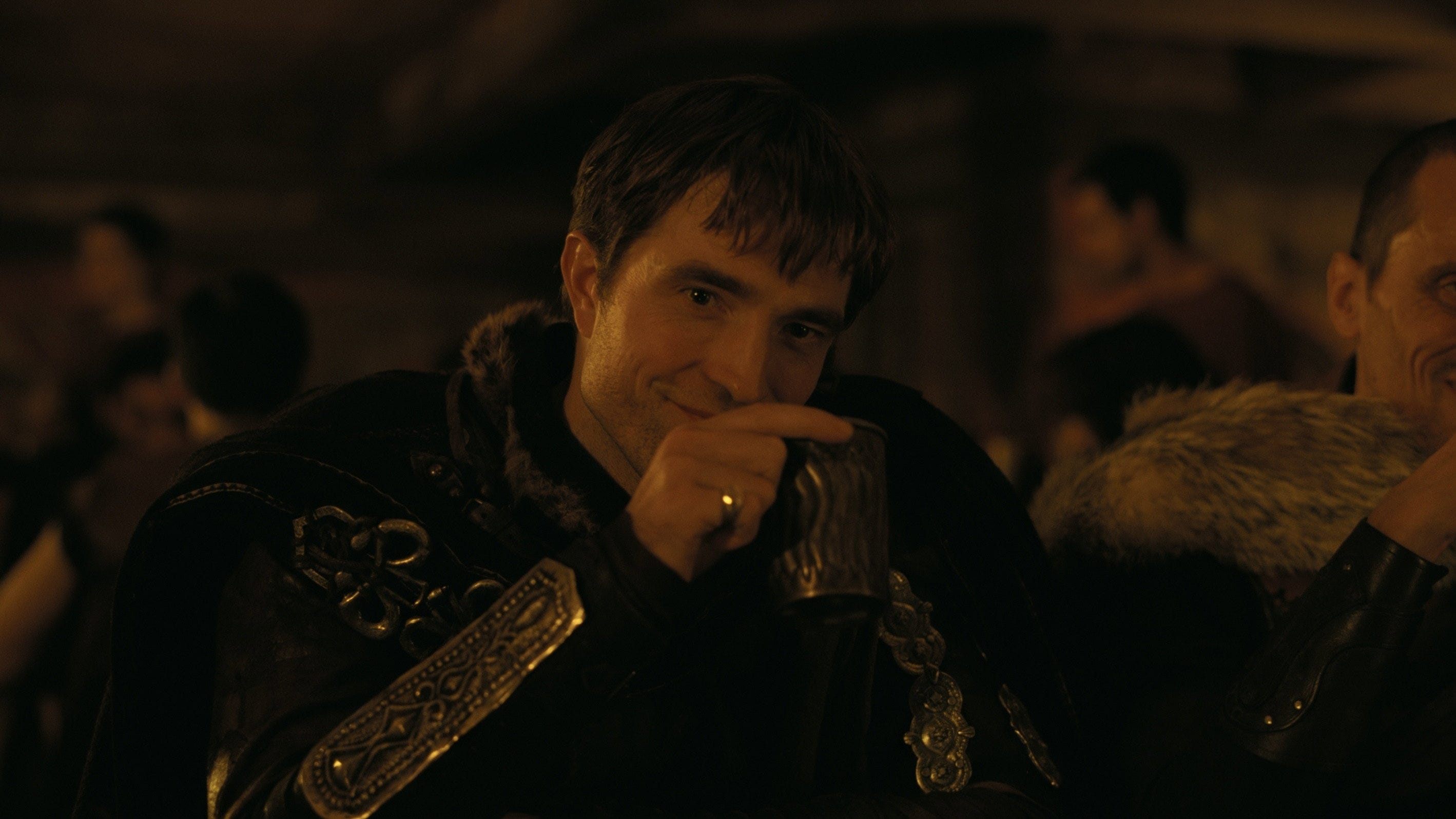
Achievement: The god of the sea called. He wants his smugness back.
May your homecoming require fewer sacrifices,
xo Marie
The Odyssey arrived in cinemas on 17 July 2026. Christopher Nolan wrote and directed the 173-minute action epic, based on Homer’s epic poem.
Where to watch? Currently playing in cinemas
More info: Letterboxd | IMDb | Rotten Tomatoes
Looking for Charlize Theron at her best? These films make far better use of her range, intensity and formidable screen presence:
Comments
Nothing yet. Say the first thing.
Sign in to join the conversation.