
THE HOT GLOBE WITH STEPHEN MAYFIELD
It’s extraordinary, 24 billion shoes manufactured each year, a majority of them flip-flop sandals, and they all end up in garbage dumps not rotting, or else floating in the oceans of the world. Some 20% are never sold at all and stores shovel them off to landfills. There’s a bit, only a bit, of decomposing because this is unforgiving plastic, but even that bad plastic just becomes smaller and smaller until it becomes the new term, “microplastic,” which has been proven to end up in our bodies, even making its way through our bloodstream to our brains.
Not good.
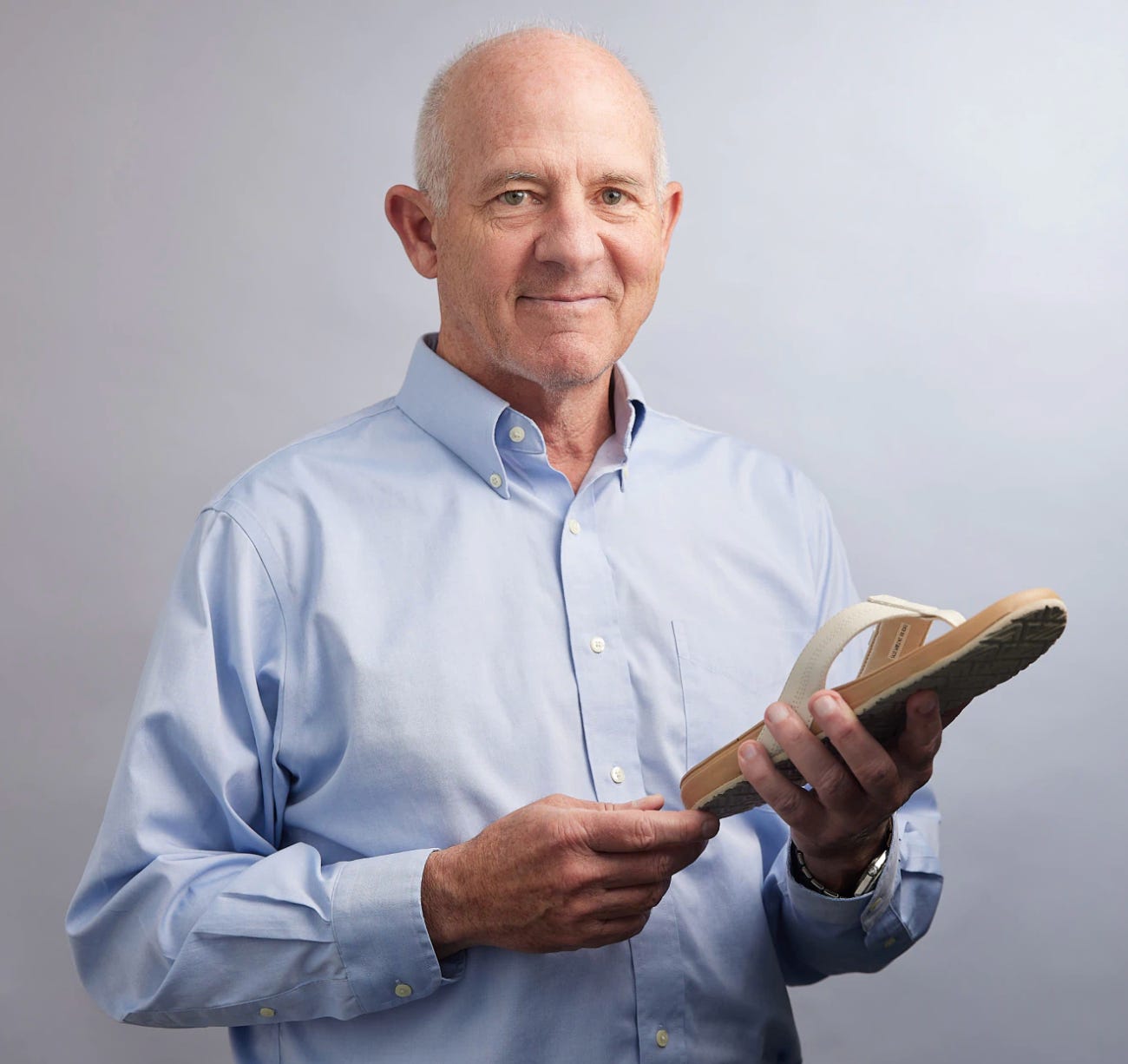
So Stephen Mayfield, a biochemist who was for many years the head of the prestigious biology department at the University of California, San Diego, and one of the world’s experts on algae, began to ponder. First he made surfboards out of algae, and this was cool—he was a surfer—and the media loved it but how many surfboards are really out there? (Actually 500,00 a year.) But a small number compared to those cushions and wrappings we put around our feet—called shoes.
He put an innovative team together, they found investors for the company, Algenesis Labs, and they have put together hip beach loafers much like Van’s or Nike’s skateboarding line, as well as some high-tops, and the crazy thing is, they look good and feel great, much better than those early recycled plastic jobs some readers may recall from Patagonia.
I say this with complete liquidity, although I consider Steve a friend, since I plunked down $80 on the website and ordered a pair of BlueViews, Size 13 if you must know.
This is one of those things, that if Mayfield and Algenesis could sell, you know, a mere 20 billion of, it would be a true-blue sustainable solution for the world.
Watch this shoe biodegrade. You can throw it in your home compost:
And no microplastics:
THE HOT GLOBE ZOOM WITH STEPHEN MAYFIELD:
TRANSCRIPT
[00:00:02] HOT GLOBE: Steve Chapple with Hot Globe here. I’m with Steven Mayfield, formerly the head of UCSD, San Diego’s biology department, and a distinguished professor from Berkeley, PhD. And. But Steve has come up with the greatest biodegradable, biodegradable shoes of all time. It’s really a major invention. Now, you’re a biochemist that has worked with algae, that has produced all sorts of things, including the first algae based surfboard. But now tell us about shoes. It’s like a problem for the planet.
[00:00:39] STEPHEN MAYFIELD: Yeah. The you said surfboard. So the way we started was we were making biofuels. And then we decided, well, that’s silly. Why? Why would we grow algae and take these really cool oils and burn them? We got to do something better than that. Hey, let’s make polymers. And since we’re going to make polymers and kind of reinvent them, let’s make them better this time. Let’s make them so they biodegrade at the end of their life. So the first thing we made was a surfboard. We’re at UC San Diego. What else? What product were you making? If you’re going to make a polymer, it’s going to be a surfboard. But then we very quickly realized, okay, there’s 500 000 surfboards made worldwide every year, and each one of them has about 2 pounds of material. So, you know, 1 million pounds. What seems like a lot, that would be good if we had that.
[00:01:25] STEPHEN MAYFIELD: Then you look at shoes 25 billion with a B, 25 billion pairs of shoes made every year, each one of those with about a quarter pound of material in it. So then suddenly you realize we’re talking 5 billion pounds of plastic made every year. And where do they all go? Where do all our old shoes go? Into landfills, into, you know, some into the ocean, some all kinds of places. And we decided, okay, that’s our target. We’re going after shoes. And, um, I mean, flip flops are what, the number one shoe in China. In India. They’re the number one shoe. Yeah. Let me grab one here just so I can show you right flip flops now, not just I mean, this is the number one shoe in the world, not this specific one, but something that looks like this. A single piece with a single strap that goes over it. And a flip flop is just the American version of that. So the rest of the world wears those things which we would call sandals, right? And then here we wear the three point version of it. Just I don’t know why, just by convenience, although most of the young kids now wear these things called slides, which look just like that number one shoe in the world, by far 8 billion of those things probably made every year.
[00:02:42] STEPHEN MAYFIELD: And so when they get to the landfills, they what, they don’t biodegrade because they’re not biodegradable. They’re oil. Right. And also microplastics in the ocean. And everybody has seen flip flops or sandals, as you say, slides on the beach. And if you go to the garbage patch or look at that from a satellite. Or if you look at Malaysia or go to Senegal, it’s crazy, you know?
[00:03:05] HOT GLOBE: So you’ve really attacked this from a stylistic fashionable way. Explain the shoe a little bit more. Like people think, uh, how it’s going to turn their feet black. It’s not.
[00:03:16] STEPHEN MAYFIELD: Yes, exactly. Exactly. The two questions we get. Oh, if they’re biodegradable, they must not be durable. No. Durability and biodegradation are two completely unrelated physical properties of a material. We all know wood biodegrades some wood is extremely hard, some wood is extremely light, but in any case, they biodegrade. Plastics don’t biodegrade. Okay, so you strength, rigidity, those are separate issues. So our material is designed to be just as durable as any petroleum plastic you get today. So our shoes last just as long as the big brands Nike, Adidas, whatever. We’ve measured that in robots. We put them and have robots walk on them. Okay. But at the end of their life, if you if these things happen to escape. Like suppose your shoes you’re sailing and your shoes fell overboard. Our shoes will biodegrade in the ocean. They will biodegrade in soil, in dirt. They will biodegrade in a compost pile.
[00:04:12] HOT GLOBE: Or own backyard compost.
[00:04:13] STEPHEN MAYFIELD: Yeah yeah yeah yeah. We’ve we’ve actually biodegraded our shoes and grown corn and sunflowers on them. They grow perfectly well. Right? So this is, this is would be true of paper, right? If, if you made paper shoes, they would be just as good for the environment as ours. The problem is paper shoes aren’t an elastomer. The reason our material is so cool is because you can step on our foam 100,000 times and it’ll it’ll rebound right back to where it was before. That’s what makes you so wonderful, right? Shoes are actually kind of a little engineering marvel, right? They’re they’re lightweight. Right? They fit to your feet and you can walk on them for miles and miles and miles, and they just keep bouncing along and protect your feet from rocks, from dirt, from the rest of the stuff. The problem with them is elastomers are made from petroleum today, and those things are going to be on the planet forever. Now, as you’re walking on a pair of shoes, you’re abrading it. Look at an old pair of tennis shoes. Look at your car tire. Look at anything that’s outside those. That part that you abraded didn’t disappear. It became microplastics in the environment. So not only do you have to worry about, hey, what if my shoe falls into the ocean? Or what happens if it, you know, somehow gets out on the planet? It’s trash. It’s dirt, it’s whatever. That’s bad enough, but it’s also that even under its normal wear and tear and washing, you’re creating microplastics. And all of us have read the reports. Now, microplastics in the water. It’s in the air. It’s in the food. It is everywhere. It’s inside of us. It’s in our blood. It’s in our brains. Okay, I don’t know about you.
[00:05:56] HOT GLOBE: I sometimes forget a name, but I guess that’s why.
[00:05:59] STEPHEN MAYFIELD: so you and I were just at the Ted conference last week. The other guy, what was that correlation? That he showed the amount of microplastics in the environment and the increase in dementia and heart disease. Oh, boy. So right now it’s a correlation. It’s not cause and effect because we haven’t defined it that well. But personally, I’m like the greatest thing that our biodegradable shoes do is they keep microplastics from accumulating in the environment because nothing good is coming from those things.
[00:06:32] HOT GLOBE: Okay, I’m going to hold them up. I don’t know if we can do this with a Zoom background. It’s kind of crazy. But there they are like magic, right? Yeah. By the way, for our cynical listeners, I paid $80 for these, which is not too bad. I mean, these are high fashion shoes. I have a high fashion daughter, a fashionista up in LA. Right. And, uh, I mean, these people are very picky about their shoes. So how come there isn’t a major adoption from, like, Nike, Adidas, etc..
[00:07:01] STEPHEN MAYFIELD: Yeah. Well, so two reasons for that right now. Number one is that all human beings operate under this mode of we all want progress. We don’t want change. And by that, what we mean is, oh, oh, the iPhone 17. Well, I had an iPhone 15 and iPhone 12 and iPhone ten. So so I’ve already learned how to work with those things. So we want progress. We want things to be better. We want them to be faster and prettier and whatever. But remember back when that first iPhone came out? Oh, we’re not touching that thing. All of us, you know, smartphones came out and we’re like, no, that’s too new and different. So part of it is just the human nature. And if you’re a big brand, you have the same thing that individuals have meaning. There are people at Nike and there are people at Adidas that are like, well, it sounds cool, but it’s going to it’s going to be painful, it’s going to be expensive. It’s going to be hard for me to integrate it into my factory. Um, consumers might not like it. I’m going to turn my feet black. Heard that? That’s actually from one of the big brands, right? So all of those are reasons not to do it. So what happens with this is it’s hard to get the first couple people to buy. Now we do. Now we have a couple of the smaller brands that have adopted our material and use them. It.
[00:08:19] STEPHEN MAYFIELD: But once you get one big brand to use it, boom. Then the pendulum swings back in the other direction very quickly because then you get FOMO, you get all the groups that are like, uh, oh, I can’t miss out on this trend. I’m going to come in. So it’s funny, I always tell the guys here, be careful what you wish for, right? We keep saying we need a big brand to, you know, adopt our material. So we’ll when they do, then we’re going to be overwhelmed with some of those big brands. Good lord. Adidas makes 300 million shoes. I want to say Nike makes 600 million. Wow. Okay. Good luck filling that order when it comes in. So we’re so in some ways, we’re kind of lucky that it’s the smaller brands that are adopting us first. You know, brands that maybe make 30,000 or 50, 000 shoes, then we sort of get our little training wheels on here, right? We get to grease the system, you know, we got our monomers made. We learn how to ship them to Vietnam. We learn how to integrate it into that factory. You know, we learn how to get it through customs. So we’re going through all of that right now. But it’s frustrating for me because and just like you said, look how comfortable and great these shoes are. And they’re not more expensive than other shoes. So the big brands are going to come around because this is the future.
[00:09:41] HOT GLOBE: You need the Norwegians, you need those soccer guys. You know, you need that six foot five guy. You need Holland.
[00:09:47] STEPHEN MAYFIELD: Exactly
[00:09:51] STEPHEN MAYFIELD: You know what? I’m going to send him a pair. I don’t know where he is, but I’m going to find him and send him and just say you need these. Days.
[00:09:57] HOT GLOBE: And then, you know, there’s other products like on your website, you can see like, uh, the phone, you know, covers on, on phones. And so explain that a little bit biochemically. I mean, that’s hard. Shoes are soft, but you’re.
[00:10:12] HOT GLOBE: Expert on all of these polymers, etc..
[00:10:14] STEPHEN MAYFIELD: Yeah, sadly, I’ve become one. You know, the scariest thing is I can now look at people’s feet and tell them what shoe size they are. And then my wife is like, that’s not right.
[00:10:22] HOT GLOBE: You shouldn’t. If everything goes south on you, you can always--
[00:10:25] STEPHEN MAYFIELD: Exactly become a shoe salesman. Okay, so so polymers come in a couple of different forms. Okay. Generically, when you look at things, they’re either they’re either flexible, right? Yeah. Like this springy or they’re harder. Okay. The main difference between these two things is how much air is mixed in with it. This one is frothed up with a bunch of foam little bubbles in it. And this one you can see is pretty clear. No bubbles at all. And that’s the main difference between the two. The underlying chemicals are the same. So this biodegrades just the same way the foam shoes do. It’s just that this one is much more dense, much more rigid, still flexible. It’s still an elastomer, right? I can still bend it boink, and it springs right back to where it was. So elastomer is the underlying physical property. And then whether it’s a foam or a solid piece that’s processing, that’s how you treat the material in the machine. One of the big challenges we have, right, is that not only do you have to make a foam that works well in a shoe, and that the shoe designers and the shoe brands like your material has to work in those billions of dollars worth of machines that are already out there. One of the super big challenges for any technology is, hey, you got to be cool chemically, as cool as the other guys, you got to integrate into existing systems. Nobody’s buying a new foam machine. Just because your polymer is cool. You have to make your polymer work in their process.
[00:12:05] HOT GLOBE: And you said that, um, the way that things are adopted is not necessarily that science paper, that sort of aha moment, not even the invention, not the patent, but the product. Right. And this is a product. So this will bring the idea that you can have biodegradable shoes. And by the way, the tops are made out of hemp and so forth. So they buy it as well. Um, and uh, so this would actually replace enormous numbers of plastic products that we. Yeah.
[00:12:38] STEPHEN MAYFIELD: Yes. So the simple answer is yes, it can. The more complex answer is there’s about eight big plastics that are out there right now that we all know there’s pet. That’s our water bottles. There’s high density polyethylene, there’s polypropylene, there’s polyvinyl chloride. Most of these things, you kind of recognize the name. Why are there so many out there? They all serve a slightly different role.
[00:13:04] STEPHEN MAYFIELD: The the elite part of the polymers are polyurethanes. That’s what we make. They’re called the elastomers. They’re the ones that stretch and snap back really well. You everybody knows PVC pipes don’t stretch and snap back. Right. Pvc, polyethylene, polypropylene. They’re flexible polymers. They’re not elastic. You can’t pull them and have them snap back. Okay. So could we could we make polyurethanes that have the role of polyvinyl chloride or polyethylene? The simple answer is yes. Would we know? And why is the answer no? Because elastomers are high performance and therefore you you get a premium for them. Much easier for us to sell into markets that appreciate the physical properties of our polymer than into the markets that don’t care. People ask us all the time, Well, you have biodegradable plastics. Why don’t you make single use plastics for me? You know, make make plastic bags because plastic bags are super, super cheap. Why would you take a really fancy, expensive polymer and make something really cheap? When I always tell people is, yeah, don’t do that. Get a paper bag. They work just as good, right?
[00:14:19] HOT GLOBE: Well, this is all fantastic. It’s a bit of solutions. It’s a bit of hope. Um, and it’s about at the right time, I would think. You know, everybody is super concerned about microplastics and about plastics in general. Well, and people should be Dustin Hoffman, you know, remember he says that guy comes up to him in the pool.
[00:14:38] STEPHEN MAYFIELD: And that was The Graduate. You and I would know that movie. I don’t think the kids today would. That’s true. I’m going to say one thing to you. Plastics? Yes, plastics. Listen, plastics are totally cool. I mean, when you think about it, they’re cheap. They’re so functional, right? Like, like just look at anywhere it’s not. It’s your phone case. It’s the foam seat you’re sitting on. It’s your shoes. It’s your car tires. It’s the world is defined by these things. We just need to be a little more thoughtful. Like number one, we need to get way better at recycling. So we’re not just throwing this stuff into the landfill, right? Okay. But we also need to get way more savvy on microplastics and a, how we clean the ones up that are in the environment now. So we’re not all eating them. And then our material, the next generation material. So we’re making products that don’t generate microplastics that that’s going to take a while because there’s 400 trillion pounds of plastic on this planet right now. It’s an absurd number you cannot even imagine. So look, it’s going to take a while, but this is a start.
[00:15:49] STEPHEN MAYFIELD: And people often ask us, why did you start in shoes? We started in shoes because everybody has them and everybody understands him, and they all know. You inherently know that a shoe is kind of cool, right? Like if you’re playing tennis or if you’re running or if you’re doing whatever, everyone kind of inherently understands, oh, shoes are super functional. They’re serving a purpose. Sometimes it’s different. My golf shoe is a little different than my running shoe is a little different than my bowling shoes or whatever, but everybody understands that they’re an engineered little thing, and you see them, they’re right in front of you. So it’s a way for people to connect your consumption of things with your protection of the environment and making it all a more sustainable place for us. So it’s a cool little thing. And what your listeners should do is think about not only our shoes, but every other polymer that’s out there that is like, hey, I’m going to do my little part. I can do my little part. I can go buy those shoes. I can not buy that plastic thing. And I can use my metal, my little metal water cup or my little metal coffee cup.
[00:16:51] HOT GLOBE: Okay. It’s called Blueview, right? Blueview shoes And um, and um, it’s Algenesis as a website Algenesis. And that’s one last question I had for you. Um, is it all made out of algae or is it synthetic versions of that?
[00:17:07] HOT GLOBE: It’s not synthetic. It’s all made out of plants. Algae is a plant. And we use algae oil to make part of our things. But we can use any plant oil out there. Algae is really just a it’s a it’s an ancient plant. It’s what all plants come from. So the oil from algae is what makes petroleum. Petroleum is not melted dinosaurs. It’s ancient algae. Right. You know that Steve. So we simply said, okay, let’s not go algae to petroleum to plastics, let’s go algae to plastics. But then there’s a limited world supply of algae.
[00:17:41] STEPHEN MAYFIELD: So then we just said, okay, if we can make it with algae oil, we can probably make it so we don’t use food oil, we don’t use soybean oil and we don’t use palm oil, but we use any other oil that’s out there. We can use waste oil. Our favorite one right now is hemp oil. There’s a whole big industry industry now growing hemp for the fabric, not not for the pot that.
[00:18:03] HOT GLOBE: The upper fabric is very nice, you know?
[00:18:05] STEPHEN MAYFIELD: Yes. Exactly that. The tops of the tops of our shoes are hemp. It makes a beautiful fabric way more environmentally friendly than cotton, uses, much less water, uses much less nitrogen fertilizer. So but when you grow all that hemp, you end up with all these hemp seeds. They’re actually low in THC. They’re not. You can’t sell them in pot stores. Okay. Not much else you can do with them. So that’s our favorite oil that we’ve been buying lately because that one converts to our polymers. No problem at all.
[00:18:35] STEPHEN MAYFIELD: Well, you have to set up another plant in Kentucky, I think that’s the hemp place. All right, Steve, it’s been a lot of fun talking and uh, walking with you as we say. #
STEVE CHAPPLE IS A FORMER VISITING SCHOLAR FROM YALE AT THE SCRIPPS INSTITUTION OF OCEANOGRAPHY, A SR. FELLOW AT THE SAMUEL LAWRENCE FOUNDATION, AND THE AUTHOR OF 8 REASONABLY GOOD BOOKS, including LET THE MOUNTAINS TALK,LET THE RIVERS RUN: A Call to Those Who Would Save the Earth (David Brower with Steve Chapple (HarperCollins) and OUTLAWS IN BABYLON (S&S) now being turned into a streamer.
Comments
Nothing yet. Say the first thing.
Sign in to join the conversation.