
Hiya History Lovers,
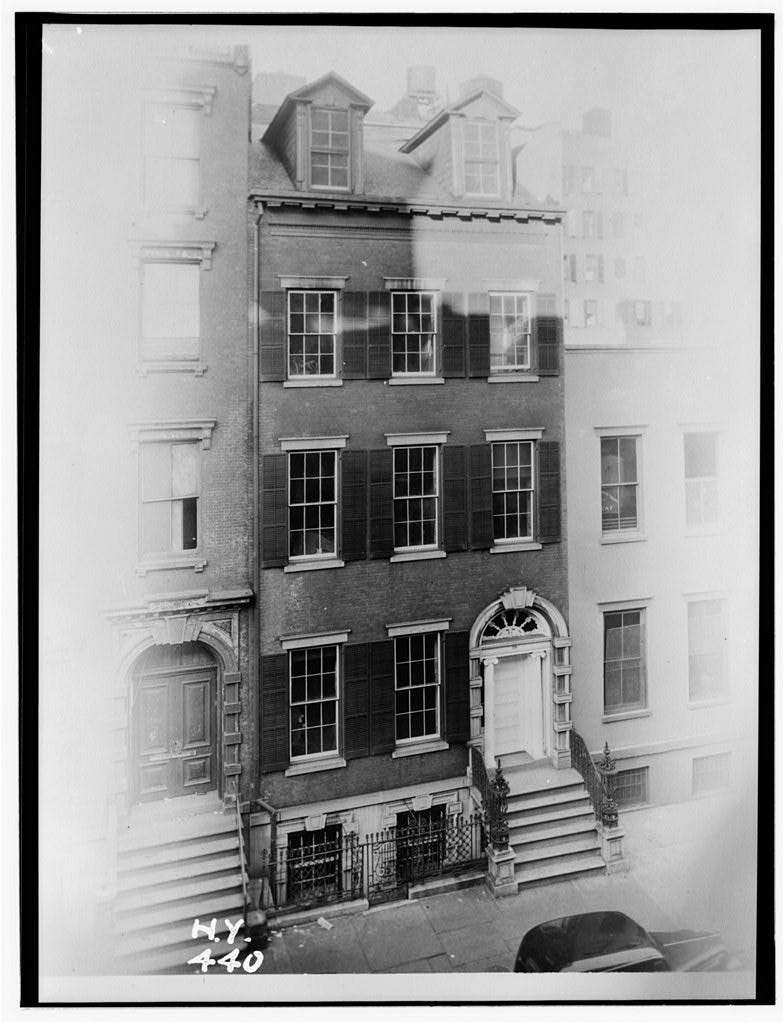
February being Black History Month, I’m doubly pleased to have come across a new-to-me discovery about 29 East Fourth Street, best known as Merchant’s House. Back in my tour guiding days, I used to stand on the front steps of this beloved East Village Manhattan landmark and wax enthusiastic, and hopefully reasonably knowledgeable, about the Tredwells, the merchant family who purchased the home in 1835, with the oldest surviving member, Miss Gertrude Tredwell remaining there until her death in 1933.1 Thinking of the massive societal changes that lady lived through — multiple wars (e.g., American Civil War, Spanish America, WW1), technological advances (e.g., horse drawn carriages to cars), sociopolitical movements (e.g., passage of the 19th Amendment granting women the vote) and economic upheavals (e.g., the Great Depression), I always marveled at her resiliency. I still do.
The property remains very much a time capsule of the mid-19th century. Which, as it turns out, is a very good thing, and not only for we lovers of antiquity and ephemera. Merchant House is still yielding discoveries! Most recently, and thrillingly, the house was discovered to be a stop on the Underground Railroad, the complex, clandestine network of tunnels, safe houses, and transport for enslaved people escaping north.
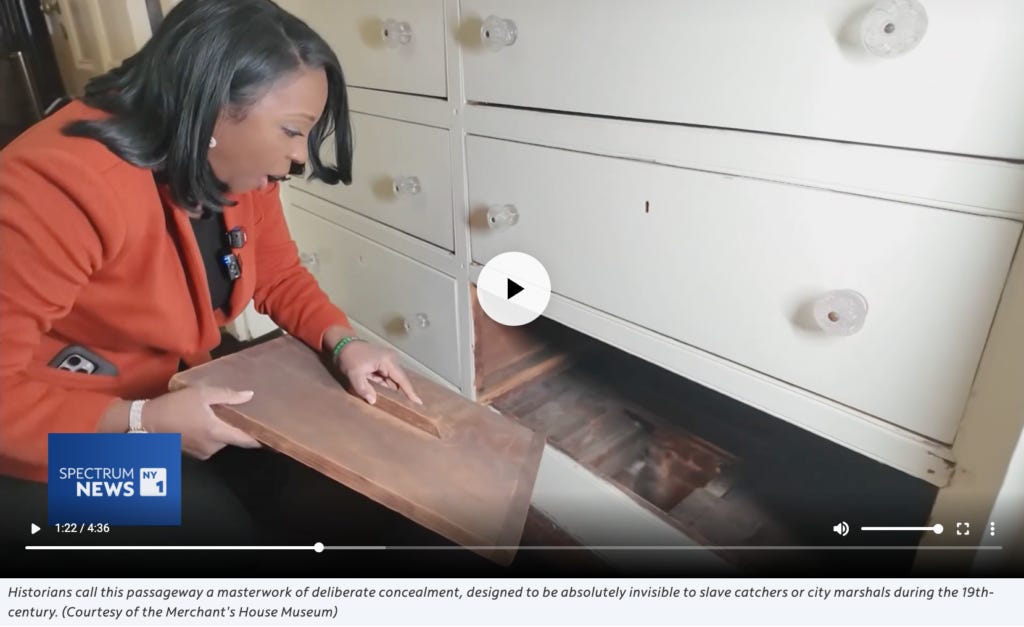
Joseph Brewster, who built the house in 1832 (three years before the Tredwells moved in) was a known abolitionist. Brewster’s secret compartment is hidden beneath a built-in chest of drawers between two bedrooms on the second floor — see NY1 news video below. Original to the house, the narrow passageway, about two feet square, descends fifteen feet to the basement. Anyone needing to hide would have lowered themselves legs first and then climbed down a ladder to the basement.
Museum staff confirm there would be no domestic use for such a crawl space nor is it an architectural feature of residences built in the 1830s.
We don’t know who, or how many, may have used Brewster’s secret tunnel to evade capture, but helping even one individual would have placed him in grave jeopardy. The federal Fugitive Slave Act of 1850 mandated that all escaped slaves, upon capture, be returned, even those found in free states. Citizens discovered to have abetted runaways faced heavy fines and even imprisonment.
The only other known Underground Railroad site remaining in Manhattan is the Hopper-Gibbons House in Chelsea; however, that site is later, 1840, and not open to the public.
Like so many historic properties, Merchant’s House has had to deal with encroaching development, notably a proposal to construct a hotel adjacent to the landmark property which museum staff and supporters insist will destabilize the structure as well as force the museum’s prolonged closure. For more on that, and what you can do to help, visit the MHM website.
For those in or near the Jersey Shore, please join me on Saturday, February 28th for a signing of IRISH EYES and STARDUST at Barnes & Noble Monmouth Square (formerly Monmouth Mall). The fun starts at 1pm! Details below.

Thanks for reading History with Hope! This post is public so feel free to share it.
Subscribe to History With Hope
Subscribe to Hope's Author Newsletter
Books make great gifts at the holidays! Find IRISH EYES and STARDUST on Amazon, Barnes & Noble, Bookshop, Target, Walmart and wherever books are sold.

Signed copies are available at these booksellers:
Barnes & Noble Upper West Side, Manhattan
Barnes & Noble, Brick Plaza, NJ
Barnes & Noble, Holmdel, NJ
Barnes & Noble, Pikesville, MD
Book Culture, Manhattan (2 locations)
The Corner Bookstore, Manhattan
Posman Books Chelsea Marketplace, Manhattan
Thunder Road Books, Spring Lake, NJ
The Comfort Zone, Ocean Grove, NJ
Some tour guides glommed on to the trope of Miss Gertrude as a reclusive spinster, but my personal research turned up the opposite. Being born in 1840, Miss Gertrude never did learn to drive, but accompanied by a younger male cousin, she made occasional trips to the New Jersey countryside where she still owned property and enjoyed strolling the boards in the seaside resort town of Asbury Park. It was while on holiday in Asbury that she was stricken with what was likely a stroke. She was brought back to New York where she passed away in the bed where she was born.
Comments
Nothing yet. Say the first thing.
Sign in to join the conversation.