
With the Men’s World Cup starting this week, I wanted to reflect on the way human rights groups campaign around these big sports events. I worked hard to get massive press coverage around the treatment of migrant workers building Qatar’s World Cup stadia. But it was also a campaign that made me question the effectiveness of “name and shame” tactics.
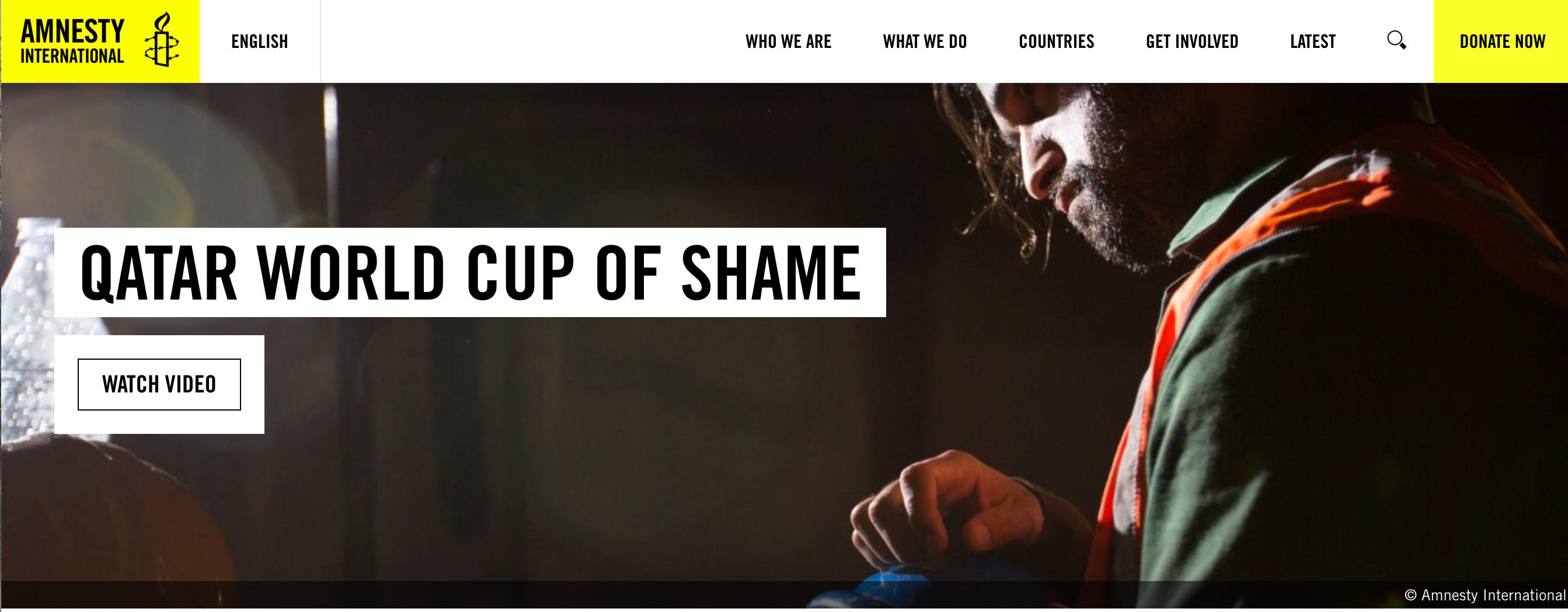
So I spoke with my old boss Osama Bhutta to revisit the campaign. He was Head of Communications at Al Jazeera in Doha, and then Communications Director at Amnesty International. I remember that at the time he was talking about the need to engage Qatari audiences with values-based messages, something I only later came around to (and wrote about last week!).
OB: As a communications person who had worked in Scottish politics, I was used to being very reactive to negative media coverage. Working in Doha, I learned that they’ve got their own ecosystem, their own bubble, their own media that they consume, their own culture, their own people that they talk to. None of whom read the New York Times, none of whom read the Guardian, much less care what the BBC has to say about them.
It’s not that they know there’s coverage and they decided to ignore it. They actually did not notice that it’s happened
TC: There is already a good question for us in HR. When we get that big coverage: is it for them, or for us? Is the media coverage reaching the people who need to hear it?
OB: I found the theory of change behind that unsatisfying. It kept the charity industrial complex going because you could do the report. It brings in donors, the Amnesty base feels happy that they’ve done it. That’s something that marked the territory. But nobody stops to ask: what difference is this actually making? What difference do we think it would make? And how are we measuring that kind of impact?
If we really care about migrant workers, we’ve got to think then what is going to move the needle. Because you could do the best report of all time and make it Amnesty International’s most effective media hit of all time. And nobody in Doha is going to notice, much less do anything about it.
TC: Looking back now, I think a lot about how people respond to shame. If you make someone feel shame, and with it fear, they start to hate you. And they will stop listening. Or fight back. I think that’s what happened around the 2022 Men’s World Cup.
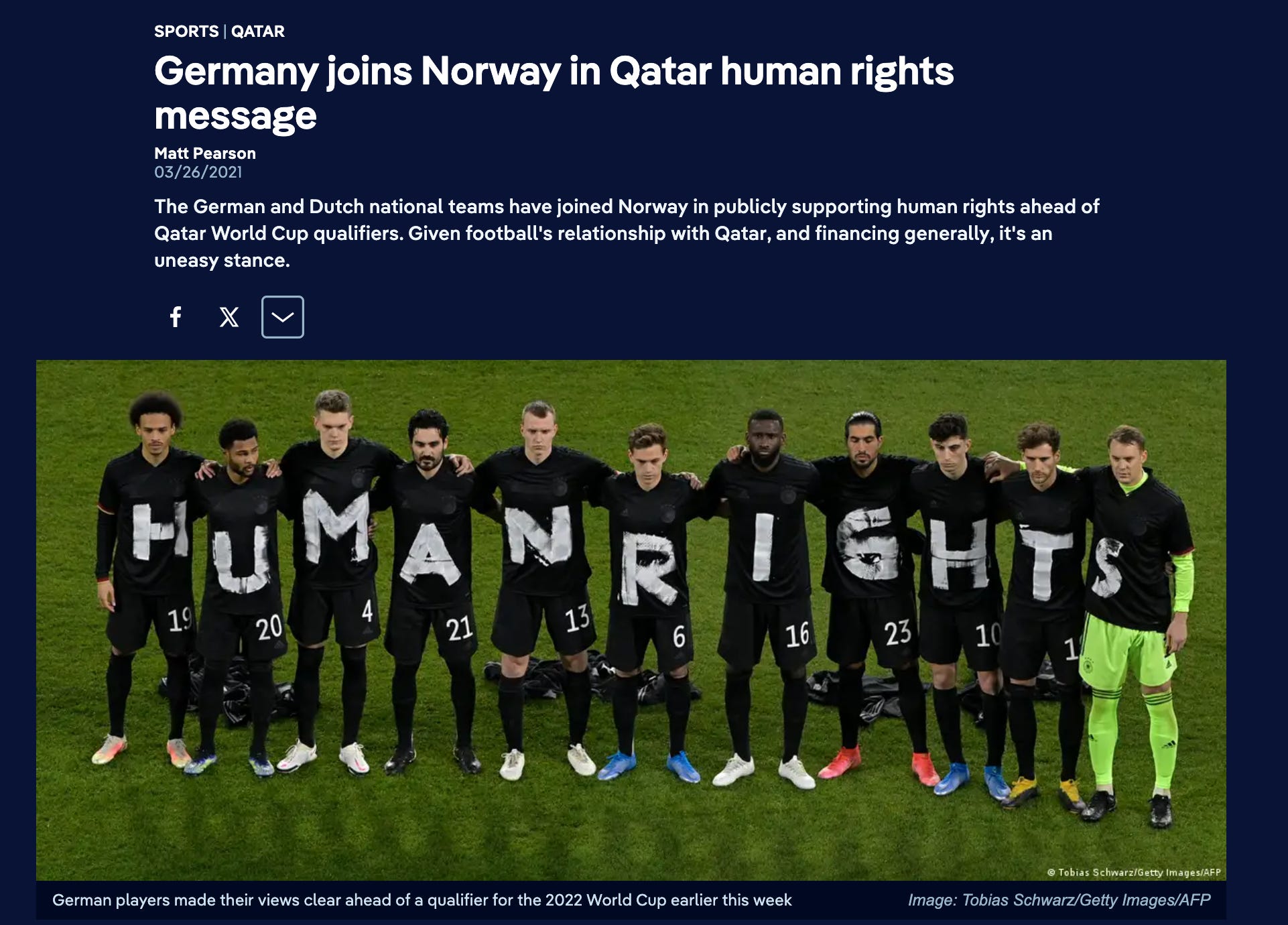
OB: There were a mixture of responses to a lot of those international perceptions, and it ranged from bewilderment to, okay, you guys are just a bunch of hypocrites. You’ve been exploiting people for centuries.
There were a lot of people also really hurt by it, that, you know, you’ve tried to tarnish our image, and this is the first time that an Arab country is getting to do this. You’ve got all these forces trying to take us down and discredit us.
I was in Qatar for the World Cup, and nobody I spoke to was engaging with the point [migrant workers].
TC: Maybe the first goal should be to start a conversation with people: to make sure they feel listened to themselves so that they are receptive to our message. Maybe people need to feel a little pride first, to create a thirst for more, and that makes people open up to greater change…
Shame only works if there is a desire to belong. Accountability requires shared values. And “name and shame” can only bring change if there is also a promise of feeling pride once you do the right thing. But when does HR make people feel proud of doing the right thing?
If states feel that they will get criticised no matter what, and never feel like they get credit for their efforts, why would they engage?
TC: Looking back now, I remember you saying we should be engaging more with Qatari audiences to change how they think and feel towards migrant workers.
OB: I felt strongly that the thing that would cut through much more effectively was something that would speak to the inherent values of the Qatari people.
You can call an Arab a terrorist, and he would be less offended than if you called him a bad host. So if you said: “These are people, they’re in your country, they’re going through these things, and attach that to that basic idea of Arab hospitality and treatment of guests.”
TC: How could the HR movement have engaged Qataris differently around the World Cup?
OB: I think to be much more effective, it needs to be working with and done by people on the ground. Content would be in Arabic, and it would be not in the New York Times, but at that time, a platform like Facebook. You would be creating videos, telling stories of these migrant workers, again, in Arabic. Because many Qataris never see them. You can drive past a worksite in Doha, they’re all fenced up with these giant boardings. The worker accommodations are out of town.
TC: I hadn’t thought of that: most Qatari people probably don’t have that much power to help migrant workers, just like most people in western countries by themselves cannot improve conditions for migrant workers here, let alone Uyghur slaves in Chinese factories. We can raise their awareness, but without offering them a way to act, people will turn to cognitive dissonance - relativising or turning away from the problem.
But a rehumanisation approach might be stories of positive encounters between Qataris and people from the countries migrant workers came from, a Qatari person changing their mind. Or examples of the kind of treatment we want to see: maybe another country that changed its policies and saw improvements.
OB: I’m not going to let people off the hook. I think Qataris do have a responsibility towards their migrant population and their rights and well-being.
Everyone needs to get their own houses in order when they want to point fingers at others. The most powerful thing the European Union could be doing is being introspective and figuring out the stuff that’s difficult, but which no one wants to talk about or is “complex”. Qataris responded to the criticism by getting Palestine flags out. People are talking past each other and doing what’s easy.
TC: There is a powerful behavioural insight there: model the behaviour you want to see.
What is the process HR wants countries we report on to go through: hear the criticism, reflect, change? How often do we do that ourselves? But as a movement and orgs we can be quite defensive ourselves! Part of countering “what aboutery” may involve celebrating openness and self-introspection!
OB: What we can all do is have tough conversations. And I think it’s something we’ve learned in Europe the last couple of years is that we’ve struggled to have those tough conversations.
TC: Indeed, it feels like on migration Europe is moving closer to Qatar!
This also makes me think of intercultural dialogue: which involves both sides coming to the table ready to change.
On specific issues like migration, maybe we need to engage in dialogue there too. Because right now it feels more like “West” wants to become more like Qatar in terms of how it treats migrant workers!
TC: Maybe the answer is HR work that is not “west vs rest”, that can move beyond post-colonial and “what about” dynamics to become a space for intercultural dialogue?
What if Americans could listen to feedback from a Qatari?
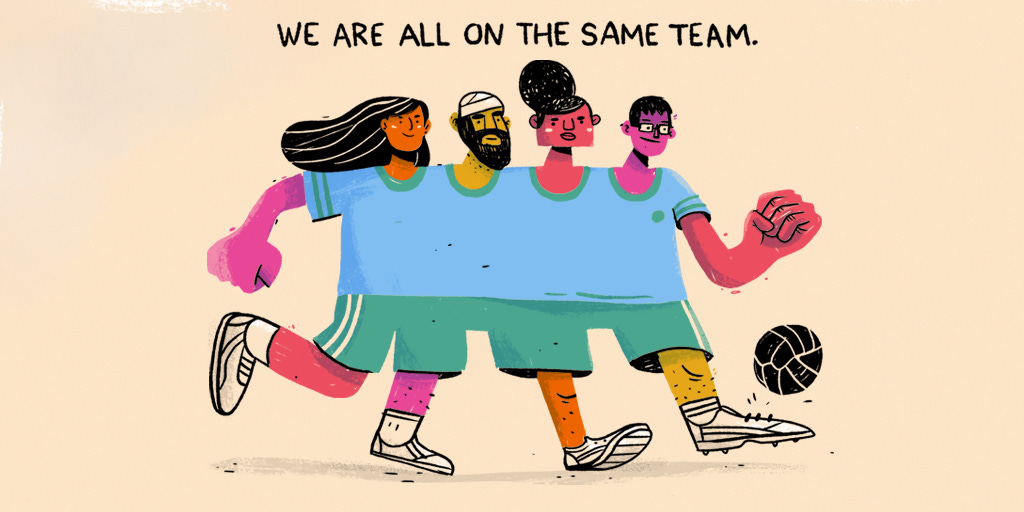
Do we need to aim for real conversations where there is back-and-forth? The very structure of a report on a country already frames the engagement as one of judgement and shame, rather than solving a common global issue like migration together. Should the HR movement stop playing for the “launch a report” 1-0 win and instead play for a 5-4, where both sides have their say?
OB: We all love a high scoring match!
TC: If our goal is promoting shared humanity (and counter a globally rising Islamophobia), we missed a chance to celebrate a World Cup hosted in a Muslim country: where Morocco were the star of the show in a way they might not have been in a European host country. Just for example, the possibility to have a party without alcohol everywhere!
I think as a human rights movement, we’ve missed an opportunity to spread a “shared humanity” message. Maybe that’s the challenge: we’re never able to celebrate the things that humans have in common, because there’s always something not going well that needs to be criticised. If our only tool is a hammer, when we look at host countries, we will only see nails.
What could we do differently in this and future World Cups?
OB: The US is involved in multiple wars currently involving untold numbers of dead and displaced. It’s rounding up people in inhumane conditions in its own country with a militia seemingly run by the president and his cronies. Nobody is talking about boycotts in the same way for 2026 as they were in 2022.
That might say a lot about the decline of the HR movement in that time, but it also says a lot about how we can also see the positive in people - we believe there is also good in the US. There was a condescension about football in Qatar which hasn’t been levelled at a similarly new footballing nation of Canada. Recognising and mobilising the possibility of good in non-white people, as well as having tough two-way dialogues would be more respectful and impactful.
TC: Thinking of how to approach a Saudi Men’s World Cup makes me think of the Beijing Olympics. There was the optimistic camp who felt that it would open up the country à la “free market capitalism = democracy”. And in HR we simply focused on highlighting abuses and sportswashing. I feel neither approach has brought much change, there or elsewhere.
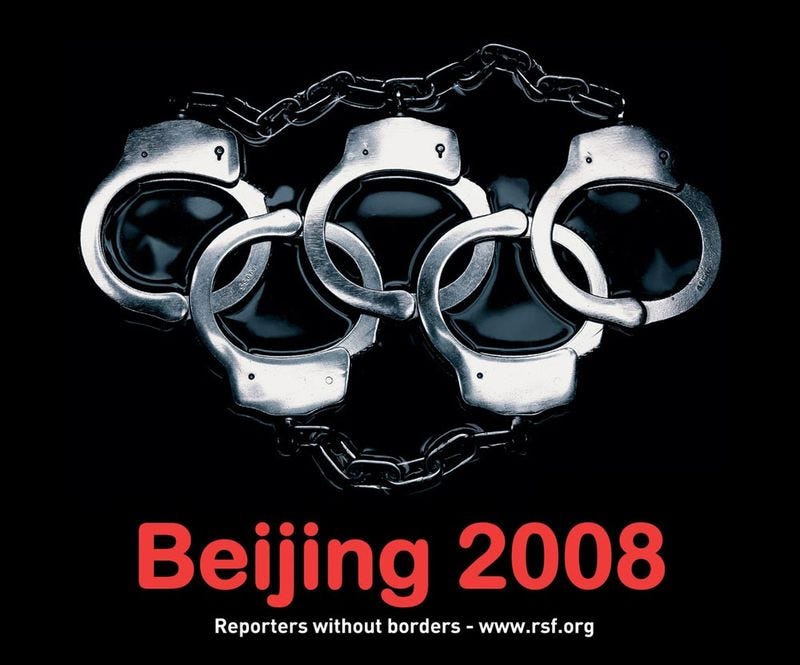
So we need to test other approaches. What is the opposite of “sportswashing”?
Maybe it’s creating real experience of cross-cultural connection for everyday people. If you live in otherwise repressive societies, a taste of freedom and connection could be a powerful catalyst for reform. (also, shaming a country risks reinforcing nationalist “us vs them” thinking - which could blunt criticism and tighten authoritarian grip on local activists).
The question then would be how would you maintain a channel for everyday Saudis to have positive social contact with others: maybe it remains through football. It’s only a small hope, but given how politics is going these days, maybe it’s worth trying?
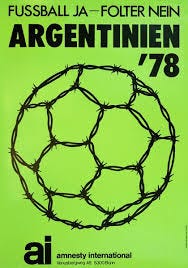
[Maybe it’s elevating local activist voices, like Dutch journalists did the Madres de la Plaza de Mayo in 1978: but can we promise to keep attention with them afterwards, let alone keep them safe?]
OB: One thing that would help is dropping this notion of sportswashing. It’s outdated and comes from an era where westerners thought that brown people did things to impress white people. Saudi is hosting events because it plays well domestically. Qatar through PSG gained pride internally by conquering the European Cup twice in a row. Same for Abu Dhabi and Man City. They don’t any more give a monkeys what European publics think. And I’m sorry to say that Gaza has undermined any possibility that European or US criticism of Muslim nations will be perceived as anything other than rank hypocrisy.
TC: Thinking of western tournaments, there is a quite cynical memory today of what were moments of inclusive, multicultural nationalism. In France 98, there was a narrative of racial unity. In Germany, a similarly diverse team but above all a chance to proudly wave a flag with such shame previously attached to it.
Extremists immediately set about undermining them, but progressives don’t help matters either. But we need those stories now more than ever to show that multicultural societies are possible.

World Cups are moments. Their positive effects are only temporary sparks of connection, unless we continue to fuel them with new moments that we create.
This is more about a gap in human rights work: we lack tools to keep that human family connected in between World Cups.
I would like to see activists do more to build on these moments to maintain the good vibes. Culture is something we shape; it doesn’t just happen. The far-right have rich and powerful people actively shaping culture, so we need all the help we can get to make human rights values salient.
OB: This only really works in Western Europe and a handful of other nations, but multicultural societies are a beautiful manifestation of the potential for human beings to continue uniting across races and faiths. Other societies can’t understand this - remember just last year the Argentina team singing a racist song about black players in the France team (something that curiously just went away as an issue).
A few years ago, players were taking the knee after George Floyd. The backlash was real but it was also because it was performative, if we are honest. Harry Kane in 2022 did a lot of handwriting about wearing a Pride armband, but in the end he wasn’t willing to take a simple yellow card for doing it. The whole football fraternity should have stood behind Omar Artan, the Somalian refugee, banned from entering the US to officiate at the World Cup. Even if the refereeing community downed tools until all of them were allowed in, one thing we know is that Trump does chicken out. It’s about knowing your power.
If clubs and players were more regularly doing something meaningful than what’s easy, sport can easily become a values and action space. The whole discussion, plus Infantino and Trump’s antics of late, show that the idea of sport as a neutral space devoid of wider meaning, is long gone. The lesson for all in the game is to tune into your souls and do as much good as you can. And ignore the haters or, better, enjoy their wrath.
What is the ideal govt response to a HR report?
How do we model the behaviour we want to see from leaders? (openness to critique, vulnerability, reflection, change)
Do we engage in real two-way public dialogue with citizens and societies or just deliver our judgement (in our communications, not just private advocacy)?
We want others to change, but are we ready to change our minds in the conversation?
Can you make people feel pride, not just shame?
“Hope is contagious when it becomes tangible, so we must design to make progress visible and celebrate incremental wins as stepping-stones, not footnotes in our journey.” - How to Bridge the Hope Gap
“A true, vanishingly rare, communal experience” - why the World Cup matters.
“The defence of one community is strengthened, not weakened, when extended to the other.” - OSF oped on need for solidarity between Muslim and Jewish communities.
"The future of science communication is not an article like this" - Scientists are getting on TikTok. Human rights lawyers, I’m looking at you. 👀
Fiction about AI behaving better could influence AI to act better - via Ari Mostov
“An equal and habitable world is possible.” - OMG it’s a solutions-based report that shows change is possible!
Wind and solar just overtook gas! We should talk about this more.
Just to be clear, traditional human rights work exposing violations in World Cup hosts will always be important. So organise hope today and share the work of the Sports & Rights Alliance and their campaign: Keep the World in the World Cup.
Together with Amnesty International’s Swiss section, they are offering a Pizza Peace Prize. Think you deserve a peace prize more than Trump? Enter here.
(They are also pushing for FIFA to compensate workers.)
OB: The Price of Peace, the biography of Keynes by Zachary Carter - I’m searching for economic answers.
TC: I’ve found my summer page-turner: The Last of Earth by Deepa Anappara.
OB:: The UK Greens have the potential to capture the public imagination in the UK and defeat the politics of hate. Hannah Spencer’s speech when being elected at the recent by-election in Manchester mentioning that all people want is to afford a “nice holiday” is tangible and down to earth enough to unite people. Along with the obvious example of Mamdani, they are showing a positive politics can cut through.
TC: Nike x Kids of Immigrants
Dear England, a new TV drama about the English football team is all about shifting from fear to hope. It shows how a sports psychologist, Pippa Grange, helped the England team overcome its paralysing fear of penalty shoot-outs.
Strongly recommend her book Fear Less. Get a taster from this podcast where she talks about. Does any of this feel familiar?
Letting go of control. High achievers who cannot feel or enjoy success → what she calls winning shallow → “A need to dominate the other”.
How fear limits our effectiveness, and makes the feared thing more likely.
Our fear of rejection, not belonging, not being worthy. This is something triggered by shame and permeates activist culture.
Fixing fear-based, urgency/scarcity culture with joy.
Scary bosses make staff obedient or avoid being noticed. They don’t innovate and hide mistakes.
“If shame is in the room, you can’t take the risk you need to go try something else”
“manipulating with fear is a lazy way to motivate. I can’t see any results that couldn’t be achieved with better skills and more care. Once introduced, fear doesn’t stay specific but reproduces and spreads. It lodges in our mentality like termites in redwood. A fear-based environment leaves little room for enthusiasm, excitement, imagination or the rising sense of possibility.”
My overriding takeaway is that the transformation she brings about in sports organisations is yet to happen in NGOs and progressive political movements: fear is a lazy way to motivate people, being kind is better than being tough.
“we make culture every day, you and I and everyone, from what we tolerate and ignore, resist and reward.”
No posts
Comments
Nothing yet. Say the first thing.
Sign in to join the conversation.