
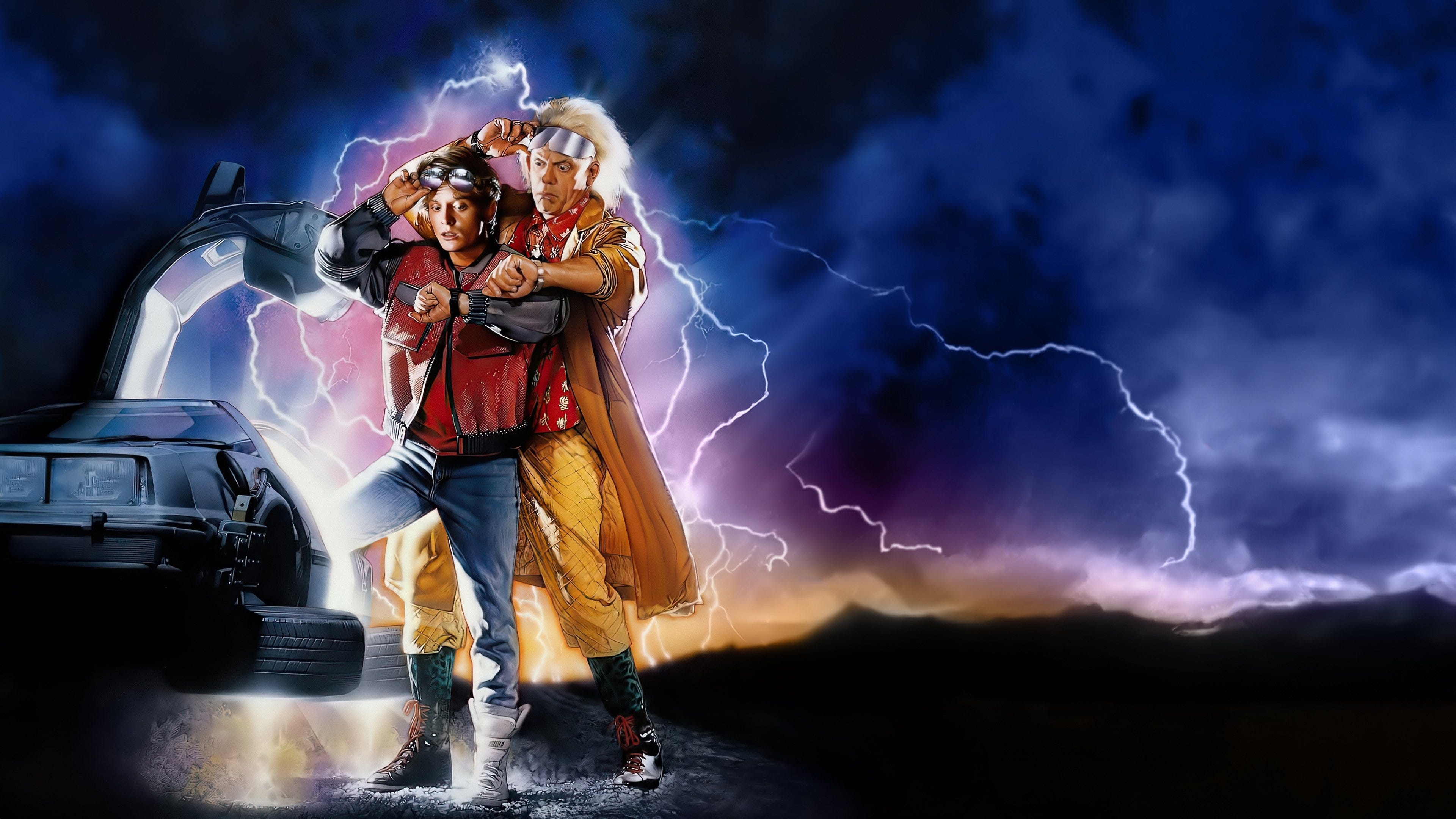
Marty McFly Sr. sits at a videophone in his den, October 21, 2015, in a meeting with his colleague Douglas Needles. Text scrolls under Needles’ face: occupation, age, birthday, address, his wife’s name, his kids’ names, food preferences, drink of choice, hobbies, and politics.
His boss has been on the line too, silent. Ito Fujitsu appears on the screen, watches Marty get talked into something illegal, and fires him on the spot. A fax prints in every room of the house: YOU’RE FIRED.
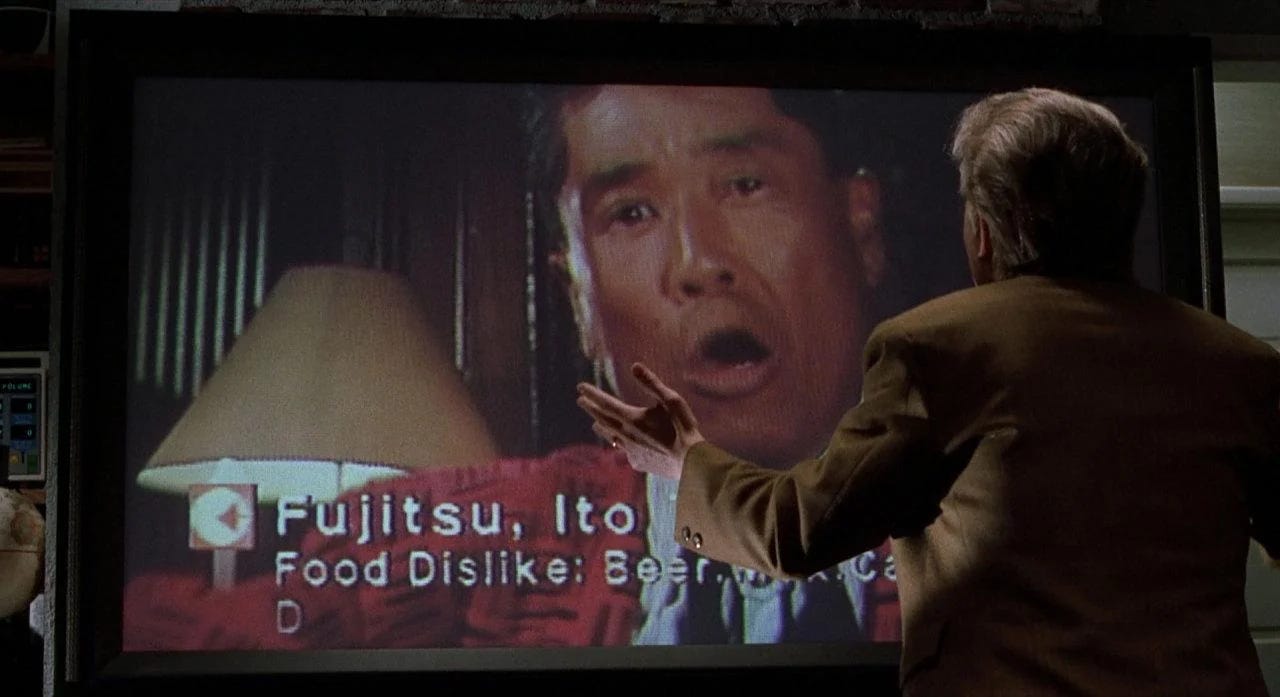
Robert Zemeckis put that scene in Back To The Future II in 1989 and plotted it as 2015. He predicted the shape of the future correctly. A personal profile under a face, a manager in a video conversation unknown to its participants, information that leaks during a seemingly private conversation - Facebook, LinkedIn, social media deep stalking, Zoom recording/transcription and the home office are all in this scene.1
With Sci-Fi the predictions often come to fruition, but the ETA rarely does.
Ridley Scott also made predictions, this time for the year 2019. Rick Deckard’s Spinner - vertical takeoff, hover, no runway necessary - has yet to materialize.2 Although some early signs of progress are in our midst.
General Motors showcased a driverless car at the 1939 World’s Fair, 87 years ago. The newest version of that, Waymo, still relies on humans at a home base.3 Roboticists use a word for what Waymo does: automated, where human intervention is available if the Waymo alerts HQ to an issue. There are still hazards that cannot be planned for, such as a pedestrian stepping off a curb at the wrong moment. Minority Report’s version removed humans - a networked highway that nobody can walk on.
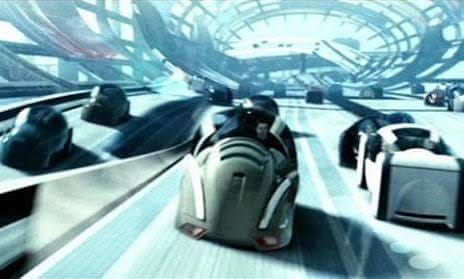
And then, this year, signs we are inching closer. Uber added Joby's aircraft to its app in February, with passenger flights expected in Dubai before the year is done.4 China’s EHang runs pilotless air taxis already. New York and Los Angeles are targeting service by the end of 2026. 90 years later ride-share apps are leading the charge instead of a Spinner.
Steven Spielberg wanted his 2002 film Minority Report to pass future muster, so in 1999 he collected 15 futurists, computer scientists, and architects in a Santa Monica hotel for three days and built an 80 page document mapping the year 2054.5 Gesture interfaces, retina-scanned advertising, predictive policing software - all showed up in the real world by 2012, a decade after the film and 42 years ahead of the movie’s setting.
(Sidenote: at a company where I worked, rumor has it our founder called Spielberg to ask how to make the interactive display for shopping purposes. All were dismayed that it was special effects and not actual hardware.)
Her’s prediction landed even sooner. Spike Jonze wrote about a lonely man falling for his operating system’s voice in 2013. 11 years later, OpenAI’s Sam Altman posted the word “her” the day he unveiled GPT-4o’s new voice. Scarlett Johansson accused the company of using her likeness without her consent. Jonze gave interviews about how uneasy he felt watching companies build the tech his film warned about.6
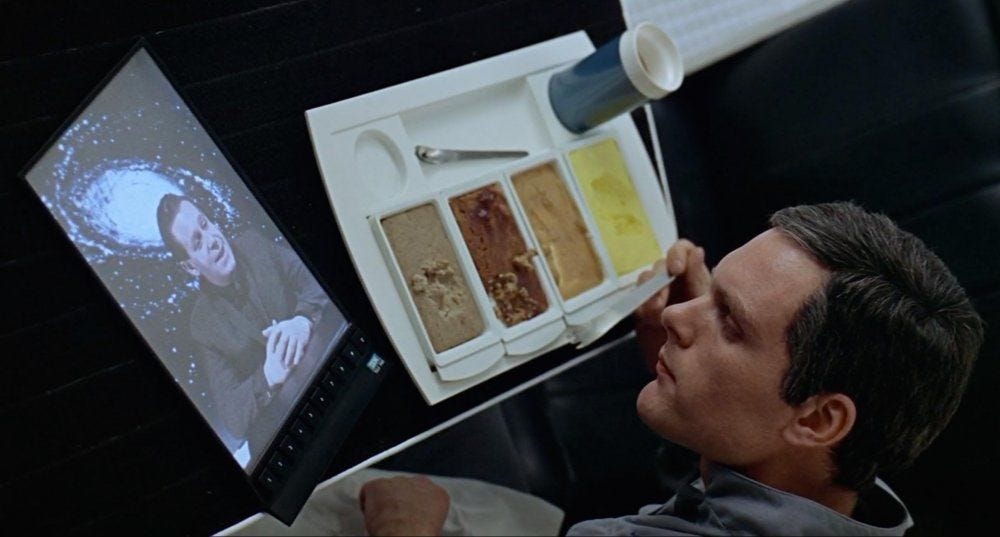
Then there’s Kubrick’s Newspad - the tablet astronauts read the news on in 1968. Samsung’s lawyers submitted it as courtroom evidence (existence of “prior art”) in the Apple patent trial, to argue the iPad’s design predated Apple’s own patent by four decades. The judge disagreed on the legal portion, but no one disagreed on the resemblance.7 42 years passed between the film and the device.
I catalogued all the time differences between prediction and reality to see if I could figure out an average. The distinction is when the prediction requires software vs. hardware. The ad tech and the AI companion needed code, data, and a company with the ambition to ship. The tablet needed batteries, glass, and processors small enough to hold in one hand - physics even if culture was ready for it.
The pattern: predictions that need a change in human behavior can arrive within a decade, no matter the era. New material science is a different beast, and those predictions take about half a century, no matter the era either.
Black Mirror is creepily prescient, upon watching any episode it feels as though the tech is already here or could ship within the year.
Nosedive looks like the most current of the series, a 2016 episode about a society that rates every interaction, and two years later China rolled out its Social Credit System. The timeline shows maybe reality was first. Regional trials of China’s system started in 2009 and the national pilot launched in 2014.8 Charlie Brooker documented something already in the works, years before most Western audiences clocked it. Recognition played out like prophecy.
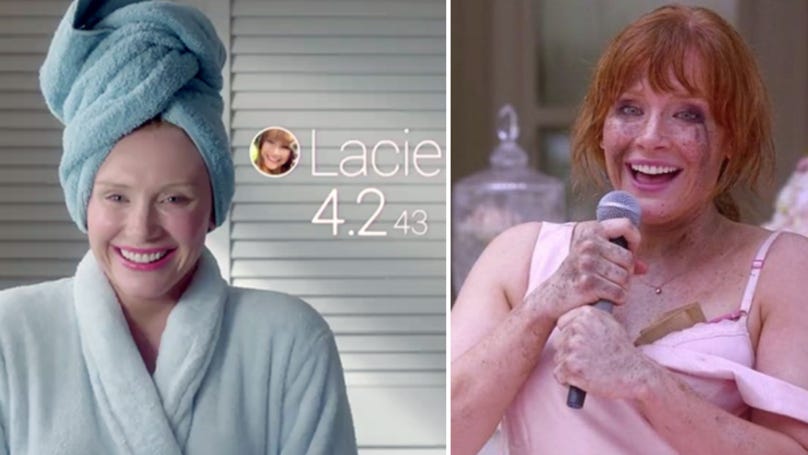
White Bear was one of the hardest episodes for me to watch. A 2013 episode about crowds filming a public punishment instead of stepping in - a decade later, watching human pain has become its own content genre. Prediction done accurately: not a flash of foresight, instead attention to a pattern that was already en route and then came to fruition before our eyes.
James Cameron gave Skynet a specific moment of self-awareness in 1991: August 29, 1997, 2:14 AM Eastern. The date came and passed without sentience → war, so the franchise did something convenient: rescheduled. Terminator 3 pushed the date forward so the war was still coming, just later. Genisys moved it again. Dark Fate erased the original date and installed a new AI running a new timeline. Judgment Day became an event that could be delayed indefinitely.
The people building artificial general intelligence (AGI) are running the same reboot trick. Forecasters tracked by 80,000 Hours put AGI at a median of 50 years away as recently as 2020.9 As of last February, that number sits at a 25% chance by 2029 and a 50% chance by 2033. Ask the people closest to the work for a date and the answers vary: Sam Altman says a few thousand days. Dario Amodei has said 2026, and also much later. Demis Hassabis says 2030. DeepMind’s Shane Legg put 50% odds on 2028 back in 2011.
I don’t think they’re lying or guessing poorly; I do think it’s hype marketing and ill-defined. It’s trying to pinpoint a date that nobody has agreed on how to define. Cognitive labor automated above human quality, sophisticated robotic capabilities, long-horizon reasoning, a truly novel scientific insight - four finish lines linked to the same name.
Skynet’s writers rescheduled Judgment Day four times without settling what would trigger it first. The industry dating AGI’s arrival is running the same play, with exorbitant funding and poker faces.
My definition and prediction: AI evolves itself - develops taste, judgment, discernment, and improves its own output without needing a human to correct - inside a decade, not 50 years.10 It doesn’t require new physical materials. It only needs someone to take their hands off the wheel, and (perhaps thankfully) the industry’s own research keeps finding reasons to keep their hands on it instead.
Naming is always the harder problem. Timing just lives in its shadow.
Same monologue, different decade.
https://screenrant.com/back-to-future-2-2015-predictions-correct/
https://www.inquirer.com/news/blade-runner-november-2019-predictions-philly-20191106.html
https://en.wikipedia.org/wiki/Futurama_(New_York_World’s_Fair)
https://www.jobyaviation.com/news/get-ready-for-takeoff-with-uber-and-joby
https://www.syfy.com/syfy-wire/minority-report-steven-spielberg-think-tank-summit-of-tech-experts
https://www.npr.org/2024/05/20/1252495087/openai-pulls-ai-voice-that-was-compared-to-scarlett-johansson-in-the-movie-her
https://appleinsider.com/articles/12/08/02/judge_denies_samsungs_2001_a_space_odyssey_fidler_tablet_arguments
https://www.forbes.com/sites/bernardmarr/2019/01/21/chinese-social-credit-score-utopian-big-data-bliss-or-black-mirror-on-steroids/
https://80000hours.org/2025/03/when-do-experts-expect-agi-to-arrive/
https://techxplore.com/news/2026-07-recursive-selfimprovement-dawning-ai-superintelligence.html
No posts
Comments
Nothing yet. Say the first thing.
Sign in to join the conversation.