
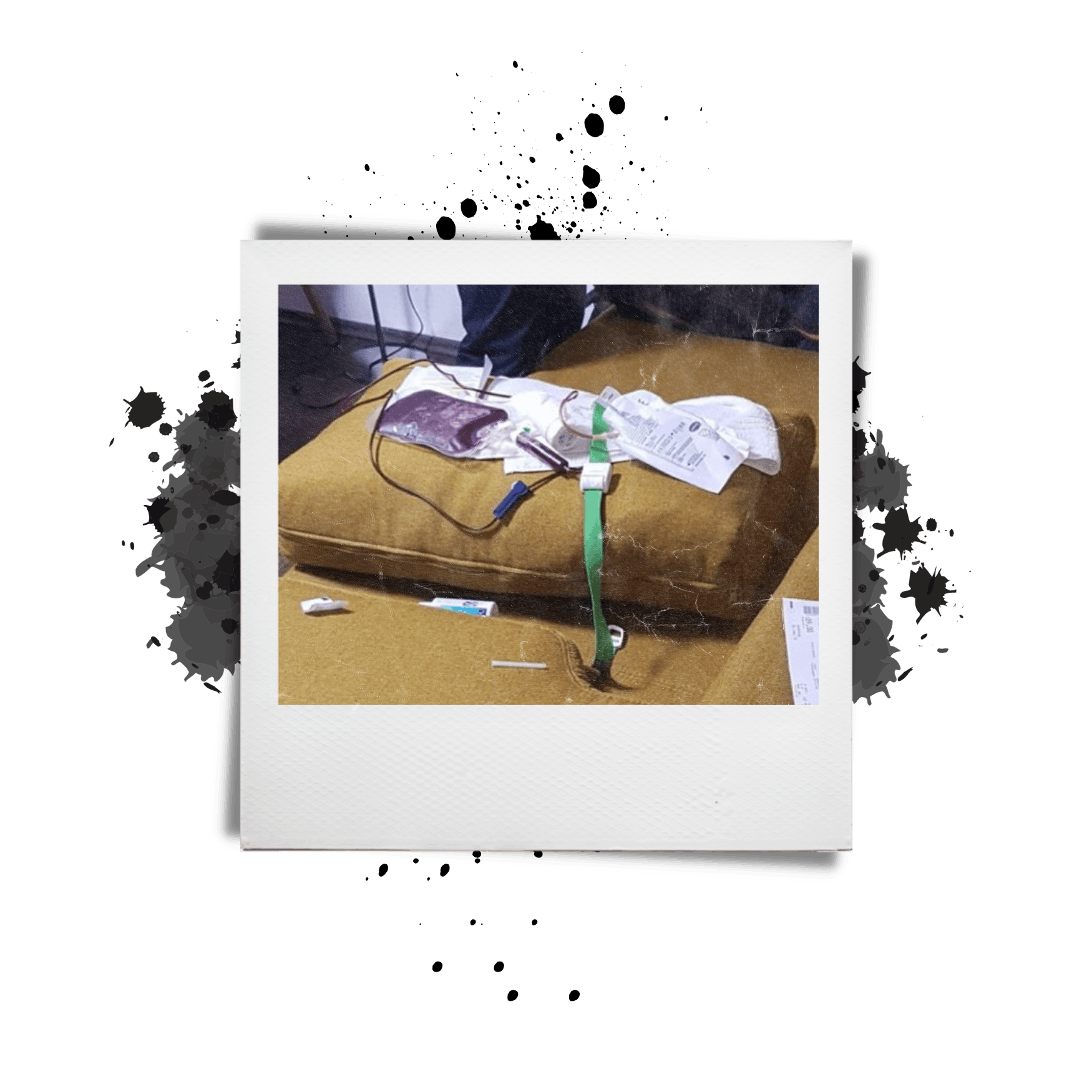
Just days before the start of this year’s ongoing Tour de France, the International Testing Agency (ITA) announced that it will begin a two-year pilot project to assess whether cyclists’ power data can be legitimately used to direct drug testing.
For example, if a rider has a large increase in performance over a short period of time, the programme will assess whether this could be indicative of doping and therefore warrant targeted drug testing by the ITA, the body which operates the International Cycling Union’s (UCI) anti-doping programme.
Four UCI World Tour teams are actively involved in the project, aimed at developing this potential anti-doping tool, such as Team Visma-Lease a Bike home to the 2022 and 2023 champion Jonas Vingegaard.
However, there are some who are more sceptical of its concept.
In January, the president of the professional riders’ union Adam Hansen said that both he and the association’s riders were ‘100% against’ such a move.
Then two months later, the agent of the UAE Team Emirates rider Tadej Pogacar, Alex Carrera, seemingly implied that such a project is not as necessary as it may have once been, for example during the era of Lance Armstrong.
“I know that a commission wants to analyse the data of training peaks and decide some elements. No. Why? Our sport has changed a lot. Now cycling has credibility,” he told road.cc. “But now the mentality has changed. We do not have this problem, the doping problem. Why do we need to create something?”
For the ITA, the idea for this initiative was born nearly a decade ago, when cycling was much closer to its undeniable doping past. Yet now ten years later, the scheme, albeit as a pilot study, is now being enforced. Vigilance against doping continues, especially as riders begin to eclipse records set during cycling’s dark age.
“We started this discussion back in 2015, but it was too premature,” said the ITA’s Head of Testing Olivier Banuls to Velo. “It took 10 years to open the discussion.”
According to two sources ‘close to’ the International Cycling Union (UCI) who spoke with The Athletic, there are concerns that the lack of high-profile doping scandals in recent years ‘cannot be wholly due to the sport’s cleanliness’.
However, the Tour de France’s most dominant champion Tadej Pogacar, like his agent, or Team Visma’s Wout van Aert, believes that the sport’s doping problem is largely confined to a previous era. While the former American rider Tom Danielson, who admitted to taking prohibited drugs as part of the US Anti-Doping Agency’s case against Armstrong, said this week that Tour de France riders are no longer cheating.
Now, Honest Sport examines how earlier assertions similar to these became questionable as law enforcement eventually uncovered evidence of systematic doping in modern professional cycling. Time will tell whether the comments made by the likes of Carrera, van Aert, Pogacar and Danielson will stand the test of time.
“Maybe in a few generations, people will forget about the past, about Armstrong and these guys, that were doing what they were doing, and maybe they will move on,” Pogacar said in 2024.
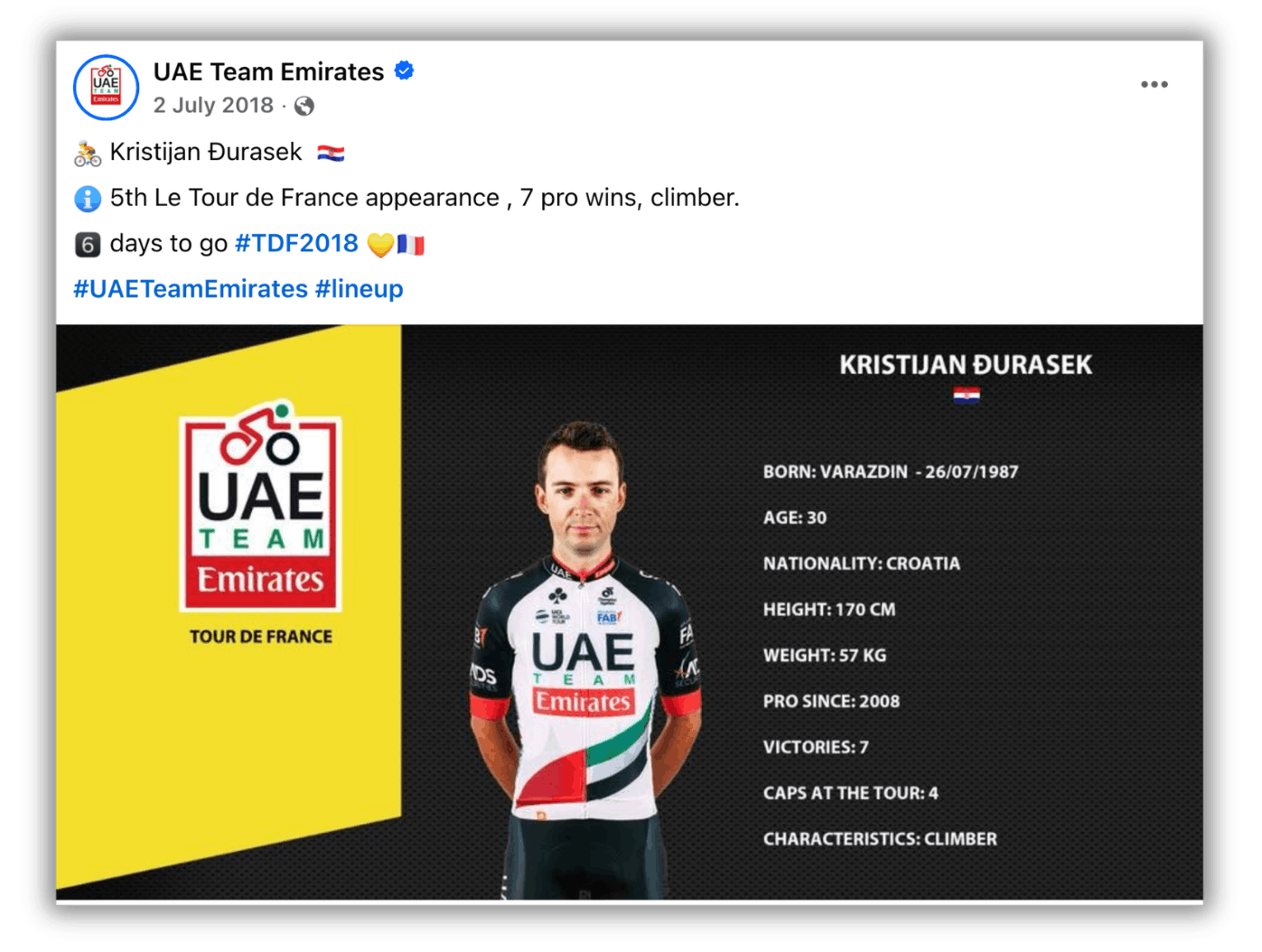
In 2016, the Team Lampre cyclist Kristijan Durasek, from Croatia, contacted the German doping doctor Mark Schmidt.
Over the next three years, Durasek would undergo a series of blood transfusions, a technique once employed by the likes of Lance Armstrong and his US Postal teammates over two decades ago. He rode the Tour de France in 2016, 2017 and 2018.
Blood transfusions, either reinfusing a rider’s own stored blood or receiving someone else’s, boost the number of oxygen-carrying red blood cells in the body, and therefore improve endurance and recovery.
This evidence was uncovered as part of the Austrian police’s ‘Operation Aderlass’ investigation into blood doping in the country, which was centred around Dr. Schmidt, a former Gerolsteiner and Team Milram doctor. One of Schmidt’s athletes, the Austrian Olympic skier Johannes Duerr, was also the subject of a documentary by ARD before the trial.
After the information concerning Kristijan Durasek was passed by Austrian law enforcement to the UCI, the cyclist was banned for committing doping violations with Schmidt’s help.
The cyclist had ridden for the team under its previous ownership since 2013.
In 2017, the Lampre manager Giuseppe Saronni’s management company CGS Cycling transferred its ownership of the team to UAE Abu Dhabi. Saronni continued to manage the new team and is still an advisor to the UAE Team Emirates, as per its website. There was no evidence that the team had knowledge or involvement in Durasek’s doping.
“We’ve gone from a family team with Lampre to a country team with UAE Abu Dhabi,” said Saronni at the time.
So affected were Team UAE Emirates by Durasek’s doping, they considered legal action against the cyclist whose actions ended as late as 2019.
“In accordance with the internal policy of the team, the contract of the rider has been terminated with immediate effect,” read a press release. “At present, the team’s lawyers are reviewing options regarding compensation for damages.”
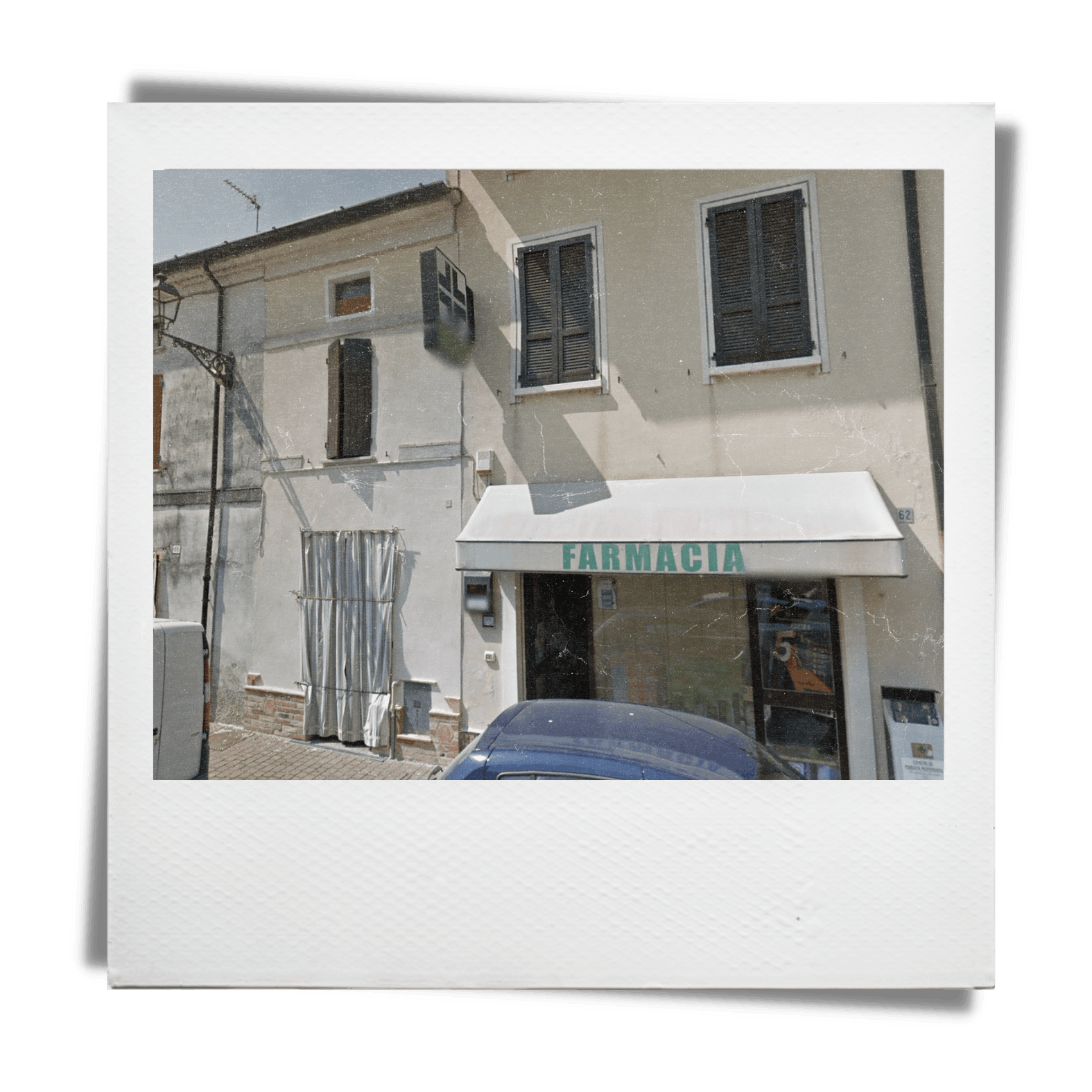
Blood doping was also exposed retroactively during Operation Aderlass by the cyclists Danilo Hondo and Alessandro Petacchi while riding for Lampre between 2011 and 2013. Over this period, more than 20 Team Lampre cyclists as well as team leadership such as Giuseppe Saronni were facing a criminal process over separate allegations of organised doping dating back to 2008. The riders and the team were cleared in 2015, except for the cyclist Emanuele Bindi who pled guilty. The pharmacist at the centre of the scandal, Guido Nigrelli, was dealt a suspended sentence for facilitating the use of doping products through his pharmacy in Mariana Mantovana, Italy.
But it was the Kristijan Durasek case which demonstrated that doping was alive and well, in the present, at the highest level of the sport in 2019, again without the knowledge of the team.
At the Tour de France two years later in 2021, it was Durasek’s wrongdoings which seemingly sat in tension with the Team UAE Emirates’ manager Mauro Gianetti’s assertions that it was only the riders of yesteryear who could not be trusted.
“Today, I, like many other team managers, can believe in this sport and in this new generation. Before as a manager it was impossible to totally trust riders,” said Gianetti.
The Durasek case had seemingly not damaged Gianetti’s faith in modern cycling. Back in 2011, the former UCI President Pat McQuaid had said the sport was looking towards ‘a golden era’.
There are others, though, who have previously been unwilling to place such trust in the sport, such as the Italian magistrate Benedetto Roberti, who investigated Lance Armstrong’s doctor Michele Ferrari.
“It’s not in a good state at all, and believe me, nothing has changed. It’s not true that the situation has improved in recent years. Absolutely nothing has changed. We’re dealing with unscrupulous people who inject themselves with everything, without even knowing what they’re doing,” Roberti told Tuttobici about the state of cycling in late 2012.
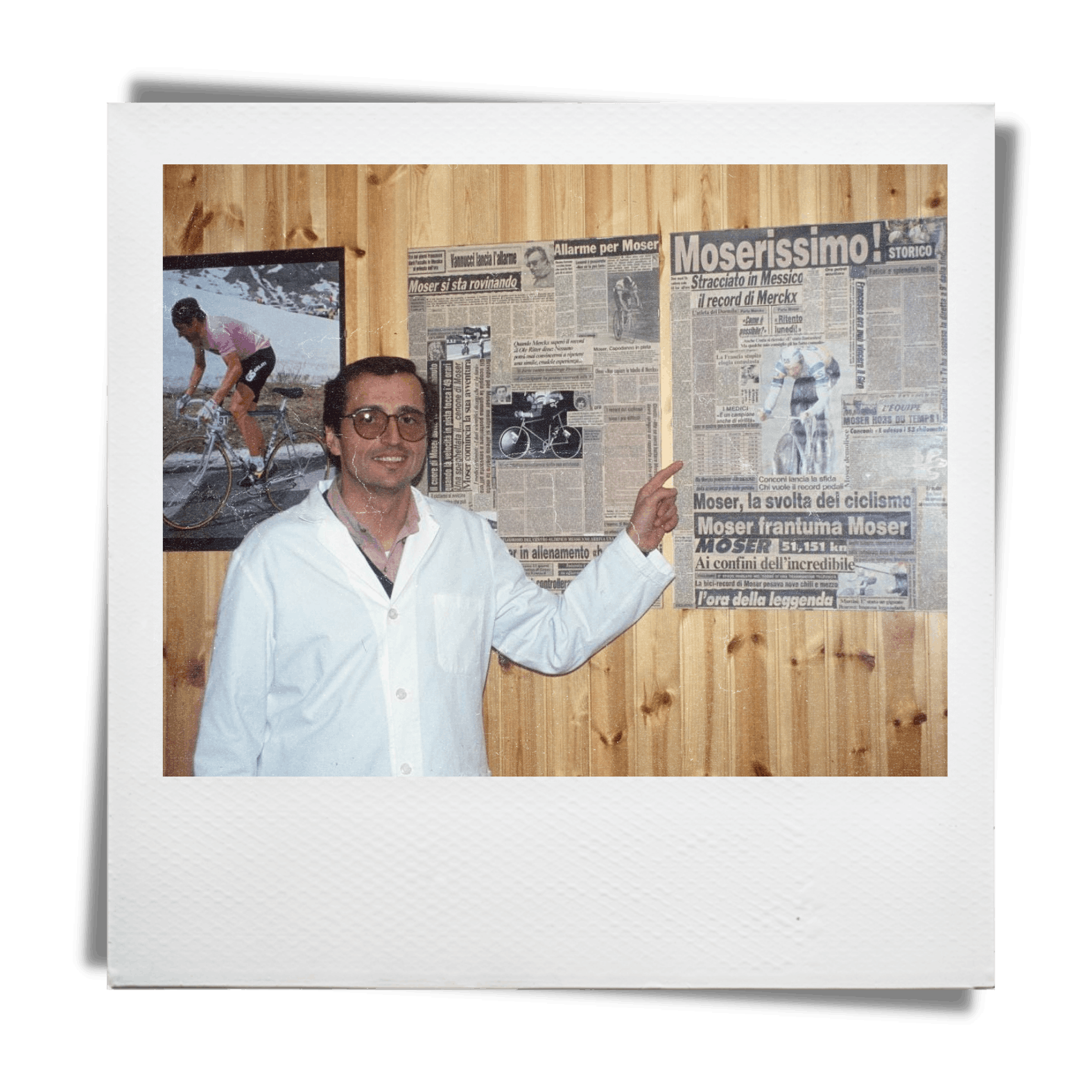
Benedetto Roberti is an avid cycling fan, but he is also an expert in doping in cycling because of the forensic investigations he has conducted in the sport on behalf of the Padua Public Prosecutor’s Office.
Shortly after Lance Armstrong was banned for life by the US Anti-Doping Agency in 2012, Roberti’s American colleagues commended his investigation into Armstrong’s doctor Michele Ferrari. His work laid the foundation to sanction the Texan cyclist who was stripped of his seven Tour de France titles.
Roberti’s investigation was jumpstarted in late 2009 when he sat down, in confidence, with the 6-time Giro d’Italia stage winner Danilo di Luca who had tested positive for third generation EPO, known as CERA.
Di Luca laid out in detail Dr. Ferrari’s alleged doping network in return for a reduced sanction. Gazzetta dello Sport later described it as ‘most valuable testimony ever received by a magistrate’ in this context.
Di Luca explained how Dr. Ferrari was allegedly performing ‘prohibited doping practices, such as blood transfusions’ centring around locations in St. Moritz, Switzerland and Teide Volcano on the island of Tenerife in Spain.
During wiretappings, Roberti and his fellow investigators also discovered that Ferrari’s network seemed to extend further. A prominent figure in Ferrari’s team was Tadej Valjavec, who was described as a ‘representative’ of the doctor, according to La Repubblica. Valjavec, who was banned for blood doping, owns a hotel in Slovenia called Villa Triglav in which bedrooms can simulate the conditions of high altitude. Ferrari reportedly sent cyclists to the hotel, which is approximately 30 miles from the Italian border, and visited when it opened.
Roberti’s report, obtained independently by Gazzetta dello Sport, demonstrated that these tentacles extended further, involving riders from Russia, Spain, Ukraine and beyond. It stated that Ferrari was allegedly close to the Astana cycling team led by its manager Alexander Vinokourov, who had already been caught blood doping as a rider at the Tour de France.
It was through this tireless work that Roberti built his informed opinion that cycling’s doping problem had changed little as of 2012. He was concerned about the presence of figures with a doping past who occupied senior management positions on top teams, like Vinokourov for example.
“We need to clean up at this level. We need to rethink new managers, new coaches. It’s not about credible cycling manifestos or ethical codes that are always drawn up with the same people. There really needs to be a cultural shift,” said Roberti.
From his expert viewpoint, Roberti still saw a culture of painkillers, injections and undetectable forms of the blood doping agent EPO. The Operation Aderlass scandal proved his words had truth over six years later.
But he left some hope that the future could be different, primarily by placing cyclists in the hands of a new breed of sports scientists, rather than doctors with a history in the sport.
“There’s too much improvisation, too little professionalism. In cycling, you don’t go to the professional, but to the fraudster. Let’s kick out this whole generation of failed riders and cheats, let’s give opportunities to the many young people with degrees in sports science and maybe something will change,” said Roberti. “In any case, in cycling, anything goes wrong because the teams don’t have adequate facilities.”
In my opinion, doping will always be present in elite sports, such as cycling, because they require extreme physical effort and offer significant prize money in return. Doping has a drastic effect on performance, as perhaps best espoused by the former US Postal cyclist Tyler Hamilton, and therefore it will always be considered by a cohort of sportspeople in pursuit of victory. The advantages are too great.
For example, in 2001, Tyler Hamilton rode the Tour de France without EPO or blood transfusions - riding ‘paniagua’, as he later described it in his book The Secret Race. He finished 94th. The following year, using EPO, Hamilton finished 15th at the Tour and 2nd at the Giro d’Italia.
“Consistently, over time, a few times a week, you’d really feel the difference, especially going uphill. It’s like you’d found another gear. The hill you’d done a thousand times, you’d just fly up,” Hamilton told Cyclist magazine.
Given the prevalence of unabated doping at this time, many commentators and officials have therefore wondered how today’s cyclists are beating records set during the EPO era, and riding at faster speeds.
The common consensus held by riders and team managers is that modern advances in sport science, including aerodynamic optimisation, data-driven training protocols, altitude training camps, lactate testing, feeding strategies and tyre technology have collectively surpassed the performance gains provided by EPO and other banned drugs. As is normal, human performance should eventually improve over time, and these arguments are outlined in articles by Cycling Weekly and Velo.
During the ongoing Tour de France, the former American rider Tom Danielson, who was suspended twice during his career, said on the Phil Gaimon podcast that clean riders, by compounding their fitness over time with the correct training, can significantly improve their performance.
“I have seen with my own eyes the progression of what actually happens when people see numbers and they have the right training advice and they have the right infrastructure and they have the right equipment how quickly they can progress,” said Danielson who believes Tour de France cyclists are now not doping.
Doping cases however continue to emerge; in 2024, the EF Education–EasyPost cyclist Andrea Piccolo was stopped at the Italian border ‘on suspicion of transporting Human Growth Hormone’. Just 23 days before the announcement of the Piccolo incident, the Astana cyclist Miguel Angel Lopez was banned for the ‘possession’ of another banned hormone at the 2022 Giro d’Italia.
The Italian magistrate Benedetto Roberti said that if cyclists are surrounded by new sports scientists, with proper medical infrastructure, then they can be spared from the pressure to engage in doping. With UCI World Tour Teams having access to modern sports scientists and legitimate medical facilities, there is now evidence of this.
But it is the concept of ‘Toxic Talk’, articulately espoused by the Austrian skier Max Hauke, who was caught undergoing blood transfusions in the Operation Aderlass scandal which ensnared top cyclists, that shows why the continued presence of individuals with a doping past can lead to an environment of pressure in elite sport.
In an awareness campaign led by the Norwegian anti-doping agency, Hauke described how his senior coaches’ attitude to doping had gradually normalised the use of prohibited drugs, and methods, over time. He consistently recalled attending team dinners, as a young athlete, during which older staff would routinely insinuate that top competitors were cheating, and it was this constant ‘toxic talk’ which kept doping at the forefront of his mind.
As he watched more dominant performances by his opponents, read about athletes constantly failing drug tests and exhausted legal means to improve his performance, he felt he was left with no viable alternative to improve but to dope. It is a decision he also takes personal responsibility for.
“Every good performance of other nations were explained with phrases like, ‘Oh what did they give them for breakfast? What was in their drinking bottle?’” said Hauke. “And I was aware of what they were talking about – it was doping.”
“No one ever asked me to start doping, but that toxic talk does something to you. It changes your attitude towards doping, breaks down barriers, and makes you believe that all the best are doping. It was presented as normal, as necessary as training, eating, and sleeping,” said Hauke.
Hauke, similar to Roberti, believes that with the right environments, where an athlete feels secure, where toxic talk never takes root, the likelihood of doping can be reduced.
In elite sport, whether it be cycling or skiing, where the pressure to win is immense and the rewards significant, I cannot be confident that toxic talk is always absent.
In 2022, the former Liberty Seguros cyclist Nuno Ribeiro, who was caught blood doping during his career, was banned for 25 years and dealt a prison sentence for his role as a director sportif on the UCI Continental team W52 FC Porto. Portuguese law enforcement exposed organised doping on the team which involved senior management, who were sentenced to jail last year. Blood transfusion equipment was found in the homes of cyclists on team, who had won the Tour of Portugal six consecutive times.
Time will tell if, or when, the next evidence of systematic doping in professional cycling will emerge.
For now, the most recent examples of it are very much attributable to the modern era, and most certainly not only to the distant past.
To quote the former American rider Phil Gaimon on his podcast last week, “We’d be stupid to say no one is doping, there is someone in there doing something.”
Please share this article by entering the original URL into this link generator as competing social media platforms, such as Twitter and Facebook, supress Substack URLs.
I have cited Tuttobici’s 2012 interview with Benedetto Roberti in this article and I would like to recommend the interview in full (here), I have periodically re-read this interview over the past decade such is its depth.


I have undertaken major doping investigations for British newspapers and international broadcasters. For discussions regarding potential doping investigations at your news organisation or broadcaster, please contact honestsport@substack.com.
Comments
Nothing yet. Say the first thing.
Sign in to join the conversation.