
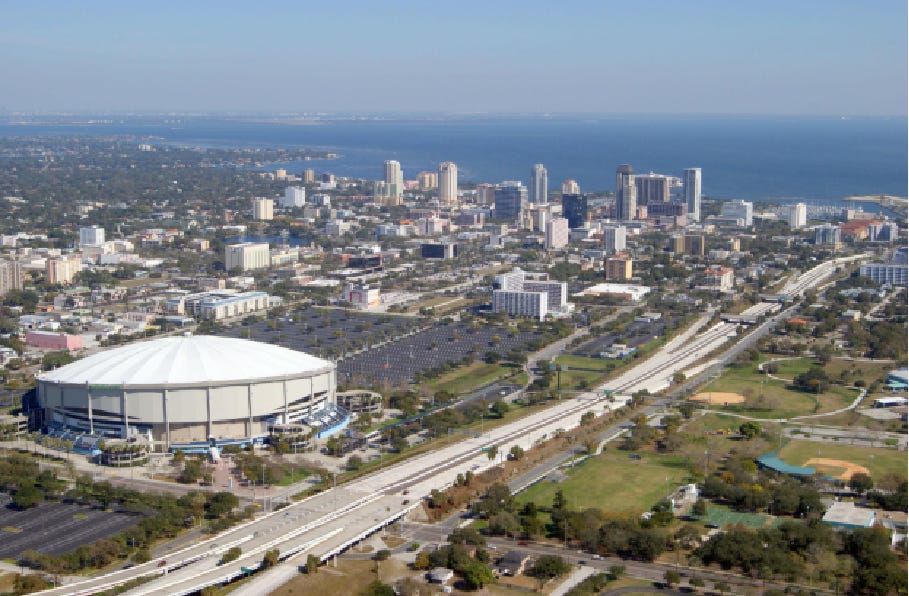
Today, Mayor Ken Welch announced his preferred development team for the Historic Gas Plant District.
I know the team, and I respect their commitment to the future of St. Petersburg.
But my position has never been about which developer is chosen.
It has always been about how a city should redevelop one of its most valuable public assets.
Here’s why I continue to believe St. Petersburg should take a different approach.
Major cities across the United States typically do not ask a single master developer to determine the future of an entire district. Nor do they leave the most important planning decisions to a mayor acting alone.
Instead, the city leads the process.
It hires nationally recognized planners and urban designers. It engages residents, business leaders, neighborhood representatives, architects, transportation experts, and other stakeholders. Together, they determine the streets, parks, public spaces, land uses, infrastructure, and overall vision for the neighborhood.
Only after that vision is established do developers compete to build portions of the plan.
That keeps the community—not one mayor and one developer—in charge of shaping the city’s future.
This is not a criticism of Mayor Welch or any future mayor. No one person can be expected to have all of the necessary expertise to make all of the decisions that will shape an 86-acre district for generations. This is about using the best planning process available.
An 86-acre redevelopment will unfold over decades.
No one knows what the economy, housing market, financing environment, or community priorities will look like 10, 20, or 30 years from now.
This isn’t a criticism of any particular developer. It is simply reality.
When the City retains control of the land and the overall development process, it can adapt as circumstances change while continuing to protect the public interest.
Once long-term control is transferred, many of those decisions become far more difficult—and sometimes impossible—to change.
This property is one of the most valuable publicly owned redevelopment opportunities in Florida.
The reported proposal values the land at approximately $275 million, while the City is expected to fund the infrastructure.
Yet the City’s own appraisals have suggested substantially higher values for the land, even before infrastructure is considered.
If the City created the master plan and then sold or leased individual parcels over time, it would capture substantially more of the property’s long-term value for the public rather than transferring that value to a single master developer.
That value would help fund affordable housing, parks, transportation improvements, public amenities, and other long-term community priorities.
It has always been about choosing the best model for governing the redevelopment of 86 acres that belong to the people of St. Petersburg.
I continue to believe the City should lead the planning, retain long-term control, and maximize the value of this extraordinary public asset for current and future generations.
Qualified developers are essential.
But developers should build the city’s vision—not create it. The responsibility for planning the future of St. Petersburg belongs to the City and its residents.
If you’d like to explore these ideas in more depth:
The Historic Gas Plant Redevelopment Guide – A comprehensive overview of the redevelopment debate.
The Best Cities Plan First. Then They Build. – How successful cities approach major redevelopment projects.
Who Should Decide the Future of the Historic Gas Plant? – Why the planning process matters as much as the outcome.
After Seven Years, a Parking Garage – What the former Police Headquarters redevelopment can teach us about long-term public projects.
A Proposal for a St. Petersburg Advisory Council – A framework for broader community involvement in major civic decisions.
No posts
Comments
Nothing yet. Say the first thing.
Sign in to join the conversation.