
bell hooks writes in her book Belonging: a culture of place that “talking about place, where we belong, is a constant subject for many of us. We want to know if it is possible to live on the earth peacefully. Is it possible to sustain life? Can we embrace an ethos of sustainability that is not solely about the appropriate care of the world’s resources, but is also about the creation of meaning—the making of lives that we feel are worth living.”
Looking for answers to these questions seems more pressing now; nearly two decades after the book was published, the weight of the climate crisis is much heavier, and ethos of sustainability seems fleeting. But they are still important questions worthy of finding answers to.
For the last fifteen years, I have come back to this book. Each time new passages get underlined and my marginalia increases. It speaks to both my mind and my soul. I have been gleaning from bell hooks’ wisdom since I first read Teaching to Transgress in my mid-20s. That book gave me language to articulate the kind of teacher I wanted to be—soft, embodied, and present. Many of her books have come into my life when I most needed her wisdom and her fierce reminder that love and loving is the beginning and the end of a life well lived. Belonging develops her love of place and her return to rural Kentucky. We have little in common, but I do understand the intense pull to feel a sense of belonging to a place.
Several times over the last year, I have been in social situations where someone has said, what they really want is to live in a community. The word community is stated wistfully, as if they aren’t quite sure if their dream could become a reality. It has been interesting to ponder how retired friends, friends in the thick of parenting, acquaintances with toddlers, and young people with their first job are all longing for something similar. To own a piece of land with other like-minded people and to live together.
This longing for community is not an unusual response to political crisis. Throughout the past century, you can trace groups of people who splintered off from society trying to create something new, different, and sustaining based on a shared religious, political, or ecological ideology. Some were successful, and some not.
I understand the impulse to remove oneself from society and attempt to create something new. A few years ago, I applied for a job, and when I was searching housing sites, to get a sense of whether I could build a life there, I stumbled upon a real estate listing of several acres with the potential for development which was well below my price range. And my first thought was, “oh, yes, this! This is what I want. I envisioned building a house for myself, and several other smaller dwellings that I could rent out/lend to people who were longing for a sense of soul rest. I wanted to create a space where artists could come and recharge in order to further hone their craft. The ideas for what it could look like came quickly. I wanted to create a sense of community around me. The job didn’t materialize, but that desire is still lingering.
I want to create what I feel is missing in my own life. Writing is what keeps my soul alive, but it is lonely work. I am longing to be with other writers and artists to talk about craft, inspiration, and struggle. I have found some pockets of presence and connection online, but is not the same as a sustained physical connection. There is something alluring about the possibility of building it.
All of us who a looking at the world and saying “enough” and whispering “there could be something beautiful here” are creatives in need of soul rest. I am longing to say, “please come to my home. I will make us soup and bread. Let’s talk about the real, the hard, the painful, and the joyful.” I am longing for a sense of home and intimacy with another. And if I give myself permission to dream wide enough, I am longing for a sense of home with a collective who cares deeply for each other, humanity, and the land that we live on.
There is something comforting about the fact that I have had similar conversations with others about wanting a sense of community. The reality of creating one is challenging. It requires risk and intentionality. It requires failure and repair. It requires soul searching and growth.
This is the part that is troubling me about people’s wishes for community. They want to be with people who are similar to them, but that often does not produce growth. There is a desire for a peaceful state of existence, but no action, shared purpose, or desire to make meaningful lives. It is easy to live with other people who hold the same views as me, but I often get bored with the conversations. We circle around affirming each other, which has its place and is good. But without action and change, life can quickly become stagnant.
Growth, though, has always come from bumping up against someone who is so different from me that I need to examine why I feel that sense of unease, irritation, or anger. It is being with people who are different from me who give me the gift of seeing different aspects of myself—where I need to grow in grace, and patience. Where I slip into judgement rather than compassion and curiosity.
And honestly, it is hard. It is hard to look at my responses to people who are different from me, and know it is an opportunity for growth, if I choose it.
So I come back to hooks’ discussion of place. I think maybe we have gotten the sense of community wrong. Or maybe not wrong, but not as expansive as it could be. Too often our sense of community is attached to a group of people, a shared activity, or faith in a set of beliefs.
We have forgotten how to have communion with a place. To sense in our bones that we belong to a landscape. That geography can call to our spirit. This is what Indigenous elders have been telling settlers for centuries.
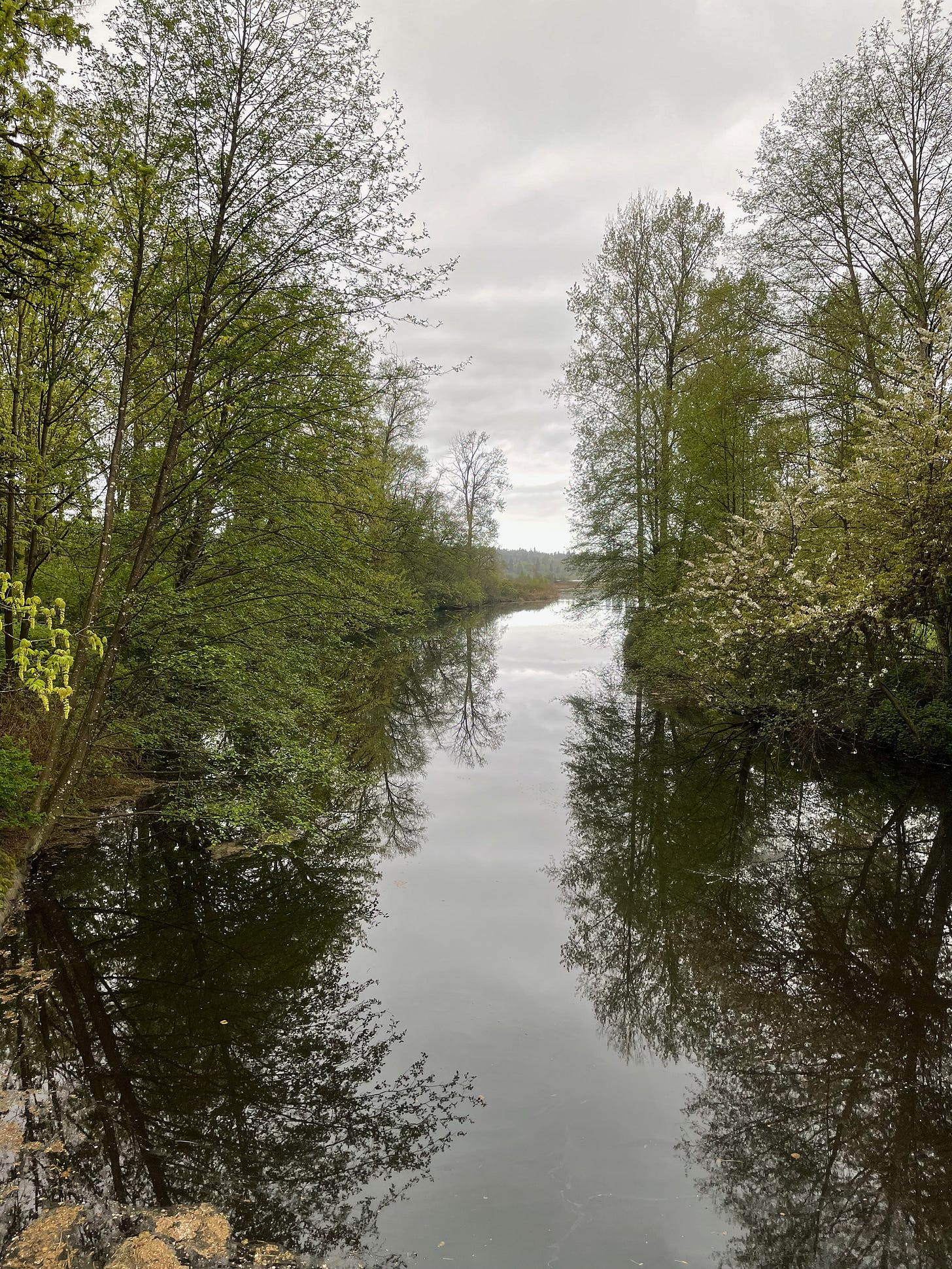
I am learning to place my hands on the earth. To listen for the changes in bird song and the scree of eagles. To close my eyes and fill my body with the smells of moss, cedar, fern, and fir. To fill my longing for community with the abundance from nature and its steadfast presence. This communion with place has changed my sense of community. I am not longer expecting others to fill my need for belonging in a place. I know I belong here.
Thanks for reading! This post is public so feel free to share it. It was written without the use of AI.
No posts
Comments
Nothing yet. Say the first thing.
Sign in to join the conversation.