
Greetings! I took a break from writing last week to recharge and celebrate a special birthday (more on that later), and I’m excited about a replenished bank of new stories and insights to come as we head into summer!
A quick side note: if you’re a Chase Sapphire cardholder — or just looking for a strong no-annual-fee everyday cash back card — the Chase Freedom Unlimited remains one of its best pairings, earning 1.5X points per dollar on non-bonus spend and 3X on drugstores (including all the useful gift cards they sell). It’s marketed as a cash back card, but if you also carry a Sapphire, you can convert those rewards into Ultimate Rewards points and combine them with the rest of your balance. Its current limited-time sign-up bonus of 25,000 points (or $250 cash back) is set to end April 30 at 9 AM ET — it’s a great time to consider adding it to your wallet!
This week:
Frontier Airlines’ latest all-you-can-fly offer
Track prices on individual properties with Google Hotels (or just use my travel advisor services)
Everything you need to know about Switzerland
Brand-new Delta One Suites are officially on the way
A lovely beachfront VIP experience with Hyatt’s Unbound Collection property in Santa Barbara
Have a great weekend — and happy travels!
Disclosure: This post contains referral links, which may earn me a small bonus. I only recommend products I use or truly believe in.

Frontier Airlines has launched its 2026 GoWild Summer Pass for $199, offering access to unlimited flights through September 30 across 100+ destinations — an enticing offer as rising jet fuel prices continue to impact airfares.
The pass is on sale now, with a key window through May 8. During that period, travelers can book flights in advance with no blackout dates and access a dedicated pool of seats on every domestic flight through September 8.
Flights price at $0.01 base fare per segment, plus taxes and fees (typically $15-$20). Outside the promo window, most domestic flights can only be booked the day before departure, and inventory is limited and capacity-controlled.
The pass is designed for last-minute travel — if you try to book ahead, early booking fees apply per segment. These range from $0 on off-peak dates to $49 on most summer departures, and up to $99 on peak travel periods like July. Carry-on bags and seat assignments are not included and will add to the total cost.
The airline says the pass can pay for itself in as few as two to three round trips, though value depends on flexibility, route availability, and avoiding peak dates.
Google Hotels now lets you set price alerts for specific properties, not just broad destinations — meaning you can monitor the exact hotel you’re eyeing and get notified when rates move.
Search your hotel on Google Hotels, toggle on price tracking, and lock in a refundable rate directly with the property. From there, you’re in a strong position — if prices drop, you can rebook lower. If they don’t, you’re covered.
Where this gets tricky:
Alerts pull pricing from all sources — OTAs (Priceline, Expedia, Booking.com, etc; third-party sites that typically don’t earn you points or status, limit elite benefits, and add friction if you need to change or cancel) and direct booking rates mixed together
You can’t filter alerts to only track your preferred booking channel
OTA prices can be cheaper, but come with tradeoffs that often outweigh the savings
How to use it effectively:
Treat alerts as a signal, not a direct booking instruction
If you see any drop (even from an OTA), check the direct rate immediately to see if it’s matched
Book refundable to give yourself a window to reprice
Pro tip: Price drop monitoring is already a free benefit when you book through a Fora Travel advisor like myself! If the price of your booking decreases by at least $50 and 5% — and the booking is refundable — I’ll receive an alert and automatically rebook you at the better rate.
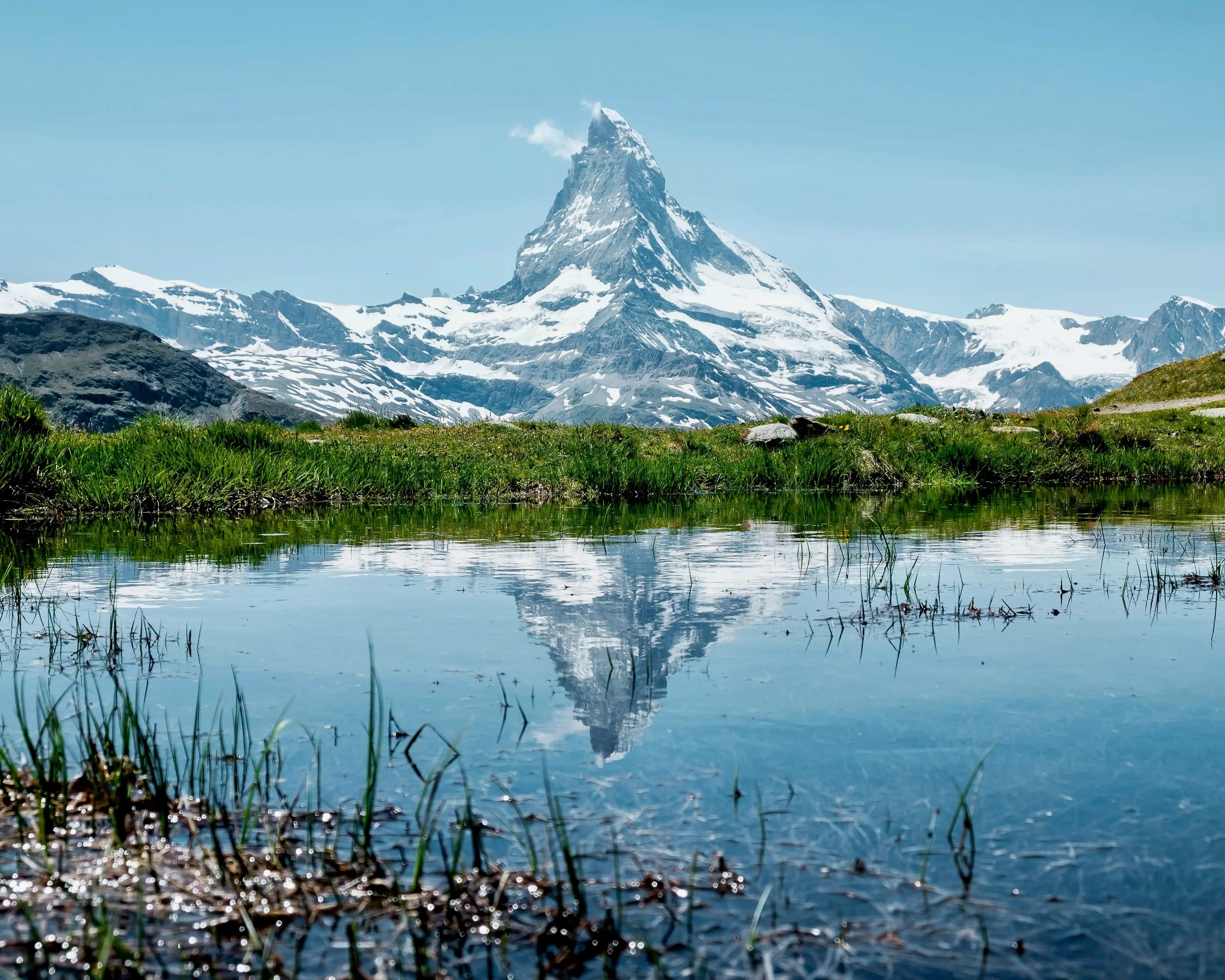
With four languages, three distinct cultures, and some of Europe's most dramatic landscapes, Switzerland packs an impressive density of culture and terrain into an area smaller than West Virginia. A few hours by train takes you from Zurich's urban polish to the Matterhorn's sharp peak, and from Geneva's international calm to the polished glamour of St. Moritz. A morning in Basel's world-class museum district, an afternoon on a lake in Lucerne, and a chalet dinner in Zermatt can all happen within the same trip without ever feeling rushed. Whether you're coming in winter for skiing, in summer for hiking, or during shoulder season to bask in the beautifully maintained landscapes, Switzerland remains a compelling destination in any season.
Switzerland is straightforward to navigate and well set up for visitors, but a few things are worth knowing before you go.
Airports: Zurich (ZRH) is Switzerland’s primary international gateway, with year-round and seasonal flights from around 20 North American cities like Los Angeles, Seattle, and Chicago. Geneva (GVA) is a solid alternative, particularly for those heading to the French Alps or western Switzerland, with year-round nonstop flights from New York, Washington D.C., and Montreal.
Transportation: Switzerland’s train network is among the best in the world—punctual, affordable, and comprehensive. For getting around cities like Zurich and Geneva, Uber tends to run significantly cheaper than traditional taxis.
Best time to visit: Switzerland rewards visitors year-round, with the season shaping the experience entirely. Summer (June–August) is ideal for lake swimming, alpine hiking, and long days outdoors. Spring (April–May) and fall (September–November) offer quieter travel and pleasant temperatures. Winter (December–March) is the prime ski season.
Ideal length of stay: One to two weeks allows enough time to explore Switzerland without feeling rushed. Switzerland also works well as a stopover within a larger European itinerary, with three days in a city like Zurich worth the addition.
What to wear: Comfortable walking shoes are a non-negotiable—cobblestone streets and lakeside promenades cover a lot of ground. Layers work well year-round, as temperatures shift between day and evening, and mountain destinations can turn cold regardless of season. The Swiss dress is practical but polished, especially for dinners and evenings out.
Travel tips:
Seasonality: Some mountain hotels, restaurants, and lifts close during shoulder seasons like spring and fall. Confirm what’s open before locking in an itinerary.
Cost: Switzerland is one of Europe’s more expensive destinations. Rail passes and casual lunches can go a long way toward lightening overall expenses.
Skiing: Layer up and dress for the mountain—temperatures drop quickly at altitude. Sunscreen and goggles are essential.
Off-piste skiing: While popular, it carries real risk. Check avalanche conditions, consider hiring a certified guide, and make sure trip insurance covers extreme sports.
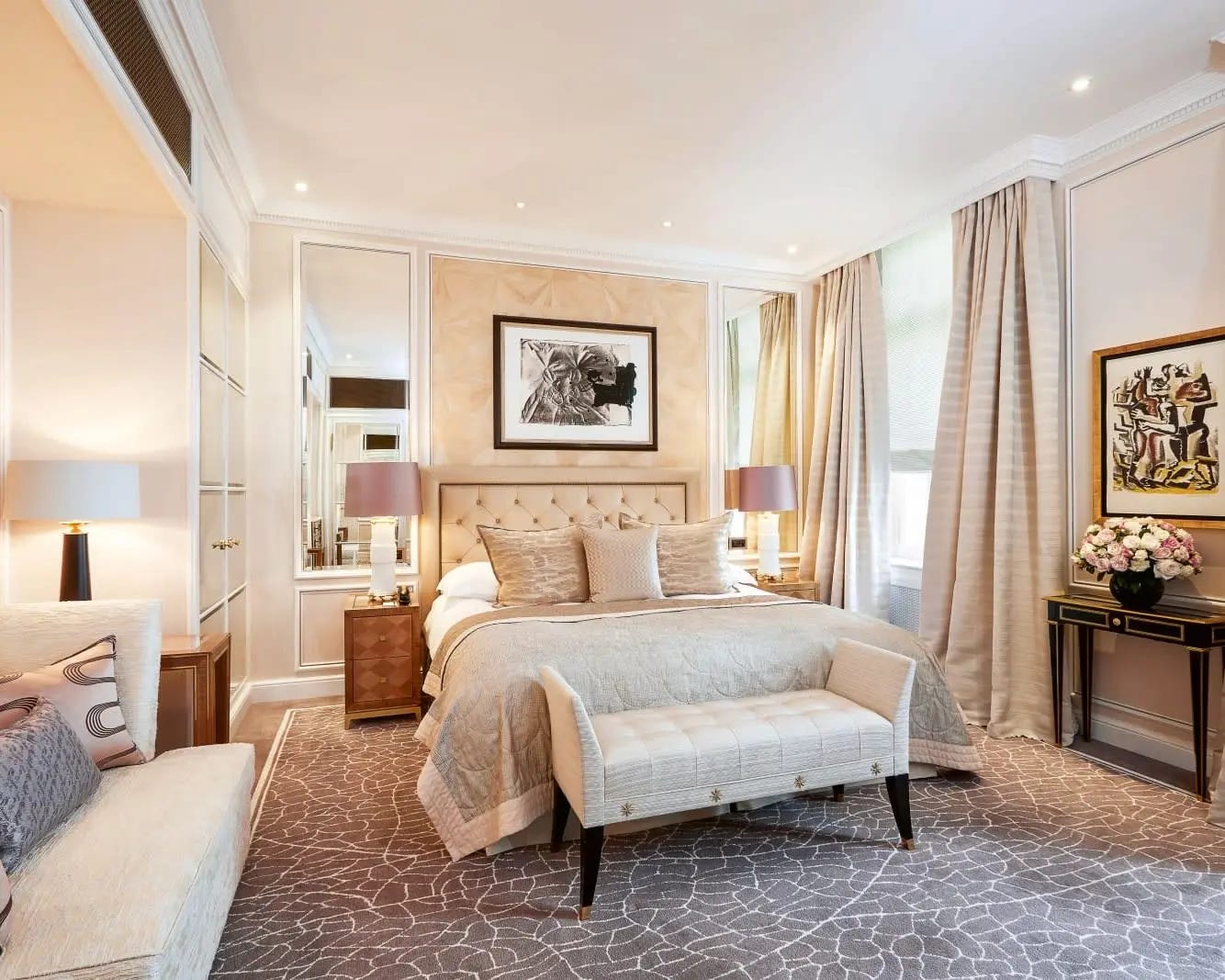
Zurich is Switzerland’s largest city and cultural engine. The medieval old town spills down to the Limmat River, lined with guild houses, independent boutiques, and restaurants. The lake provides a natural opportunity to decompress, with swimming spots, promenade walks, and mountain views. Cultured, walkable, and quietly cosmopolitan, it’s a city that rewards slowing down.
Where to stay
Mandarin Oriental Savoy, Zurich: Sophisticated rooms, a destination spa, and a celebrated dining program, centrally placed for the city’s best shopping and cultural draws.
Mandarin Oriental Fan Club partner perks include a $100 hotel credit, daily breakfast, welcome amenity, an upgrade, and extended check-in/out whenever possible.
Baur au Lac: Zurich’s most storied address, set in a private park on the lake since 1844. Discreet, impeccably maintained, and favored by those who prefer understated luxury.
Fora Perks include a $100 food and beverage credit, daily breakfast, welcome amenity, an upgrade, and extended check-in/out whenever possible.
The Dolder Grand: Landmark hotel with sweeping views over Zurich and the lake, with an alpine setting and storybook architecture.
Fora Perks include a $100 hotel credit, daily breakfast, an upgrade, and extended check-in/out whenever possible.
Park Hyatt Zurich: Sleek, design-forward option in the financial district, built around contemporary art, clean-lined interiors, and a well-regarded restaurant.
Hyatt Privé partner perks include a hotel credit, welcome amenity, daily breakfast, an upgrade, and extended check-in/out whenever possible.
La Réserve Eden au Lac Zurich: An intimate lakeside boutique hotel with a Parisian sensibility and a loyal following among creative travelers.
Fora Perks include a $100 food and beverage credit, daily breakfast, an upgrade, and extended check-in/out whenever possible.
AMERON Zürich Bellerive au Lac: Lakefront retreat with clean, contemporary design, and a relaxed atmosphere that sits apart from the city’s busier hotel corridor.
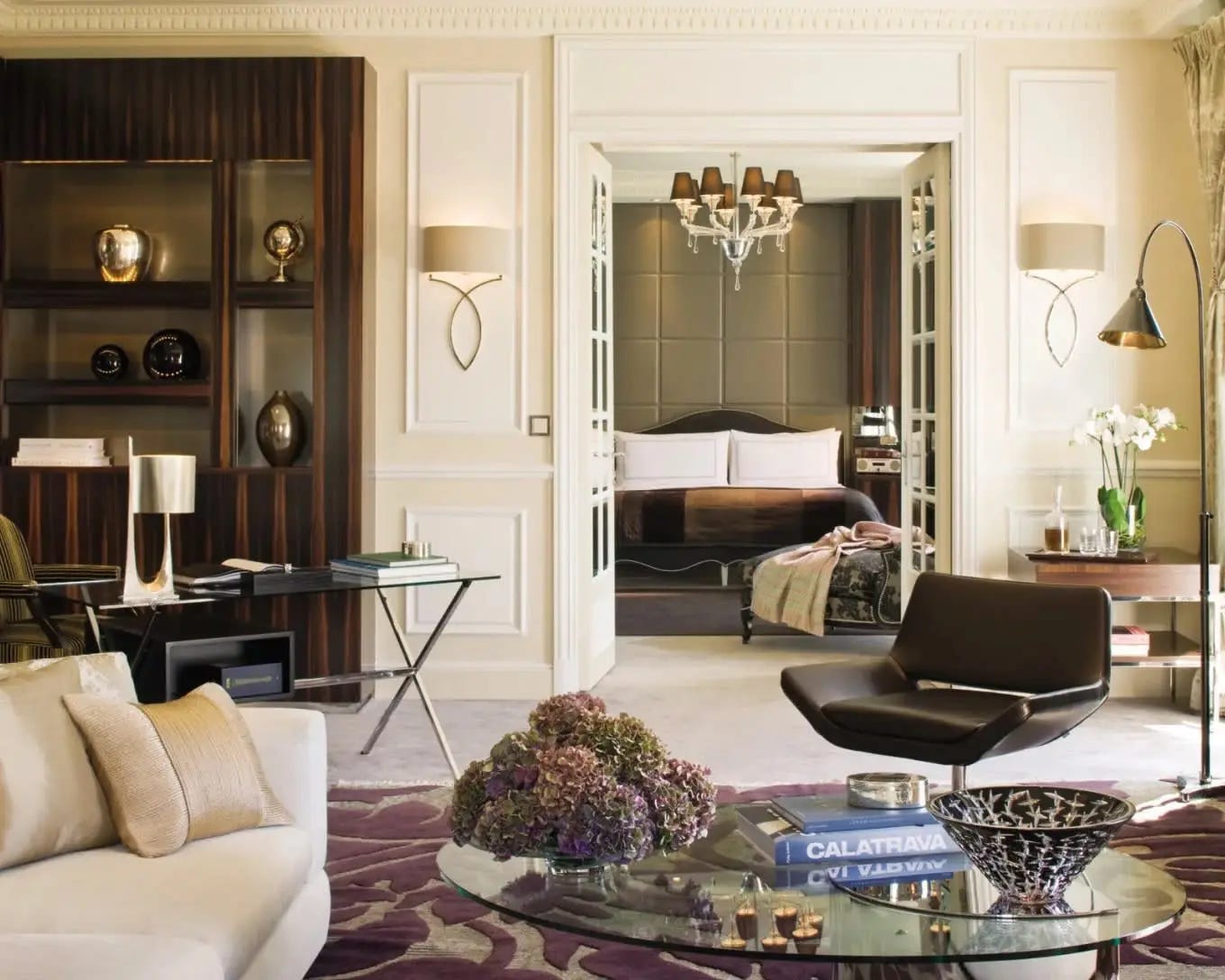
Geneva is shaped by its role as a global hub for finance, watchmaking, and humanitarian organizations. The Old Town sits above the Rhône, anchored by St. Peter’s Cathedral and a dense network of museums and galleries. The lakefront is lined with parks and terraces, creating a sense of a polished calm.
Where to stay
The Woodward, Auberge Collection: Beautifully restored Belle Époque property on the Rhône, where Auberge’s signature warmth meets understated elegance.
Fora Perks include a $100 food and beverage credit, daily breakfast, an upgrade, and extended check-in/out whenever possible.
Four Seasons Hotel Des Bergues Geneva: Geneva’s oldest hotel, set directly on the lake with views of the Jet d’Eau, balances historic gravitas with contemporary comfort.
When you book Four Seasons with Fora, you’ll enjoy exclusive Four Seasons Preferred Partner benefits.
Mandarin Oriental, Geneva: Sleek, contemporary retreat known for impeccable service, refined interiors, and a spa that ranks among Geneva’s best.
Mandarin Oriental Fan Club partner perks include a $100 hotel credit, daily breakfast, welcome amenity, an upgrade, and extended check-in/out whenever possible.
The Ritz-Carlton Hotel de la Paix, Geneva: One of Geneva’s most impressive stays, this landmark property has a storied past, grand architecture, and well-regarded service.
Marriott STARS partner perks include a $100 hotel credit, daily breakfast, welcome amenity, an upgrade, and extended check-in/out whenever possible.
Hotel Metropole Geneve: Classic Geneva address steps from the lake and the Old Town, offering traditional Swiss hospitality with a well-located, unpretentious ease.
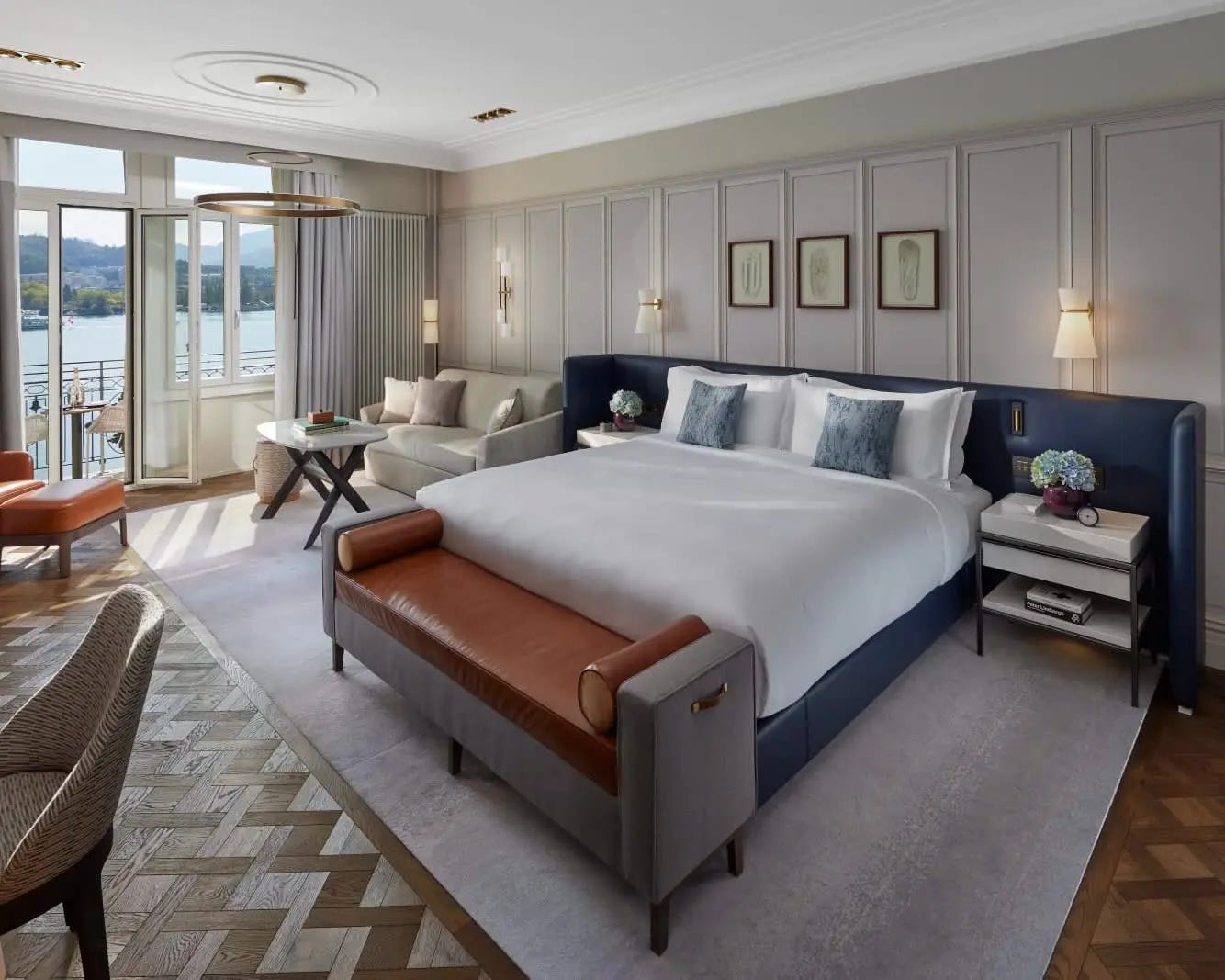
Lucerne sits at the edge of a lake with the Alps rising behind it. The Chapel Bridge, the medieval walls, and the compact old town make it one of Switzerland’s most immediately beautiful cities. Easy to navigate, rich with history, and a natural base for excursions, it’s less frenetic than Zurich but more accessible than the high alpine resorts.
Where to stay
Bürgenstock Hotel & Alpine Spa: Dramatic clifftop resort above Lake Lucerne, where panoramic Alpine views meet an expansive spa complex.
Fora Perks include a $100 hotel credit, daily breakfast, an upgrade, and extended check-in/out whenever possible.
Mandarin Oriental Palace, Luzern: Beautifully restored Belle Époque landmark on the lakefront, combining the brand’s signature service with a polished hotel address.
Mandarin Oriental Fan Club partner perks include a $100 hotel credit, daily breakfast, welcome amenity, an upgrade, and extended check-in/out whenever possible.
Park Hotel Vitznau: A secluded retreat, set on the quieter eastern shores of Lake Lucerne for a deeply comfortable stay.
Fora Perks include a CHF 100 hotel credit, daily breakfast, welcome amenity, an upgrade, and extended check-in/out whenever possible.
Hotel Schweizerhof Luzern: Classic grand hotel in the heart of Lucerne, steps from the Chapel Bridge, that’s warm and traditionally Swiss in character.
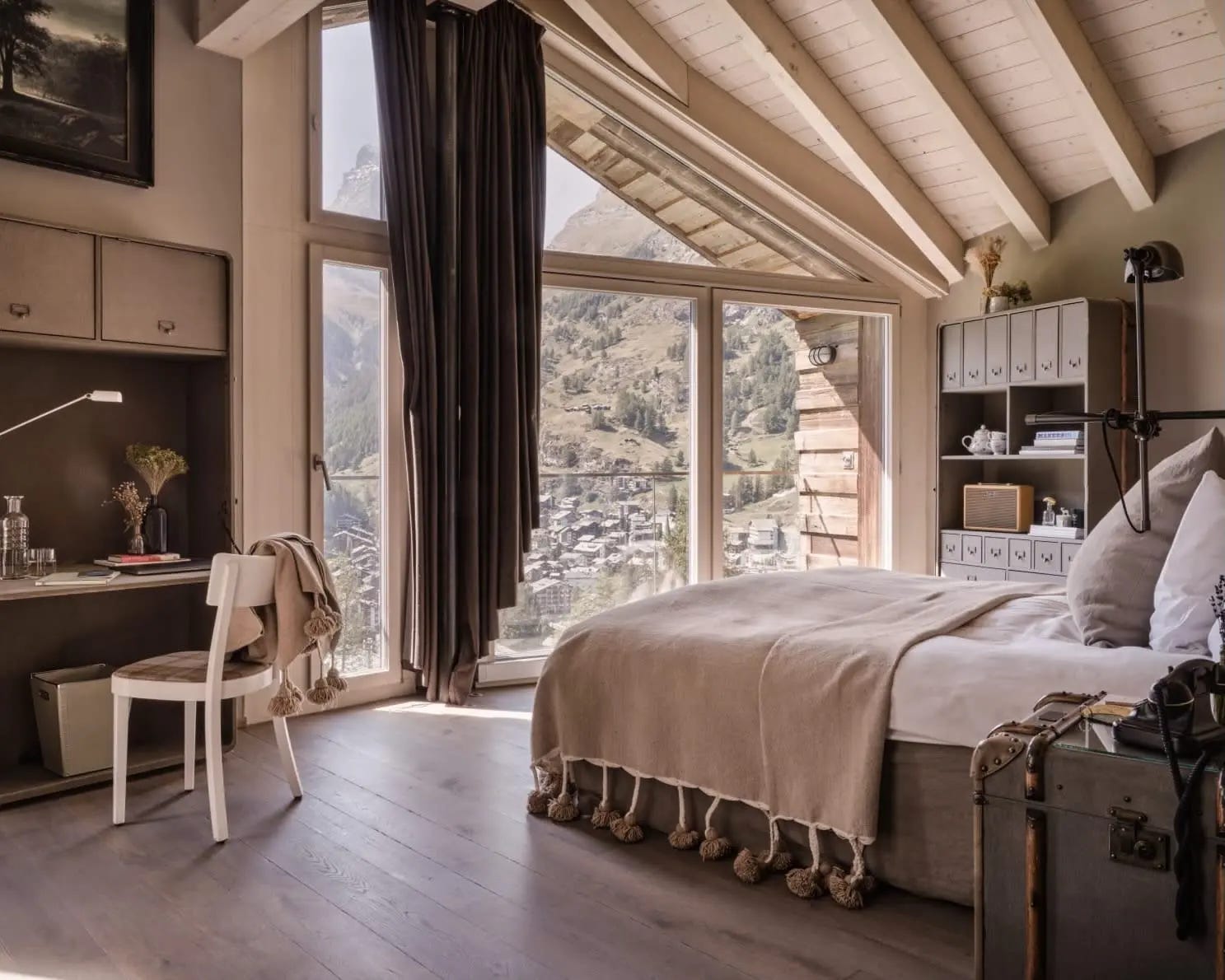
Zermatt exists in the shadow of the Matterhorn, with car-free streets and a year-round draw that shifts from world-class skiing in winter to serious alpine hiking in summer. The mountain views are among the most dramatic in Europe, and the town’s mix of traditional chalets, excellent dining, and unhurried pace makes it easy to stay longer than planned.
CERVO Mountain Resort: Chalet-style retreat with a distinctly alpine soul displayed in rough-hewn timber, cozy interiors, and direct Matterhorn views.
Fora Perks include a $100 food and beverage credit, daily breakfast, an upgrade, and extended check-in/out whenever possible.
Mont Cervin Palace: An institution with over 150 years of history, whose prime location at the foot of the Matterhorn and traditional Swiss grandeur has kept guests returning for generations.
Fora Perks include a $100 hotel credit, daily breakfast, an upgrade, and extended check-in/out whenever possible.
The Omnia: An intimate, architecturally striking retreat, with Matterhorn views from nearly every room.
Schweizerhof Zermatt: Well-established address combining classic Alpine hospitality with modern comfort steps from the village center and ski lifts.
withIN by SLH partner perks include a $100 food and beverage credit, daily breakfast, an upgrade, and extended check-in/out whenever possible.
Hotel Chesa Valese: Charming and intimate St. Moritz retreat with the feel of a private chalet, complete with warm interiors, personalized service, and a quiet residential setting.
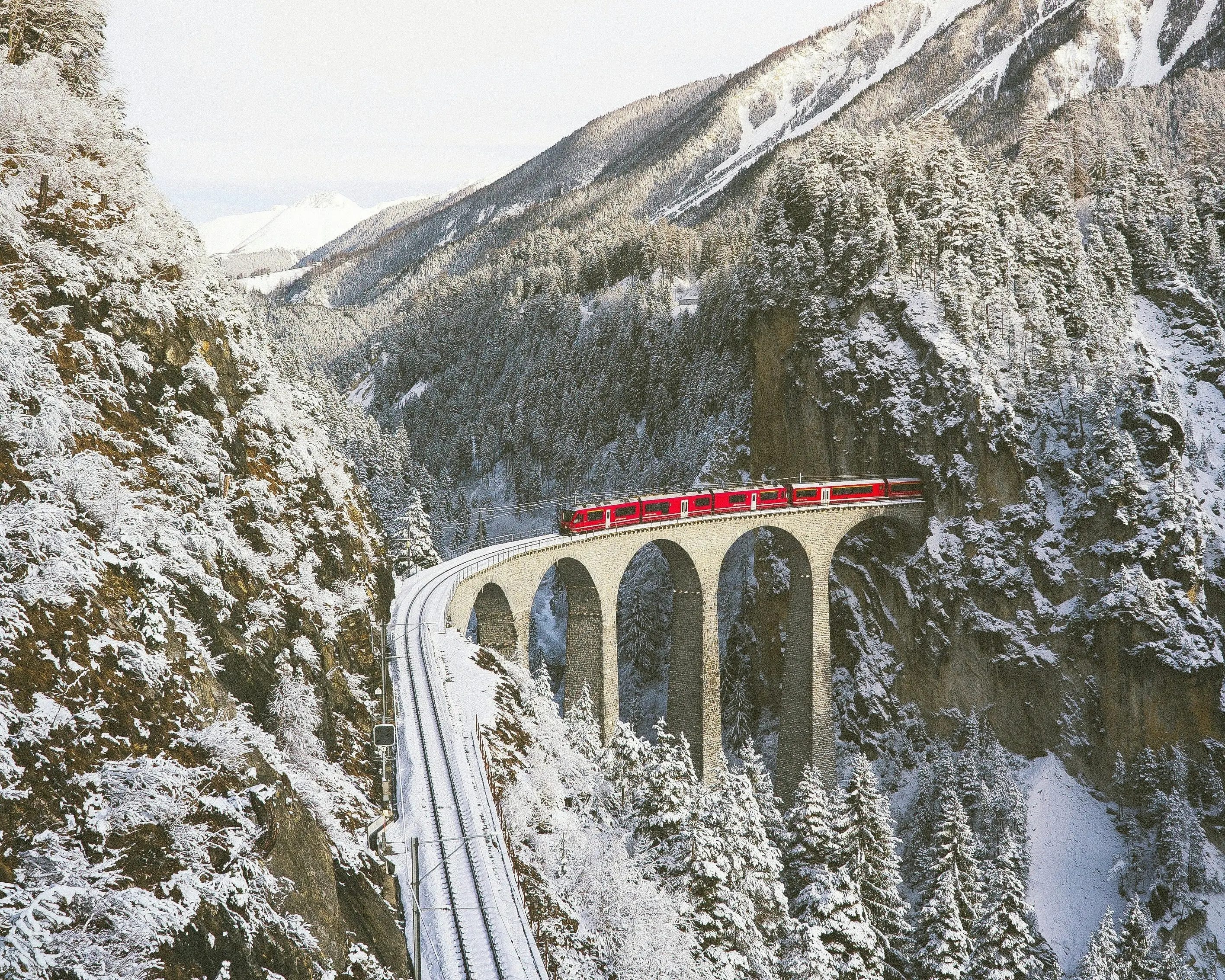
Switzerland packs a variety of experiences into a remarkably compact country, where landscapes range from medieval old towns to alpine peaks and glacier lakes.
Zurich
Old Town (Altstadt): Compact, walkable medieval core full of independent shops, galleries, and cafés that runs along both banks of the Limmat River.
Lake Zurich: Boat cruises, lakeside promenades, and summer swimming make this the city’s most popular outdoor playground.
Lindt Home of Chocolate: A well-executed museum with tastings and interactive displays on the history of chocolate-making.
Museums: The Kunsthaus Zürich holds one of Switzerland’s finest art collections, while the Swiss National Museum covers the breadth of Swiss history.
Shopping: Walk the exclusive Bahnhofstrasse for great shopping opportunities, or head to the Viadukt for boutique shops and restaurants.
Nightlife: The Langstrasse district anchors the city’s bar and club culture, with a mix of low-key wine bars, live music venues, and electronic music clubs.
Geneva
Old Town (Vieille Ville): Wander Geneva’s historic core, taking in St. Pierre Cathedral and Maison Tavel, the city’s oldest surviving house, now a museum of urban history.
Lake Geneva: Walk the flower-lined shoreline, pause at the Flower Clock in the Jardin des Anglais, or take an evening dinner cruise with views of the Alps at dusk.
Watchmaking: Tour historic factories and the Patek Philippe Museum, browse shops along the Rue du Rhône, or design your own timepiece at a hands-on workshop.
Swiss Army Knife workshop: Participate in a hands-on building session where you select the tools and assemble your own knife to take home.
International District: Visit the the UN’s European headquarters at the Palace of Nations, and the thought-provoking International Red Cross and Red Crescent Museum.
CERN: Stop by the birthplace of the World Wide Web and home to the world’s largest particle physics laboratory for a rare look inside this scientific site.
Lucerne
Lake Lucerne: Beyond the flower-lined lakefront promenade, scenic ferries run half- and full-day routes across the lake, with food, drinks, and sweeping Alpine views.
Chapel Bridge (Kapellbrücke): Europe’s oldest covered wooden bridge, with painted panels depicting Swiss history running the length of the interior.
Lion Monument (Löwendenkmal): A large rock relief carved directly into a cliff face, commemorating the Swiss Guards who died during the French Revolution.
Old Town (Altstadt): A pedestrian-only medieval core with cobblestone squares, painted building facades, and an unhurried atmosphere.
Musegg Wall and Towers: A well-preserved stretch of 13th-century city fortifications with climbable towers offering panoramic views over the rooftops.
Mount Rigi: Ride a rack railway—one of the oldest in Europe—to the summit, then walk to a mountain café for cheese, views, and a genuinely Alpine afternoon.
Zermatt
Glacier Express: One of the world’s great train journeys—a slow, panoramic ride through Alpine valleys, over dramatic viaducts, and past classic Swiss villages.
Matterhorn Glacier Paradise: A cable car ascends to Europe’s highest mountain station, where the Glacier Palace, a cinema lounge, and year-round snow await.
Hiking: Trails range from leisurely valley walks to serious summit routes, like the 5-Lakes Walk for a series of alpine lakes or Gorner Gorge, carved by glacial meltwater.
Border crossing: Take the cable car over the ridge into Italy—a genuinely novel way to cross an international border, with lunch on the other side as the reward.
Skiing: Zermatt sits at the center of one of the Alps’ most extensive ski areas, where the Matterhorn is a constant backdrop.
Check out the full article for more on cultural events, where to eat and trips to add on!
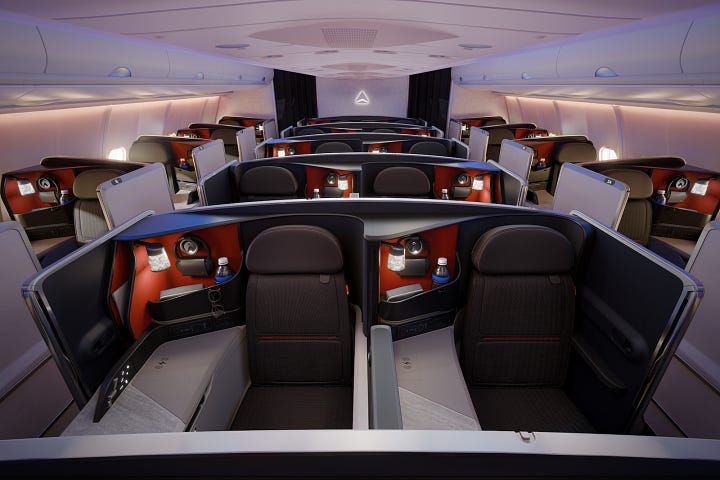
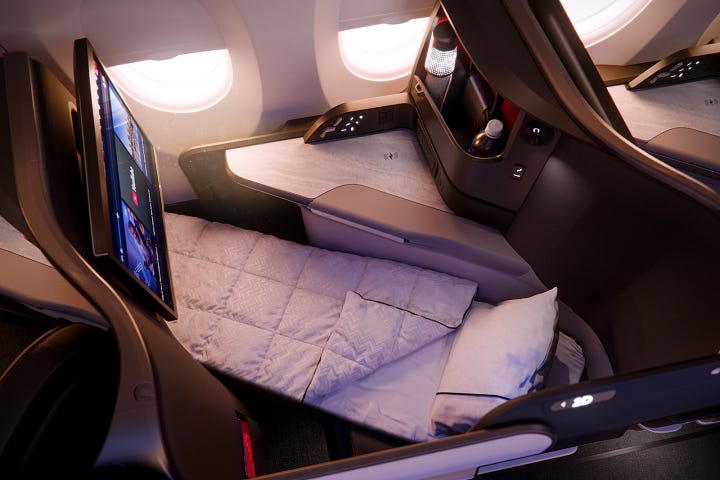
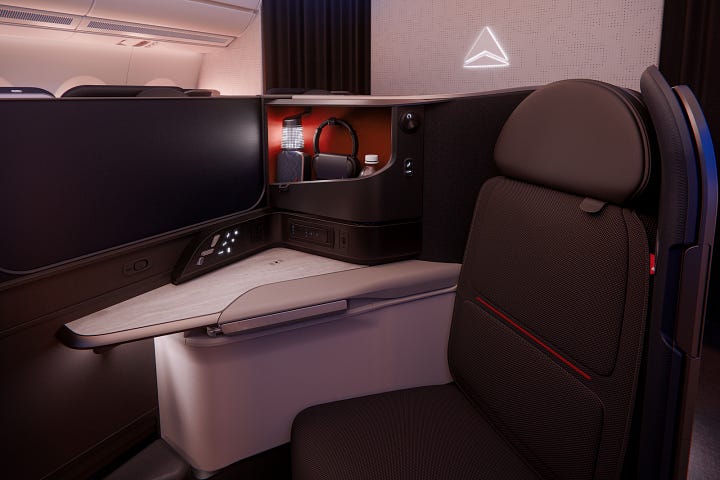
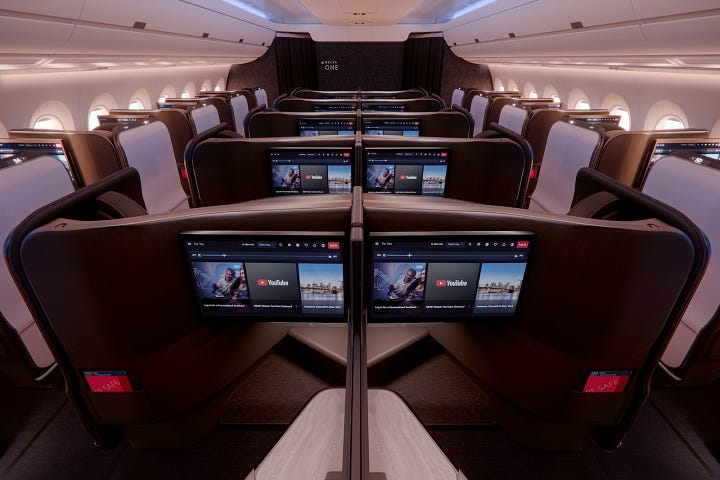
Delta is introducing a next-generation business class suite debuting in 2027 on new Airbus A350-1000 aircraft, with 53 suites, longer lie-flat beds, upgraded finishes, wireless charging, and larger 4K seatback screens. The new planes will skew heavily premium, with more than 100 seats across business and premium economy.
A more immediate change hits this fall, when Delta begins retrofitting 42 older Airbus A330 aircraft. These planes — some of the most dated in the fleet — will finally get suite-style seating and refreshed cabins, narrowing the gap between newer and legacy long-haul experiences.
The upgrades won’t be uniform right away. Not every aircraft will get the full next-gen product, and timelines stretch into the end of the decade, so the onboard experience will continue to vary widely depending on the specific plane operating your route, which is why you should always double check your aircraft type before booking.
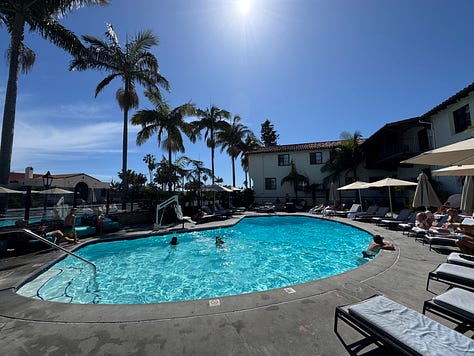
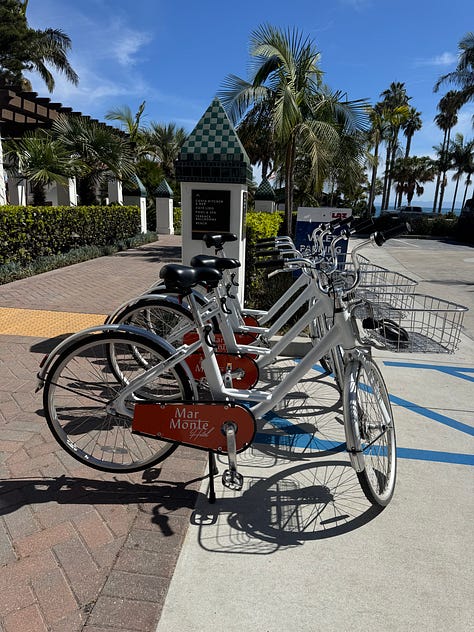
We recently celebrated P2’s birthday with a stay at Mar Monte Hotel - The Unbound Collection by Hyatt, a relaxed, beachfront property set just outside the center of town. Mar Monte sits about a 30-minute walk from downtown Santa Barbara’s shops and restaurants, but that tradeoff brings sweeping ocean views and a quieter, more residential feel. The hotel offers complimentary loaner bikes, which makes getting around easy if you don’t feel like walking.
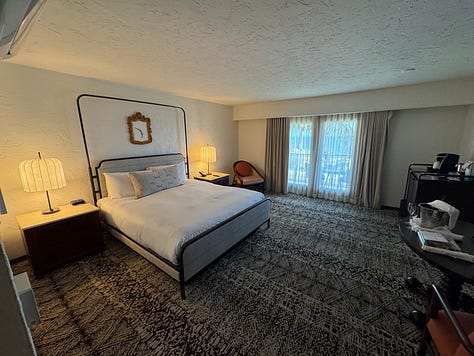
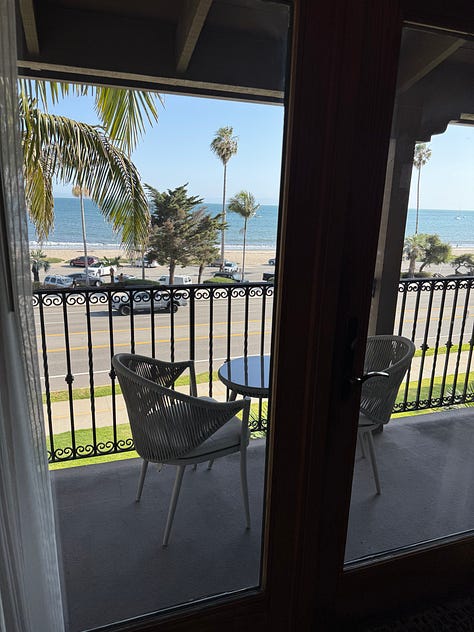
Award rates range from 21K–29K Hyatt points per night, or roughly $250 cash rates for off-peak dates to $600+ on busier weekends. As part of the Hyatt Privé advisor program, stays include a one-category room upgrade confirmed within 24 hours of booking (subject to availability), daily breakfast for two, early check-in and late checkout when available, a welcome amenity, and a $100 property credit.
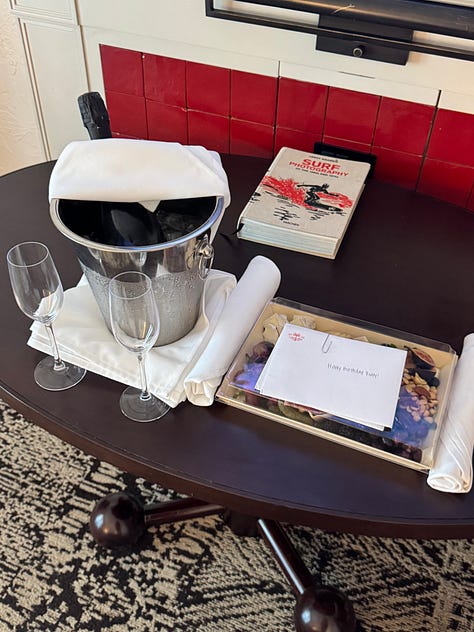
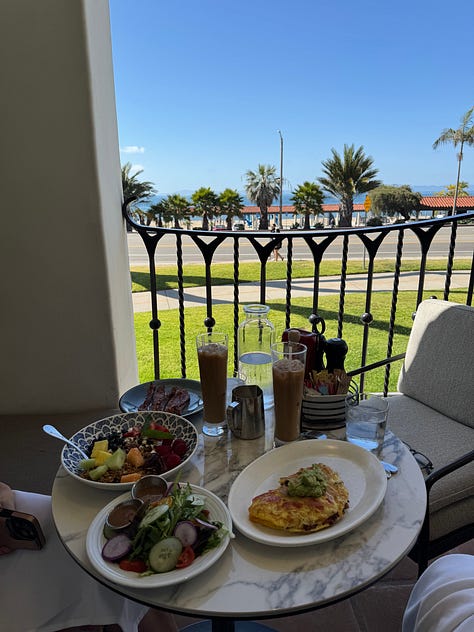
The property delivered on arrival — a bottle of sparkling wine and a generous charcuterie plate were waiting in the room. Breakfast is structured as a $35 per person daily credit, usable at either on-site restaurant or poolside. We used it at the Mediterranean-inspired Costa, where the outdoor patio overlooks the beach and sets the tone for a slow, scenic start to each day.
Thanks for reading! As always, I’m here if you want help with cards, points, destinations, or hotel bookings — especially for friends who don’t have time to decode this stuff. Hit me up anytime.
Comments
Nothing yet. Say the first thing.
Sign in to join the conversation.